U.S. anthracite production peak — 1917
Listen to this article · 5 min
0:005:03
Read by a synthetic voice, generated from the text of this article. Hear the whole archive on the Listen page.
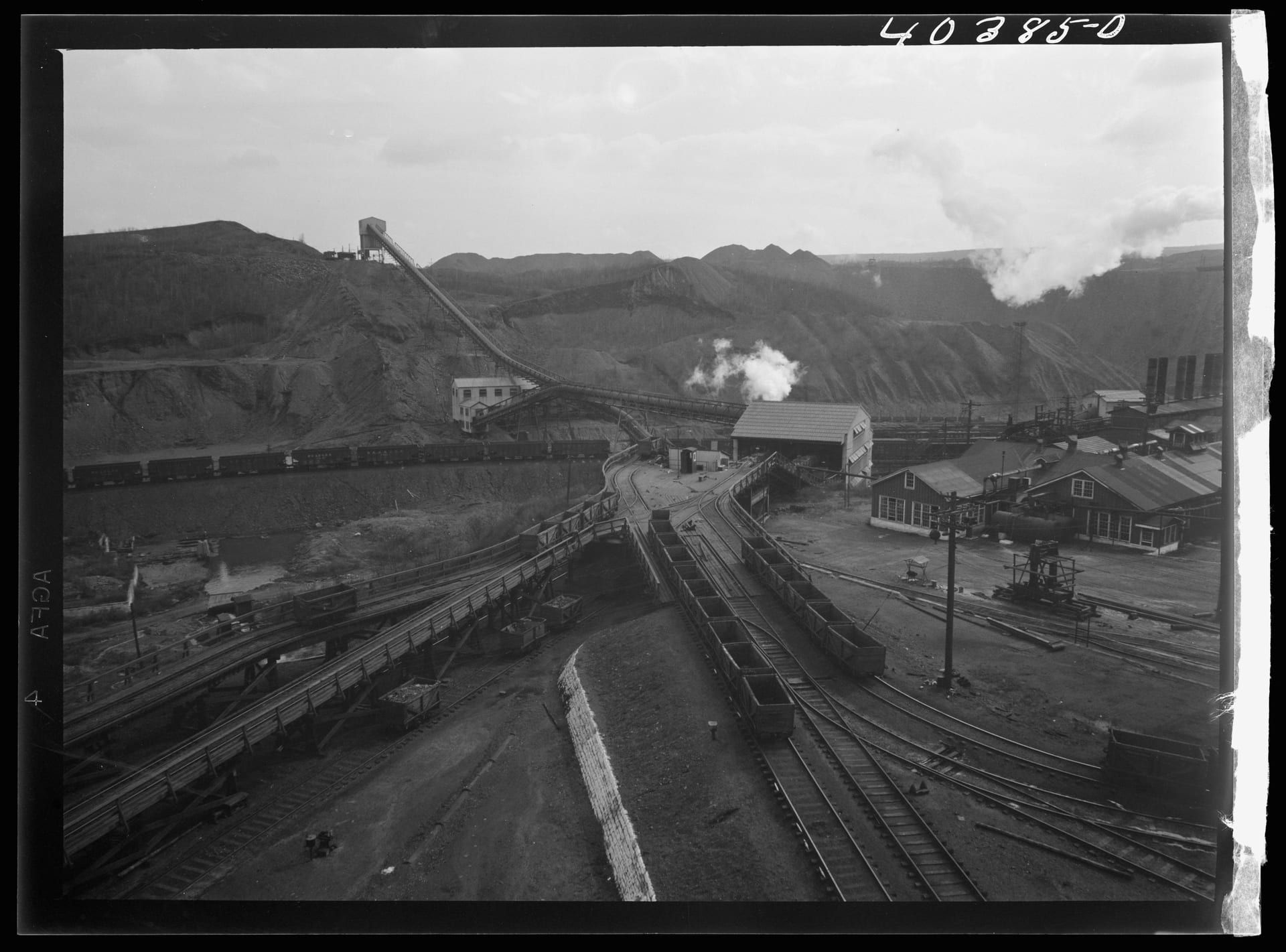
U.S. anthracite production peaked in 1917 at 99.67 million short tons (per the U.S. Geological Survey’s historical production record) — almost all of it from Pennsylvania’s four anthracite fields, with a substantial fraction from the Southern and Western Middle fields in Schuylkill County. Production declined to 73.8 million short tons by 1929 and was not exceeded in any subsequent year. 1917 was the calendar year of the United States’s entry into the First World War (April 1917) and the year of the Lever Food and Fuel Control Act of August 10, 1917 (Pub. L. 65-41; 40 Stat. 276), which gave the federal government authority over essential fuels — including coal — for the war’s duration.
The numbers
Federal coal-production figures for the period were compiled annually by the U.S. Geological Survey in its Mineral Resources of the United States series. The Survey’s later Circular 1147 (Use of Historical Production Data to Predict Future Coal Production Rates) summarises the historical record: Pennsylvania anthracite production peaked at 99.67 million short tons in 1917 and declined to 73.8 million short tons by 1929 at an average annual rate of about 3.56 percent. The 99.67-million-ton mark was not exceeded in any subsequent year — almost the entirety of which originated in the Pennsylvania anthracite fields.
Within Pennsylvania, the four fields contributed unevenly:
- the Northern (Wyoming) Field around Scranton and Wilkes-Barre — the largest single deposit;
- the Eastern Middle Field around Hazleton;
- the Western Middle Field around Shenandoah, Mahanoy City, and Ashland in northern Schuylkill County; and
- the Southern Field around Pottsville and the patches at Saint Clair, Minersville, and Port Carbon in southern Schuylkill County.
Schuylkill County straddled two of those four fields, and contributed a substantial fraction of the 1917 total.
Why 1917
By 1917 the structural conditions for a production peak had been assembling for two decades:
- Domestic demand was at structural high. Anthracite — “hard coal,” nearly smokeless and slow-burning — was the dominant home-heating fuel across the urban Northeast.
- Wartime industrial expansion raised hard-coal demand. The April 1917 U.S. entry into the First World War expanded factory employment across the urban Northeast, driving up household heating demand in the cities that burned anthracite. (Steel, long-distance railroad haulage, and steam shipping ran on bituminous coal nationally; anthracite was the home-heating fuel and a niche industrial fuel — malthouses, brick kilns, foundry work requiring a smokeless flame, and the locomotive fleets of the anthracite-region railroads such as the Philadelphia & Reading and the Lehigh Valley.)
- Federal wartime controls. The Lever Food and Fuel Control Act of August 10, 1917 (Pub. L. 65-41; 40 Stat. 276) authorized the U.S. Fuel Administration to regulate coal allocations, prices, and transportation. Coal was among the most-managed commodities of the federal wartime regime through the 1917–18 war winters.
- Workforce was past peak even as production hit its high-water mark. The Pennsylvania anthracite workforce — recorded annually by the Pennsylvania Department of Mines, the state agency charged with mine inspection and accident reporting — had reached its all-time high in 1914 and was already trending downward through the war years even as tonnage climbed, as the wartime expansion drew workers into the armed forces (after April 1917) and into higher-wage industrial work elsewhere in the Northeast. The workforce had been drawn first from Welsh and Irish immigrants and then, from the 1880s onward, from Slovak, Polish, Lithuanian, and Ukrainian migrants who populated the Schuylkill County towns.
The aftermath
1917 turned out to be the high-water mark. Production fell during the 1922 anthracite strike, recovered partially in the mid-1920s, fell sharply during the Great Depression, recovered partially during the Second World War, and then declined steadily through the second half of the twentieth century as home heating shifted from anthracite to fuel oil and natural gas. By the time the 1959 Knox Mine Disaster flooded much of the Northern Field, deep anthracite mining was already a contracting industry; strip mining and culm-bank reclamation continue in Schuylkill County today, but on a fraction of the 1917 scale.
The broader social history of the anthracite region — the four-field workforce, the labor record, the multi-parish Catholic neighbourhoods of the Schuylkill County towns — is covered in the topic page on anthracite coal in Pennsylvania.
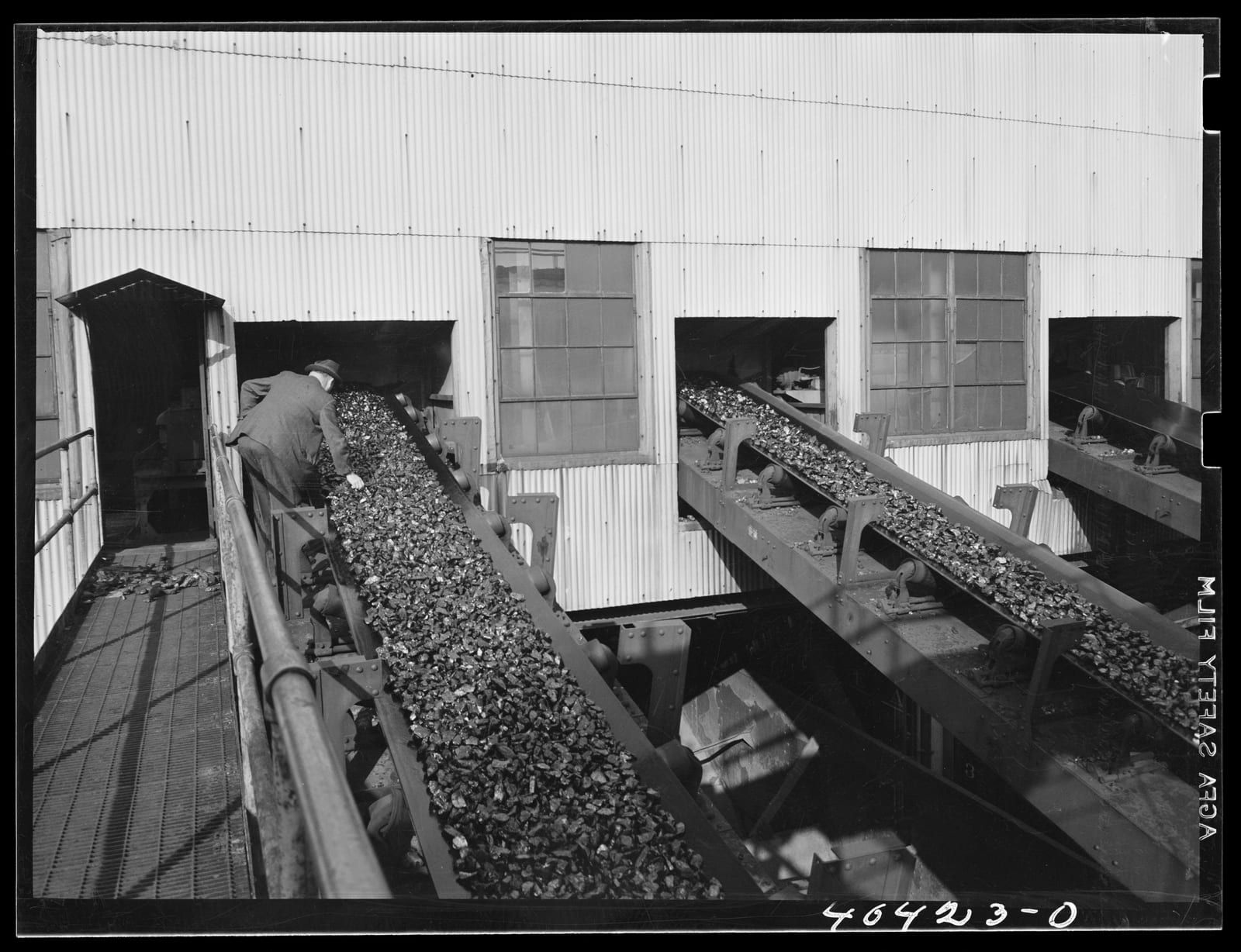
Related
Towns: Pottsville, Shenandoah, Mahanoy City, Ashland, Tamaqua, Minersville, Saint Clair, Port Carbon
Sources
- U.S. Geological Survey Circular 1147 — Use of Historical Production Data to Predict Future Coal Production Rates (Pennsylvania anthracite production peaked at 99.67 million short tons in 1917) · 1997
License: public-domain - U.S. Geological Survey, Mineral Resources of the United States, 1919 — Part II — Nonmetals (United States Geological Survey, federal coal-production compilation) · 1922
License: public-domain - Wikidata: anthracite (Q182458)
License: CC0 - Wikidata: Coal Region — Pennsylvania (Q5137767)
License: CC0 - Library of Congress, Chronicling America: Pottsville Journal (Pottsville, Pa.) 1909-1953, LCCN sn86081729
License: public-domain - U.S. Statutes at Large, Volume 40 (1917-1919), 65th Congress — Lever Food and Fuel Control Act (Pub. L. 65-41; 40 Stat. 276) · 1919
License: public-domain - Pennsylvania Department of Mines, Report of the Department of Mines of Pennsylvania: Anthracite Region 1921-1922 (Harrisburg: Department of Mines of Pennsylvania, 1925) — state biennial compilation of Pennsylvania anthracite production, mine inventories, employment, and accident statistics · 1925
License: public-domain
Frequently asked
- When did U.S. anthracite production peak?
- U.S. anthracite production peaked in 1917 — the calendar year of the United States's entry into the First World War — at 99.67 million short tons, per the U.S. Geological Survey's historical-production record (Circular 1147). Almost all of that output came from Pennsylvania's four anthracite fields, with a substantial fraction from the Southern and Western Middle fields in Schuylkill County. Production declined to 73.8 million short tons by 1929 and the 1917 figure was not exceeded in any subsequent year.
- Why did the United States produce more anthracite in 1917 than in any other year?
- The 1917 peak combined steady pre-war domestic demand (hard coal was the dominant home-heating fuel in the urban Northeast) with wartime industrial demand following the U.S. entry into the First World War in April 1917. The Pennsylvania anthracite workforce — recorded annually by the Pennsylvania Department of Mines — had peaked in 1914 and was already drifting downward through the war years as workers moved into the armed forces and into higher-wage industrial jobs; production climbed despite the falling headcount. The mines were operating at maximum sustainable output.
- Did anthracite production ever recover?
- It did not. Per the USGS record, production declined from 99.67 million short tons in 1917 to 73.8 million short tons by 1929 at an average annual rate of about 3.56 percent. Output fell further during the Great Depression, recovered partially during the Second World War, and then declined steadily through the second half of the twentieth century as home heating shifted from anthracite to fuel oil and natural gas. The 1959 Knox Mine Disaster effectively ended deep mining in the Northern Field. Strip mining and culm-bank reclamation continue today, but on a fraction of the 1917 scale.