Schuylkill Hub Search

Outdoor Life · Wildlife

Birds of Schuylkill County

287 documented taxa of class Aves recorded in Schuylkill County, Pennsylvania — by iNaturalist research-grade, eBird county records as of 2026-06-18 — with detailed accounts of the most notable, signature, and introduced species.

How this list is sourced. County presence is anchored to records filtered to Schuylkill County — iNaturalist research-grade observations (place 1470) and eBird county records. Observation counts are an effort-biased signal of recording activity as of 2026-06-18, not a census. Biology and identification draw on state and museum authorities; per-species links go to Wikipedia for cross-reference only.

Conservation ranks here are relayed from NatureServe / iNaturalist and are not definitive Pennsylvania ranks — confirm against the Pennsylvania Natural Heritage Program (PNHP) before relying on them.

Detailed accounts

287 of the 287 documented taxa are profiled in detail below — the most-recorded, signature, introduced, and notable species. The complete checklist follows.

Canada Goose

Branta canadensis — Anatidae

Native

Description & ID
large goose, brown body, black neck and head with a white "chinstrap." Resident and migratory populations both occur.
Habitat
lakes, ponds, reservoirs, rivers, farm fields, and mowed parkland.
County status
present and abundant; 44 research-grade iNaturalist records [S1] and a year-round eBird presence [S2]. Resident breeder augmented by migrants.
Conservation status
native; secure. (confirm against PNHP)
Notes
has become superabundant as a resident bird on lawns, golf courses, and basins; managed as both game and nuisance species.

More on Wikipedia →

Cackling Goose

Branta hutchinsii — Anatidae

Native

Description & ID
a small "mini Canada Goose" with a stubby bill and rounder head; recently split from Canada Goose.
Habitat
mixes into Canada Goose flocks on fields and water during migration.
County status
present; 4 research-grade iNaturalist records [S1]; an uncommon fall/winter migrant [S2].
Conservation status
native; secure. (confirm against PNHP)
Notes
identification requires care alongside small Canada Geese.

More on Wikipedia →

Snow Goose

Anser caerulescens — Anatidae

Native

Description & ID
white goose with black wingtips (a dark "blue morph" also occurs); pink bill with a black "grin patch."
Habitat
large flocks stage on fields and open water during migration.
County status
present; 8 research-grade iNaturalist records [S1]; a migrant, mainly late fall and early spring [S2].
Conservation status
native; secure (hyperabundant continentally). (confirm against PNHP)

More on Wikipedia →

Greater White-fronted Goose

Anser albifrons — Anatidae

Native

Description & ID
gray-brown goose with a white forehead blaze, orange legs, and dark belly barring.
County status
present; 1 research-grade iNaturalist record [S1]; a rare migrant in goose flocks [S2].
Conservation status
native; secure. (confirm against PNHP)

More on Wikipedia →

Tundra Swan

Cygnus columbianus — Anatidae

Native

Description & ID
large white swan with a straight neck; black bill usually with a small yellow lore spot.
Habitat
open water and flooded fields on migration.
County status
present; 3 research-grade iNaturalist records [S1]; a regular migrant, chiefly late fall and early spring [S2].
Conservation status
native; secure. (confirm against PNHP)
Notes
the expected wild swan in PA; distinguish from introduced Mute Swan and rarer Trumpeter Swan.

More on Wikipedia →

Trumpeter Swan

Cygnus buccinator — Anatidae

Native

Description & ID
very large swan with an all-black bill and straight neck; larger than Tundra Swan with no yellow lore.
County status
present; 1 research-grade iNaturalist record [S1]; rare, reflecting expanding reintroduced populations in the Great Lakes region [S2].
Conservation status
native; NatureServe "apparently secure" (United States) [S1][S9]; recovered from near-extirpation. (confirm against PNHP)

More on Wikipedia →

Mute Swan

Cygnus olor — Anatidae

Introduced

Description & ID
large white swan with an orange bill and black knob; holds its neck in an S-curve.
Habitat
ponds, lakes, and slow rivers.
County status
present; 11 research-grade iNaturalist records [S1]; resident where established [S2]. Introduced from Eurasia [S1].
Conservation status
non-native; aggressive toward native waterfowl and damaging to aquatic vegetation. (confirm against PNHP)
Notes
an invasive species; included as a documented county occurrence.

More on Wikipedia →

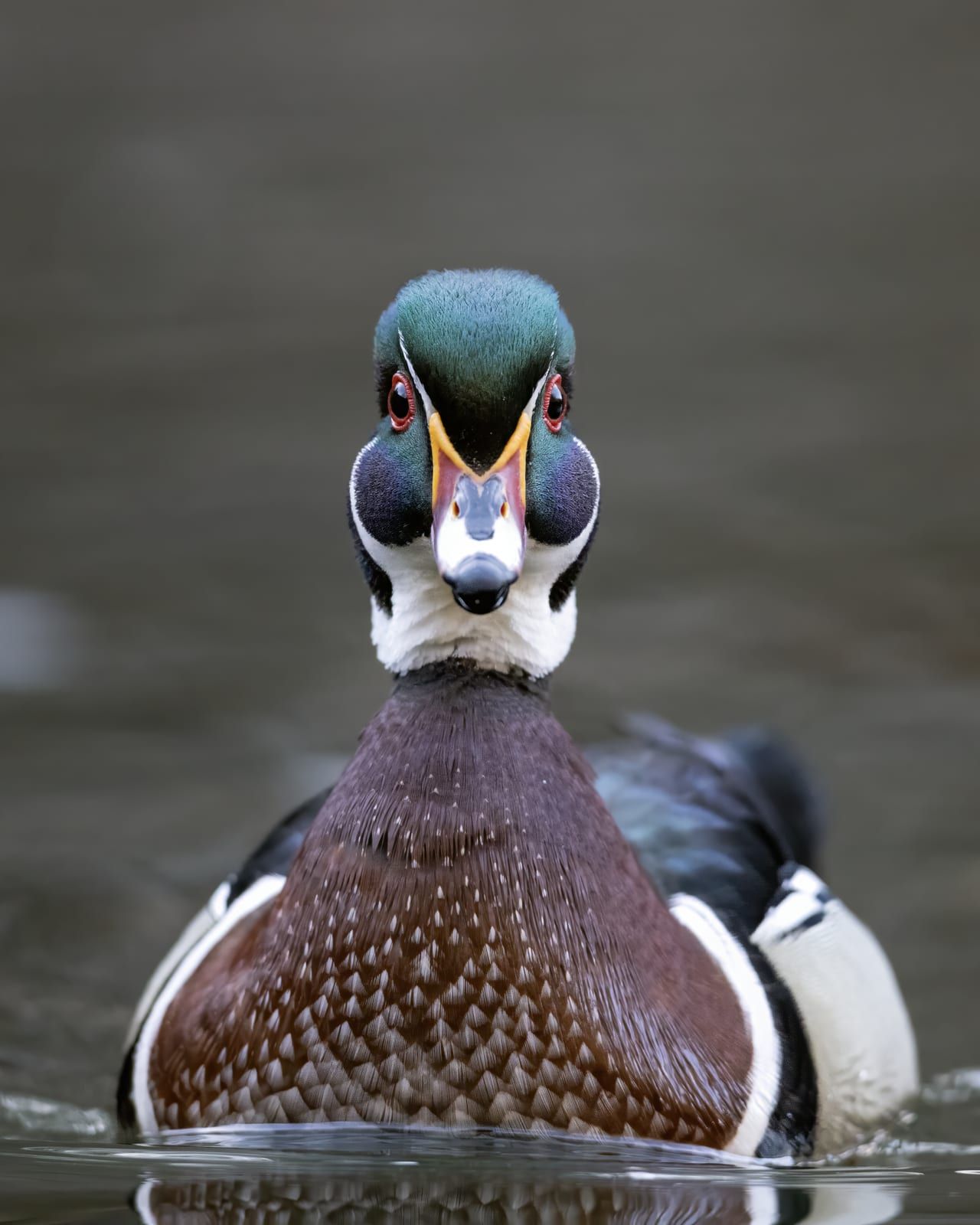
Wood Duck

Aix sponsa — Anatidae

Native

Description & ID
ornate cavity-nesting duck; drake iridescent green-crested with bold facial pattern; hen gray-brown with a white eye-teardrop.
Habitat
wooded swamps, beaver ponds, and quiet streams with overhanging cover.
County status
present; 2 research-grade iNaturalist records [S1]; an uncommon-to-fairly-common breeder [S2].
Conservation status
native; secure; a nest-box conservation success. (confirm against PNHP)

More on Wikipedia →

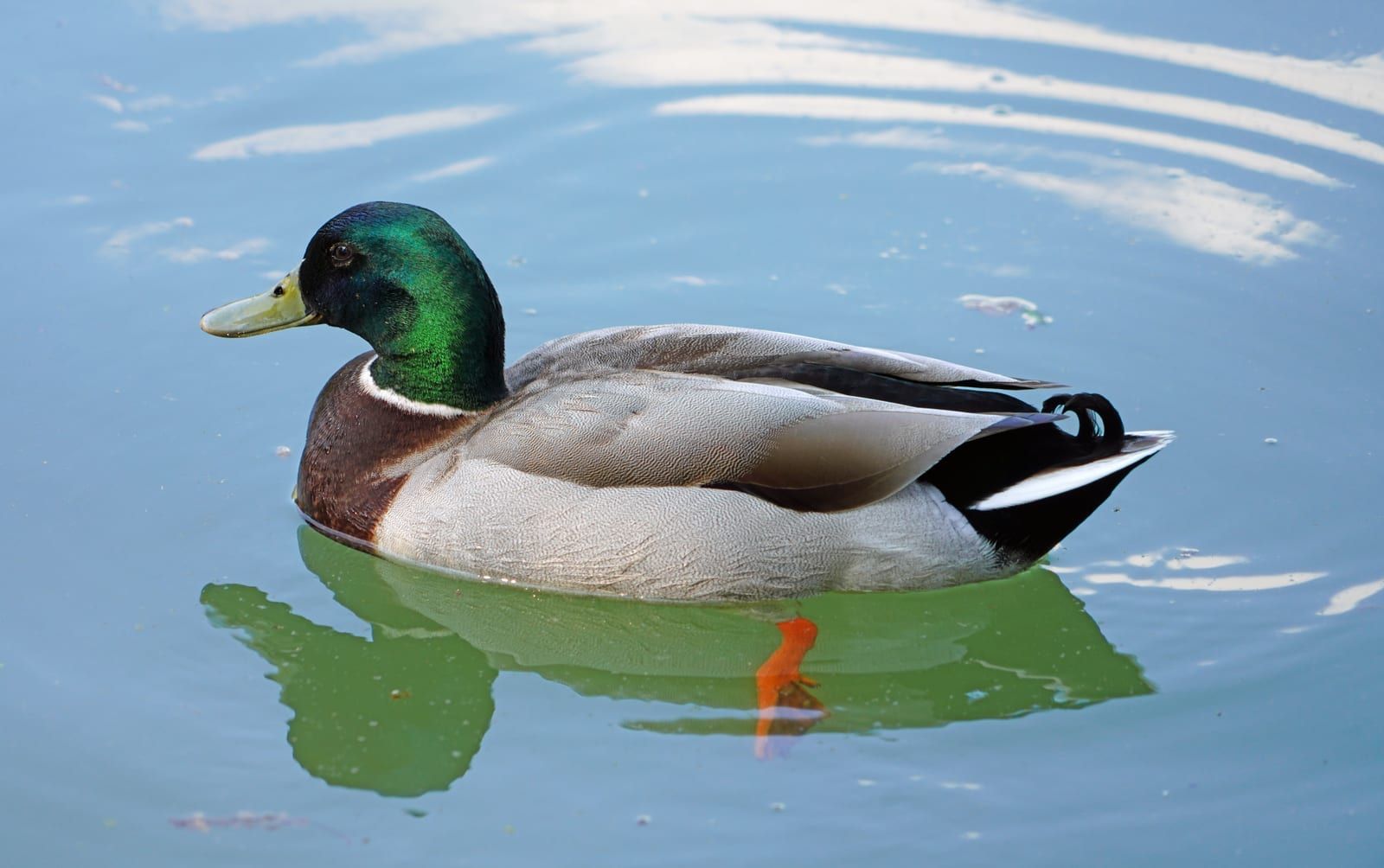
Mallard

Anas platyrhynchos — Anatidae

Native

Description & ID
the familiar dabbling duck; drake glossy-green head, white neck-ring, chestnut breast; hen mottled brown. Blue speculum bordered white.
Habitat
virtually any fresh water, from rivers to suburban ponds.
County status
present and abundant; 36 research-grade iNaturalist records [S1]; a year-round resident and breeder [S2].
Conservation status
native; secure (some local stock includes domestic/feral genes). (confirm against PNHP)

More on Wikipedia →

American Black Duck

Anas rubripes — Anatidae

Native

Description & ID
dark, dusky dabbler resembling a female Mallard but darker-bodied with a violet (white-bordered) speculum and contrasting pale head.
Habitat
wetlands, marshes, and quiet waters, often with Mallards.
County status
present; 4 research-grade iNaturalist records [S1]; an uncommon migrant and wintering bird [S2].
Conservation status
native; declining regionally due to hybridization with and competition from Mallards. (confirm against PNHP)

More on Wikipedia →

Northern Pintail

Anas acuta — Anatidae

Native

Description & ID
elegant, slender dabbler; drake with chocolate head, white neck-stripe, and long pointed tail.
County status
present; 4 research-grade iNaturalist records [S1]; an uncommon migrant [S2].
Conservation status
native; secure (declining continentally). (confirm against PNHP)

More on Wikipedia →

American Wigeon

Mareca americana — Anatidae

Native

Description & ID
compact dabbler; drake with a green eye-patch and white forecrown ("baldpate"); short blue bill.
County status
present; 5 research-grade iNaturalist records [S1]; an uncommon migrant on open water [S2].
Conservation status
native; secure. (confirm against PNHP)

More on Wikipedia →

Gadwall

Mareca strepera — Anatidae

Native

Description & ID
understated gray dabbler; drake with a black rear end and a white speculum patch visible in flight.
County status
present; 3 research-grade iNaturalist records [S1]; an uncommon migrant [S2].
Conservation status
native; secure. (confirm against PNHP)

More on Wikipedia →

Green-winged Teal

Anas crecca — Anatidae

Native

Description & ID
PA's smallest dabbling duck; drake with a chestnut head, green eye-swoosh, and a vertical white shoulder bar.
County status
present; 3 research-grade iNaturalist records [S1]; an uncommon migrant on shallow wetlands and mudflats [S2].
Conservation status
native; secure. (confirm against PNHP)

More on Wikipedia →

Redhead

Aythya americana — Anatidae

Native

Description & ID
diving duck; drake with a rounded rufous head, black breast, gray back, and pale blue bill with a black tip.
County status
present; 8 research-grade iNaturalist records [S1]; an uncommon migrant on lakes and reservoirs [S2].
Conservation status
native; secure. (confirm against PNHP)

More on Wikipedia →

Canvasback

Aythya valisineria — Anatidae

Native

Description & ID
large diving duck with a sloping forehead and long bill; drake with a rusty head and pale white back.
County status
present; 1 research-grade iNaturalist record [S1]; an uncommon-to-rare migrant on open water [S2].
Conservation status
native; secure. (confirm against PNHP)

More on Wikipedia →

Ring-necked Duck

Aythya collaris — Anatidae

Native

Description & ID
diving duck; drake with a peaked black head, gray flanks, and a distinctive white bill-ring; the namesake neck-ring is hard to see.
County status
present; 4 research-grade iNaturalist records [S1]; NatureServe "vulnerable" (Pennsylvania) [S1][S9]; a regular migrant on ponds and lakes [S2].
Conservation status
native; common as a migrant despite the PA S-rank (which reflects rarity as a breeder). (confirm against PNHP)

More on Wikipedia →

Greater Scaup

Aythya marila — Anatidae

Native

Description & ID
diving duck; drake with a rounded green-glossed head and pale back; very similar to Lesser Scaup.
County status
present; 1 research-grade iNaturalist record [S1]; a rare migrant on large open water [S2].
Conservation status
native; secure. (confirm against PNHP)

More on Wikipedia →

Lesser Scaup

Aythya affinis — Anatidae

Native

Description & ID
diving duck; drake with a peaked, purple-glossed head; commoner inland than Greater Scaup.
County status
present; 1 research-grade iNaturalist record [S1]; an uncommon migrant on lakes [S2].
Conservation status
native; secure. (confirm against PNHP)

More on Wikipedia →

Bufflehead

Bucephala albeola — Anatidae

Native

Description & ID
tiny diving duck; drake mostly white with a black back and a large white head-patch on a dark, iridescent head.
County status
present; 4 research-grade iNaturalist records [S1]; a fairly common migrant and winter visitor on open water [S2].
Conservation status
native; secure; a tree-cavity nester (uses old flicker holes). (confirm against PNHP)

More on Wikipedia →

Common Goldeneye

Bucephala clangula — Anatidae

Native

Description & ID
diving duck; drake with a greenish-black head, golden eye, and a round white cheek-spot.
County status
present; 3 research-grade iNaturalist records [S1]; an uncommon winter visitor on larger waters [S2].
Conservation status
native; secure. (confirm against PNHP)

More on Wikipedia →

Long-tailed Duck

Clangula hyemalis — Anatidae

Native

Description & ID
small sea duck; drake with bold black-and-white plumage and long central tail feathers.
County status
present; 2 research-grade iNaturalist records [S1]; NatureServe "vulnerable" [S1][S9]; a rare migrant/winter visitor on larger lakes inland [S2].
Conservation status
native; declining; chiefly a coastal/Great Lakes bird. (confirm against PNHP)

More on Wikipedia →

Ruddy Duck

Oxyura jamaicensis — Anatidae

Native

Description & ID
small, stiff-tailed diving duck; breeding drake with a chestnut body, black cap, white cheeks, and a sky-blue bill.
County status
present; 4 research-grade iNaturalist records [S1]; an uncommon migrant on ponds and lakes [S2].
Conservation status
native; secure. (confirm against PNHP)

More on Wikipedia →

Hooded Merganser

Lophodytes cucullatus — Anatidae

Native

Description & ID
small merganser; drake with a fan-shaped white crest bordered black, and a thin black bill.
Habitat
wooded ponds, swamps, and slow streams; a cavity nester.
County status
present; 6 research-grade iNaturalist records [S1]; NatureServe "vulnerable" (Pennsylvania) [S1][S9]; an uncommon breeder and migrant [S2].
Conservation status
native; secure as a migrant; uses nest boxes. (confirm against PNHP)

More on Wikipedia →

Common Merganser

Mergus merganser — Anatidae

Native

Description & ID
large, slender fish-eating duck; drake with a green-black head, white body, and thin red bill; hen with a rusty crested head and clean white chin.
Habitat
rivers, large streams, and lakes with clear water and fish.
County status
present; 8 research-grade iNaturalist records [S1]; an uncommon breeder along rivers and a winter visitor [S2].
Conservation status
native; secure. (confirm against PNHP)

More on Wikipedia →

Red-breasted Merganser

Mergus serrator — Anatidae

Native

Description & ID
slender merganser; drake with a shaggy double crest, green head, and a rusty breast band.
County status
present; 2 research-grade iNaturalist records [S1]; an uncommon migrant on open water [S2].
Conservation status
native; secure. (confirm against PNHP)

More on Wikipedia →

Muscovy Duck

Cairina moschata — Anatidae

Introduced

Description & ID
large, heavy duck with bare red facial caruncles; feral birds are variably pied black-and-white.
County status
present; 2 research-grade iNaturalist records [S1]. Introduced/feral (domestic stock) [S1]. A hybrid Mallard × Muscovy Duck is also recorded (1 iNaturalist record) [S1].
Conservation status
non-native, domestic; not part of the native fauna. (confirm against PNHP)

More on Wikipedia →

Brant

Branta bernicla — Anatidae

Native eBird county record

Description & ID
small, dark sea goose with a black head, neck, and breast, a small white neck-mark, and a white rear; smaller and dumpier than Canada Goose, with no chinstrap.
Habitat
chiefly coastal; inland birds turn up on open water and fields, usually briefly.
County status
eBird-documented [S2]; a rare migrant, mainly in late fall, occasionally appearing on reservoirs or in goose flocks during coastal weather systems.
Conservation status
native; secure. (confirm against PNHP)
Notes
a primarily Atlantic-coast goose; inland records are weather-driven overflights.

More on Wikipedia →

Black-bellied Whistling-Duck

Dendrocygna autumnalis — Anatidae

Native eBird county record

Description & ID
long-legged, long-necked duck with a chestnut body, gray face, bright pink-red bill, and a bold white wing-stripe in flight; perches readily and is noisy.
Habitat
ponds, marshes, and flooded fields with cover.
County status
eBird-documented [S2]; a vagrant, reflecting this southern species' marked northward range expansion and increasing PA records in recent years.
Conservation status
native; secure and increasing. (confirm against PNHP)
Notes
once exceptional in the Northeast, now a near-annual stray somewhere in PA.

More on Wikipedia →

Ross's Goose

Anser rossii — Anatidae

Native eBird county record

Description & ID
a miniature Snow Goose with a stubby triangular bill lacking the black "grin patch"; white with black wingtips (a rare blue morph exists).
Habitat
mixes into Snow Goose and other goose flocks on fields and open water.
County status
eBird-documented [S2]; a rare migrant, found by careful scanning of Snow Goose flocks in late fall and early spring.
Conservation status
native; secure (increasing continentally). (confirm against PNHP)
Notes
identification requires care against small Snow Geese and hybrids.

More on Wikipedia →

Blue-winged Teal

Spatula discors — Anatidae

Native eBird county record

Description & ID
small dabbling duck; drake with a slate-blue head, a bold white facial crescent, and a powder-blue forewing patch shared with the female.
Habitat
shallow marshes, flooded fields, and pond margins with emergent cover.
County status
eBird-documented [S2]; an uncommon migrant, mainly spring and early fall; an occasional, very local breeder in wetlands.
Conservation status
native; secure. (confirm against PNHP)
Notes
one of the earliest-departing and latest-arriving dabblers, wintering largely in the tropics.

More on Wikipedia →

Northern Shoveler

Spatula clypeata — Anatidae

Native eBird county record

Description & ID
distinctive dabbler with an oversized, spatula-shaped bill; drake with a green head, white breast, and rusty flanks; both sexes show a blue forewing.
Habitat
shallow, productive wetlands and pond edges where it filter-feeds.
County status
eBird-documented [S2]; an uncommon migrant on shallow wetlands and impoundments, spring and fall.
Conservation status
native; secure. (confirm against PNHP)
Notes
the comb-like bill lamellae strain plankton and seeds from the water.

More on Wikipedia →

Surf Scoter

Melanitta perspicillata — Anatidae

Native eBird county record

Description & ID
stocky sea duck; drake black with bold white head-patches and a swollen orange, white, and black bill; female browner with pale face-patches.
Habitat
large lakes and reservoirs inland during migration; primarily a coastal bird.
County status
eBird-documented [S2]; a rare migrant on large open water, mainly late fall.
Conservation status
native; secure. (confirm against PNHP)
Notes
scoters appear inland chiefly during coastal storms or hard weather.

More on Wikipedia →

White-winged Scoter

Melanitta deglandi — Anatidae

Native eBird county record

Description & ID
the largest scoter; drake black with a small white eye-comma and a white wing-patch obvious in flight; female brown with a white speculum.
Habitat
large open lakes and reservoirs inland on migration.
County status
eBird-documented [S2]; a rare migrant on large open water, mainly late fall.
Conservation status
native; secure (declining continentally). (confirm against PNHP)

More on Wikipedia →

Black Scoter

Melanitta americana — Anatidae

Native eBird county record

Description & ID
rounded sea duck; drake all-black with a bulbous orange-yellow bill knob; female dark with a contrasting pale cheek and dark cap.
Habitat
large lakes and reservoirs inland during migration.
County status
eBird-documented [S2]; a rare migrant on large open water, mainly late fall.
Conservation status
native; secure. (confirm against PNHP)

More on Wikipedia →

Black Swan

Cygnus atratus — Anatidae

Introduced eBird county record

Description & ID
large, all-black swan with a red bill and white flight feathers visible in flight; unmistakable.
Habitat
ponds and lakes where escaped birds settle.
County status
eBird-documented [S2]; records pertain to escaped or released captive birds. Introduced/escapee (an Australian species) [S2].
Conservation status
non-native; not part of the wild fauna. (confirm against PNHP)

More on Wikipedia →

Swan Goose

Anser cygnoides — Anatidae

Introduced eBird county record

Description & ID
large goose with a long bill and (in domestic "Chinese goose" stock) a knob at the bill base; wild type is brown-necked.
Habitat
ponds and farmyards where domestic birds free-range.
County status
eBird-documented [S2]; records reflect domestic/feral free-ranging stock, not wild birds. Domestic/escapee [S2].
Conservation status
non-native, domestic. (confirm against PNHP)

More on Wikipedia →

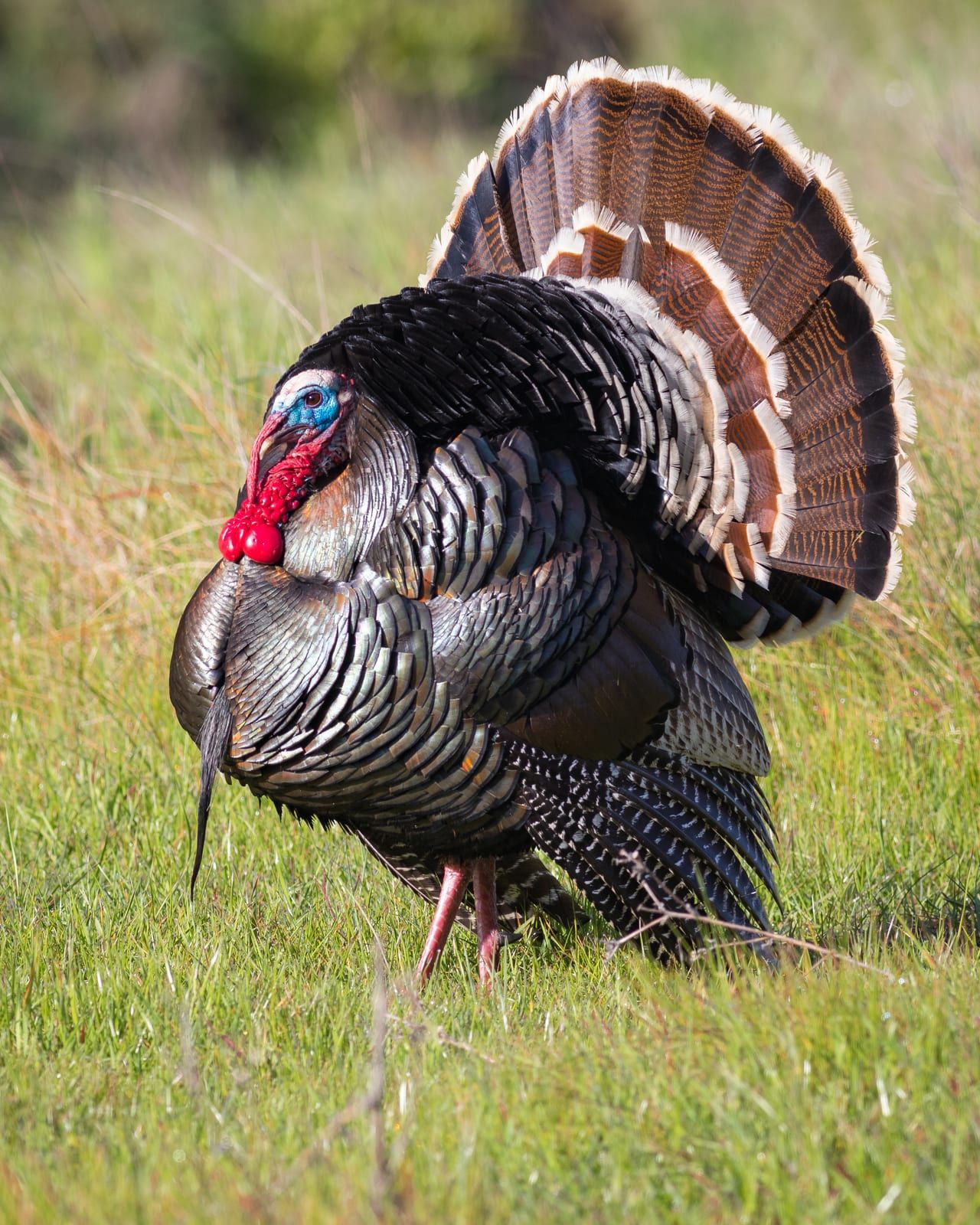
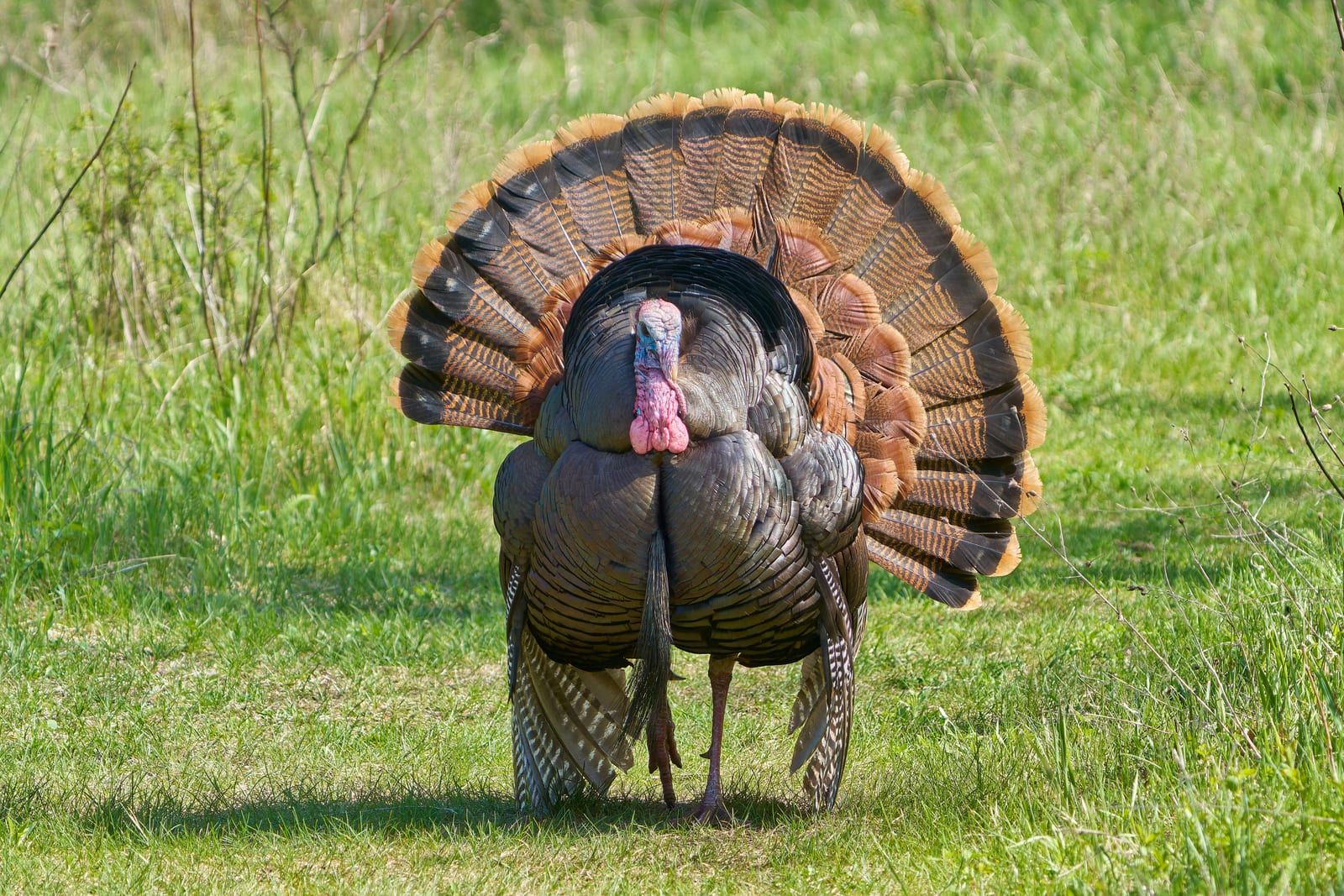
Wild Turkey

Meleagris gallopavo — Phasianidae

Native

Description & ID
very large, dark, iridescent game bird; males with a bare blue-red head, breast "beard," and fanning tail in display.
Habitat
mature forests with mast (oak/beech), interspersed clearings and farmland.
County status
present and widespread; 16 research-grade iNaturalist records [S1]; a year-round resident [S2].
Conservation status
native; secure; a managed game species restored statewide in the 20th century [S5]. (confirm against PNHP)

More on Wikipedia →

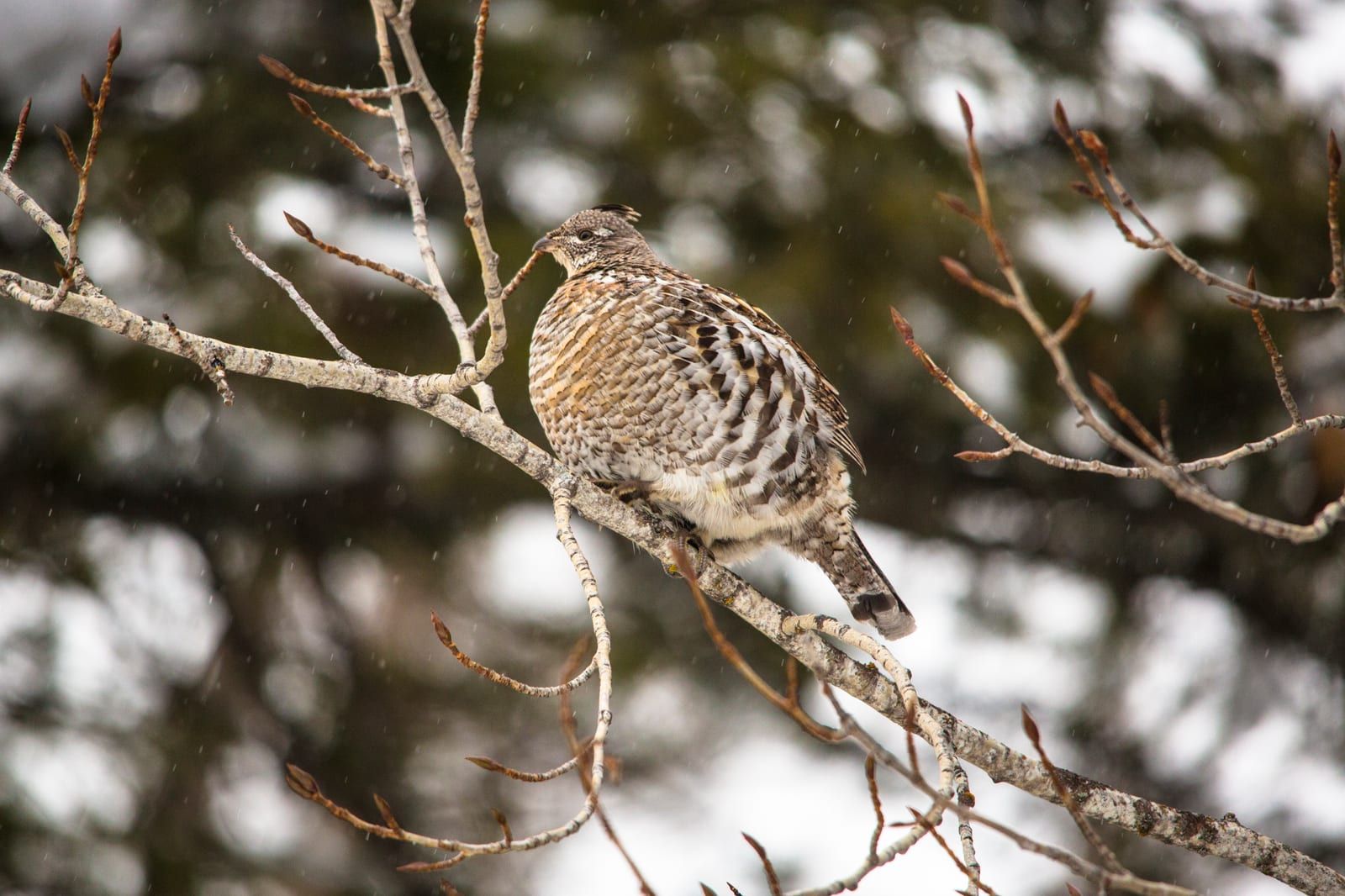
Ruffed Grouse

Bonasa umbellus — Phasianidae

Native

Description & ID
chunky woodland grouse with a crest, ruffed neck feathers, and a fan tail with a dark subterminal band. Males "drum" with their wings.
Habitat
young, dense second-growth and mixed forest with thick understory.
County status
present; 1 research-grade iNaturalist record [S1]; an uncommon resident, declining regionally [S2].
Conservation status
native; Pennsylvania state bird; populations have fallen sharply due to maturing forests and West Nile virus [S5]. (confirm against PNHP)
Notes
a conservation-priority game bird; benefits from early-successional habitat management.

More on Wikipedia →

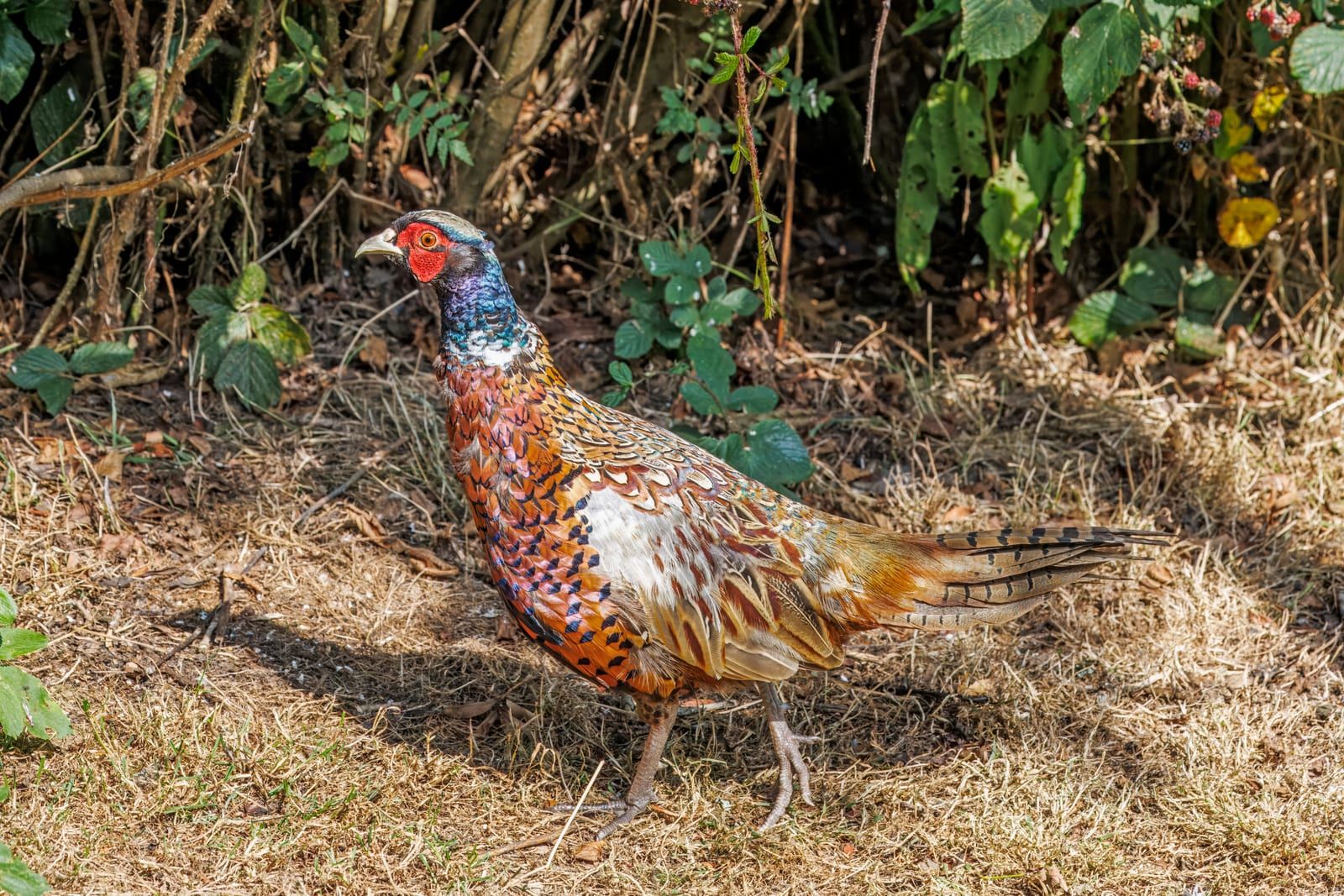
Ring-necked Pheasant

Phasianus colchicus — Phasianidae

Introduced

Description & ID
large, long-tailed game bird; cock iridescent with a white neck-ring and red face wattles.
Habitat
farmland, hedgerows, and grassy field edges.
County status
present; 11 research-grade iNaturalist records [S1]; locally present, partly sustained by stocking [S2][S5]. Introduced from Asia [S1].
Conservation status
non-native; self-sustaining wild populations are limited. (confirm against PNHP)

More on Wikipedia →

Chukar

Alectoris chukar — Phasianidae

Introduced

Description & ID
stocky partridge with bold black flank bars, a black "necklace," and a red bill and legs.
County status
present; 2 research-grade iNaturalist records [S1]. Introduced; PA records typically reflect released/stocked birds rather than a wild population [S1].
Conservation status
non-native; not established as a self-sustaining wild bird in PA. (confirm against PNHP)

More on Wikipedia →

Helmeted Guineafowl

Numida meleagris — Numididae

Introduced

Description & ID
rotund, gray-spangled fowl with a bare blue-and-red head and a bony casque.
County status
present; 1 research-grade iNaturalist record [S1]. Introduced/domestic free-ranging farm stock [S1].
Conservation status
non-native, domestic. (confirm against PNHP)

More on Wikipedia →

Northern Bobwhite

Colinus virginianus — Odontophoridae

Native eBird county record

Description & ID
small, rounded quail with intricate brown, rufous, and white plumage; males with a bold white throat and eyebrow; named for its clear, whistled "bob-WHITE" call.
Habitat
brushy farmland, weedy field edges, and early-successional grassland-shrub mosaics.
County status
eBird-documented [S2]; very rare. Pennsylvania's native wild population is considered nearly extirpated, so most county records pertain to released or stocked birds rather than a self-sustaining wild covey.
Conservation status
native; a steeply declining grassland-shrubland game bird and a PA species of conservation concern; wild PA stock effectively gone [S5]. (confirm against PNHP)
Notes
a flagship of declining early-successional habitat across the eastern U.S.

More on Wikipedia →

Pied-billed Grebe

Podilymbus podiceps — Podicipedidae

Native

Description & ID
small, stocky brown grebe with a stubby pale bill ringed black in breeding plumage; dives readily.
Habitat
marshy ponds, wetlands, and quiet water with emergent vegetation.
County status
present; 3 research-grade iNaturalist records [S1]; NatureServe "vulnerable" (Pennsylvania) [S1][S9]; an uncommon migrant and rare breeder [S2].
Conservation status
native; a PA species of concern as a breeder due to wetland loss. (confirm against PNHP)

More on Wikipedia →

Horned Grebe

Podiceps auritus — Podicipedidae

Native

Description & ID
small grebe; nonbreeding birds black-and-white with a clean white cheek; breeding birds have golden "horns."
County status
present; 5 research-grade iNaturalist records [S1]; NatureServe "vulnerable" [S1][S9]; an uncommon migrant on open water [S2].
Conservation status
native; declining continentally. (confirm against PNHP)

More on Wikipedia →

Red-necked Grebe

Podiceps grisegena — Podicipedidae

Native

Description & ID
larger grebe with a heavy yellow-based bill; breeding birds with a rusty neck and pale cheek.
County status
present; 2 research-grade iNaturalist records [S1]; a rare migrant, most likely after late-winter storms [S2].
Conservation status
native; secure. (confirm against PNHP)

More on Wikipedia →

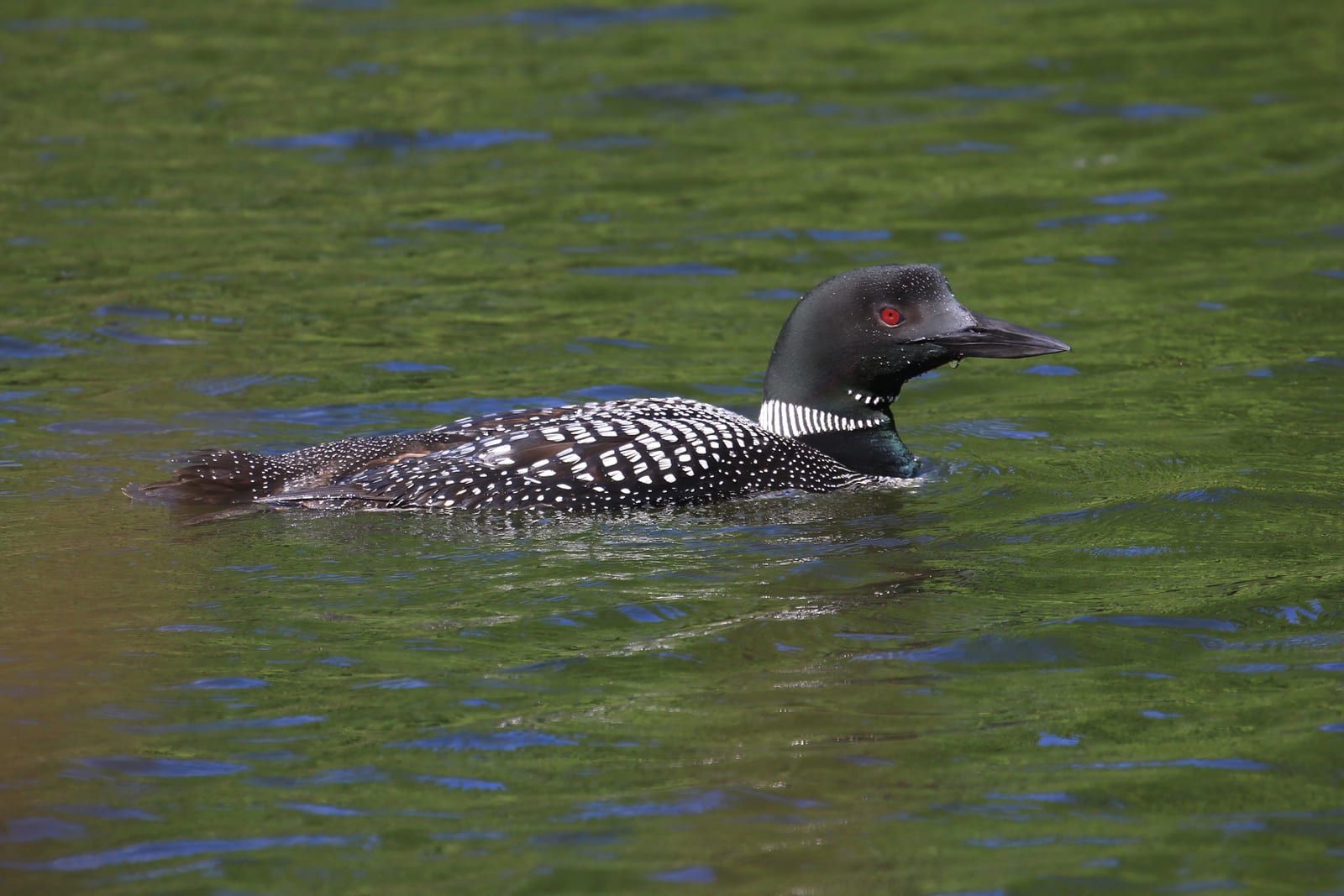
Common Loon

Gavia immer — Gaviidae

Native

Description & ID
large diving bird with a dagger bill; breeding adults boldly checkered black-and-white with a green-black head; winter birds gray above, white below.
Habitat
larger lakes and reservoirs on migration; rivers occasionally.
County status
present; 8 research-grade iNaturalist records [S1]; a regular migrant, mainly spring and fall [S2].
Conservation status
native; secure (does not breed in PA). (confirm against PNHP)

More on Wikipedia →

Red-throated Loon

Gavia stellata — Gaviidae

Native

Description & ID
smaller loon with a thin, slightly upturned bill held tilted up; winter birds pale-faced.
County status
present; 1 research-grade iNaturalist record [S1]; a rare migrant on open water [S2].
Conservation status
native; secure. (confirm against PNHP)

More on Wikipedia →

Double-crested Cormorant

Nannopterum auritum — Phalacrocoracidae

Native

Description & ID
large, dark, long-necked waterbird with a hooked yellow-orange bill; swims low and perches with wings spread.
Habitat
rivers, lakes, and reservoirs with fish.
County status
present; 12 research-grade iNaturalist records [S1]; a fairly common migrant, increasingly seen in summer [S2].
Conservation status
native; secure; populations recovered strongly after DDT-era declines. (confirm against PNHP)

More on Wikipedia →

Anhinga

Anhinga anhinga — Anhingidae

Native eBird county record

Description & ID
slender, long-necked, long-tailed waterbird with a dagger bill and silver wing-panels; males glossy black; soars on flat wings like a raptor and swims with only the snake-like neck exposed.
Habitat
southern swamps and freshwater wetlands; far north of its normal range here.
County status
eBird-documented [S2]; a vagrant. Records reflect rare overshoots of this southeastern species, sometimes among soaring migrants in spring.
Conservation status
native; secure within its southern range. (confirm against PNHP)
Notes
distinguished from cormorants by the pointed bill, long fanned tail, and soaring flight.

More on Wikipedia →

Northern Gannet

Morus bassanus — Sulidae

Native eBird county record

Description & ID
large, sharply pointed seabird, white with black wingtips and a buff-washed head; plunge-dives spectacularly for fish.
Habitat
a pelagic and coastal seabird; inland only as a storm-driven stray.
County status
eBird-documented [S2]; a vagrant, appearing inland only after major coastal storms or hurricanes that displace seabirds onto reservoirs and rivers.
Conservation status
native; secure. (confirm against PNHP)
Notes
an exceptional inland record class, almost always weather-related.

More on Wikipedia →

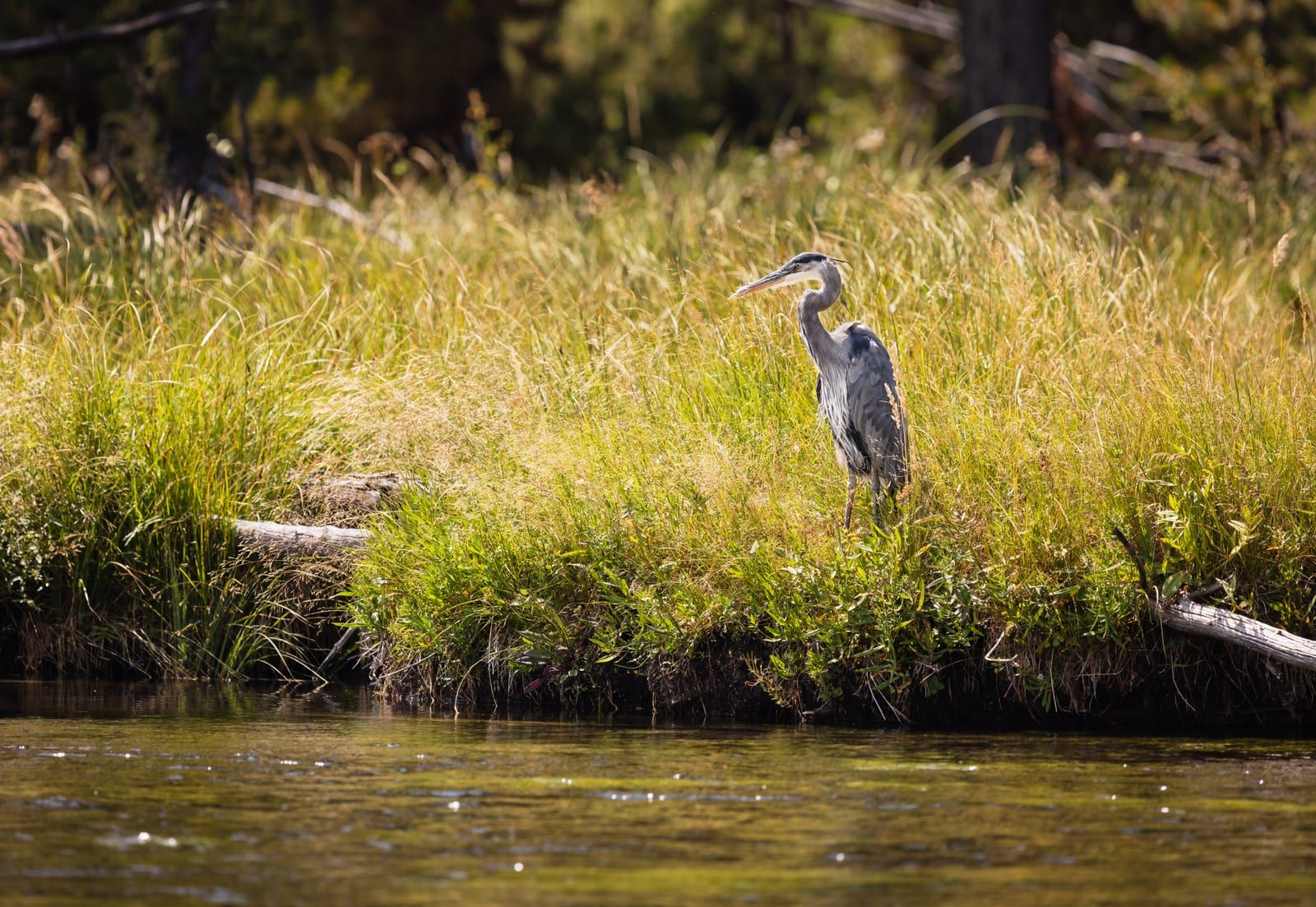
Great Blue Heron

Ardea herodias — Ardeidae

Native

Description & ID
PA's largest heron; tall, blue-gray, with a long neck, dagger bill, and black eyebrow plume. Flies with neck folded.
Habitat
rivers, lakes, marshes, and pond edges; nests colonially in tall trees ("rookeries").
County status
present and common; 20 research-grade iNaturalist records [S1]; a year-round resident (some withdraw in hard winters) and breeder [S2].
Conservation status
native; secure. (confirm against PNHP)

More on Wikipedia →

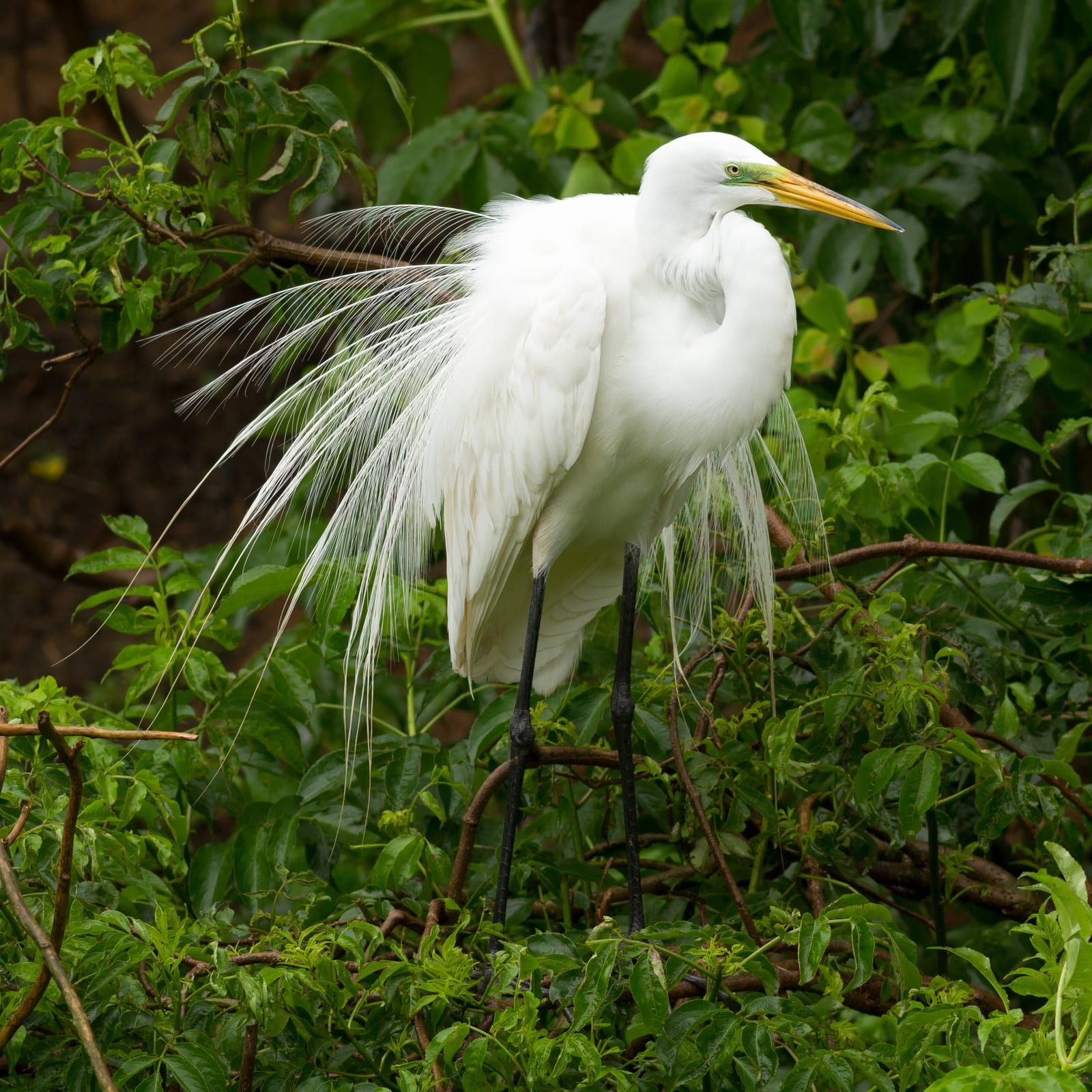
Great Egret

Ardea alba — Ardeidae

Native

Description & ID
large, all-white heron with a yellow bill and black legs and feet.
Habitat
marshes, pond and lake edges, and slow rivers.
County status
present; 7 research-grade iNaturalist records [S1]; an uncommon post-breeding visitor and migrant, mainly late summer [S2].
Conservation status
native; secure; recovered after plume-hunting era. (confirm against PNHP)

More on Wikipedia →

Green Heron

Butorides virescens — Ardeidae

Native

Description & ID
small, stocky, dark heron with a chestnut neck, greenish back, and yellow-orange legs; often crouches at the water's edge.
Habitat
wooded ponds, streams, and marsh edges with cover.
County status
present; 12 research-grade iNaturalist records [S1]; a fairly common breeder, spring through fall [S2].
Conservation status
native; secure. (confirm against PNHP)
Notes
a tool-user — sometimes drops bait to lure fish.

More on Wikipedia →

Black-crowned Night Heron

Nycticorax nycticorax — Ardeidae

Native

Description & ID
stocky, short-necked heron; adult with a black crown and back, gray wings, white underparts, and red eyes.
Habitat
wooded wetlands, marshes, and pond edges; most active at dusk.
County status
present; 1 research-grade iNaturalist record [S1]; NatureServe "imperiled" (Pennsylvania) [S1][S9]; a rare visitor [S2].
Conservation status
native; PA species of special concern as a breeder. (confirm against PNHP)

More on Wikipedia →

Western Cattle-Egret

Ardea ibis — Ardeidae

Native

Description & ID
small, compact white egret with a yellow bill and (in breeding plumage) buff plumes; associates with livestock and fields rather than water.
County status
present; 1 research-grade iNaturalist record [S1]; a rare visitor [S2]. An Old World species that colonized the Americas naturally in the 20th century.
Conservation status
native (self-introduced range expansion); not of concern. (confirm against PNHP)

More on Wikipedia →

American Bittern

Botaurus lentiginosus — Ardeidae

Native eBird county record

Description & ID
stocky, cryptic brown heron streaked below; points its bill skyward and freezes among reeds; gives a deep, pumping "oonk-a-lunk" call.
Habitat
large freshwater marshes with dense emergent vegetation.
County status
eBird-documented [S2]; a rare migrant and very rare, secretive breeder, easily overlooked in extensive marsh.
Conservation status
native; PA-listed Endangered; a high-priority wetland species dependent on large undisturbed marshes [S4][S5]. (confirm against PNHP)
Notes
one of the county's highest-priority wetland birds where suitable marsh exists.

More on Wikipedia →

Least Bittern

Botaurus exilis — Ardeidae

Native eBird county record

Description & ID
the smallest North American heron; buff and chestnut with contrasting blackish back and bold buff wing-patches; clambers through reeds rather than wading.
Habitat
dense cattail and emergent marsh with interspersed open water.
County status
eBird-documented [S2]; a rare and very local marsh breeder and migrant, exceptionally hard to detect.
Conservation status
native; a PA species of conservation concern tied to large, healthy marshes [S4][S5]. (confirm against PNHP)

More on Wikipedia →

Snowy Egret

Egretta thula — Ardeidae

Native eBird county record

Description & ID
medium all-white egret with a slender black bill, black legs, and bright yellow feet ("golden slippers"); active, dashing forager.
Habitat
marshes, pond edges, and shallow water.
County status
eBird-documented [S2]; a rare post-breeding visitor, mainly late summer, when southern herons disperse northward.
Conservation status
native; secure; recovered after the plume-hunting era. (confirm against PNHP)

More on Wikipedia →

Little Blue Heron

Egretta caerulea — Ardeidae

Native eBird county record

Description & ID
medium heron; adults slate-blue with a purplish head and a bicolored bill; immatures all-white (told from egrets by the dull gray-tipped bill and greenish legs), often patchy "calico" while molting.
Habitat
marshes, pond margins, and slow shallow water.
County status
eBird-documented [S2]; a rare post-breeding visitor, chiefly late summer.
Conservation status
native; secure. (confirm against PNHP)

More on Wikipedia →

Yellow-crowned Night Heron

Nyctanassa violacea — Ardeidae

Native eBird county record

Description & ID
stocky, gray heron with a black face crossed by bold white cheek-patches and a pale crown; heavier-billed and longer-legged than Black-crowned Night Heron.
Habitat
wooded swamps, wet woods, and pond edges; a crayfish specialist.
County status
eBird-documented [S2]; a rare visitor, mainly post-breeding.
Conservation status
native; PA-listed Endangered — among the county's highest-listed wetland birds [S4][S5]. (confirm against PNHP)

More on Wikipedia →

Glossy Ibis

Plegadis falcinellus — Threskiornithidae

Native eBird county record

Description & ID
medium wading bird with a long, downcurved bill and dark, iridescent maroon-and-green plumage; flies with neck outstretched in lines.
Habitat
marshes, flooded fields, and shallow wetlands.
County status
eBird-documented [S2]; a rare migrant, most likely in spring, when small numbers wander inland from coastal colonies.
Conservation status
native; secure. (confirm against PNHP)

More on Wikipedia →

Wood Stork

Mycteria americana — Ciconiidae

Native eBird county record

Description & ID
very large white wading bird with black flight feathers and a bare, dark, scaly head and heavy decurved bill; soars on broad wings.
Habitat
southern swamps and wetlands; far out of range here.
County status
eBird-documented [S2]; an exceptional vagrant, reflecting rare post-breeding wanderings of this southeastern species.
Conservation status
native; recovered from federally Endangered to Threatened in the U.S.; not part of the regular fauna. (confirm against PNHP)
Notes
one of the most remarkable records on the county list.

More on Wikipedia →

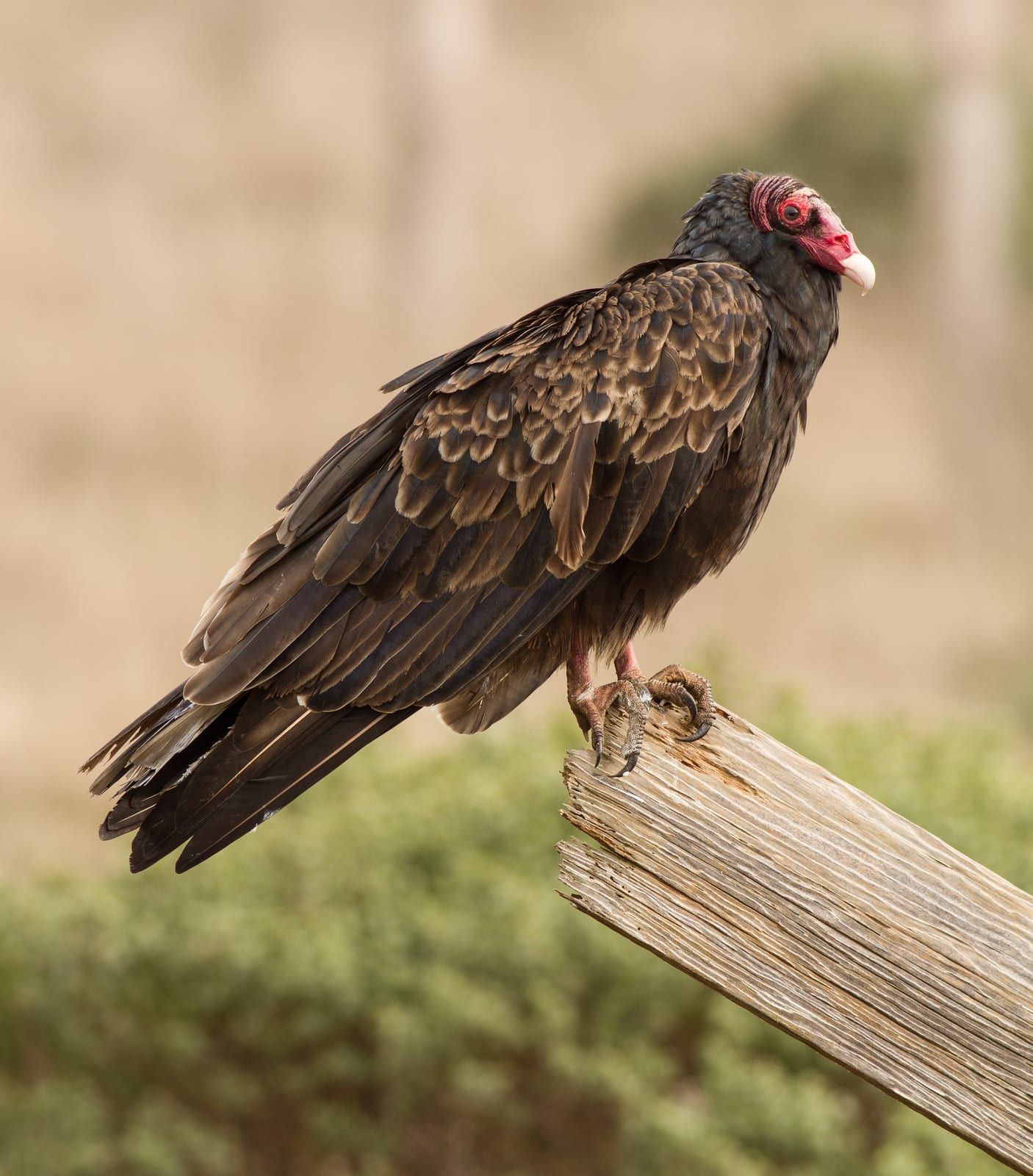
Turkey Vulture

Cathartes aura — Cathartidae

Native

Description & ID
large, dark soaring bird with a small red (adult) head, silvery flight-feather undersides, and a teetering, dihedral (V-shaped) glide.
Habitat
ubiquitous over ridges, farmland, and roads; roosts communally.
County status
present and abundant; 59 research-grade iNaturalist records — among the most-recorded county birds [S1]; year-round, most numerous in the warm months [S2].
Conservation status
native; secure. (confirm against PNHP)
Notes
finds carrion partly by smell, unusual among birds.

More on Wikipedia →

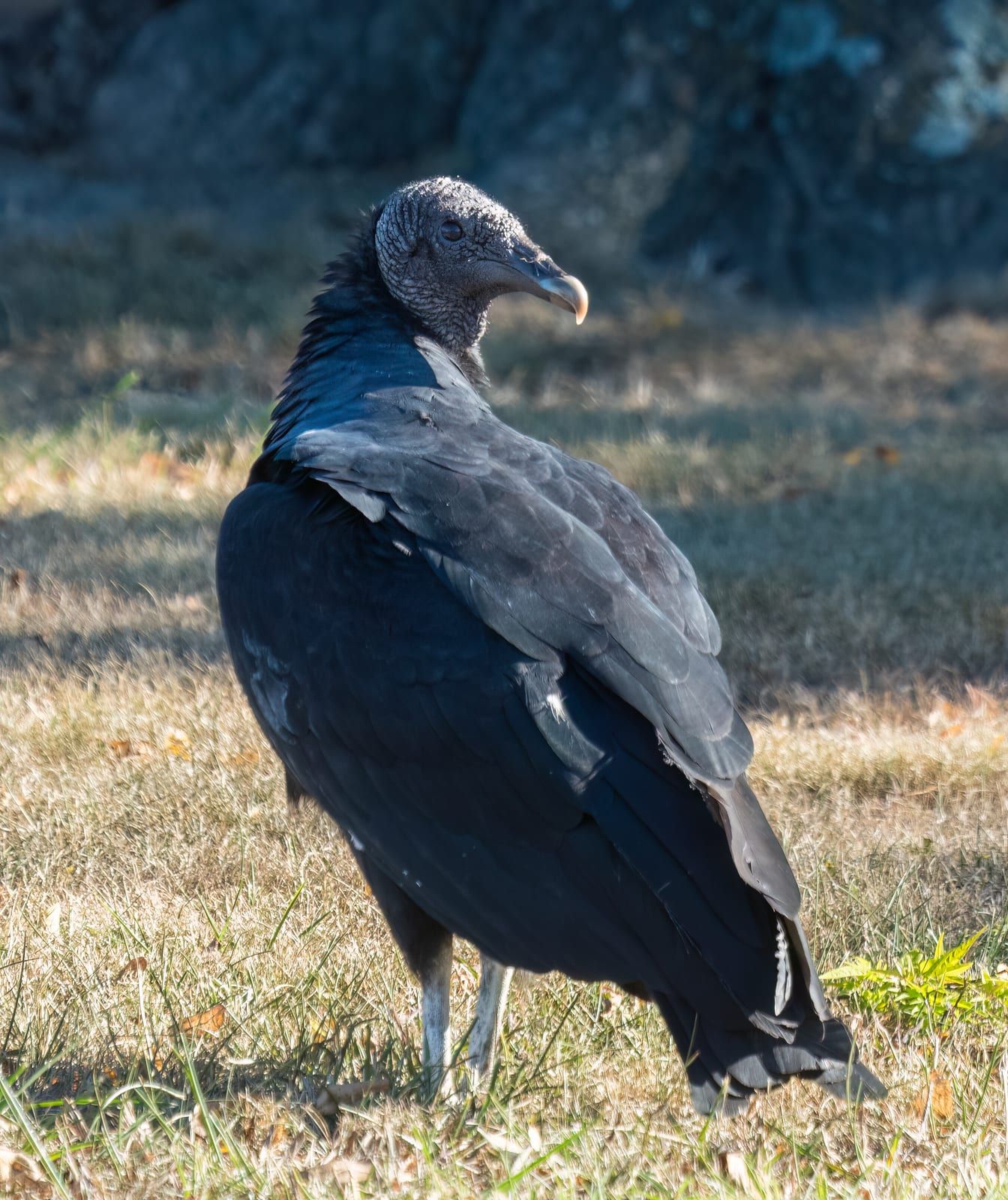
Black Vulture

Coragyps atratus — Cathartidae

Native

Description & ID
compact black vulture with a bare gray head, short tail, and white "stars" at the wingtips; flat-winged glide with quick flaps.
Habitat
farmland, roads, and ridges; roosts with Turkey Vultures.
County status
present and common; 34 research-grade iNaturalist records [S1]; a year-round resident expanding northward [S2].
Conservation status
native (range-expanded); secure. (confirm against PNHP)

More on Wikipedia →

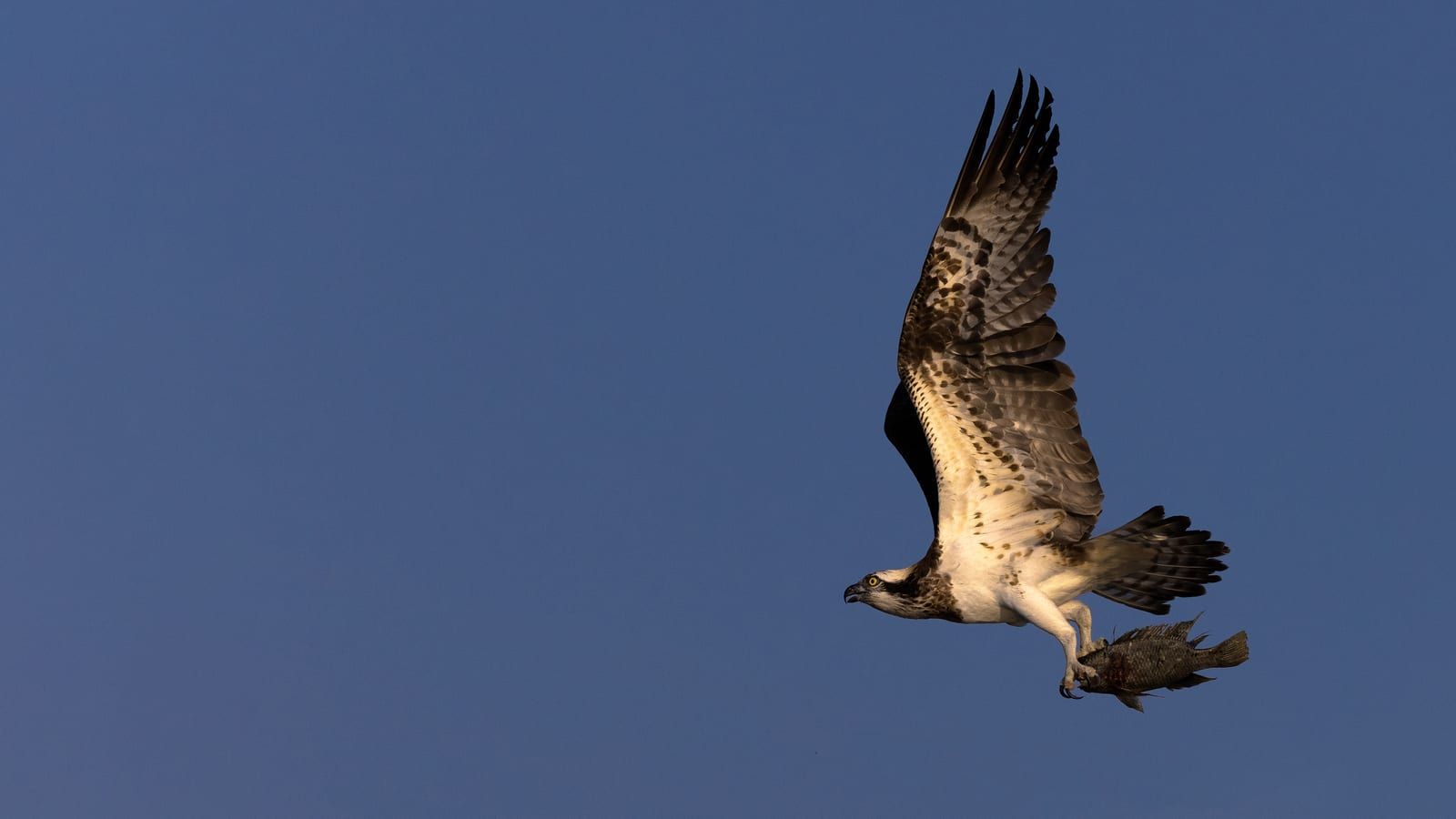
Osprey

Pandion haliaetus — Pandionidae

Native

Description & ID
large fish-eating raptor; white below with a dark eye-stripe, brown above, and crooked wings in flight. Hovers and plunges for fish.
Habitat
lakes, reservoirs, and large rivers with fish; nests on platforms, snags, and structures.
County status
present; 19 research-grade iNaturalist records [S1]; NatureServe "imperiled" (Pennsylvania) [S1][S9]; a migrant and uncommon nester [S2].
Conservation status
native; a PA conservation success delisted from threatened, though still S-rank "imperiled" as a breeder. (confirm against PNHP)

More on Wikipedia →

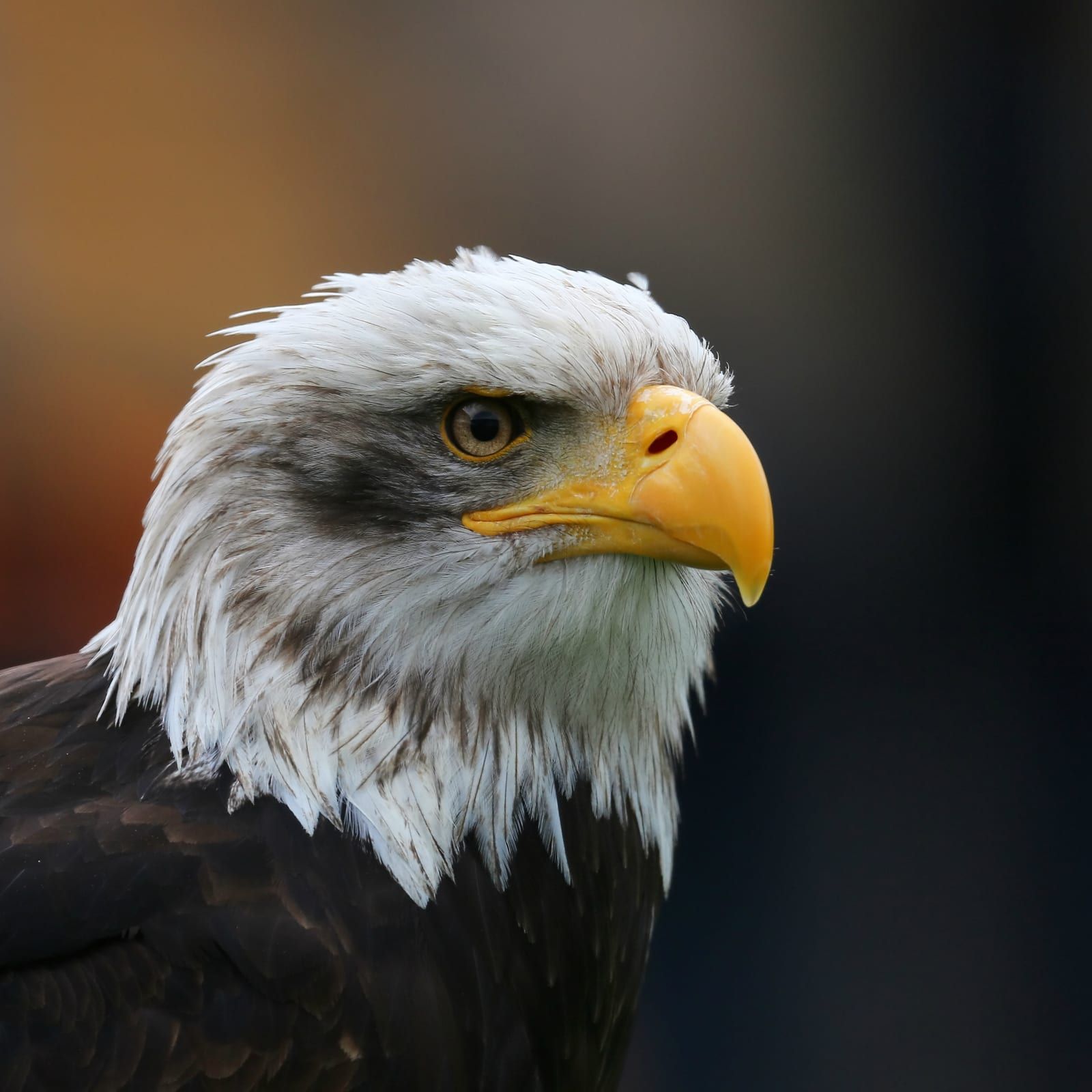
Bald Eagle

Haliaeetus leucocephalus — Accipitridae

Native

Description & ID
huge raptor; adults unmistakable with a white head and tail and a massive yellow bill; immatures mottled brown and white.
Habitat
rivers, lakes, and reservoirs; nests in large trees near water.
County status
present and increasing; 56 research-grade iNaturalist records — one of the most-recorded raptors [S1]; NatureServe "apparently secure" (Pennsylvania) [S1][S9]; a year-round resident and breeder [S2].
Conservation status
native; recovered dramatically after the DDT era; federally protected under the Bald and Golden Eagle Protection Act. (confirm against PNHP)
Notes
a flagship recovery species; now nests in multiple county watersheds.

More on Wikipedia →

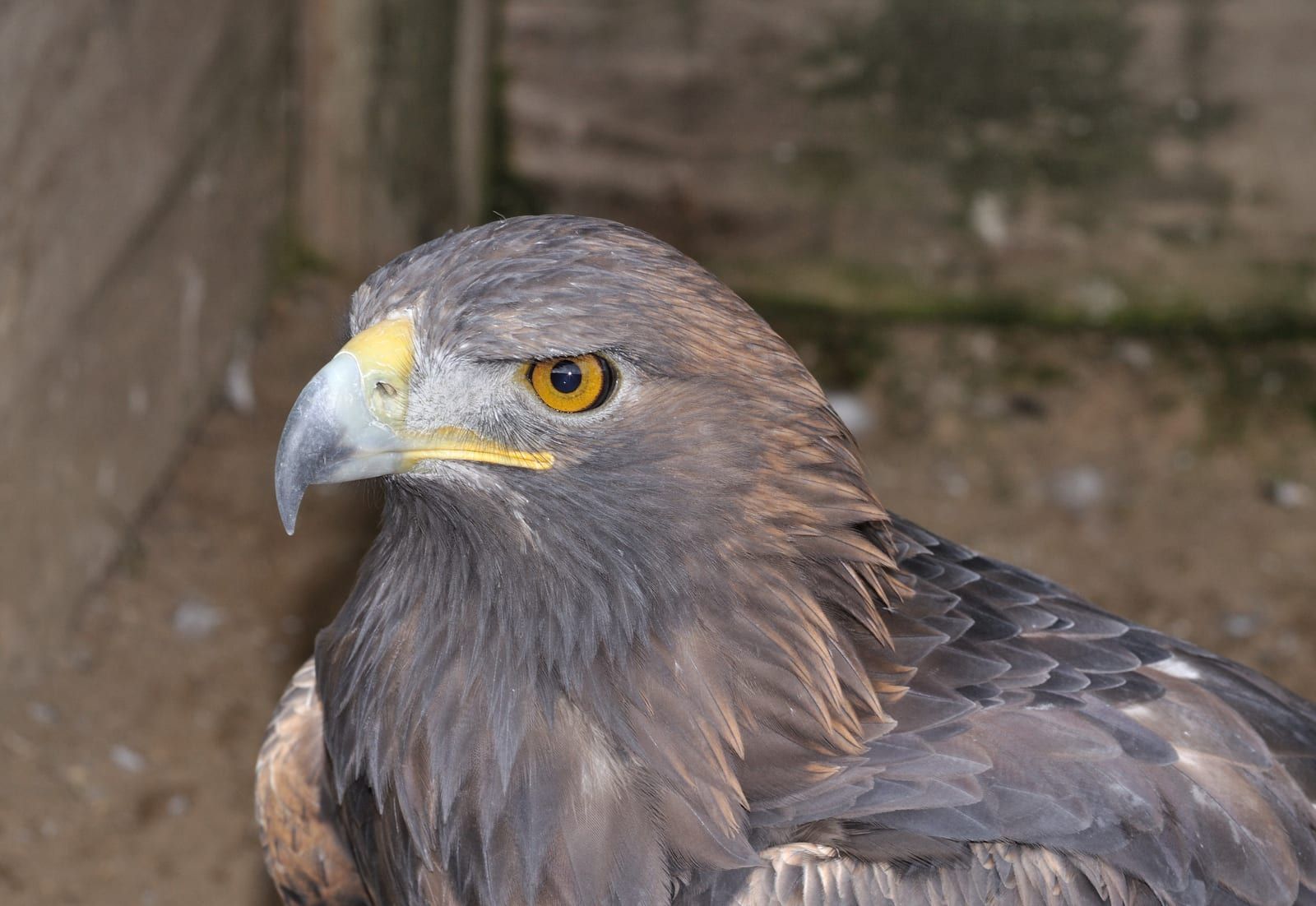
Golden Eagle

Aquila chrysaetos — Accipitridae

Native

Description & ID
huge dark eagle with a golden nape; immatures show white wing-patches and a white tail base. Soars on flat or slightly raised wings.
Habitat
migrates along forested ridges; favors remote terrain.
County status
present; 11 research-grade iNaturalist records [S1]; a regular but uncommon migrant along the ridges, mainly late fall [S2]. The eastern population winters in the central Appalachians.
Conservation status
native; secure continentally but a regional conservation focus; protected federally. (confirm against PNHP)

More on Wikipedia →

Northern Harrier

Circus hudsonius — Accipitridae

Native

Description & ID
slim, long-winged, long-tailed hawk with a white rump and an owl-like facial disk; courses low over open ground.
Habitat
marshes, grasslands, reclaimed strip-mine barrens, and large fields.
County status
present; 7 research-grade iNaturalist records [S1]; PA-listed Threatened (NatureServe S3B,S4N) [S1][S9]; a migrant and uncommon breeder on open lands [S2].
Conservation status
native; Pennsylvania Threatened as a breeder; dependent on large open grassland/wetland habitat. (confirm against PNHP)
Notes
one of the county's higher-priority conservation birds where it breeds on reclaimed anthracite barrens.

More on Wikipedia →

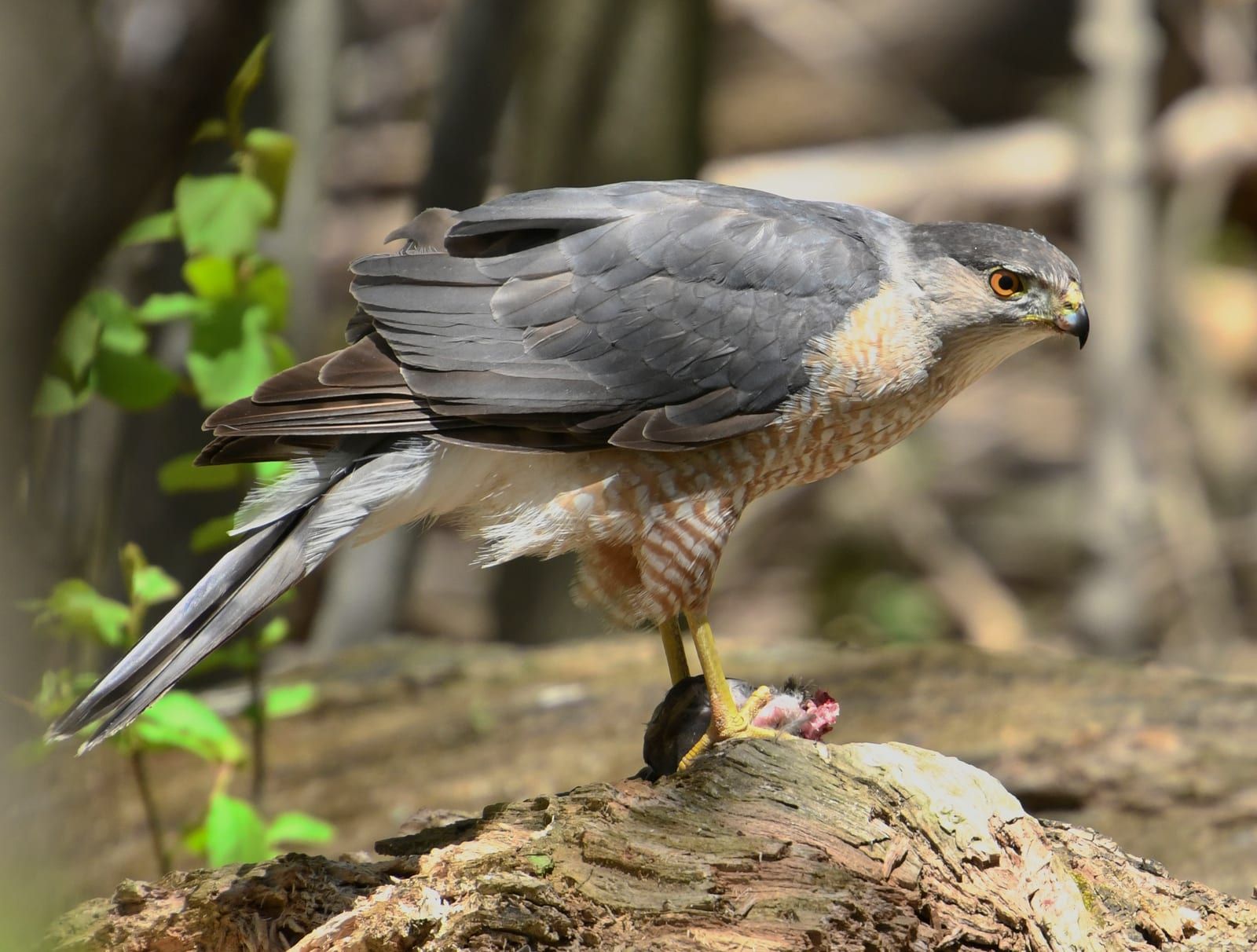
Sharp-shinned Hawk

Accipiter striatus — Accipitridae

Native

Description & ID
small, slim accipiter with short rounded wings, a long square-tipped tail, and rapid flap-and-glide flight; preys on songbirds.
Habitat
forests and edges; common at feeders in winter.
County status
present; 26 research-grade iNaturalist records [S1]; a common migrant (a signature ridge species) and winter visitor [S2].
Conservation status
native; secure. (confirm against PNHP)

More on Wikipedia →

Cooper's Hawk

Astur cooperii — Accipitridae

Native

Description & ID
medium accipiter, larger than Sharp-shinned, with a rounded tail tip and a more capped head; adults blue-gray above with rusty barring below.
Habitat
woodlands, suburbs, and edges; hunts birds at feeders.
County status
present and common; 20 research-grade iNaturalist records [S1]; a year-round resident and migrant [S2].
Conservation status
native; secure; has adapted well to suburban areas. (confirm against PNHP)

More on Wikipedia →

American Goshawk

Astur atricapillus — Accipitridae

Native

Description & ID
large, powerful accipiter; adults gray with a bold white eyebrow and a dark cap; immatures heavily streaked.
Habitat
extensive mature forest; rare and reclusive.
County status
present; 1 research-grade iNaturalist record [S1]; PA-listed Endangered (NatureServe "endangered," Pennsylvania) [S1][S9]; a rare migrant and very rare breeder at the southern edge of its range [S2].
Conservation status
native; Pennsylvania Endangered — the county's highest-listed raptor. (confirm against PNHP)
Notes
a top conservation-priority bird; breeding records warrant PNHP documentation.

More on Wikipedia →

Red-shouldered Hawk

Buteo lineatus — Accipitridae

Native

Description & ID
medium buteo with rusty shoulders and underparts, bold black-and-white tail bands, and translucent wing "crescents" in flight.
Habitat
moist, mature bottomland and riparian forest.
County status
present; 15 research-grade iNaturalist records [S1]; an uncommon breeder and migrant [S2].
Conservation status
native; secure. (confirm against PNHP)

More on Wikipedia →

Broad-winged Hawk

Buteo platypterus — Accipitridae

Native

Description & ID
small, compact buteo with broad black-and-white tail bands and pointed wings; forms huge migrating "kettles."
Habitat
interior forest in the breeding season; ridges on migration.
County status
present; 30 research-grade iNaturalist records [S1]; a common breeder and a spectacular September migrant along the ridges [S2].
Conservation status
native; secure. (confirm against PNHP)
Notes
the classic September ridge migrant in the thousands at nearby Hawk Mountain.

More on Wikipedia →

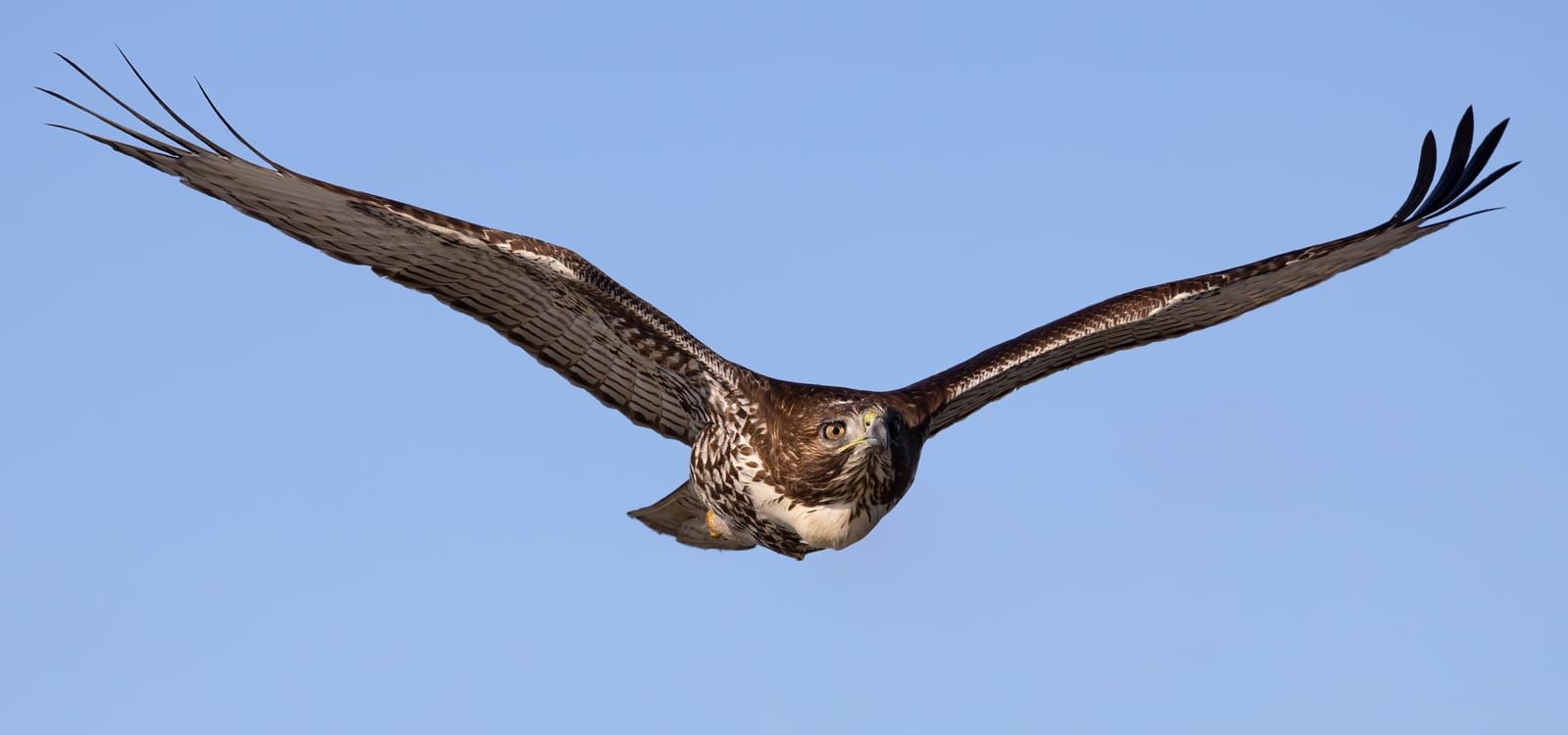
Red-tailed Hawk

Buteo jamaicensis — Accipitridae

Native

Description & ID
PA's most familiar large buteo; broad-winged, with a brick-red tail (adults), a dark belly band, and a pale chest.
Habitat
open country, woodland edges, farmland, and roadsides; hunts from perches.
County status
present and abundant; 61 research-grade iNaturalist records — the most-recorded bird in the county's research-grade set [S1]; a year-round resident, breeder, and migrant [S2].
Conservation status
native; secure. (confirm against PNHP)

More on Wikipedia →

Swallow-tailed Kite

Elanoides forficatus — Accipitridae

Native eBird county record

Description & ID
unmistakable, graceful raptor with crisp black-and-white plumage and a deeply forked black tail; soars and wheels buoyantly, snatching prey on the wing.
Habitat
southern swamps and woodlands; here only as a wandering stray over open country and ridges.
County status
eBird-documented [S2]; an exceptional vagrant, reflecting rare spring overshoots of this southeastern kite.
Conservation status
native; secure in its southern range; a notable rarity in PA. (confirm against PNHP)

More on Wikipedia →

Mississippi Kite

Ictinia mississippiensis — Accipitridae

Native eBird county record

Description & ID
small, slim, falcon-shaped raptor; adults pale gray with a whitish head and dark tail; agile aerial forager on insects.
Habitat
wooded and edge habitats; observed over towns and ridges on migration.
County status
eBird-documented [S2]; a rare migrant, with sightings increasing as this species expands northward and is increasingly noted at PA hawkwatches.
Conservation status
native; secure and increasing. (confirm against PNHP)

More on Wikipedia →

Rough-legged Hawk

Buteo lagopus — Accipitridae

Native eBird county record

Description & ID
large buteo with long wings, feathered legs, a dark belly band and dark "wrists," and a white tail base with a dark band; often hovers over open ground.
Habitat
open farmland, grasslands, and reclaimed barrens in winter.
County status
eBird-documented [S2]; an uncommon winter visitor from the Arctic, numbers varying year to year, favoring extensive open country.
Conservation status
native; secure. (confirm against PNHP)
Notes
one of the few buteos that habitually hovers while hunting.

More on Wikipedia →

Swainson's Hawk

Buteo swainsoni — Accipitridae

Native eBird county record

Description & ID
slim buteo with long pointed wings held in a slight dihedral; light-morph birds show a dark breast band and two-toned underwings; a western species.
Habitat
open country; here a rare ridge migrant.
County status
eBird-documented [S2]; a rare migrant along the ridges, mainly in fall among other migrating raptors.
Conservation status
native; secure; a long-distance migrant to South America. (confirm against PNHP)

More on Wikipedia →

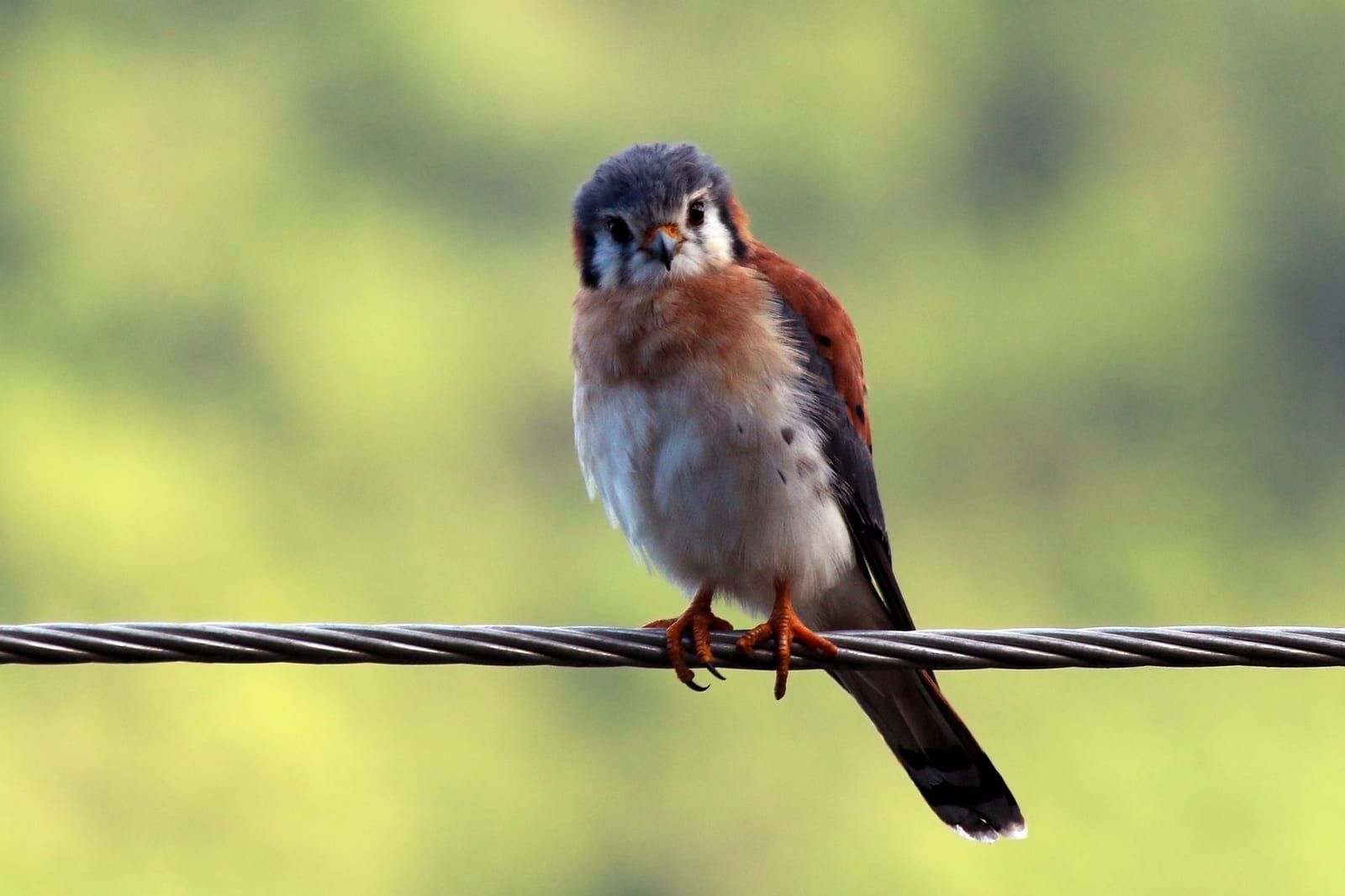
American Kestrel

Falco sparverius — Falconidae

Native

Description & ID
North America's smallest falcon; rusty back and tail, blue-gray wings (male), and two bold black facial stripes. Hovers over fields.
Habitat
open farmland, meadows, and roadsides; nests in cavities and boxes.
County status
present; 15 research-grade iNaturalist records [S1]; a year-round resident and breeder, but declining [S2].
Conservation status
native; a regional conservation concern — steep declines tied to loss of grassland/farmland nesting habitat [S5]. (confirm against PNHP)
Notes
nest-box programs target this species' recovery.

More on Wikipedia →

Merlin

Falco columbarius — Falconidae

Native

Description & ID
small, dark, dashing falcon, larger and heavier than a kestrel, with a weakly marked face and powerful direct flight.
County status
present; 7 research-grade iNaturalist records [S1]; NatureServe "apparently secure" (United States) [S1][S9]; an uncommon migrant, increasingly wintering [S2].
Conservation status
native; expanding as a breeder in PA. (confirm against PNHP)

More on Wikipedia →

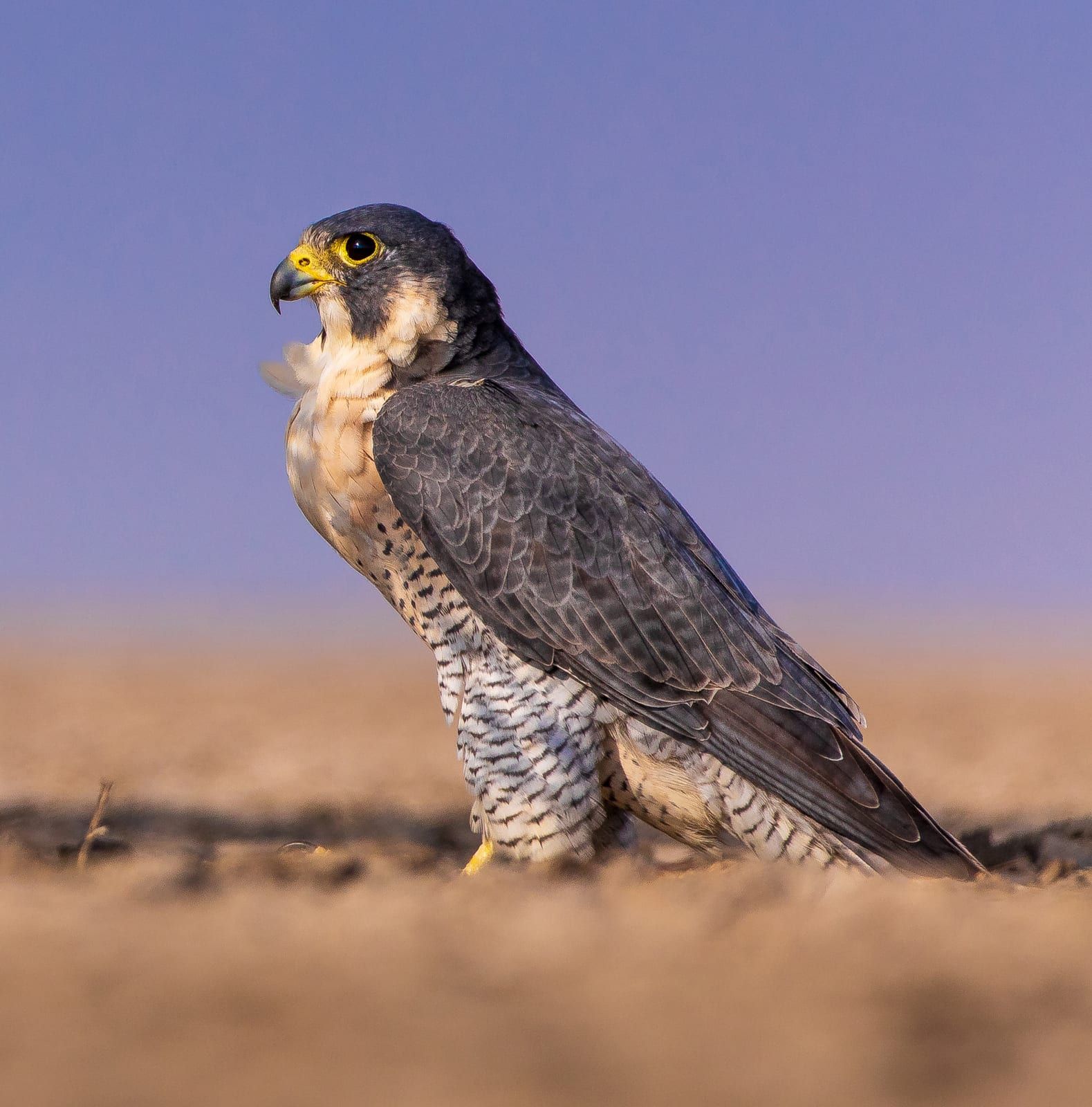
Peregrine Falcon

Falco peregrinus — Falconidae

Native

Description & ID
powerful, broad-shouldered falcon with a dark "helmet"; the fastest animal in a stoop.
Habitat
cliffs and (increasingly) bridges and structures; hunts over open areas.
County status
present; 3 research-grade iNaturalist records [S1]; NatureServe "apparently secure" (United States) [S1][S9]; an uncommon migrant, recovering as a PA breeder [S2].
Conservation status
native; a DDT-era recovery species, removed from the federal list but still PA-monitored. (confirm against PNHP)

More on Wikipedia →

Gyrfalcon

Falco rusticolus — Falconidae

Native eBird county record

Description & ID
the largest falcon, heavy-bodied with broad-based wings; plumage ranges from gray to dark to nearly white; an Arctic species.
Habitat
open country and shorelines in winter; an extreme rarity at this latitude.
County status
eBird-documented [S2]; an exceptional winter vagrant, with PA records confined to rare southward irruptions of this high-Arctic falcon.
Conservation status
native; secure in its Arctic range; among the most remarkable raptor records on the county list. (confirm against PNHP)

More on Wikipedia →

Virginia Rail

Rallus limicola — Rallidae

Native

Description & ID
small, secretive marsh bird with a long slightly downcurved reddish bill, gray cheeks, and rusty underparts.
Habitat
freshwater marshes with dense cattails and sedges.
County status
present; 2 research-grade iNaturalist records [S1]; NatureServe "vulnerable" (Pennsylvania) [S1][S9]; a secretive, under-recorded breeder/migrant [S2].
Conservation status
native; a wetland-dependent species of concern. (confirm against PNHP)

More on Wikipedia →

American Coot

Fulica americana — Rallidae

Native

Description & ID
slate-gray, duck-like waterbird with a white bill and lobed (not webbed) toes; pumps its head while swimming.
Habitat
marshy ponds, lakes, and reservoirs.
County status
present; 2 research-grade iNaturalist records [S1]; NatureServe "vulnerable" (Pennsylvania) [S1][S9]; an uncommon migrant and winter visitor [S2].
Conservation status
native; common as a migrant despite the PA breeding S-rank. (confirm against PNHP)

More on Wikipedia →

Common Gallinule

Gallinula galeata — Rallidae

Native eBird county record

Description & ID
chicken-like marsh bird, slate-gray with a brownish back, a white flank-stripe, white undertail, and a bright red frontal shield and yellow-tipped bill.
Habitat
freshwater marshes and pond edges with dense emergent vegetation and open water.
County status
eBird-documented [S2]; a rare migrant and very local breeder in suitable marsh, secretive and easily missed.
Conservation status
native; a wetland-dependent species of regional concern as marsh habitat declines. (confirm against PNHP)

More on Wikipedia →

Sora

Porzana carolina — Rallidae

Native eBird county record

Description & ID
small, plump rail with a short yellow bill, gray face and breast, a black face-and-throat patch, and barred flanks; gives a descending whinny and a sharp "ker-wee."
Habitat
freshwater marshes with cattails, sedges, and shallow water.
County status
eBird-documented [S2]; an uncommon, secretive migrant and local breeder, far more often heard than seen.
Conservation status
native; a marsh-dependent species of regional conservation concern; the most widespread North American rail. (confirm against PNHP)

More on Wikipedia →

Sandhill Crane

Antigone canadensis — Gruidae

Native

Description & ID
very large gray crane with a red crown and a bustle of feathers over the rump; flies with neck outstretched (unlike herons).
County status
present; 1 research-grade iNaturalist record [S1]; a rare but increasing visitor as the species expands eastward in PA [S2].
Conservation status
native; secure and increasing. (confirm against PNHP)

More on Wikipedia →

Killdeer

Charadrius vociferus — Charadriidae

Native

Description & ID
large plover with two black breast bands, a rusty rump, and a loud "kill-deer" call; performs a broken-wing distraction display.
Habitat
gravel lots, fields, shorelines, and reclaimed barrens; nests on bare ground.
County status
present and common; 17 research-grade iNaturalist records [S1]; NatureServe "near threatened" [S1][S9]; a common breeder and migrant [S2].
Conservation status
native; secure locally though declining continentally. (confirm against PNHP)

More on Wikipedia →

Semipalmated Plover

Charadrius semipalmatus — Charadriidae

Native

Description & ID
small brown plover with a single dark breast band and an orange bill base; a miniature Killdeer with one band.
County status
present; 3 research-grade iNaturalist records [S1]; an uncommon migrant on mudflats and shorelines [S2].
Conservation status
native; secure. (confirm against PNHP)

More on Wikipedia →

American Golden-Plover

Pluvialis dominica — Charadriidae

Native

Description & ID
sleek plover; nonbreeding birds golden-spangled gray-brown with a bold pale eyebrow; long-winged.
County status
present; 1 research-grade iNaturalist record [S1]; a rare migrant on sod farms and fields, mainly fall [S2].
Conservation status
native; secure (long-distance migrant). (confirm against PNHP)

More on Wikipedia →

Spotted Sandpiper

Actitis macularius — Scolopacidae

Native

Description & ID
small sandpiper with bold dark breast-spots in breeding plumage; teeters constantly and flies with stiff, fluttering wingbeats.
Habitat
stream banks, lake and pond margins, and gravelly shores.
County status
present; 10 research-grade iNaturalist records [S1]; a common breeder along waterways [S2].
Conservation status
native; secure. (confirm against PNHP)

More on Wikipedia →

Solitary Sandpiper

Tringa solitaria — Scolopacidae

Native

Description & ID
dark-backed sandpiper with a bold white eye-ring and dark, barred tail-sides; bobs and flushes singly.
County status
present; 3 research-grade iNaturalist records [S1]; an uncommon migrant at woodland pools and pond edges [S2].
Conservation status
native; secure. (confirm against PNHP)

More on Wikipedia →

Greater Yellowlegs

Tringa melanoleuca — Scolopacidae

Native

Description & ID
tall, gray-streaked sandpiper with long yellow legs and a slightly upturned bill; larger than Lesser Yellowlegs.
County status
present; 4 research-grade iNaturalist records [S1]; NatureServe "near threatened" [S1][S9]; an uncommon migrant on mudflats and flooded fields [S2].
Conservation status
native; secure. (confirm against PNHP)

More on Wikipedia →

Lesser Yellowlegs

Tringa flavipes — Scolopacidae

Native

Description & ID
slimmer yellowlegs with a straight, needle-thin bill about the length of the head.
County status
present; 3 research-grade iNaturalist records [S1]; NatureServe "vulnerable" [S1][S9]; an uncommon migrant [S2].
Conservation status
native; declining continentally; a shorebird conservation focus. (confirm against PNHP)

More on Wikipedia →

Least Sandpiper

Calidris minutilla — Scolopacidae

Native

Description & ID
the world's smallest sandpiper; brown-backed with yellow-green legs and a fine drooped bill.
County status
present; 4 research-grade iNaturalist records [S1]; NatureServe "near threatened" [S1][S9]; a regular migrant on mudflats [S2].
Conservation status
native; secure. (confirm against PNHP)

More on Wikipedia →

Pectoral Sandpiper

Calidris melanotos — Scolopacidae

Native

Description & ID
medium sandpiper with a sharply demarcated streaked breast ("bib") and yellowish legs.
County status
present; 1 research-grade iNaturalist record [S1]; an uncommon migrant on flooded fields and mudflats [S2].
Conservation status
native; secure. (confirm against PNHP)

More on Wikipedia →

White-rumped Sandpiper

Calidris fuscicollis — Scolopacidae

Native

Description & ID
small sandpiper with long wings extending past the tail and a white rump visible in flight.
County status
present; 1 research-grade iNaturalist record [S1]; NatureServe "vulnerable" [S1][S9]; a rare migrant, mainly late spring [S2].
Conservation status
native; long-distance migrant. (confirm against PNHP)

More on Wikipedia →

American Woodcock

Scolopax minor — Scolopacidae

Native

Description & ID
plump, cryptic woodland shorebird with a very long bill, large eyes set high, and dead-leaf camouflage; males perform spiraling "sky-dance" displays.
Habitat
moist young forests, shrubby old fields, and thickets.
County status
present; 1 research-grade iNaturalist record [S1]; an uncommon but widespread breeder, best detected by spring display [S2].
Conservation status
native; an early-successional game bird of regional conservation interest as shrubland habitat declines [S5]. (confirm against PNHP)

More on Wikipedia →

Wilson's Snipe

Gallinago delicata — Scolopacidae

Native

Description & ID
stocky, cryptically striped shorebird with a very long bill; flushes in a zigzag with a rasping call.
Habitat
wet meadows, marsh edges, and flooded fields.
County status
present; 2 research-grade iNaturalist records [S1]; NatureServe "vulnerable" (Pennsylvania) [S1][S9]; an uncommon migrant and rare breeder [S2].
Conservation status
native; secure as a migrant. (confirm against PNHP)

More on Wikipedia →

Bonaparte's Gull

Chroicocephalus philadelphia — Laridae

Native

Description & ID
small, tern-like gull with a black bill, pink legs, and a white leading wing-wedge; breeding adults have a black hood.
County status
present; 3 research-grade iNaturalist records [S1]; an uncommon migrant on reservoirs and lakes [S2].
Conservation status
native; secure. (confirm against PNHP)

More on Wikipedia →

Ring-billed Gull

Larus delawarensis — Laridae

Native

Description & ID
medium gull with a yellow bill bearing a black ring, yellow legs, and a pale gray back.
Habitat
lakes, rivers, parking lots, and landfills.
County status
present and common; 8 research-grade iNaturalist records [S1]; a common migrant and winter visitor [S2].
Conservation status
native; secure. (confirm against PNHP)

More on Wikipedia →

American Herring Gull

Larus smithsonianus — Laridae

Native

Description & ID
large gull with pink legs, a pale gray back, and a heavy yellow bill with a red gonys spot; takes four years to reach adult plumage.
County status
present; 1 research-grade iNaturalist record [S1]; an uncommon migrant and winter visitor on larger waters [S2].
Conservation status
native; secure. (confirm against PNHP)

More on Wikipedia →

Black-bellied Plover

Pluvialis squatarola — Charadriidae

Native eBird county record

Description & ID
the largest North American plover, chunky with a stout black bill; breeding birds have a jet-black face and belly framed in white; nonbreeding birds gray-spangled with black "wingpits" in flight.
Habitat
mudflats, flooded fields, and reclaimed barrens on migration.
County status
eBird-documented [S2]; an uncommon migrant, mainly fall, at flooded fields and impoundments.
Conservation status
native; secure. (confirm against PNHP)

More on Wikipedia →

Ruddy Turnstone

Arenaria interpres — Scolopacidae

Native eBird county record

Description & ID
stout, short-legged shorebird with a harlequin black-and-rusty back pattern (breeding), orange legs, and a slightly upturned bill used to flip debris.
Habitat
shorelines and mudflats; primarily a coastal migrant.
County status
eBird-documented [S2]; a rare migrant inland, mainly late spring and fall on open shorelines.
Conservation status
native; secure. (confirm against PNHP)

More on Wikipedia →

Sanderling

Calidris alba — Scolopacidae

Native eBird county record

Description & ID
pale, active sandpiper, very white in nonbreeding plumage with a black shoulder-mark; lacks a hind toe; famously chases waves on beaches.
Habitat
sandy and gravel shorelines and mudflats; chiefly coastal.
County status
eBird-documented [S2]; a rare migrant inland on reservoir shorelines, mainly fall.
Conservation status
native; secure. (confirm against PNHP)

More on Wikipedia →

Dunlin

Calidris alpina — Scolopacidae

Native eBird county record

Description & ID
medium sandpiper with a long, drooped bill; breeding birds with a rusty back and bold black belly-patch; nonbreeding birds plain gray-brown.
Habitat
mudflats, flooded fields, and shorelines on migration.
County status
eBird-documented [S2]; an uncommon migrant, mainly late fall, often the latest-lingering small sandpiper.
Conservation status
native; secure. (confirm against PNHP)

More on Wikipedia →

Baird's Sandpiper

Calidris bairdii — Scolopacidae

Native eBird county record

Description & ID
medium peep with long wings extending past the tail, a buffy scaly back, and a straight black bill; an elegant, attenuated shape.
Habitat
drier edges of mudflats, sod farms, and reclaimed barrens.
County status
eBird-documented [S2]; a rare fall migrant, chiefly juveniles in late summer and early fall.
Conservation status
native; secure. (confirm against PNHP)

More on Wikipedia →

Buff-breasted Sandpiper

Calidris subruficollis — Scolopacidae

Native eBird county record

Description & ID
slim, small-headed sandpiper with a plain buff face and breast, a short bill, and yellow legs; favors short-grass habitat over mud.
Habitat
sod farms, dry fields, and reclaimed grasslands on migration.
County status
eBird-documented [S2]; a rare fall migrant in short-grass habitat, a sought-after species.
Conservation status
native; a grassland-migrant shorebird of conservation interest, with a small global population. (confirm against PNHP)

More on Wikipedia →

Stilt Sandpiper

Calidris himantopus — Scolopacidae

Native eBird county record

Description & ID
slim, long-legged sandpiper with a long, slightly drooped bill; feeds with a sewing-machine motion in deeper water; breeding birds rusty-cheeked and barred below.
Habitat
flooded fields, mudflats, and shallow impoundments.
County status
eBird-documented [S2]; a rare migrant, mainly fall, at productive wetlands and flooded fields.
Conservation status
native; secure. (confirm against PNHP)

More on Wikipedia →

Western Sandpiper

Calidris mauri — Scolopacidae

Native eBird county record

Description & ID
small peep, similar to Semipalmated but with a longer, slightly drooped bill and rustier scapulars in breeding plumage; black legs.
Habitat
mudflats and flooded fields on migration.
County status
eBird-documented [S2]; a rare migrant, mainly fall, requiring care to separate from Semipalmated Sandpiper.
Conservation status
native; secure. (confirm against PNHP)

More on Wikipedia →

Semipalmated Sandpiper

Calidris pusilla — Scolopacidae

Native eBird county record

Description & ID
small, gray-brown peep with a short, straight blunt-tipped bill, black legs, and partial webbing between the toes.
Habitat
mudflats, flooded fields, and shorelines on migration.
County status
eBird-documented [S2]; an uncommon migrant, the default small "peep" at flooded fields, mainly spring and fall.
Conservation status
native; a long-distance migrant of shorebird conservation interest. (confirm against PNHP)

More on Wikipedia →

Short-billed Dowitcher

Limnodromus griseus — Scolopacidae

Native eBird county record

Description & ID
chunky, snipe-like shorebird with a very long straight bill probed in a sewing-machine motion; rusty below in breeding plumage; a white wedge up the back in flight.
Habitat
mudflats, flooded fields, and shallow impoundments.
County status
eBird-documented [S2]; an uncommon migrant, mainly fall; separated from the rarer Long-billed Dowitcher chiefly by call.
Conservation status
native; secure. (confirm against PNHP)

More on Wikipedia →

Wilson's Phalarope

Phalaropus tricolor — Scolopacidae

Native eBird county record

Description & ID
slim, needle-billed shorebird that often swims and spins to stir up food; breeding females boldly patterned (brighter than males, a sex-role reversal).
Habitat
shallow wetlands, flooded fields, and pond margins.
County status
eBird-documented [S2]; a rare migrant, mainly in fall, on shallow water.
Conservation status
native; secure; the most terrestrial of the phalaropes. (confirm against PNHP)

More on Wikipedia →

American Avocet

Recurvirostra americana — Recurvirostridae

Native eBird county record

Description & ID
large, elegant shorebird with a long, thin upturned bill, black-and-white wings, long blue-gray legs, and a rusty head and neck in breeding plumage.
Habitat
shallow open wetlands and impoundments; a western species.
County status
eBird-documented [S2]; a vagrant, with PA records confined to rare wandering individuals at productive shallow wetlands.
Conservation status
native; secure in its western range; a notable county rarity. (confirm against PNHP)

More on Wikipedia →

Caspian Tern

Hydroprogne caspia — Laridae

Native eBird county record

Description & ID
the largest tern, gull-sized, with a massive blood-red bill, a black cap, and pale gray wings; a harsh, low call.
Habitat
reservoirs, large rivers, and lakes on migration.
County status
eBird-documented [S2]; an uncommon migrant on larger open waters, spring and fall.
Conservation status
native; secure. (confirm against PNHP)

More on Wikipedia →

Common Tern

Sterna hirundo — Laridae

Native eBird county record

Description & ID
slender, graceful tern with a black cap, a red-orange black-tipped bill, and a deeply forked tail; pale gray above.
Habitat
reservoirs, lakes, and large rivers on migration.
County status
eBird-documented [S2]; an uncommon migrant on open water, mainly fall.
Conservation status
native; a PA-monitored species as a breeder (it does not breed in the county); secure as a migrant. (confirm against PNHP)

More on Wikipedia →

Black Tern

Chlidonias niger — Laridae

Native eBird county record

Description & ID
small marsh tern; breeding birds with a black head and body and gray wings; nonbreeding birds pale below with a dark ear-patch; buoyant, dipping flight.
Habitat
marshes, reservoirs, and lakes on migration.
County status
eBird-documented [S2]; a rare migrant on open water and marsh, mainly late summer and fall.
Conservation status
native; a marsh-nesting tern that has declined sharply; a species of conservation concern. (confirm against PNHP)

More on Wikipedia →

Sabine's Gull

Xema sabini — Laridae

Native eBird county record

Description & ID
small, elegant gull with a striking tricolored upperwing pattern (gray, white, and black triangles), a forked tail, and a black-tipped yellow bill; pelagic.
Habitat
open water; an oceanic migrant only forced inland by weather.
County status
eBird-documented [S2]; a vagrant, with inland PA records almost always storm-driven, mainly fall.
Conservation status
native; secure; a high-Arctic breeder and ocean migrant. (confirm against PNHP)

More on Wikipedia →

Great Black-backed Gull

Larus marinus — Laridae

Native eBird county record

Description & ID
the largest gull, massive, with a slate-black back, pink legs, and a heavy yellow bill with a red spot; takes four years to mature.
Habitat
larger rivers, reservoirs, and landfills.
County status
eBird-documented [S2]; an uncommon migrant and winter visitor on larger open waters.
Conservation status
native; secure. (confirm against PNHP)

More on Wikipedia →

Lesser Black-backed Gull

Larus fuscus — Laridae

Native eBird county record

Description & ID
medium-large gull with a dark slate-gray back, yellow legs, and a yellow bill; intermediate in size between Herring and Great Black-backed Gulls.
Habitat
larger rivers, reservoirs, and landfills.
County status
eBird-documented [S2]; an uncommon and increasing migrant and winter visitor, reflecting this Old World gull's growing North American presence.
Conservation status
native to the Old World; an increasingly regular non-breeding visitor to eastern North America. (confirm against PNHP)

More on Wikipedia →

Rock Pigeon

Columba livia — Columbidae

Introduced

Description & ID
the familiar city pigeon; highly variable plumage, classically blue-gray with two black wingbars and an iridescent neck.
Habitat
towns, farms, bridges, and quarries.
County status
present; 4 research-grade iNaturalist records [S1]; a common resident [S2]. Introduced from Eurasia [S1].
Conservation status
non-native; secure. (confirm against PNHP)

More on Wikipedia →

Mourning Dove

Zenaida macroura — Columbidae

Native

Description & ID
slim, buffy-brown dove with a long pointed tail (white-edged), black wing-spots, and a whistling wingbeat.
Habitat
farmland, suburbs, woodland edges, and feeders.
County status
present and abundant; 16 research-grade iNaturalist records [S1]; a year-round resident and breeder [S2].
Conservation status
native; secure; a managed game species in PA. (confirm against PNHP)

More on Wikipedia →

Eurasian Collared-Dove

Streptopelia decaocto — Columbidae

Introduced eBird county record

Description & ID
pale, sandy-gray dove, larger and chunkier than Mourning Dove, with a square tail and a thin black half-collar on the hindneck.
Habitat
towns, farmyards, and feeders, often around grain.
County status
eBird-documented [S2]; rare and local. Introduced; this Eurasian species spread across North America from Florida and remains scarce and patchy in PA [S2].
Conservation status
non-native; established but uncommon in the region. (confirm against PNHP)
Notes
still scattered and unpredictable at this latitude, unlike its abundance farther south and west.

More on Wikipedia →

White-winged Dove

Zenaida asiatica — Columbidae

Native eBird county record

Description & ID
plump dove with a bold white wing-stripe (a white edge on the folded wing), a rounded tail with white corners, and a blue eye-ring.
Habitat
towns, feeders, and edges; a southern/southwestern species.
County status
eBird-documented [S2]; a vagrant, reflecting this expanding species' increasing tendency to wander north and east, often appearing at feeders.
Conservation status
native; secure and expanding; a notable county rarity. (confirm against PNHP)

More on Wikipedia →

Yellow-billed Cuckoo

Coccyzus americanus — Cuculidae

Native

Description & ID
slim, long-tailed bird, brown above and white below, with rufous wing-flashes, a yellow lower mandible, and bold white tail-spots.
Habitat
deciduous woodland, edges, and overgrown thickets; numbers track outbreaks of caterpillars.
County status
present; 4 research-grade iNaturalist records [S1]; an uncommon breeder, late spring through summer [S2].
Conservation status
native; secure but declining; a tent-caterpillar and cicada specialist. (confirm against PNHP)

More on Wikipedia →

Black-billed Cuckoo

Coccyzus erythropthalmus — Cuculidae

Native

Description & ID
like Yellow-billed but with an all-dark bill, a red eye-ring, and small white tail-tips (no bold tail-spots or rufous wings).
County status
present; 4 research-grade iNaturalist records [S1]; an uncommon, secretive breeder [S2].
Conservation status
native; declining regionally. (confirm against PNHP)

More on Wikipedia →

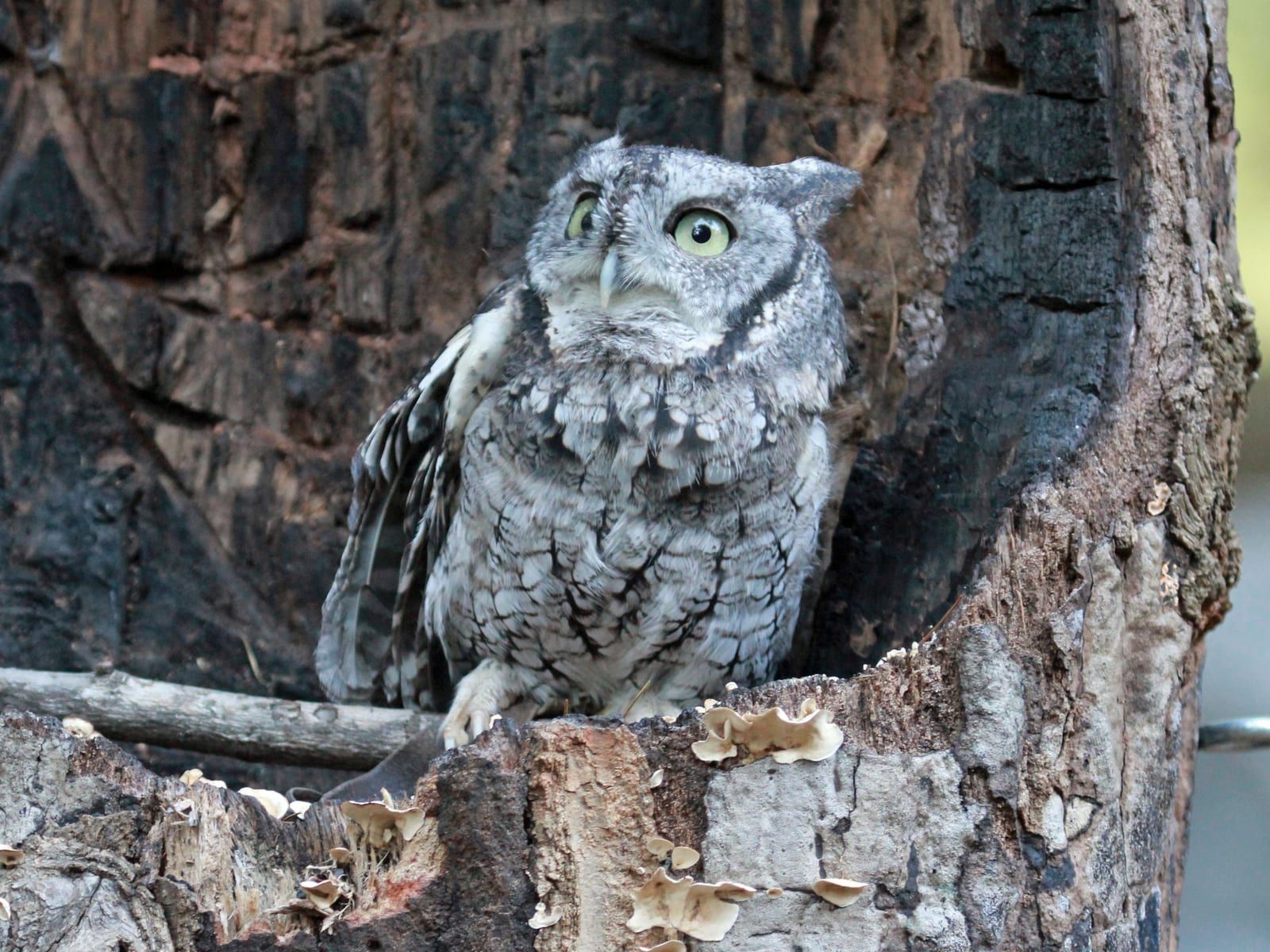
Eastern Screech-Owl

Megascops asio — Strigidae

Native

Description & ID
small, ear-tufted owl in red or gray morphs; gives a descending whinny and a soft trill.
Habitat
woodlands, suburbs, orchards, and parks with cavities.
County status
present and common; 28 research-grade iNaturalist records [S1]; a year-round resident, well-recorded for an owl [S2].
Conservation status
native; secure. (confirm against PNHP)

More on Wikipedia →

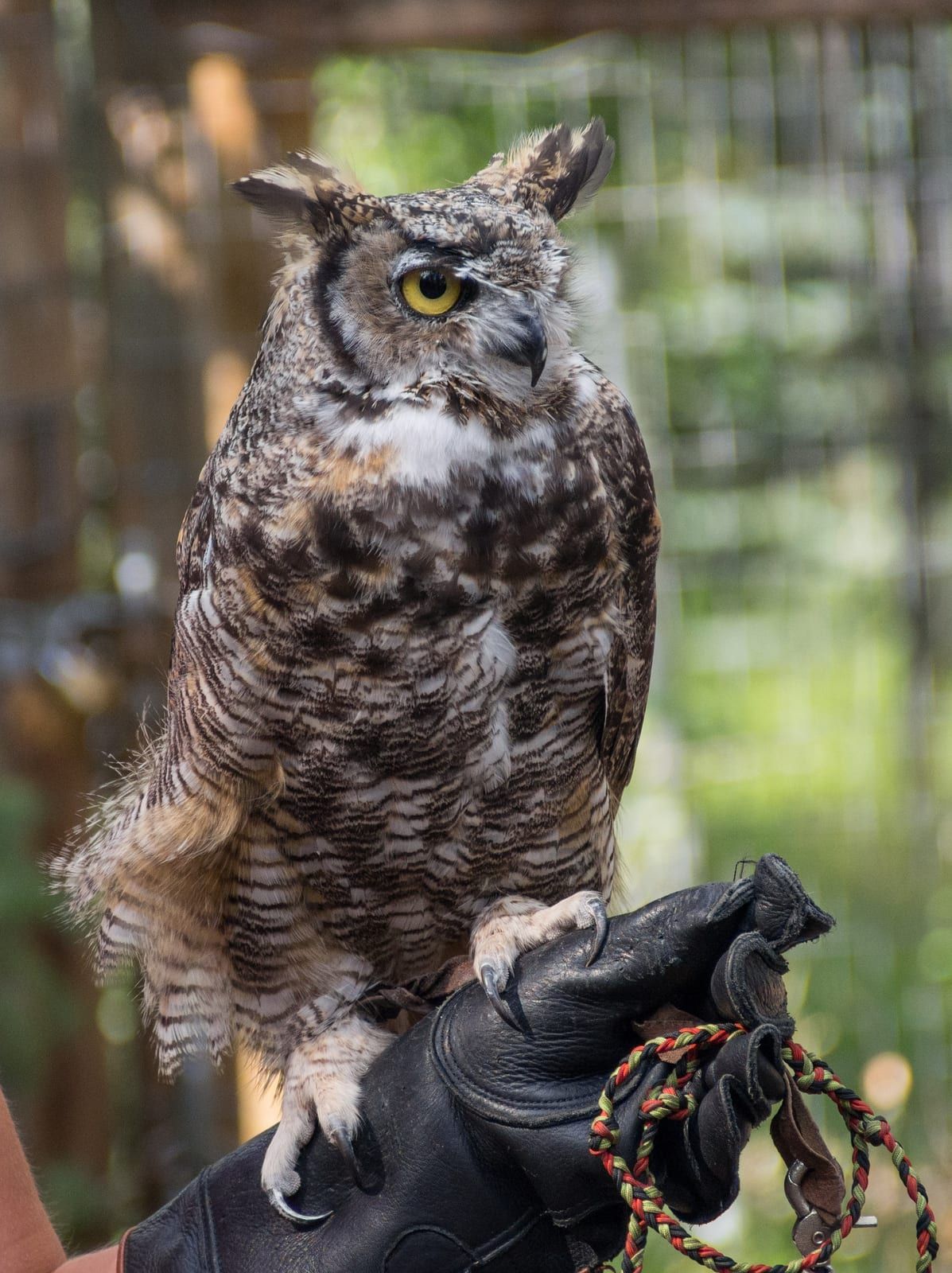
Great Horned Owl

Bubo virginianus — Strigidae

Native

Description & ID
large, powerful owl with prominent ear-tufts, a white throat, and a deep hooting song.
Habitat
forests, woodlots, and farmland; nests early (late winter), often in old hawk nests.
County status
present; 2 research-grade iNaturalist records [S1]; a widespread year-round resident, under-recorded due to nocturnality [S2].
Conservation status
native; secure; an apex avian predator. (confirm against PNHP)

More on Wikipedia →

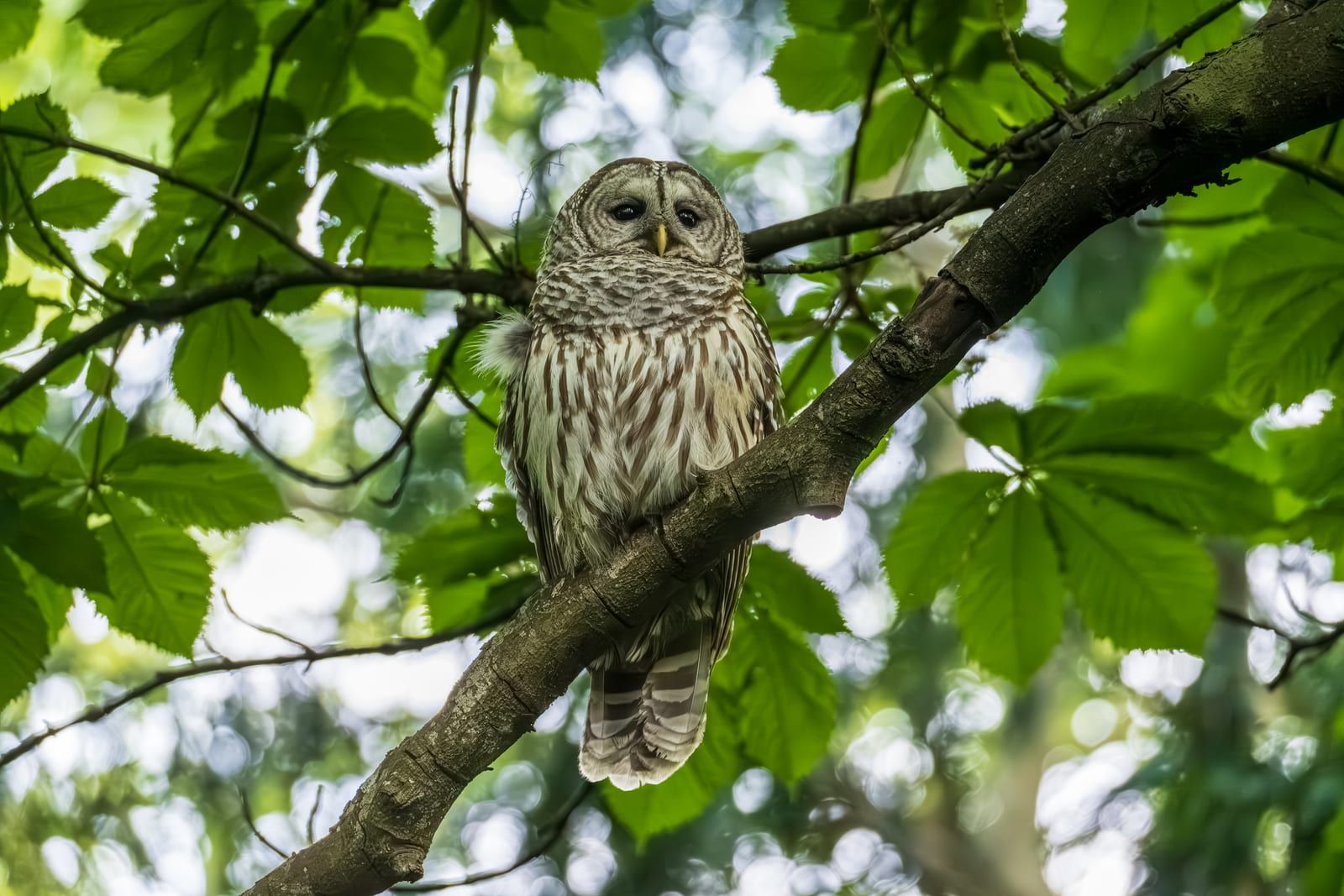
Barred Owl

Strix varia — Strigidae

Native

Description & ID
large, round-headed owl with dark eyes, vertical belly streaks, and the classic "who-cooks-for-you" call.
Habitat
mature, moist forests and wooded swamps.
County status
present; 3 research-grade iNaturalist records [S1]; an uncommon year-round resident [S2].
Conservation status
native; secure. (confirm against PNHP)

More on Wikipedia →

Northern Saw-whet Owl

Aegolius acadicus — Strigidae

Native

Description & ID
tiny, big-headed owl with a streaked rusty body, white facial "V," and yellow eyes; gives a monotonous tooting song.
Habitat
dense conifers and mixed forest; migrates along ridges.
County status
present; 5 research-grade iNaturalist records [S1]; a regular but easily-overlooked fall migrant and rare breeder; ridge banding stations detect many [S2].
Conservation status
native; secure. (confirm against PNHP)

More on Wikipedia →

American Barn Owl

Tyto furcata — Tytonidae

Native eBird county record

Description & ID
pale, long-legged owl with a white heart-shaped facial disk, golden-buff upperparts, and dark eyes; gives an eerie raspy shriek rather than a hoot.
Habitat
farmland, grasslands, and reclaimed barrens; nests in barns, silos, and cavities.
County status
eBird-documented [S2]; a rare and local resident, dependent on open grassland-farmland hunting habitat and suitable nest structures.
Conservation status
native; a PA species of conservation concern, declining with loss of grassland foraging habitat and old farm buildings [S5]. (confirm against PNHP)
Notes
a focus of PA nest-box and barn-conservation efforts.

More on Wikipedia →

Long-eared Owl

Asio otus — Strigidae

Native eBird county record

Description & ID
slim, cryptic woodland owl with long close-set ear-tufts, a rusty facial disk, and a streaked body; roosts upright against trunks, very hard to find.
Habitat
dense conifers and thickets for roosting; hunts adjacent open ground.
County status
eBird-documented [S2]; a rare and easily overlooked migrant and winter visitor, occasionally roosting communally in conifers.
Conservation status
native; a secretive species of regional conservation concern; very under-detected. (confirm against PNHP)

More on Wikipedia →

Short-eared Owl

Asio flammeus — Strigidae

Native eBird county record

Description & ID
medium, buffy owl with a pale facial disk, dark eye-patches, and bold dark "wrist" marks; tiny ear-tufts; hunts low over open ground with a buoyant, moth-like flight, often in daylight.
Habitat
large grasslands, marshes, and reclaimed anthracite barrens in winter.
County status
eBird-documented [S2]; a rare winter visitor to extensive open country, numbers varying year to year; the county's reclaimed grasslands offer prime habitat.
Conservation status
native; PA-listed Threatened — one of the county's higher-priority open-country birds [S4][S5]. (confirm against PNHP)
Notes
crepuscular hunting over reclaimed barrens makes it a sought-after winter bird.

More on Wikipedia →

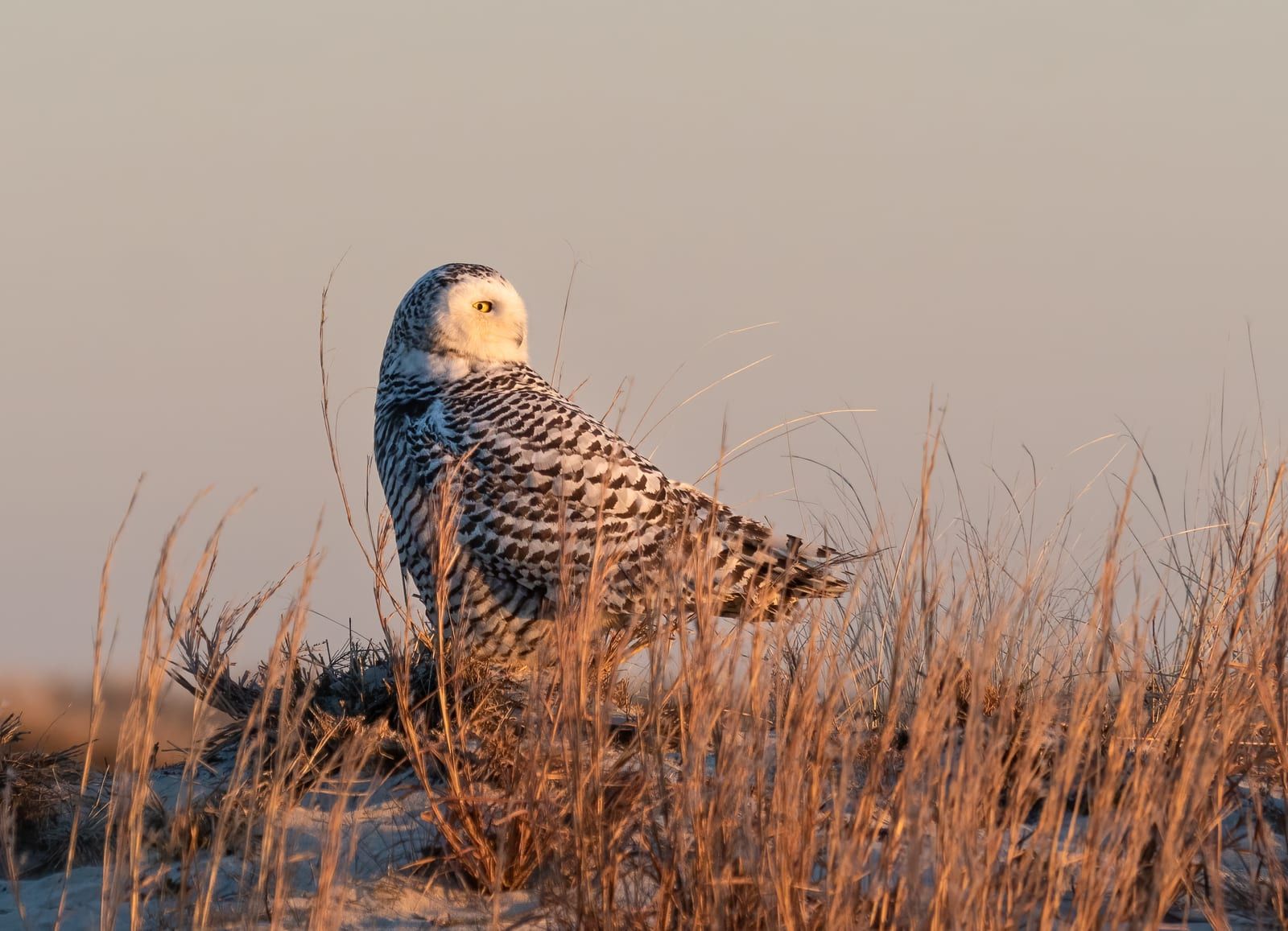
Snowy Owl

Bubo scandiacus — Strigidae

Native eBird county record

Description & ID
large, heavy white owl, variably barred with dark; rounded head with no ear-tufts and yellow eyes; an unmistakable Arctic visitor.
Habitat
open fields, airports, lakeshores, and barrens in winter.
County status
eBird-documented [S2]; a rare and irruptive winter visitor, appearing in flight years when northern prey populations crash.
Conservation status
native; a NatureServe-flagged species of conservation interest; a spectacular but unpredictable winter rarity. (confirm against PNHP)

More on Wikipedia →

Common Nighthawk

Chordeiles minor — Caprimulgidae

Native

Description & ID
slim, long-winged aerial insectivore with bold white wing-bars; flies erratically at dusk with a nasal "peent."
Habitat
open skies over towns (nests on flat gravel roofs) and barrens; conspicuous on migration.
County status
present; 4 research-grade iNaturalist records [S1]; a migrant (notable late-summer evening flights) and rare local breeder [S2].
Conservation status
native; declining due to insect loss and changing rooftops; an aerial-insectivore conservation concern. (confirm against PNHP)

More on Wikipedia →

Eastern Whip-poor-will

Antrostomus vociferus — Caprimulgidae

Native

Description & ID
cryptic, dead-leaf-patterned nightjar named for its loud, rhythmic nocturnal song; rarely seen by day.
Habitat
dry, open woodlands and forest-barren edges.
County status
present; 1 research-grade iNaturalist record [S1]; NatureServe "near threatened" [S1][S9]; a declining, song-detected breeder [S2].
Conservation status
native; a PA species of regional conservation concern due to habitat loss and insect decline. (confirm against PNHP)

More on Wikipedia →

Chimney Swift

Chaetura pelagica — Apodidae

Native

Description & ID
a "flying cigar" — dark, fast aerial bird with stiff curved wings and a twittering call; never perches in the open.
Habitat
open skies over towns; roosts and nests in chimneys.
County status
present; 2 research-grade iNaturalist records [S1]; NatureServe "vulnerable" [S1][S9]; a common breeder over towns, spring through early fall [S2].
Conservation status
native; declining sharply with loss of open chimneys and aerial insects. (confirm against PNHP)

More on Wikipedia →

Ruby-throated Hummingbird

Archilochus colubris — Trochilidae

Native

Description & ID
PA's only breeding hummingbird; metallic green above, males with a fiery red gorget.
Habitat
gardens, woodland edges, and feeders.
County status
present; 16 research-grade iNaturalist records [S1]; a common breeder, late spring through early fall [S2].
Conservation status
native; secure. (confirm against PNHP)

More on Wikipedia →

Rufous Hummingbird

Selasphorus rufus — Trochilidae

Native eBird county record

Description & ID
small hummingbird; adult males bright rufous with a flaming orange-red gorget; females and immatures green-backed with rufous flanks and tail-base — separation from Allen's Hummingbird requires care.
Habitat
gardens and feeders; a western species that strays east in late fall.
County status
eBird-documented [S2]; a rare late-fall and early-winter vagrant, typically found at feeders kept up after Ruby-throated Hummingbirds depart.
Conservation status
native (western); the most regular of the western hummingbirds straying to the East. (confirm against PNHP)
Notes
any late-fall hummingbird in PA warrants documentation, as several western species are possible.

More on Wikipedia →

Belted Kingfisher

Megaceryle alcyon — Alcedinidae

Native

Description & ID
stocky, big-headed, blue-gray bird with a shaggy crest and a heavy bill; females have a rusty belly band. Loud rattling call.
Habitat
clear streams, rivers, ponds, and lakes with fish; nests in earthen bank burrows.
County status
present; 13 research-grade iNaturalist records [S1]; a year-round resident along waterways (some withdraw when water freezes) [S2].
Conservation status
native; secure. (confirm against PNHP)

More on Wikipedia →

Red-headed Woodpecker

Melanerpes erythrocephalus — Picidae

Native

Description & ID
striking woodpecker with an entirely crimson head, black back, and large white wing-patches.
Habitat
open oak woods, savanna, dead-snag groves, and parkland.
County status
present; 7 research-grade iNaturalist records [S1]; an uncommon and local breeder, declining [S2].
Conservation status
native; a regional conservation concern due to loss of open mast woodland and snags. (confirm against PNHP)

More on Wikipedia →

Red-bellied Woodpecker

Melanerpes carolinus — Picidae

Native

Description & ID
medium woodpecker with a black-and-white barred back, pale face, and a red nape/crown; the namesake belly tinge is subtle.
Habitat
woodlands, suburbs, and feeders.
County status
present and common; 20 research-grade iNaturalist records [S1]; a year-round resident that has expanded northward [S2].
Conservation status
native; secure. (confirm against PNHP)

More on Wikipedia →

Yellow-bellied Sapsucker

Sphyrapicus varius — Picidae

Native

Description & ID
medium woodpecker with a red forecrown, a long white wing-stripe, and a pale yellow wash below; drills neat rows of sap-wells.
Habitat
mixed and northern hardwood forests; migrant in lowland woods.
County status
present; 13 research-grade iNaturalist records [S1]; a migrant and winter visitor; a rare breeder on cooler ridges [S2].
Conservation status
native; secure. (confirm against PNHP)

More on Wikipedia →

Downy Woodpecker

Dryobates pubescens — Picidae

Native

Description & ID
smallest North American woodpecker; black-and-white with a short, stubby bill; males show a red nape-spot.
Habitat
nearly all woodlands, suburbs, and feeders.
County status
present and abundant; 27 research-grade iNaturalist records [S1]; a common year-round resident [S2].
Conservation status
native; secure. (confirm against PNHP)
Notes
distinguished from the larger Hairy Woodpecker by its tiny bill and smaller size.

More on Wikipedia →

Hairy Woodpecker

Leuconotopicus villosus — Picidae

Native

Description & ID
like a large Downy but with a long, robust bill roughly as long as the head; cleaner white outer tail feathers.
Habitat
mature forests and woodlots.
County status
present; 8 research-grade iNaturalist records [S1]; a fairly common year-round resident [S2].
Conservation status
native; secure. (confirm against PNHP)

More on Wikipedia →

Northern Flicker

Colaptes auratus — Picidae

Native

Description & ID
large brown woodpecker that often feeds on the ground (ants); the eastern "Yellow-shafted" form shows yellow wing/tail shafts, a black bib, a red nape crescent, and a white rump in flight.
Habitat
open woodlands, edges, farmland, and suburbs.
County status
present and common; 18 research-grade iNaturalist records [S1]; a year-round resident and migrant [S2].
Conservation status
native; secure. (confirm against PNHP)

More on Wikipedia →

Pileated Woodpecker

Dryocopus pileatus — Picidae

Native

Description & ID
PA's largest woodpecker, crow-sized, black with a flaming red crest and bold white neck-stripes; excavates large rectangular holes.
Habitat
mature forests with large trees and standing deadwood.
County status
present and common; 26 research-grade iNaturalist records [S1]; a year-round resident [S2].
Conservation status
native; secure. (confirm against PNHP)
Notes
its excavations create cavities used by many other species.

More on Wikipedia →

Eastern Wood-Pewee

Contopus virens — Tyrannidae

Native

Description & ID
plain gray-olive flycatcher with no eye-ring and long wings; identified by its plaintive "pee-a-wee" song.
Habitat
mid-canopy of open deciduous and mixed woodland.
County status
present; 8 research-grade iNaturalist records [S1]; a common breeder, late spring through summer [S2].
Conservation status
native; secure but slowly declining. (confirm against PNHP)

More on Wikipedia →

Hammond's Flycatcher

Empidonax hammondii — Tyrannidae

Native

Description & ID
a small western Empidonax flycatcher; very rare in the East and identifiable only with care (often by call and structure).
County status
present; 7 research-grade iNaturalist records [S1]; this count almost certainly reflects a single, well-documented vagrant photographed repeatedly rather than a regular occurrence — a notable county rarity if confirmed [S1][S2].
Conservation status
native (western); secure in its range; an exceptional eastern vagrant. (confirm against PNHP)
Notes
any Empidonax identification at the edge of range warrants scrutiny; this is among the more remarkable iNaturalist county records.

More on Wikipedia →

Acadian Flycatcher

Empidonax virescens — Tyrannidae

Native

Description & ID
greenish Empidonax of shaded forest; best identified by its explosive "peet-sah" song and bottomland habitat.
Habitat
mature, shady deciduous forest, often near streams and ravines.
County status
present; 2 research-grade iNaturalist records [S1]; an uncommon breeder of forest interiors [S2].
Conservation status
native; secure. (confirm against PNHP)

More on Wikipedia →

Eastern Phoebe

Sayornis phoebe — Tyrannidae

Native

Description & ID
plain gray-brown flycatcher with a dark head, no eye-ring or wing-bars, and a constantly pumping tail; says its name, "fee-bee."
Habitat
stream bridges, eaves, and rocky outcrops; nests on ledges and under overhangs.
County status
present and common; 26 research-grade iNaturalist records [S1]; an early-arriving, common breeder and migrant [S2].
Conservation status
native; secure. (confirm against PNHP)

More on Wikipedia →

Great Crested Flycatcher

Myiarchus crinitus — Tyrannidae

Native

Description & ID
large, crested flycatcher with a gray throat, lemon-yellow belly, and rufous in the wings and tail; loud "wheep" call.
Habitat
canopy of open deciduous woodland; a cavity nester.
County status
present; 6 research-grade iNaturalist records [S1]; a common summer breeder [S2].
Conservation status
native; secure. (confirm against PNHP)

More on Wikipedia →

Eastern Kingbird

Tyrannus tyrannus — Tyrannidae

Native

Description & ID
boldly black-and-white flycatcher with a white tail-tip; pugnacious, often chasing larger birds.
Habitat
open country, field edges, and wetland margins.
County status
present; 11 research-grade iNaturalist records [S1]; a common summer breeder [S2].
Conservation status
native; secure. (confirm against PNHP)

More on Wikipedia →

Olive-sided Flycatcher

Contopus cooperi — Tyrannidae

Native eBird county record

Description & ID
large, big-headed flycatcher with a dark vest enclosing a white breast-stripe and white tufts at the flanks; perches conspicuously on dead snags; sings "quick-three-beers."
Habitat
forest openings, burns, and bogs with tall snags on migration.
County status
eBird-documented [S2]; an uncommon migrant, spring and fall, favoring exposed dead-tree perches.
Conservation status
native; a steeply declining boreal-breeding aerial insectivore and a species of conservation concern. (confirm against PNHP)

More on Wikipedia →

Yellow-bellied Flycatcher

Empidonax flaviventris — Tyrannidae

Native eBird county record

Description & ID
small Empidonax with a strong yellow wash on the throat and belly, a bold yellowish eye-ring, and greenish upperparts; best confirmed by call.
Habitat
moist, shady forest understory on migration; breeds in northern bogs.
County status
eBird-documented [S2]; an uncommon migrant, mainly late spring and early fall.
Conservation status
native; secure (boreal breeder). (confirm against PNHP)

More on Wikipedia →

Alder Flycatcher

Empidonax alnorum — Tyrannidae

Native eBird county record

Description & ID
drab Empidonax essentially identical to Willow Flycatcher; reliably separated only by its buzzy "fee-bee-o" song.
Habitat
wet alder and shrub thickets, often near water.
County status
eBird-documented [S2]; an uncommon and local breeder in wet shrubby habitat, mainly on cooler ridges.
Conservation status
native; secure. (confirm against PNHP)
Notes
forms a near-cryptic species pair ("Traill's Flycatcher") with Willow Flycatcher, separable in the field only by voice.

More on Wikipedia →

Willow Flycatcher

Empidonax traillii — Tyrannidae

Native eBird county record

Description & ID
drab brownish-olive Empidonax with a faint eye-ring; identified by its sneezy "fitz-bew" song.
Habitat
shrubby wetlands, willow thickets, and brushy old fields.
County status
eBird-documented [S2]; an uncommon breeder of shrubby wetlands and damp old fields, late spring through summer.
Conservation status
native; secure. (confirm against PNHP)

More on Wikipedia →

Least Flycatcher

Empidonax minimus — Tyrannidae

Native eBird county record

Description & ID
the smallest eastern Empidonax, gray-olive with a bold white eye-ring and wing-bars; gives an emphatic, dry "che-bek."
Habitat
open deciduous and mixed woodland and edges.
County status
eBird-documented [S2]; an uncommon breeder and migrant, more frequent on passage than as a nester.
Conservation status
native; secure but declining. (confirm against PNHP)

More on Wikipedia →

Say's Phoebe

Sayornis saya — Tyrannidae

Native eBird county record

Description & ID
pale gray-brown flycatcher with a cinnamon belly and undertail and a blackish tail; pumps its tail like Eastern Phoebe; a western species.
Habitat
open, arid country in the West; here in open farmland or barrens.
County status
eBird-documented [S2]; a vagrant, with PA records confined to rare wandering individuals, mainly fall and winter.
Conservation status
native (western); secure; a notable county rarity. (confirm against PNHP)

More on Wikipedia →

Northern Shrike

Lanius borealis — Laniidae

Native eBird county record

Description & ID
robust, pale-gray songbird with a black mask, hooked bill, and black wings and tail; a predatory "butcherbird" that impales prey on thorns.
Habitat
open country with scattered trees and hedgerows in winter.
County status
eBird-documented [S2]; a rare and irregular winter visitor from the boreal north, numbers varying with northern food supplies.
Conservation status
native; secure; a sought-after winter rarity in open country. (confirm against PNHP)
Notes
PA's only regularly occurring shrike now that Loggerhead Shrike has essentially vanished as a breeder.

More on Wikipedia →

Yellow-throated Vireo

Vireo flavifrons — Vireonidae

Native

Description & ID
stout vireo with a bright yellow throat and "spectacles" and white wing-bars.
Habitat
open mature deciduous woodland and edges.
County status
present; 2 research-grade iNaturalist records [S1]; an uncommon breeder [S2].
Conservation status
native; secure. (confirm against PNHP)

More on Wikipedia →

Blue-headed Vireo

Vireo solitarius — Vireonidae

Native

Description & ID
crisp vireo with a blue-gray head, bold white spectacles, white wing-bars, and greenish flanks.
Habitat
mixed and coniferous forest on cooler ridges.
County status
present; 9 research-grade iNaturalist records [S1]; an early and late migrant and uncommon breeder in conifers [S2].
Conservation status
native; secure. (confirm against PNHP)

More on Wikipedia →

Warbling Vireo

Vireo gilvus — Vireonidae

Native

Description & ID
plain gray-olive vireo with a pale eyebrow, no wing-bars; identified by its rolling, warbling song.
Habitat
open deciduous trees along streams, lakeshores, and in towns.
County status
present; 1 research-grade iNaturalist record [S1]; an uncommon breeder of riparian shade trees [S2].
Conservation status
native; secure. (confirm against PNHP)

More on Wikipedia →

Red-eyed Vireo

Vireo olivaceus — Vireonidae

Native

Description & ID
olive-backed vireo with a gray crown, white eyebrow bordered black, and (adult) red eye; sings incessantly through summer days.
Habitat
deciduous and mixed forest canopy; one of the most abundant breeding forest birds.
County status
present; 11 research-grade iNaturalist records [S1]; an abundant summer breeder [S2].
Conservation status
native; secure. (confirm against PNHP)

More on Wikipedia →

White-eyed Vireo

Vireo griseus — Vireonidae

Native eBird county record

Description & ID
small vireo with yellow "spectacles," white wing-bars, yellow flanks, and (in adults) a white eye; gives an emphatic, jumbled "chick-per-weeoo-chick" song.
Habitat
dense shrubby thickets, hedgerows, and brushy old fields.
County status
eBird-documented [S2]; an uncommon and somewhat local breeder of dense scrub, mainly in the warmer lowlands.
Conservation status
native; secure; a shrubland species expanding in places. (confirm against PNHP)

More on Wikipedia →

Philadelphia Vireo

Vireo philadelphicus — Vireonidae

Native eBird county record

Description & ID
plain vireo resembling Warbling Vireo but with a yellow-washed throat and breast and a darker eye-line through a pale eyebrow; no wing-bars.
Habitat
deciduous woodland and edges on migration.
County status
eBird-documented [S2]; an uncommon migrant, mainly fall, easily overlooked among commoner vireos.
Conservation status
native; secure (boreal breeder). (confirm against PNHP)
Notes
told from Warbling Vireo by yellower underparts and a stronger face pattern; from Red-eyed by smaller size and lack of a bold red eye and black-bordered eyebrow.

More on Wikipedia →

Blue Jay

Cyanocitta cristata — Corvidae

Native

Description & ID
crested blue, white, and black jay with bold wing-and-tail markings; loud and versatile vocally.
Habitat
woodlands, suburbs, and feeders; a major oak-acorn disperser.
County status
present and abundant; 30 research-grade iNaturalist records [S1]; a year-round resident with pronounced migratory movements along ridges [S2].
Conservation status
native; secure. (confirm against PNHP)

More on Wikipedia →

American Crow

Corvus brachyrhynchos — Corvidae

Native

Description & ID
large, all-black bird with a fan-shaped tail and a familiar "caw"; smaller and shorter-tailed than a raven.
Habitat
farmland, towns, woods, and edges; forms large winter roosts.
County status
present; 2 research-grade iNaturalist records [S1] (under-recorded relative to true abundance); an abundant year-round resident [S2].
Conservation status
native; secure. (confirm against PNHP)

More on Wikipedia →

Common Raven

Corvus corax — Corvidae

Native

Description & ID
very large, glossy-black corvid with a heavy bill, shaggy throat, wedge-shaped tail, and deep croaking call; soars and tumbles in flight.
Habitat
forested ridges, cliffs, and increasingly towns; has expanded across PA.
County status
present and increasing; 16 research-grade iNaturalist records [S1]; a year-round resident on the ridges [S2].
Conservation status
native; secure and expanding. (confirm against PNHP)

More on Wikipedia →

Fish Crow

Corvus ossifragus — Corvidae

Native eBird county record

Description & ID
nearly identical to American Crow but slightly smaller and more slender, reliably separated only by its nasal, two-noted "uh-uh" call.
Habitat
river valleys, towns, and waterways, especially along the Schuylkill and larger streams.
County status
eBird-documented [S2]; a local resident in river-valley towns, expanding inland up the major drainages; best detected by voice.
Conservation status
native; secure and expanding northward and inland. (confirm against PNHP)
Notes
silent birds are essentially unidentifiable from American Crow in the field.

More on Wikipedia →

Horned Lark

Eremophila alpestris — Alaudidae

Native

Description & ID
pale, ground-dwelling songbird with a black breast-bib, facial mask, and tiny black "horns"; walks (not hops) on bare ground.
Habitat
extensive bare farm fields, airports, and reclaimed barrens.
County status
present; 16 research-grade iNaturalist records [S1]; a year-round resident of open ground and a winter-flock bird [S2].
Conservation status
native; a grassland species declining with farmland change. (confirm against PNHP)

More on Wikipedia →

Tree Swallow

Tachycineta bicolor — Hirundinidae

Native

Description & ID
iridescent blue-green above, clean white below; a cavity/box nester often over water.
Habitat
open areas near water and wetlands; uses nest boxes.
County status
present; 8 research-grade iNaturalist records [S1]; a common breeder and abundant migrant [S2].
Conservation status
native; secure. (confirm against PNHP)

More on Wikipedia →

Northern Rough-winged Swallow

Stelgidopteryx serripennis — Hirundinidae

Native

Description & ID
plain brown-backed swallow with a dingy throat and no breast band; nests in banks, culverts, and crevices.
Habitat
rivers, streams, and gravel banks.
County status
present; 9 research-grade iNaturalist records [S1]; a common breeder along waterways [S2].
Conservation status
native; secure. (confirm against PNHP)

More on Wikipedia →

Purple Martin

Progne subis — Hirundinidae

Native

Description & ID
the largest North American swallow; males glossy blue-black all over; colonial, nesting almost entirely in human-provided housing in the East.
Habitat
open areas near water with martin houses.
County status
present; 2 research-grade iNaturalist records [S1]; a local breeder dependent on managed colonies [S2].
Conservation status
native; secure where colonies are maintained. (confirm against PNHP)

More on Wikipedia →

Barn Swallow

Hirundo rustica — Hirundinidae

Native

Description & ID
glossy blue-backed swallow with a rusty throat, buffy underparts, and a deeply forked tail.
Habitat
farmland and open country; nests on barns, bridges, and culverts.
County status
present; 9 research-grade iNaturalist records [S1]; a common summer breeder [S2].
Conservation status
native; secure. (confirm against PNHP)

More on Wikipedia →

Bank Swallow

Riparia riparia — Hirundinidae

Native eBird county record

Description & ID
the smallest North American swallow, plain brown above and white below with a crisp brown breast-band; nests colonially in burrows.
Habitat
rivers, lakeshores, and active sand-and-gravel banks and quarry faces.
County status
eBird-documented [S2]; an uncommon and local breeder in colonies at eroding banks and pits, plus a more widespread migrant.
Conservation status
native; declining where suitable bank-colony sites are lost; an aerial insectivore of regional concern. (confirm against PNHP)

More on Wikipedia →

Cliff Swallow

Petrochelidon pyrrhonota — Hirundinidae

Native eBird county record

Description & ID
square-tailed swallow with a buff rump, a pale forehead, and a dark rusty throat; builds gourd-shaped mud nests in colonies under overhangs.
Habitat
open country near water; nests on bridges, culverts, and barns.
County status
eBird-documented [S2] (a single iNaturalist record also exists); an uncommon and local breeder at bridge and building colonies, plus a migrant.
Conservation status
native; secure where nest structures persist; locally dependent on suitable bridges and barns. (confirm against PNHP)

More on Wikipedia →

Black-capped Chickadee

Poecile atricapillus — Paridae

Native

Description & ID
tiny, energetic bird with a black cap and bib, white cheeks, and buffy flanks; sings "fee-bee" and calls "chick-a-dee."
Habitat
forests, woodlots, suburbs, and feeders; the dominant chickadee on the county's ridges.
County status
present and abundant; 17 research-grade iNaturalist records [S1]; a year-round resident [S2].
Conservation status
native; secure. (confirm against PNHP)
Notes
in the southern county and lowlands, the very similar Carolina Chickadee occurs (see below); the two hybridize along a narrow contact zone in PA.

More on Wikipedia →

Carolina Chickadee

Poecile carolinensis — Paridae

Native

Description & ID
nearly identical to Black-capped Chickadee but smaller, with a crisper bib edge and a faster, four-note song; best separated by voice and range.
Habitat
lower-elevation woodlands and suburbs at the northern edge of its range.
County status
present; 1 research-grade iNaturalist record [S1]; a local resident where the species reaches into the county along its contact zone with Black-capped [S2].
Conservation status
native; secure. (confirm against PNHP)
Notes
identification in the contact zone is genuinely difficult; hybrids occur.

More on Wikipedia →

Tufted Titmouse

Baeolophus bicolor — Paridae

Native

Description & ID
small, crested gray bird with a pale belly, rusty flanks, and a black forehead; whistles "peter-peter-peter."
Habitat
deciduous woods, suburbs, and feeders.
County status
present and abundant; 33 research-grade iNaturalist records [S1]; a year-round resident [S2].
Conservation status
native; secure. (confirm against PNHP)

More on Wikipedia →

White-breasted Nuthatch

Sitta carolinensis — Sittidae

Native

Description & ID
compact, big-headed bird with a blue-gray back, white face and underparts, and a black cap; climbs head-down on trunks.
Habitat
deciduous and mixed forest, woodlots, and feeders.
County status
present and common; 26 research-grade iNaturalist records [S1]; a year-round resident [S2].
Conservation status
native; secure. (confirm against PNHP)

More on Wikipedia →

Red-breasted Nuthatch

Sitta canadensis — Sittidae

Native

Description & ID
smaller nuthatch with a black eye-line, white eyebrow, and rusty underparts; gives a nasal, tin-horn call.
Habitat
conifers and mixed forest; irruptive in winter.
County status
present; 12 research-grade iNaturalist records [S1]; an uncommon resident in conifers and a variable winter visitor [S2].
Conservation status
native; secure. (confirm against PNHP)

More on Wikipedia →

Brown Creeper

Certhia americana — Certhiidae

Native

Description & ID
small, cryptic, bark-colored bird with a decurved bill and a stiff tail; spirals up tree trunks then drops to the next.
Habitat
mature forests with large or dead trees; more widespread in winter.
County status
present; 19 research-grade iNaturalist records [S1]; an uncommon resident and winter visitor [S2].
Conservation status
native; secure. (confirm against PNHP)

More on Wikipedia →

Carolina Wren

Thryothorus ludovicianus — Troglodytidae

Native

Description & ID
warm rusty wren with a bold white eyebrow and a cocked tail; loud "tea-kettle" song; sings year-round.
Habitat
brushy woods, thickets, gardens, and suburbs.
County status
present; 8 research-grade iNaturalist records [S1]; a year-round resident, with numbers knocked back by severe winters [S2].
Conservation status
native; secure. (confirm against PNHP)

More on Wikipedia →

Northern House Wren

Troglodytes aedon — Troglodytidae

Native

Description & ID
plain brown wren with a faint eyebrow and a bubbling, energetic song; aggressively competes for cavities.
Habitat
brushy yards, woodland edges, and thickets; uses boxes.
County status
present; 6 research-grade iNaturalist records [S1]; a common summer breeder [S2].
Conservation status
native; secure. (confirm against PNHP)

More on Wikipedia →

Winter Wren

Troglodytes hiemalis — Troglodytidae

Native

Description & ID
tiny, dark, stub-tailed wren with a long, tinkling song; skulks low in dense cover.
Habitat
moist conifer and mixed forest with mossy logs and ravines.
County status
present; 4 research-grade iNaturalist records [S1]; a migrant and winter visitor; a rare breeder on cool, moist ridges [S2].
Conservation status
native; secure. (confirm against PNHP)

More on Wikipedia →

Marsh Wren

Cistothorus palustris — Troglodytidae

Native eBird county record

Description & ID
small, warm-brown wren with a bold white eyebrow and black-and-white streaking on the back; cocks its tail; gives a rattling, gurgling song from deep in reeds.
Habitat
cattail and bulrush marshes with standing water.
County status
eBird-documented [S2]; an uncommon and local marsh breeder and migrant, restricted to the county's larger emergent wetlands.
Conservation status
native; a wetland-dependent species of regional concern as marsh habitat declines. (confirm against PNHP)

More on Wikipedia →

Golden-crowned Kinglet

Regulus satrapa — Regulidae

Native

Description & ID
tiny, olive bird with a black-bordered yellow-orange crown stripe and white wing-bars; constantly flicks its wings.
Habitat
conifers in the breeding season; mixed woods on migration and in winter.
County status
present; 14 research-grade iNaturalist records [S1]; a common migrant and winter visitor; rare breeder in conifers [S2].
Conservation status
native; secure. (confirm against PNHP)

More on Wikipedia →

Ruby-crowned Kinglet

Corthylio calendula — Regulidae

Native

Description & ID
tiny olive bird with a bold white eye-ring and (males) a usually-hidden red crown patch; very active.
Habitat
woodland and thickets on migration; conifers in summer farther north.
County status
present; 13 research-grade iNaturalist records [S1]; a common spring and fall migrant [S2].
Conservation status
native; secure. (confirm against PNHP)

More on Wikipedia →

Blue-gray Gnatcatcher

Polioptila caerulea — Polioptilidae

Native

Description & ID
tiny, slender, blue-gray bird with a white eye-ring and a long, white-edged tail it flicks constantly.
Habitat
open deciduous woodland and edges.
County status
present; 5 research-grade iNaturalist records [S1]; a common summer breeder [S2].
Conservation status
native; secure. (confirm against PNHP)

More on Wikipedia →

Eastern Bluebird

Sialia sialis — Turdidae

Native

Description & ID
small thrush; males with a brilliant blue back and a rusty breast; a cavity nester that readily uses boxes.
Habitat
open farmland, meadows, orchards, and field edges.
County status
present and common; 31 research-grade iNaturalist records [S1]; a year-round resident and breeder [S2].
Conservation status
native; secure — a nest-box conservation success story. (confirm against PNHP)

More on Wikipedia →

Veery

Catharus fuscescens — Turdidae

Native

Description & ID
warm-cinnamon thrush with faint, blurry breast-spots; sings a downward-spiraling, ethereal "veer" song.
Habitat
moist deciduous forest with dense understory.
County status
present; 10 research-grade iNaturalist records [S1]; an uncommon breeder and migrant [S2].
Conservation status
native; secure but declining. (confirm against PNHP)

More on Wikipedia →

Swainson's Thrush

Catharus ustulatus — Turdidae

Native

Description & ID
olive-brown thrush with buffy "spectacles" and a buff-washed, spotted breast; an upward-spiraling song.
Habitat
forest understory on migration; breeds in conifers farther north.
County status
present; 4 research-grade iNaturalist records [S1]; a regular migrant, spring and fall [S2].
Conservation status
native; secure. (confirm against PNHP)

More on Wikipedia →

Hermit Thrush

Catharus guttatus — Turdidae

Native

Description & ID
brown-backed thrush with a contrasting rusty tail it slowly raises and lowers, and a bold-spotted breast; flute-like song.
Habitat
mixed and coniferous forest; the only spotted thrush regularly wintering in PA.
County status
present; 14 research-grade iNaturalist records [S1]; a migrant, winter visitor, and local breeder on cool ridges [S2].
Conservation status
native; secure. (confirm against PNHP)

More on Wikipedia →

Wood Thrush

Hylocichla mustelina — Turdidae

Native

Description & ID
plump, rusty-headed thrush with bold round black breast-spots; sings an exquisite flute-like "ee-oh-lay."
Habitat
interior of moist mature deciduous forest with a shrub layer.
County status
present; 8 research-grade iNaturalist records [S1]; a common summer breeder, but declining [S2].
Conservation status
native; a regional forest-interior conservation concern (a PA Wildlife Action Plan focal species) [S5]. (confirm against PNHP)

More on Wikipedia →

Gray-cheeked Thrush

Catharus minimus — Turdidae

Native eBird county record

Description & ID
olive-brown Catharus thrush with a gray face lacking a buff eye-ring, and a faintly spotted breast; the plainest-faced of the spotted thrushes.
Habitat
forest understory and thickets on migration; breeds in the far north.
County status
eBird-documented [S2]; an uncommon migrant, mainly late spring and fall, often detected by its nocturnal flight call.
Conservation status
native; secure (a high-latitude boreal/taiga breeder). (confirm against PNHP)

More on Wikipedia →

Townsend's Solitaire

Myadestes townsendi — Turdidae

Native eBird county record

Description & ID
slim, gray thrush with a bold white eye-ring, buff wing-patches, and white outer tail feathers; perches upright and defends winter juniper berry stands.
Habitat
open country with junipers and fruiting trees; a western species.
County status
eBird-documented [S2]; a rare winter vagrant, with PA records typically lone birds at fruiting cedars or feeders.
Conservation status
native (western); secure; a notable county rarity. (confirm against PNHP)

More on Wikipedia →

American Robin

Turdus migratorius — Turdidae

Native

Description & ID
the familiar large thrush with a brick-red breast, gray back, and yellow bill; hunts earthworms on lawns.
Habitat
lawns, fields, woodlands, and suburbs; ubiquitous.
County status
present and abundant; 45 research-grade iNaturalist records — among the most-recorded county birds [S1]; a year-round resident (forms large winter fruit-feeding flocks) and breeder [S2].
Conservation status
native; secure. (confirm against PNHP)

More on Wikipedia →

Gray Catbird

Dumetella carolinensis — Mimidae

Native

Description & ID
slim, slate-gray mimid with a black cap and rusty undertail; gives a cat-like "mew" and a long, improvised song.
Habitat
dense thickets, hedgerows, and shrubby edges.
County status
present and common; 29 research-grade iNaturalist records [S1]; a common summer breeder [S2].
Conservation status
native; secure. (confirm against PNHP)

More on Wikipedia →

Brown Thrasher

Toxostoma rufum — Mimidae

Native

Description & ID
large, rufous, long-tailed mimid with a heavily streaked breast, yellow eye, and a curved bill; sings in doubled phrases.
Habitat
dense shrubby thickets, hedgerows, and overgrown fields.
County status
present; 16 research-grade iNaturalist records [S1]; an uncommon breeder, declining with shrubland loss [S2].
Conservation status
native; a shrubland species of regional concern. (confirm against PNHP)

More on Wikipedia →

Northern Mockingbird

Mimus polyglottos — Mimidae

Native

Description & ID
slim gray mimid with white wing-patches and outer tail feathers; an accomplished, persistent mimic.
Habitat
suburbs, hedgerows, and farmland edges.
County status
present and common; 17 research-grade iNaturalist records [S1]; a year-round resident [S2].
Conservation status
native; secure. (confirm against PNHP)

More on Wikipedia →

European Starling

Sturnus vulgaris — Sturnidae

Introduced

Description & ID
stocky, dark, iridescent bird with a yellow bill (breeding) and white spangling (winter); short tail and triangular wings.
Habitat
towns, farms, and open country; cavity nester that displaces natives.
County status
present and abundant; 8 research-grade iNaturalist records [S1]; an abundant year-round resident [S2]. Introduced to North America in the 1890s [S1].
Conservation status
non-native and invasive; competes with native cavity nesters. (confirm against PNHP)

More on Wikipedia →

Cedar Waxwing

Bombycilla cedrorum — Bombycillidae

Native

Description & ID
sleek, crested, fawn-colored bird with a black mask, yellow tail-tip, and waxy red wing-droplets; travels in flocks.
Habitat
woodland edges, orchards, and suburbs with fruiting trees.
County status
present and common; 24 research-grade iNaturalist records [S1]; a nomadic year-round resident and breeder, following fruit crops [S2].
Conservation status
native; secure. (confirm against PNHP)

More on Wikipedia →

American Pipit

Anthus rubescens — Motacillidae

Native

Description & ID
slim, brown, ground-walking songbird with a thin bill, streaked breast, and white outer tail feathers; bobs its tail and walks.
Habitat
bare fields, shores, and reclaimed barrens.
County status
present; 4 research-grade iNaturalist records [S1]; an uncommon migrant and winter visitor in open ground [S2].
Conservation status
native; secure. (confirm against PNHP)

More on Wikipedia →

Lapland Longspur

Calcarius lapponicus — Calcariidae

Native

Description & ID
sparrow-like, ground bird often in winter flocks with Horned Larks and Snow Buntings; rusty nape and streaked flanks.
Habitat
bare, windswept farm fields in winter.
County status
present; 4 research-grade iNaturalist records [S1]; an uncommon winter visitor in open-field flocks [S2].
Conservation status
native; secure. (confirm against PNHP)

More on Wikipedia →

Snow Bunting

Plectrophenax nivalis — Calcariidae

Native eBird county record

Description & ID
chunky, sparrow-like bird, strikingly white with rusty-brown back and wing markings in winter; flocks flash white in undulating flight ("snowflakes").
Habitat
bare, windswept farm fields, shorelines, and reclaimed barrens in winter.
County status
eBird-documented [S2]; an uncommon winter visitor from the Arctic, in flocks on open ground, often with Horned Larks and Lapland Longspurs.
Conservation status
native; secure. (confirm against PNHP)

More on Wikipedia →

House Finch

Haemorhous mexicanus — Fringillidae

Introduced

Description & ID
streaky brown finch; males with a red (sometimes orange/yellow) forehead, throat, and rump.
Habitat
suburbs, towns, and feeders.
County status
present and common; 11 research-grade iNaturalist records [S1]; a year-round resident [S2]. Native to western North America; the eastern U.S. population (including PA) descends from 1940s pet-trade releases, so it is introduced east of the Rockies.
Conservation status
native species (established eastern population); secure. (confirm against PNHP)

More on Wikipedia →

Purple Finch

Haemorhous purpureus — Fringillidae

Native

Description & ID
stockier than House Finch; males raspberry-red overall (head, breast, back), females boldly face-patterned.
Habitat
conifer and mixed forest; feeders, especially in winter.
County status
present; 16 research-grade iNaturalist records [S1]; an irruptive migrant and winter visitor; uncommon breeder in conifers [S2].
Conservation status
native; secure. (confirm against PNHP)

More on Wikipedia →

Red Crossbill

Loxia curvirostra — Fringillidae

Native

Description & ID
chunky finch with crossed mandible tips for prying conifer cones; males brick-red, females yellow-olive.
Habitat
conifer stands; nomadic and irruptive, following cone crops.
County status
present; 5 research-grade iNaturalist records [S1]; an irregular, irruptive visitor to conifers [S2].
Conservation status
native; secure but unpredictable in occurrence. (confirm against PNHP)

More on Wikipedia →

Pine Siskin

Spinus pinus — Fringillidae

Native

Description & ID
small, heavily streaked finch with yellow wing- and tail-flashes and a sharp, notched bill.
Habitat
conifers and feeders; highly irruptive.
County status
present; 3 research-grade iNaturalist records [S1]; an irruptive winter visitor, abundant some years and absent others [S2].
Conservation status
native; secure. (confirm against PNHP)

More on Wikipedia →

American Goldfinch

Spinus tristis — Fringillidae

Native

Description & ID
small finch; breeding males brilliant yellow with a black cap and wings; winter birds drab olive-buff.
Habitat
weedy fields, thistle patches, edges, and feeders.
County status
present and abundant; 28 research-grade iNaturalist records [S1]; a year-round resident and late-season breeder (times nesting to thistle seed) [S2].
Conservation status
native; secure. (confirm against PNHP)

More on Wikipedia →

Redpoll

Acanthis flammea — Fringillidae

Native

Description & ID
small, streaky northern finch with a red forecrown, black chin, and (males) a pink-washed breast.
Habitat
weedy fields, birches, and feeders during winter irruptions.
County status
present; 2 research-grade iNaturalist records [S1]; an irregular, irruptive winter visitor [S2].
Conservation status
native; secure (recently lumped: Common/Hoary now one species). (confirm against PNHP)

More on Wikipedia →

Evening Grosbeak

Hesperiphona vespertina — Fringillidae

Native

Description & ID
large, heavy-billed finch; males golden-yellow and black with bold white wing-patches.
Habitat
conifer and mixed forest, feeders during irruptions.
County status
present; 2 research-grade iNaturalist records [S1]; NatureServe "vulnerable" [S1][S9]; a now-scarce, irruptive winter visitor [S2].
Conservation status
native; declined sharply from former abundance — a continental conservation concern. (confirm against PNHP)

More on Wikipedia →

Pine Grosbeak

Pinicola enucleator — Fringillidae

Native eBird county record

Description & ID
large, plump, long-tailed finch with a stubby bill and bold white wing-bars; males rosy-red, females and immatures gray with golden or russet heads.
Habitat
conifers and fruiting trees during winter irruptions; a boreal species.
County status
eBird-documented [S2]; a rare irruptive winter finch, appearing only in major flight years.
Conservation status
native; secure but very unpredictable this far south. (confirm against PNHP)

More on Wikipedia →

White-winged Crossbill

Loxia leucoptera — Fringillidae

Native eBird county record

Description & ID
crossbill with two bold white wing-bars; males rose-pink, females olive-yellow; the crossed bill pries seeds from spruce and tamarack cones.
Habitat
conifer stands; nomadic and irruptive, following cone crops.
County status
eBird-documented [S2]; a rare and irregular irruptive winter finch, present only when northern cone crops fail.
Conservation status
native; secure but erratic in occurrence. (confirm against PNHP)

More on Wikipedia →

Eastern Towhee

Pipilo erythrophthalmus — Passerellidae

Native

Description & ID
large, boldly patterned sparrow; males black above with rufous sides and a white belly; red eye; sings "drink-your-tea."
Habitat
brushy thickets, shrubby edges, and forest understory.
County status
present; 14 research-grade iNaturalist records [S1]; a common breeder and partial winter resident [S2].
Conservation status
native; secure. (confirm against PNHP)

More on Wikipedia →

American Tree Sparrow

Spizelloides arborea — Passerellidae

Native

Description & ID
plump winter sparrow with a rusty cap, a central breast-spot, and a bicolored bill.
Habitat
weedy fields, hedgerows, and feeders in winter.
County status
present; 4 research-grade iNaturalist records [S1]; a winter visitor from the far north [S2].
Conservation status
native; secure. (confirm against PNHP)

More on Wikipedia →

Chipping Sparrow

Spizella passerina — Passerellidae

Native

Description & ID
small, crisp sparrow with a rusty cap, white eyebrow, and black eye-line; a dry trilled song.
Habitat
lawns, conifers, woodland edges, and parks.
County status
present and common; 21 research-grade iNaturalist records [S1]; a common summer breeder [S2].
Conservation status
native; secure. (confirm against PNHP)

More on Wikipedia →

Field Sparrow

Spizella pusilla — Passerellidae

Native

Description & ID
small, plain-faced sparrow with a pink bill, white eye-ring, and rusty cap; an accelerating "bouncing-ball" song.
Habitat
old fields, brushy pastures, and shrubby edges.
County status
present; 11 research-grade iNaturalist records [S1]; a common breeder of early-successional habitat, declining [S2].
Conservation status
native; a shrubland species of regional concern. (confirm against PNHP)

More on Wikipedia →

Clay-colored Sparrow

Spizella pallida — Passerellidae

Native

Description & ID
pale, crisp sparrow with a strong face pattern, gray nape, and pale lores; an insect-like buzzy song.
County status
present; 1 research-grade iNaturalist record [S1]; a rare migrant and very rare breeder at the edge of its expanding range [S2].
Conservation status
native; secure. (confirm against PNHP)

More on Wikipedia →

Vesper Sparrow

Pooecetes gramineus — Passerellidae

Native

Description & ID
streaky grassland sparrow with white outer tail feathers, a thin white eye-ring, and a rusty shoulder.
Habitat
large, sparse fields, pastures, and reclaimed barrens.
County status
present; 1 research-grade iNaturalist record [S1]; an uncommon and local grassland breeder, declining [S2].
Conservation status
native; a grassland species of regional concern. (confirm against PNHP)

More on Wikipedia →

Savannah Sparrow

Passerculus sandwichensis — Passerellidae

Native

Description & ID
streaky open-country sparrow with a short notched tail, a yellow eyebrow-spot, and pink legs.
Habitat
grasslands, hayfields, and reclaimed barrens.
County status
present; 4 research-grade iNaturalist records [S1]; a grassland breeder and migrant [S2].
Conservation status
native; a grassland species declining with farmland change. (confirm against PNHP)

More on Wikipedia →

Grasshopper Sparrow

Ammodramus savannarum — Passerellidae

Native

Description & ID
small, flat-headed, short-tailed grassland sparrow with a buffy unstreaked breast and an insect-like buzzy song.
Habitat
large grasslands, hayfields, and reclaimed strip-mine barrens.
County status
present; 1 research-grade iNaturalist record [S1]; a local grassland breeder, declining [S2].
Conservation status
native; a PA Wildlife Action Plan grassland focal species [S5]. (confirm against PNHP)

More on Wikipedia →

Henslow's Sparrow

Centronyx henslowii — Passerellidae

Native

Description & ID
secretive, flat-headed grassland sparrow with an olive face and a feeble "tsi-lick" song; easily overlooked.
Habitat
large, weedy grasslands and reclaimed anthracite barrens — a habitat well represented in Schuylkill County.
County status
present; 2 research-grade iNaturalist records [S1]; NatureServe "vulnerable" (United States) [S1][S9]; a rare and local grassland breeder [S2].
Conservation status
native; a high-priority grassland species; PA's reclaimed mine grasslands are regionally important for it [S5]. (confirm against PNHP)
Notes
one of the county's signature conservation-priority songbirds.

More on Wikipedia →

Nelson's Sparrow

Ammospiza nelsoni — Passerellidae

Native

Description & ID
secretive marsh sparrow with an orange-buff face triangle and gray cheek; very rare inland.
County status
present; 1 research-grade iNaturalist record [S1]; NatureServe "vulnerable" (United States) [S1][S9]; a rare migrant in wet, grassy habitat — a notable county record [S2].
Conservation status
native; a marsh-sparrow of conservation concern. (confirm against PNHP)

More on Wikipedia →

Fox Sparrow

Passerella iliaca — Passerellidae

Native

Description & ID
large, richly rufous sparrow with heavy triangular breast-spotting and a gray-and-rust face; scratches in leaf litter.
Habitat
thickets and brushy edges on migration and in winter.
County status
present; 6 research-grade iNaturalist records [S1]; a migrant and uncommon winter visitor [S2].
Conservation status
native; secure. (confirm against PNHP)

More on Wikipedia →

Song Sparrow

Melospiza melodia — Passerellidae

Native

Description & ID
streaky brown sparrow with a central breast-spot and a long, rounded tail it pumps in flight; highly variable, persistent singer.
Habitat
brushy edges, wetlands, hedgerows, and gardens.
County status
present and abundant; 18 research-grade iNaturalist records [S1]; a common year-round resident and breeder [S2].
Conservation status
native; secure. (confirm against PNHP)

More on Wikipedia →

Lincoln's Sparrow

Melospiza lincolnii — Passerellidae

Native

Description & ID
crisp, buffy-breasted sparrow with fine breast-streaking, a gray face, and a buff malar; shyer than Song Sparrow.
Habitat
brushy wet edges and thickets on migration.
County status
present; 9 research-grade iNaturalist records [S1]; an uncommon migrant, spring and fall [S2].
Conservation status
native; secure. (confirm against PNHP)

More on Wikipedia →

Swamp Sparrow

Melospiza georgiana — Passerellidae

Native

Description & ID
dark, rich-rusty sparrow with a gray breast and face, rusty wings, and a slow musical trill.
Habitat
marshes, wet meadows, and shrubby wetland edges.
County status
present; 12 research-grade iNaturalist records [S1]; a wetland breeder and migrant [S2].
Conservation status
native; secure. (confirm against PNHP)

More on Wikipedia →

White-throated Sparrow

Zonotrichia albicollis — Passerellidae

Native

Description & ID
plump sparrow with a striped crown (white or tan), a crisp white throat, and a yellow lore-spot; whistles "Old-Sam-Peabody."
Habitat
brushy woods, thickets, and feeders.
County status
present and common; 32 research-grade iNaturalist records [S1]; NatureServe "vulnerable" (Pennsylvania) as a breeder [S1][S9]; an abundant migrant and winter visitor [S2].
Conservation status
native; abundant in winter despite the PA breeding S-rank. (confirm against PNHP)

More on Wikipedia →

White-crowned Sparrow

Zonotrichia leucophrys — Passerellidae

Native

Description & ID
elegant sparrow with a boldly black-and-white-striped crown, pink bill, and clean gray face and breast.
Habitat
hedgerows, weedy edges, and feeders on migration and in winter.
County status
present; 5 research-grade iNaturalist records [S1]; a migrant and uncommon winter visitor [S2].
Conservation status
native; secure. (confirm against PNHP)

More on Wikipedia →

Dark-eyed Junco

Junco hyemalis — Passerellidae

Native

Description & ID
slate-gray "snowbird" with a white belly, pink bill, and white outer tail feathers flashed in flight.
Habitat
forests in summer; feeders, edges, and brush in winter.
County status
present and abundant; 33 research-grade iNaturalist records [S1]; an abundant migrant and winter visitor; breeds on cool, higher ridges [S2].
Conservation status
native; secure. (confirm against PNHP)

More on Wikipedia →

Bobolink

Dolichonyx oryzivorus — Icteridae

Native eBird county record

Description & ID
breeding males boldly black below with a buff nape and white back and rump ("backward tuxedo"); females and fall birds buffy and streaked; males give a bubbling, mechanical song in flight.
Habitat
large hayfields, meadows, and reclaimed grasslands.
County status
eBird-documented [S2]; an uncommon and local grassland breeder, dependent on extensive hayfields and reclaimed barrens; a long-distance migrant to South America.
Conservation status
native; a declining grassland species and PA Wildlife Action Plan focal bird; vulnerable to early hay-mowing [S5]. (confirm against PNHP)
Notes
one of the county's signature reclaimed-grassland breeders.

More on Wikipedia →

Eastern Meadowlark

Sturnella magna — Icteridae

Native

Description & ID
chunky grassland bird with a bright yellow breast crossed by a black "V," and white outer tail feathers; sings a clear, slurred whistle.
Habitat
hayfields, pastures, grasslands, and reclaimed barrens.
County status
present; 6 research-grade iNaturalist records [S1]; NatureServe "near threatened" [S1][S9]; a grassland breeder, declining steeply [S2].
Conservation status
native; a high-priority grassland species in PA's Wildlife Action Plan [S5]. (confirm against PNHP)

More on Wikipedia →

Red-winged Blackbird

Agelaius phoeniceus — Icteridae

Native

Description & ID
males glossy black with red-and-yellow shoulder epaulets; females heavily streaked brown.
Habitat
marshes, wet meadows, ditches, and field edges.
County status
present and abundant; 18 research-grade iNaturalist records [S1]; an abundant breeder and migrant; forms huge winter flocks [S2].
Conservation status
native; secure. (confirm against PNHP)

More on Wikipedia →

Rusty Blackbird

Euphagus carolinus — Icteridae

Native

Description & ID
medium blackbird with a pale yellow eye; fall birds rusty-edged; favors wet woods.
Habitat
wooded swamps, flooded woodland, and wet edges on migration.
County status
present; 10 research-grade iNaturalist records [S1]; NatureServe "apparently secure" (United States) but a steeply declining species; a regular migrant — notably reliable at Union Meadows in late winter/spring [S2].
Conservation status
native; one of the most rapidly declining North American birds — a continental conservation concern. (confirm against PNHP)

More on Wikipedia →

Common Grackle

Quiscalus quiscula — Icteridae

Native

Description & ID
large, long-tailed blackbird with a glossy iridescent (bronze/purple) sheen and a pale yellow eye; keel-shaped tail.
Habitat
farmland, towns, woodland edges, and marshes.
County status
present and abundant; 15 research-grade iNaturalist records [S1]; NatureServe "near threatened" [S1][S9]; an abundant breeder and migrant [S2].
Conservation status
native; common but declining continentally. (confirm against PNHP)

More on Wikipedia →

Brown-headed Cowbird

Molothrus ater — Icteridae

Native

Description & ID
small blackbird; males glossy black with a brown head; females plain gray-brown; a brood parasite.
Habitat
farmland, edges, and feeders; forages with blackbird flocks.
County status
present; 9 research-grade iNaturalist records [S1]; a common breeder and migrant [S2].
Conservation status
native; secure; lays eggs in other species' nests, a pressure on forest songbirds. (confirm against PNHP)

More on Wikipedia →

Orchard Oriole

Icterus spurius — Icteridae

Native

Description & ID
small oriole; males brick-rust and black; females and immatures greenish-yellow.
Habitat
open woodland, orchards, and shade trees near water.
County status
present; 4 research-grade iNaturalist records [S1]; an uncommon summer breeder [S2].
Conservation status
native; secure. (confirm against PNHP)

More on Wikipedia →

Baltimore Oriole

Icterus galbula — Icteridae

Native

Description & ID
males flame-orange and black with white wing-bars; females and immatures yellow-orange and gray; weaves a hanging pouch nest.
Habitat
open deciduous woodland, riparian shade trees, and parks.
County status
present and common; 16 research-grade iNaturalist records [S1]; a common summer breeder [S2].
Conservation status
native; secure. (confirm against PNHP)

More on Wikipedia →

Ovenbird

Seiurus aurocapilla — Parulidae

Native

Description & ID
thrush-like ground warbler with an orange crown-stripe, bold breast-streaking, and a white eye-ring; sings a ringing "teacher-teacher-TEACHER."
Habitat
interior of mature deciduous forest with deep leaf litter.
County status
present; 13 research-grade iNaturalist records [S1]; a common forest-interior breeder [S2].
Conservation status
native; secure but area-sensitive (needs large forest blocks). (confirm against PNHP)

More on Wikipedia →

Worm-eating Warbler

Helmitheros vermivorum — Parulidae

Native

Description & ID
buffy warbler with bold black head-stripes; forages by probing dead-leaf clusters.
Habitat
steep, forested hillsides with dense understory.
County status
present; 5 research-grade iNaturalist records [S1]; an uncommon breeder of wooded slopes [S2].
Conservation status
native; secure; a forest-slope specialist. (confirm against PNHP)

More on Wikipedia →

Louisiana Waterthrush

Parkesia motacilla — Parulidae

Native

Description & ID
large, ground-walking warbler with a bold white eyebrow, streaked breast, and a constantly bobbing tail; sings near rushing water.
Habitat
clear, fast woodland streams and seeps.
County status
present; 8 research-grade iNaturalist records [S1]; an uncommon breeder along clean streams [S2].
Conservation status
native; a clean-water indicator and PA focal species [S5]. (confirm against PNHP)

More on Wikipedia →

Black-and-white Warbler

Mniotilta varia — Parulidae

Native

Description & ID
boldly black-and-white-striped warbler that creeps along trunks and limbs like a nuthatch.
Habitat
mature and mixed forest.
County status
present; 13 research-grade iNaturalist records [S1]; a common breeder and migrant [S2].
Conservation status
native; secure. (confirm against PNHP)

More on Wikipedia →

Blue-winged Warbler

Vermivora cyanoptera — Parulidae

Native

Description & ID
yellow warbler with blue-gray wings (two white bars) and a thin black eye-line; buzzy "bee-buzz" song.
Habitat
shrubby old fields and brushy woodland edges.
County status
present; 4 research-grade iNaturalist records [S1]; an uncommon shrubland breeder [S2].
Conservation status
native; hybridizes with and is replacing Golden-winged Warbler; a regional conservation interest. (confirm against PNHP)

More on Wikipedia →

Tennessee Warbler

Leiothlypis peregrina — Parulidae

Native

Description & ID
plain greenish warbler with a gray crown, white eyebrow, and white undertail; no wing-bars.
County status
present; 6 research-grade iNaturalist records [S1]; a regular migrant, spring and fall [S2].
Conservation status
native; secure (boreal breeder). (confirm against PNHP)

More on Wikipedia →

Nashville Warbler

Leiothlypis ruficapilla — Parulidae

Native

Description & ID
small warbler with a gray head, bold white eye-ring, yellow throat and underparts, and a white belly-patch.
County status
present; 2 research-grade iNaturalist records [S1]; a regular migrant and rare local breeder [S2].
Conservation status
native; secure. (confirm against PNHP)

More on Wikipedia →

Common Yellowthroat

Geothlypis trichas — Parulidae

Native

Description & ID
skulking warbler; males yellow with a black "bandit" mask; sings "witchety-witchety."
Habitat
marshes, wet thickets, and brushy edges.
County status
present and common; 16 research-grade iNaturalist records [S1]; a common breeder of wetlands and brush [S2].
Conservation status
native; secure. (confirm against PNHP)

More on Wikipedia →

Hooded Warbler

Setophaga citrina — Parulidae

Native

Description & ID
males with a black hood enclosing a yellow face; flashes white outer tail feathers.
Habitat
shaded forest understory with a dense shrub layer.
County status
present; 9 research-grade iNaturalist records [S1]; a fairly common forest-understory breeder [S2].
Conservation status
native; secure. (confirm against PNHP)

More on Wikipedia →

American Redstart

Setophaga ruticilla — Parulidae

Native

Description & ID
active warbler; males black with orange wing-, tail-, and side-patches; females gray-olive with yellow patches; fans its tail.
Habitat
young deciduous and edge forest.
County status
present; 18 research-grade iNaturalist records [S1]; a common breeder and migrant [S2].
Conservation status
native; secure. (confirm against PNHP)

More on Wikipedia →

Northern Parula

Setophaga americana — Parulidae

Native

Description & ID
tiny blue-gray warbler with a yellow-green back-patch, yellow throat/breast, and (males) a chestnut breast-band; broken eye-arcs.
Habitat
mature forest, often near water; nests in epiphytes/lichen.
County status
present; 6 research-grade iNaturalist records [S1]; an uncommon breeder and common migrant [S2].
Conservation status
native; secure. (confirm against PNHP)

More on Wikipedia →

Magnolia Warbler

Setophaga magnolia — Parulidae

Native

Description & ID
striking warbler with a yellow breast streaked black ("necklace"), a gray head, white eyebrow, and a black-and-white tail band.
Habitat
young conifers in summer; mixed woods on migration.
County status
present; 6 research-grade iNaturalist records [S1]; a common migrant and rare ridge-top breeder [S2].
Conservation status
native; secure. (confirm against PNHP)

More on Wikipedia →

Bay-breasted Warbler

Setophaga castanea — Parulidae

Native

Description & ID
breeding males with chestnut crown, throat, and flanks and a black face; fall birds drab greenish.
County status
present; 10 research-grade iNaturalist records [S1]; a regular migrant, mainly spring [S2].
Conservation status
native; secure (boreal breeder tied to spruce budworm). (confirm against PNHP)

More on Wikipedia →

Cape May Warbler

Setophaga tigrina — Parulidae

Native

Description & ID
breeding males with a chestnut cheek, yellow neck-patch, and tiger-striped yellow breast; thin bill.
County status
present; 5 research-grade iNaturalist records [S1]; a regular migrant, mainly spring [S2].
Conservation status
native; secure (boreal breeder). (confirm against PNHP)

More on Wikipedia →

Northern Yellow Warbler

Setophaga aestiva — Parulidae

Native

Description & ID
uniformly bright yellow warbler; males with rusty breast-streaks; sings "sweet-sweet-sweet."
Habitat
wet thickets, willows, and shrubby wetland edges.
County status
present; 5 research-grade iNaturalist records [S1]; a common breeder of riparian shrub [S2].
Conservation status
native; secure. (confirm against PNHP)

More on Wikipedia →

Chestnut-sided Warbler

Setophaga pensylvanica — Parulidae

Native

Description & ID
breeding males with a yellow crown, black face-frame, and chestnut sides; sings "pleased-pleased-to-meetcha."
Habitat
young, regenerating deciduous forest and brushy edges.
County status
present; 14 research-grade iNaturalist records [S1]; a common second-growth breeder [S2].
Conservation status
native; secure; favored by forest regeneration. (confirm against PNHP)

More on Wikipedia →

Blackpoll Warbler

Setophaga striata — Parulidae

Native

Description & ID
breeding males black-capped with white cheeks; fall birds greenish with streaks and yellow legs; a record-setting migrant.
County status
present; 1 research-grade iNaturalist record [S1]; NatureServe "near threatened" [S1][S9]; a late-spring and fall migrant [S2].
Conservation status
native; long-distance migrant of conservation interest. (confirm against PNHP)

More on Wikipedia →

Black-throated Blue Warbler

Setophaga caerulescens — Parulidae

Native

Description & ID
males deep blue above with a black face and flanks and a white belly and wing-spot; females olive with a pale eyebrow and wing-spot.
Habitat
mature forest with a dense shrub (e.g., laurel) understory on cool ridges.
County status
present; 8 research-grade iNaturalist records [S1]; an uncommon ridge breeder and migrant [S2].
Conservation status
native; secure. (confirm against PNHP)

More on Wikipedia →

Palm Warbler

Setophaga palmarum — Parulidae

Native

Description & ID
ground-foraging warbler with a chestnut cap (breeding), yellow undertail, and a constantly bobbing tail.
Habitat
weedy fields, edges, and shorelines on migration.
County status
present; 6 research-grade iNaturalist records [S1]; a regular migrant, mainly fall and early spring [S2].
Conservation status
native; secure (boreal bog breeder). (confirm against PNHP)

More on Wikipedia →

Pine Warbler

Setophaga pinus — Parulidae

Native

Description & ID
sturdy yellow-breasted warbler with white wing-bars and a plain face; a slow musical trill; clings to pine branches.
Habitat
pine and mixed pine-oak woodland.
County status
present; 2 research-grade iNaturalist records [S1]; NatureServe "vulnerable" (Pennsylvania) [S1][S9]; an uncommon pine-woods breeder and early migrant [S2].
Conservation status
native; tied to mature pine stands. (confirm against PNHP)

More on Wikipedia →

Yellow-rumped Warbler

Setophaga coronata — Parulidae

Native

Description & ID
the "butter-butt"; gray-and-white with yellow rump, crown, and side-patches; the hardiest, latest warbler.
Habitat
conifers and edges; abundant on migration; winters where berries (bayberry) persist.
County status
present and common; 15 research-grade iNaturalist records [S1]; an abundant migrant and uncommon winter visitor [S2].
Conservation status
native; secure. (confirm against PNHP)

More on Wikipedia →

Prairie Warbler

Setophaga discolor — Parulidae

Native

Description & ID
yellow warbler with black face-and-side markings and chestnut back-streaks; wags its tail; rising buzzy song.
Habitat
dry, shrubby old fields, barrens, and young pine.
County status
present; 6 research-grade iNaturalist records [S1]; an uncommon scrubland breeder [S2].
Conservation status
native; a shrubland/barrens species of regional concern. (confirm against PNHP)

More on Wikipedia →

Black-throated Green Warbler

Setophaga virens — Parulidae

Native

Description & ID
olive-crowned warbler with a yellow face, black throat (males), and white wing-bars; buzzy "zee-zee-zee-zoo-zee."
Habitat
mature conifer and mixed forest on cooler ridges.
County status
present; 11 research-grade iNaturalist records [S1]; a fairly common ridge breeder and common migrant [S2].
Conservation status
native; secure. (confirm against PNHP)

More on Wikipedia →

Blackburnian Warbler

Setophaga fusca — Parulidae

Native

Description & ID
males with a flaming orange throat and face framed in black; a high, thin song.
Habitat
mature conifer and mixed forest, high in the canopy, on cool ridges.
County status
present; 5 research-grade iNaturalist records [S1]; an uncommon ridge breeder and migrant [S2].
Conservation status
native; secure; a hemlock/conifer associate. (confirm against PNHP)

More on Wikipedia →

Canada Warbler

Cardellina canadensis — Parulidae

Native

Description & ID
blue-gray-backed warbler with a yellow breast crossed by a black "necklace" and bold spectacles.
Habitat
moist forest with dense shrubby/mossy understory, often on cool slopes.
County status
present; 1 research-grade iNaturalist record [S1]; an uncommon breeder of cool, wet ravines and a migrant [S2].
Conservation status
native; a declining species and PA Wildlife Action Plan focal bird [S5]. (confirm against PNHP)

More on Wikipedia →

Wilson's Warbler

Cardellina pusilla — Parulidae

Native

Description & ID
small, bright yellow warbler; males with a neat black cap; active, tail-flicking.
County status
present; 1 research-grade iNaturalist record [S1]; an uncommon migrant, spring and fall [S2].
Conservation status
native; secure (boreal breeder). (confirm against PNHP)

More on Wikipedia →

Golden-winged Warbler

Vermivora chrysoptera — Parulidae

Native eBird county record

Description & ID
gray warbler with a yellow crown and wing-patch and a black-and-white face pattern (black throat and mask in males); buzzy "bee-buzz-buzz" song.
Habitat
shrubby, regenerating clearings, reclaimed barrens, and brushy wetland edges.
County status
eBird-documented [S2]; a rare and declining shrubland breeder at the southern edge of its shrinking range, plus a scarce migrant.
Conservation status
native; a PA species of conservation concern and a high-priority continental species; threatened by habitat loss and hybridization with Blue-winged Warbler [S5]. (confirm against PNHP)
Notes
one of the most rapidly declining North American warblers; PA holds globally important populations.

More on Wikipedia →

Orange-crowned Warbler

Leiothlypis celata — Parulidae

Native eBird county record

Description & ID
drab, dingy yellow-olive warbler with faint breast-streaking, a thin broken eye-ring, and a usually-hidden orange crown; lacks wing-bars.
Habitat
brushy edges, thickets, and weedy fields on migration.
County status
eBird-documented [S2]; an uncommon migrant, mainly late fall, and a rare lingering winter bird.
Conservation status
native; secure. (confirm against PNHP)
Notes
the plainest of the regular warblers; identified by its drabness and habits.

More on Wikipedia →

Northern Waterthrush

Parkesia noveboracensis — Parulidae

Native eBird county record

Description & ID
ground-walking warbler much like Louisiana Waterthrush but with a yellowish-tinged eyebrow of even width, finer throat-streaking, and cooler brown upperparts; bobs its tail constantly.
Habitat
wooded swamps, alder thickets, and still-water margins.
County status
eBird-documented [S2]; an uncommon migrant, spring and fall, and a rare breeder in still-water wetlands (versus the rushing streams favored by Louisiana Waterthrush).
Conservation status
native; secure. (confirm against PNHP)

More on Wikipedia →

Kentucky Warbler

Geothlypis formosa — Parulidae

Native eBird county record

Description & ID
plump, ground-loving warbler, bright yellow below and olive above, with black "sideburns" framing yellow spectacles; sings a rolling "churry-churry-churry."
Habitat
moist deciduous forest with a dense shrub-and-herb understory.
County status
eBird-documented [S2]; an uncommon and local breeder of rich forest understory, mainly in the warmer lowlands and ravines.
Conservation status
native; a forest-understory species of regional conservation interest, sensitive to fragmentation and deer over-browsing. (confirm against PNHP)

More on Wikipedia →

Mourning Warbler

Geothlypis philadelphia — Parulidae

Native eBird county record

Description & ID
skulking warbler, olive above and yellow below, with a gray hood and (in males) a black "crepe" on the breast; no eye-ring or a thin broken one.
Habitat
dense regenerating clearcuts, brushy edges, and shrubby tangles.
County status
eBird-documented [S2]; an uncommon migrant, mainly late spring, and a rare breeder in dense early-successional habitat on cooler ridges.
Conservation status
native; secure. (confirm against PNHP)

More on Wikipedia →

Connecticut Warbler

Oporornis agilis — Parulidae

Native eBird county record

Description & ID
large, deliberate, ground-walking warbler with a complete bold white eye-ring and a gray (male) or brownish (female) hood; walks rather than hops.
Habitat
dense weedy and shrubby cover on migration.
County status
eBird-documented [S2]; a rare and notoriously skulking migrant, chiefly in fall, one of the hardest warblers to find.
Conservation status
native; secure (boreal breeder) but poorly monitored. (confirm against PNHP)

More on Wikipedia →

Cerulean Warbler

Setophaga cerulea — Parulidae

Native eBird county record

Description & ID
small canopy warbler; males sky-blue above and white below with a narrow blue breast-band and white wing-bars; females blue-green above with a pale eyebrow.
Habitat
mature deciduous forest canopy, often on slopes and ridges with large trees.
County status
eBird-documented [S2]; a rare and local breeder of extensive mature forest, plus a scarce migrant; easily missed high in the canopy.
Conservation status
native; a PA and continental conservation concern — one of the fastest-declining warblers, tied to large blocks of mature forest [S5]. (confirm against PNHP)
Notes
among the county's highest-priority forest-interior songbirds.

More on Wikipedia →

Prothonotary Warbler

Protonotaria citrea — Parulidae

Native eBird county record

Description & ID
brilliant golden-yellow warbler with a glowing orange-yellow head, blue-gray wings, and a long bill; the only eastern warbler that nests in tree cavities.
Habitat
wooded swamps and flooded bottomland forest with standing water.
County status
eBird-documented [S2]; a rare and very local breeder restricted to wooded swamps, plus an occasional migrant.
Conservation status
native; a swamp-forest species of regional conservation concern; uses nest boxes over water. (confirm against PNHP)

More on Wikipedia →

Yellow-throated Warbler

Setophaga dominica — Parulidae

Native eBird county record

Description & ID
crisp warbler with a bright yellow throat, bold black-and-white face, gray back, and white neck-patch and wing-bars; creeps along high branches.
Habitat
riparian sycamores and tall pines.
County status
eBird-documented [S2]; an uncommon and local breeder in mature sycamores along the larger streams, plus an early spring migrant.
Conservation status
native; secure; expanding northward in PA. (confirm against PNHP)

More on Wikipedia →

Yellow-breasted Chat

Icteria virens — Icteriidae

Native

Description & ID
oversized, atypical warbler-relative with a bright yellow breast, white spectacles, and a bizarre, varied song of whistles, chatters, and mimicry.
Habitat
dense, brushy thickets and shrubby old fields.
County status
present; 4 research-grade iNaturalist records [S1]; an uncommon and local shrubland breeder [S2].
Conservation status
native; a shrubland species of regional concern; now placed in its own family. (confirm against PNHP)

More on Wikipedia →

Scarlet Tanager

Piranga olivacea — Cardinalidae

Native

Description & ID
breeding males brilliant scarlet with jet-black wings and tail; females and fall males olive-yellow with dark wings.
Habitat
mature deciduous forest canopy, especially oak.
County status
present; 15 research-grade iNaturalist records [S1]; a common forest-canopy breeder [S2].
Conservation status
native; secure but area-sensitive (a flagship of large forest blocks). (confirm against PNHP)

More on Wikipedia →

Northern Cardinal

Cardinalis cardinalis — Cardinalidae

Native

Description & ID
crested songbird; males brilliant red with a black face; females warm buff-brown; both with stout orange bills.
Habitat
thickets, woodland edges, gardens, and feeders.
County status
present and abundant; 26 research-grade iNaturalist records [S1]; a year-round resident and breeder [S2].
Conservation status
native; secure. (confirm against PNHP)

More on Wikipedia →

Rose-breasted Grosbeak

Pheucticus ludovicianus — Cardinalidae

Native

Description & ID
males black-and-white with a rose-red breast triangle and a massive pale bill; females streaky brown with a bold eyebrow.
Habitat
young and mature deciduous and mixed forest and edges.
County status
present and common; 24 research-grade iNaturalist records [S1]; a common breeder and migrant [S2].
Conservation status
native; secure. (confirm against PNHP)

More on Wikipedia →

Indigo Bunting

Passerina cyanea — Cardinalidae

Native

Description & ID
breeding males entirely deep blue; females plain warm brown; sings paired phrases from exposed perches all summer.
Habitat
brushy edges, old fields, roadsides, and forest openings.
County status
present and common; 19 research-grade iNaturalist records [S1]; a common edge-and-shrubland breeder [S2].
Conservation status
native; secure. (confirm against PNHP)

More on Wikipedia →

Summer Tanager

Piranga rubra — Cardinalidae

Native eBird county record

Description & ID
medium songbird with a stout pale bill; males entirely rosy-red (no black wings, unlike Scarlet Tanager); females and immatures mustard-yellow.
Habitat
open oak and oak-pine woodland.
County status
eBird-documented [S2]; a rare and local breeder at the northern edge of its range, plus an occasional overshooting spring migrant.
Conservation status
native; secure; a bee- and wasp-eating specialist. (confirm against PNHP)

More on Wikipedia →

Blue Grosbeak

Passerina caerulea — Cardinalidae

Native eBird county record

Description & ID
stocky bunting-relative with a heavy bill; males deep blue with rusty wing-bars; females warm brown with buffy wing-bars; larger than Indigo Bunting.
Habitat
brushy old fields, weedy edges, and reclaimed barrens.
County status
eBird-documented [S2]; an uncommon and local breeder of shrubby open country, reflecting a gradual northward expansion in PA.
Conservation status
native; secure and increasing. (confirm against PNHP)

More on Wikipedia →

Black-headed Grosbeak

Pheucticus melanocephalus — Cardinalidae

Native eBird county record

Description & ID
the western counterpart of Rose-breasted Grosbeak; males with a black head, orange-cinnamon underparts and collar, and a massive bill; females buffy and streaked.
Habitat
feeders, edges, and open woodland; a western species.
County status
eBird-documented [S2]; a rare western vagrant, with PA records typically lone birds at feeders, mainly late fall and winter.
Conservation status
native (western); secure; a notable county rarity. (confirm against PNHP)
Notes
female and immature birds require care to separate from Rose-breasted Grosbeak.

More on Wikipedia →

Dickcissel

Spiza americana — Cardinalidae

Native eBird county record

Description & ID
sparrow-like bird recalling a tiny meadowlark; males with a yellow breast, black "V" bib, and rusty shoulder; females plainer with a yellow wash; gives a buzzy "dick-dick-cissel."
Habitat
large grasslands, hayfields, weedy fields, and reclaimed barrens.
County status
eBird-documented [S2]; a rare and erratic grassland breeder and migrant, present in varying numbers year to year at the eastern edge of its core range.
Conservation status
native; a grassland species of regional conservation interest; irruptive and unpredictable in PA. (confirm against PNHP)

More on Wikipedia →

Budgerigar

Melopsittacus undulatus — Psittaculidae

Introduced eBird county record

Description & ID
small, slender parakeet, wild-type green and yellow with fine black barring; captive birds also blue, white, or yellow; the familiar pet "budgie."
Habitat
wherever escaped cage birds turn up — feeders, yards, and edges.
County status
eBird-documented [S2]; records reflect escaped pet birds, not a wild population. Escapee (a non-native cage bird) [S2].
Conservation status
non-native; not part of the wild fauna and not self-sustaining in PA's climate. (confirm against PNHP)

More on Wikipedia →

House Sparrow

Passer domesticus — Passeridae

Introduced

Description & ID
stocky sparrow; males with a gray crown, black bib, and chestnut nape; females plain buff-brown.
Habitat
strongly commensal — towns, farms, and buildings.
County status
present and common; 10 research-grade iNaturalist records [S1]; an abundant year-round resident around human structures [S2]. Introduced from Eurasia (1850s) [S1].
Conservation status
non-native and invasive; competes with native cavity nesters (bluebirds, swallows). (confirm against PNHP)

More on Wikipedia →

Complete checklist

Every taxon recorded research-grade for Schuylkill County as of 2026-06-18, by provenance tier. 287 are iNaturalist or eBird county records.

287 iNaturalist & eBird county records
Common name Scientific name Records Status
Red-tailed Hawk Buteo jamaicensis 61 Native
Turkey Vulture Cathartes aura 59 Native
Bald Eagle Haliaeetus leucocephalus 56 Native
American Robin Turdus migratorius 45 Native
Canada Goose Branta canadensis 44 Native
Mallard Anas platyrhynchos 36 Native
Black Vulture Coragyps atratus 34 Native
Tufted Titmouse Baeolophus bicolor 33 Native
Dark-eyed Junco Junco hyemalis 33 Native
White-throated Sparrow Zonotrichia albicollis 32 Native
Eastern Bluebird Sialia sialis 31 Native
Broad-winged Hawk Buteo platypterus 30 Native
Blue Jay Cyanocitta cristata 30 Native
Gray Catbird Dumetella carolinensis 29 Native
Eastern Screech-Owl Megascops asio 28 Native
American Goldfinch Spinus tristis 28 Native
Downy Woodpecker Dryobates pubescens 27 Native
Sharp-shinned Hawk Accipiter striatus 26 Native
Northern Cardinal Cardinalis cardinalis 26 Native
Pileated Woodpecker Dryocopus pileatus 26 Native
Eastern Phoebe Sayornis phoebe 26 Native
White-breasted Nuthatch Sitta carolinensis 26 Native
Cedar Waxwing Bombycilla cedrorum 24 Native
Rose-breasted Grosbeak Pheucticus ludovicianus 24 Native
Chipping Sparrow Spizella passerina 21 Native
Great Blue Heron Ardea herodias 20 Native
Cooper's Hawk Astur cooperii 20 Native
Red-bellied Woodpecker Melanerpes carolinus 20 Native
Brown Creeper Certhia americana 19 Native
Osprey Pandion haliaetus 19 Native
Indigo Bunting Passerina cyanea 19 Native
Red-winged Blackbird Agelaius phoeniceus 18 Native
Northern Flicker Colaptes auratus 18 Native
Song Sparrow Melospiza melodia 18 Native
American Redstart Setophaga ruticilla 18 Native
Killdeer Charadrius vociferus 17 Native
Northern Mockingbird Mimus polyglottos 17 Native
Black-capped Chickadee Poecile atricapillus 17 Native
Ruby-throated Hummingbird Archilochus colubris 16 Native
Common Raven Corvus corax 16 Native
Horned Lark Eremophila alpestris 16 Native
Common Yellowthroat Geothlypis trichas 16 Native
Purple Finch Haemorhous purpureus 16 Native
Baltimore Oriole Icterus galbula 16 Native
Wild Turkey Meleagris gallopavo 16 Native
Brown Thrasher Toxostoma rufum 16 Native
Mourning Dove Zenaida macroura 16 Native
Red-shouldered Hawk Buteo lineatus 15 Native
American Kestrel Falco sparverius 15 Native
Scarlet Tanager Piranga olivacea 15 Native
Common Grackle Quiscalus quiscula 15 Native
Yellow-rumped Warbler Setophaga coronata 15 Native
Hermit Thrush Catharus guttatus 14 Native
Eastern Towhee Pipilo erythrophthalmus 14 Native
Golden-crowned Kinglet Regulus satrapa 14 Native
Chestnut-sided Warbler Setophaga pensylvanica 14 Native
Ruby-crowned Kinglet Corthylio calendula 13 Native
Belted Kingfisher Megaceryle alcyon 13 Native
Black-and-white Warbler Mniotilta varia 13 Native
Ovenbird Seiurus aurocapilla 13 Native
Yellow-bellied Sapsucker Sphyrapicus varius 13 Native
Green Heron Butorides virescens 12 Native
Swamp Sparrow Melospiza georgiana 12 Native
Double-crested Cormorant Nannopterum auritum 12 Native
Red-breasted Nuthatch Sitta canadensis 12 Native
Golden Eagle Aquila chrysaetos 11 Native
Mute Swan Cygnus olor 11 Introduced
House Finch Haemorhous mexicanus 11 Introduced
Ring-necked Pheasant Phasianus colchicus 11 Introduced
Black-throated Green Warbler Setophaga virens 11 Native
Field Sparrow Spizella pusilla 11 Native
Eastern Kingbird Tyrannus tyrannus 11 Native
Red-eyed Vireo Vireo olivaceus 11 Native
Spotted Sandpiper Actitis macularius 10 Native
Veery Catharus fuscescens 10 Native
Rusty Blackbird Euphagus carolinus 10 Native
House Sparrow Passer domesticus 10 Introduced
Bay-breasted Warbler Setophaga castanea 10 Native
Barn Swallow Hirundo rustica 9 Native
Lincoln's Sparrow Melospiza lincolnii 9 Native
Brown-headed Cowbird Molothrus ater 9 Native
Hooded Warbler Setophaga citrina 9 Native
Northern Rough-winged Swallow Stelgidopteryx serripennis 9 Native
Blue-headed Vireo Vireo solitarius 9 Native
Snow Goose Anser caerulescens 8 Native
Redhead Aythya americana 8 Native
Eastern Wood-Pewee Contopus virens 8 Native
Common Loon Gavia immer 8 Native
Wood Thrush Hylocichla mustelina 8 Native
Ring-billed Gull Larus delawarensis 8 Native
Hairy Woodpecker Leuconotopicus villosus 8 Native
Common Merganser Mergus merganser 8 Native
Louisiana Waterthrush Parkesia motacilla 8 Native
Black-throated Blue Warbler Setophaga caerulescens 8 Native
European Starling Sturnus vulgaris 8 Introduced
Tree Swallow Tachycineta bicolor 8 Native
Carolina Wren Thryothorus ludovicianus 8 Native
Great Egret Ardea alba 7 Native
Northern Harrier Circus hudsonius 7 Native
Hammond's Flycatcher Empidonax hammondii 7 Native
Merlin Falco columbarius 7 Native
Red-headed Woodpecker Melanerpes erythrocephalus 7 Native
Tennessee Warbler Leiothlypis peregrina 6 Native
Hooded Merganser Lophodytes cucullatus 6 Native
Great Crested Flycatcher Myiarchus crinitus 6 Native
Fox Sparrow Passerella iliaca 6 Native
Northern Parula Setophaga americana 6 Native
Prairie Warbler Setophaga discolor 6 Native
Magnolia Warbler Setophaga magnolia 6 Native
Palm Warbler Setophaga palmarum 6 Native
Eastern Meadowlark Sturnella magna 6 Native
Northern House Wren Troglodytes aedon 6 Native
Northern Saw-whet Owl Aegolius acadicus 5 Native
Worm-eating Warbler Helmitheros vermivorum 5 Native
Red Crossbill Loxia curvirostra 5 Native
American Wigeon Mareca americana 5 Native
Horned Grebe Podiceps auritus 5 Native
Blue-gray Gnatcatcher Polioptila caerulea 5 Native
Northern Yellow Warbler Setophaga aestiva 5 Native
Blackburnian Warbler Setophaga fusca 5 Native
Cape May Warbler Setophaga tigrina 5 Native
White-crowned Sparrow Zonotrichia leucophrys 5 Native
Northern Pintail Anas acuta 4 Native
American Black Duck Anas rubripes 4 Native
American Pipit Anthus rubescens 4 Native
Ring-necked Duck Aythya collaris 4 Native
Cackling Goose Branta hutchinsii 4 Native
Bufflehead Bucephala albeola 4 Native
Lapland Longspur Calcarius lapponicus 4 Native
Least Sandpiper Calidris minutilla 4 Native
Swainson's Thrush Catharus ustulatus 4 Native
Common Nighthawk Chordeiles minor 4 Native
Yellow-billed Cuckoo Coccyzus americanus 4 Native
Black-billed Cuckoo Coccyzus erythropthalmus 4 Native
Rock Pigeon Columba livia 4 Introduced
Yellow-breasted Chat Icteria virens 4 Native
Orchard Oriole Icterus spurius 4 Native
Ruddy Duck Oxyura jamaicensis 4 Native
Savannah Sparrow Passerculus sandwichensis 4 Native
American Tree Sparrow Spizelloides arborea 4 Native
Greater Yellowlegs Tringa melanoleuca 4 Native
Winter Wren Troglodytes hiemalis 4 Native
Blue-winged Warbler Vermivora cyanoptera 4 Native
Green-winged Teal Anas crecca 3 Native
Common Goldeneye Bucephala clangula 3 Native
Semipalmated Plover Charadrius semipalmatus 3 Native
Bonaparte's Gull Chroicocephalus philadelphia 3 Native
Tundra Swan Cygnus columbianus 3 Native
Peregrine Falcon Falco peregrinus 3 Native
Gadwall Mareca strepera 3 Native
Pied-billed Grebe Podilymbus podiceps 3 Native
Pine Siskin Spinus pinus 3 Native
Barred Owl Strix varia 3 Native
Lesser Yellowlegs Tringa flavipes 3 Native
Solitary Sandpiper Tringa solitaria 3 Native
Redpoll Acanthis flammea 2 Native
Wood Duck Aix sponsa 2 Native
Chukar Alectoris chukar 2 Introduced
Great Horned Owl Bubo virginianus 2 Native
Muscovy Duck Cairina moschata 2 Introduced
Henslow's Sparrow Centronyx henslowii 2 Native
Chimney Swift Chaetura pelagica 2 Native
Long-tailed Duck Clangula hyemalis 2 Native
American Crow Corvus brachyrhynchos 2 Native
Acadian Flycatcher Empidonax virescens 2 Native
American Coot Fulica americana 2 Native
Wilson's Snipe Gallinago delicata 2 Native
Evening Grosbeak Hesperiphona vespertina 2 Native
Nashville Warbler Leiothlypis ruficapilla 2 Native
Red-breasted Merganser Mergus serrator 2 Native
Red-necked Grebe Podiceps grisegena 2 Native
Purple Martin Progne subis 2 Native
Virginia Rail Rallus limicola 2 Native
Pine Warbler Setophaga pinus 2 Native
Yellow-throated Vireo Vireo flavifrons 2 Native
Grasshopper Sparrow Ammodramus savannarum 1 Native
Nelson's Sparrow Ammospiza nelsoni 1 Native
Greater White-fronted Goose Anser albifrons 1 Native
Sandhill Crane Antigone canadensis 1 Native
Eastern Whip-poor-will Antrostomus vociferus 1 Native
Western Cattle-Egret Ardea ibis 1 Native
American Goshawk Astur atricapillus 1 Native
Lesser Scaup Aythya affinis 1 Native
Greater Scaup Aythya marila 1 Native
Canvasback Aythya valisineria 1 Native
Ruffed Grouse Bonasa umbellus 1 Native
White-rumped Sandpiper Calidris fuscicollis 1 Native
Pectoral Sandpiper Calidris melanotos 1 Native
Canada Warbler Cardellina canadensis 1 Native
Wilson's Warbler Cardellina pusilla 1 Native
Trumpeter Swan Cygnus buccinator 1 Native
Red-throated Loon Gavia stellata 1 Native
American Herring Gull Larus smithsonianus 1 Native
Helmeted Guineafowl Numida meleagris 1 Introduced
Black-crowned Night Heron Nycticorax nycticorax 1 Native
American Golden-Plover Pluvialis dominica 1 Native
Carolina Chickadee Poecile carolinensis 1 Native
Vesper Sparrow Pooecetes gramineus 1 Native
American Woodcock Scolopax minor 1 Native
Blackpoll Warbler Setophaga striata 1 Native
Clay-colored Sparrow Spizella pallida 1 Native
Warbling Vireo Vireo gilvus 1 Native
Anhinga Anhinga anhinga eBird record Native
Swan Goose Anser cygnoides eBird record Introduced
Ross's Goose Anser rossii eBird record Native
Ruddy Turnstone Arenaria interpres eBird record Native
Short-eared Owl Asio flammeus eBird record Native
Long-eared Owl Asio otus eBird record Native
Least Bittern Botaurus exilis eBird record Native
American Bittern Botaurus lentiginosus eBird record Native
Brant Branta bernicla eBird record Native
Snowy Owl Bubo scandiacus eBird record Native
Rough-legged Hawk Buteo lagopus eBird record Native
Swainson's Hawk Buteo swainsoni eBird record Native
Sanderling Calidris alba eBird record Native
Dunlin Calidris alpina eBird record Native
Baird's Sandpiper Calidris bairdii eBird record Native
Stilt Sandpiper Calidris himantopus eBird record Native
Western Sandpiper Calidris mauri eBird record Native
Semipalmated Sandpiper Calidris pusilla eBird record Native
Buff-breasted Sandpiper Calidris subruficollis eBird record Native
Gray-cheeked Thrush Catharus minimus eBird record Native
Black Tern Chlidonias niger eBird record Native
Marsh Wren Cistothorus palustris eBird record Native
Northern Bobwhite Colinus virginianus eBird record Native
Olive-sided Flycatcher Contopus cooperi eBird record Native
Fish Crow Corvus ossifragus eBird record Native
Black Swan Cygnus atratus eBird record Introduced
Black-bellied Whistling-Duck Dendrocygna autumnalis eBird record Native
Bobolink Dolichonyx oryzivorus eBird record Native
Little Blue Heron Egretta caerulea eBird record Native
Snowy Egret Egretta thula eBird record Native
Swallow-tailed Kite Elanoides forficatus eBird record Native
Alder Flycatcher Empidonax alnorum eBird record Native
Yellow-bellied Flycatcher Empidonax flaviventris eBird record Native
Least Flycatcher Empidonax minimus eBird record Native
Willow Flycatcher Empidonax traillii eBird record Native
Gyrfalcon Falco rusticolus eBird record Native
Common Gallinule Gallinula galeata eBird record Native
Kentucky Warbler Geothlypis formosa eBird record Native
Mourning Warbler Geothlypis philadelphia eBird record Native
Caspian Tern Hydroprogne caspia eBird record Native
Mississippi Kite Ictinia mississippiensis eBird record Native
Northern Shrike Lanius borealis eBird record Native
Lesser Black-backed Gull Larus fuscus eBird record Native
Great Black-backed Gull Larus marinus eBird record Native
Orange-crowned Warbler Leiothlypis celata eBird record Native
Short-billed Dowitcher Limnodromus griseus eBird record Native
White-winged Crossbill Loxia leucoptera eBird record Native
Black Scoter Melanitta americana eBird record Native
White-winged Scoter Melanitta deglandi eBird record Native
Surf Scoter Melanitta perspicillata eBird record Native
Budgerigar Melopsittacus undulatus eBird record Introduced
Northern Gannet Morus bassanus eBird record Native
Townsend's Solitaire Myadestes townsendi eBird record Native
Wood Stork Mycteria americana eBird record Native
Yellow-crowned Night Heron Nyctanassa violacea eBird record Native
Connecticut Warbler Oporornis agilis eBird record Native
Northern Waterthrush Parkesia noveboracensis eBird record Native
Blue Grosbeak Passerina caerulea eBird record Native
Cliff Swallow Petrochelidon pyrrhonota eBird record Native
Wilson's Phalarope Phalaropus tricolor eBird record Native
Black-headed Grosbeak Pheucticus melanocephalus eBird record Native
Pine Grosbeak Pinicola enucleator eBird record Native
Summer Tanager Piranga rubra eBird record Native
Snow Bunting Plectrophenax nivalis eBird record Native
Glossy Ibis Plegadis falcinellus eBird record Native
Black-bellied Plover Pluvialis squatarola eBird record Native
Sora Porzana carolina eBird record Native
Prothonotary Warbler Protonotaria citrea eBird record Native
American Avocet Recurvirostra americana eBird record Native
Bank Swallow Riparia riparia eBird record Native
Say's Phoebe Sayornis saya eBird record Native
Rufous Hummingbird Selasphorus rufus eBird record Native
Cerulean Warbler Setophaga cerulea eBird record Native
Yellow-throated Warbler Setophaga dominica eBird record Native
Northern Shoveler Spatula clypeata eBird record Native
Blue-winged Teal Spatula discors eBird record Native
Dickcissel Spiza americana eBird record Native
Common Tern Sterna hirundo eBird record Native
Eurasian Collared-Dove Streptopelia decaocto eBird record Introduced
American Barn Owl Tyto furcata eBird record Native
Golden-winged Warbler Vermivora chrysoptera eBird record Native
White-eyed Vireo Vireo griseus eBird record Native
Philadelphia Vireo Vireo philadelphicus eBird record Native
Sabine's Gull Xema sabini eBird record Native
White-winged Dove Zenaida asiatica eBird record Native

Sources

← All wildlife