Outdoor Life · Wildlife
Reptiles of Schuylkill County
24 documented taxa of class Reptilia recorded in Schuylkill County, Pennsylvania — by iNaturalist research-grade records as of 2026-06-18 — with detailed accounts of the most notable, signature, and introduced species.
How this list is sourced. County presence is anchored to
records filtered to Schuylkill County — iNaturalist research-grade
observations (place 1470).
Observation counts are an effort-biased signal of recording activity as of
2026-06-18, not a census. Biology and identification draw on state
and museum authorities; per-species links go to Wikipedia for cross-reference
only.
Conservation ranks here are relayed from NatureServe / iNaturalist and are not definitive Pennsylvania ranks — confirm against the Pennsylvania Natural Heritage Program (PNHP) before relying on them.
Detailed accounts
24 of the 24 documented taxa are
profiled in detail below — the most-recorded, signature, introduced, and
notable species. The complete checklist follows.
Common Snapping Turtle
Chelydra serpentina — Chelydridae
Native
- Description & ID
- large turtle with a massive head, long saw-toothed tail, small plastron, and powerful jaws; up to 35+ cm carapace.
- Habitat
- ponds, lakes, slow rivers, and marshes with muddy bottoms; highly aquatic.
- County status
- present; 17 research-grade records [S1].
- Conservation status
- native; secure. (confirm against PNHP)
- Notes
- omnivorous; only leaves water to nest. Defensive on land but not aggressive in water.
More on Wikipedia →
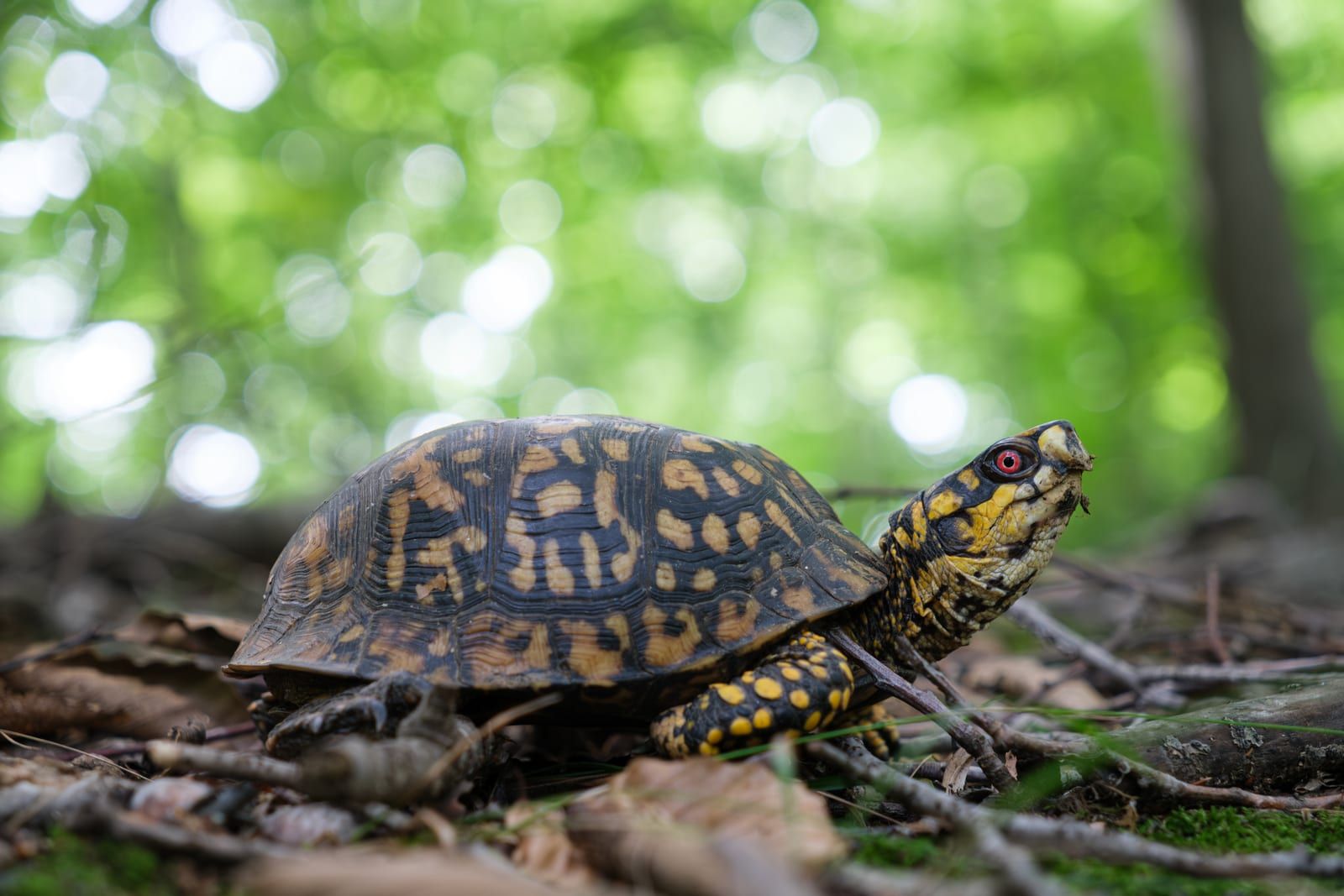
Eastern Box Turtle
Terrapene carolina — Emydidae
Native
- Description & ID
- terrestrial turtle with a high domed carapace and a hinged plastron allowing it to close completely; variable yellow-orange markings; males often have red eyes.
- Habitat
- moist deciduous woodlands, meadows, and field edges; terrestrial.
- County status
- present and well-recorded; 50 research-grade records [S1].
- Conservation status
- native; PA NatureServe S3S4 (vulnerable) [S1][S9]; localities obscured. Long-lived, slow to mature, and sensitive to road mortality and collection. (confirm against PNHP)
- Notes
- strong site fidelity to a small home range; omnivorous. Do not relocate individuals — it disrupts populations.
More on Wikipedia →
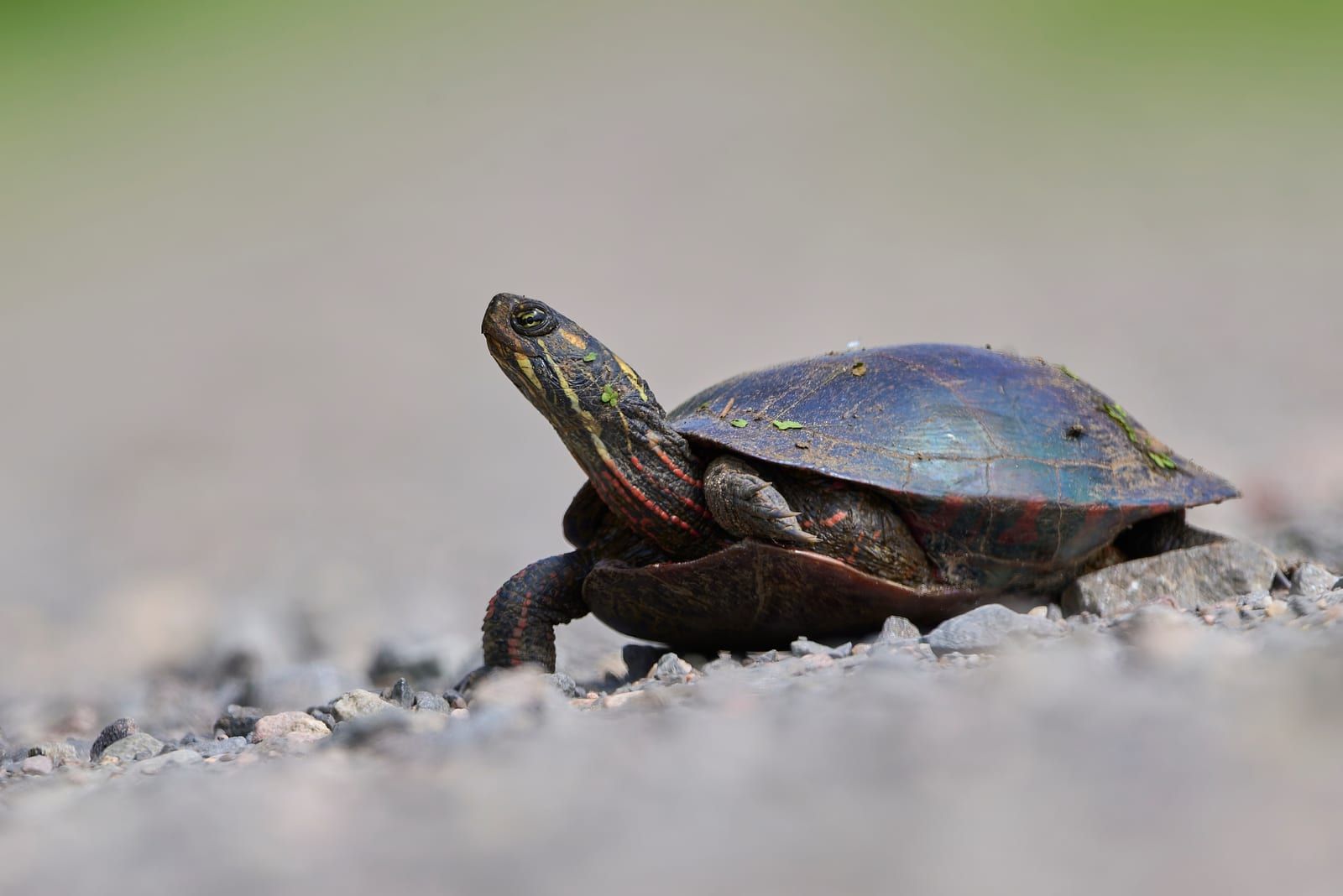
Painted Turtle
Chrysemys picta — Emydidae
Native
- Description & ID
- smooth dark carapace with red markings on the marginal scutes and yellow stripes on head and limbs.
- Habitat
- ponds, marshes, and slow streams with soft bottoms and basking sites.
- County status
- present and common; 27 research-grade records [S1].
- Conservation status
- native; secure. (confirm against PNHP)
- Notes
- the most familiar basking turtle; omnivorous.
More on Wikipedia →
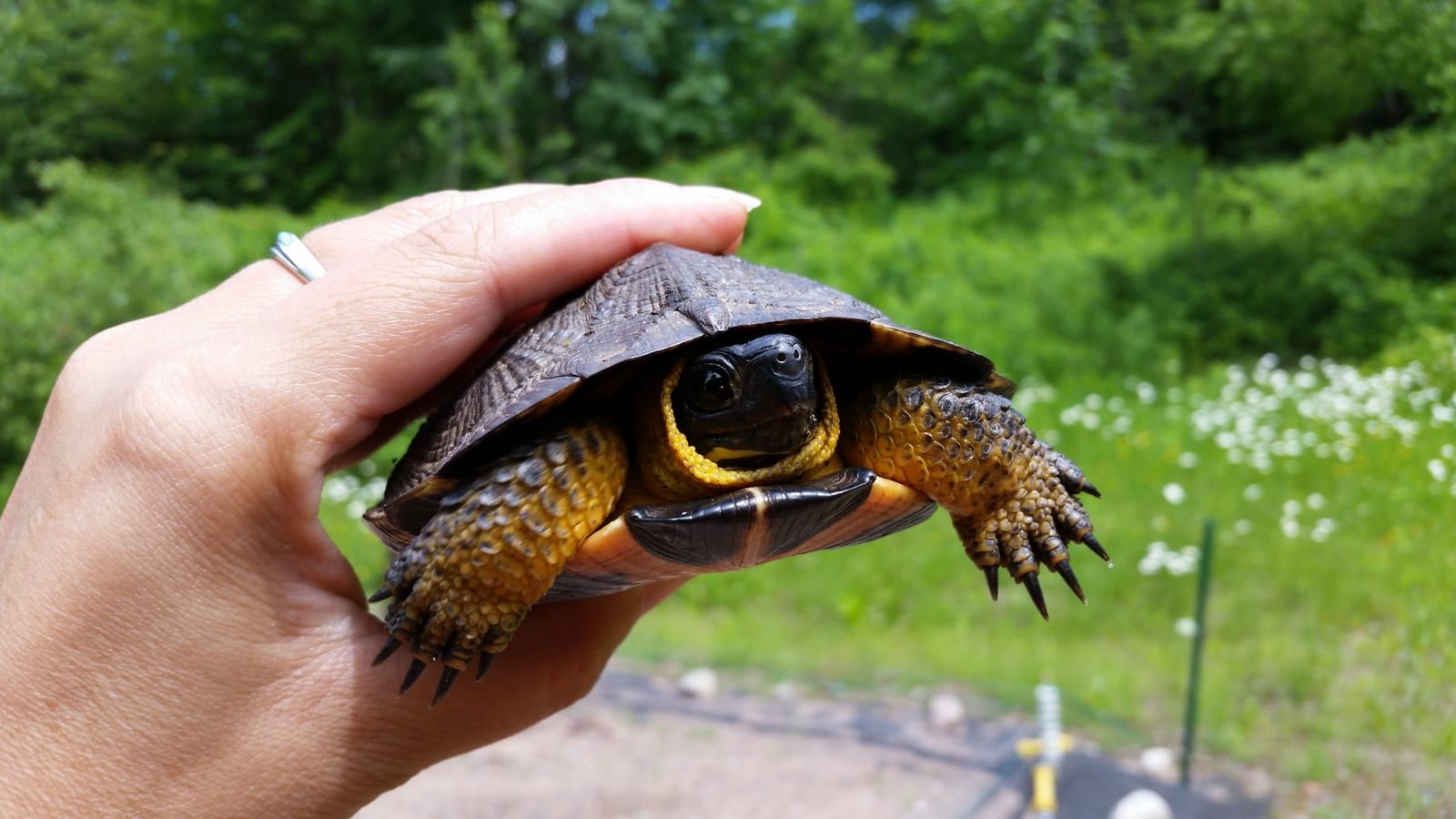
Wood Turtle
Glyptemys insculpta — Emydidae
Native
- Description & ID
- sculpted, pyramidal carapace scutes; orange coloring on neck and legs.
- Habitat
- clear streams and adjacent riparian woodlands and meadows; semi-terrestrial.
- County status
- present; 29 research-grade records [S1].
- Conservation status
- native; vulnerable (NatureServe N3) [S1][S9]; localities obscured. Declining range-wide due to habitat loss and collection. (confirm against PNHP)
- Notes
- intelligent forager; highly vulnerable to illegal collection — never share locations.
More on Wikipedia →
Spotted Turtle
Clemmys guttata — Emydidae
Native
- Description & ID
- small black turtle dotted with yellow spots on carapace, head, and limbs.
- Habitat
- shallow wetlands, bogs, fens, vernal pools, and wet meadows.
- County status
- present; 3 research-grade records [S1].
- Conservation status
- native; PA S3S4 (vulnerable) [S1][S9]; localities obscured. Wetland loss and collection are key threats. (confirm against PNHP)
- Notes
- active early in spring; semi-aquatic.
More on Wikipedia →
Eastern Musk Turtle
Sternotherus odoratus — Kinosternidae
Native
- Also known as
- stinkpot.
- Description & ID
- small, high-domed turtle with two light stripes on the head; releases a musky odor when handled.
- Habitat
- slow, soft-bottomed waters; highly aquatic, rarely basks.
- County status
- present; 4 research-grade records [S1].
- Conservation status
- native; secure. (confirm against PNHP)
- Notes
- often walks along the bottom rather than swimming.
More on Wikipedia →
Northern Map Turtle
Graptemys geographica — Emydidae
Native
- Description & ID
- olive carapace with fine maplike yellow lines and a low keel; yellow spot behind the eye.
- Habitat
- larger rivers and lakes; strongly aquatic.
- County status
- present; 1 research-grade record [S1] — uncommon, associated with larger waterways.
- Conservation status
- native; secure in PA. (confirm against PNHP)
- Notes
- females much larger than males; eats mollusks and crayfish.
More on Wikipedia →
Pond Slider (Red-eared Slider)
Trachemys scripta — Emydidae
Introduced
- Description & ID
- the familiar pet-trade turtle; T. s. elegans has a red ear stripe.
- Habitat
- ponds and slow water; tolerant of disturbed habitats.
- County status
- present; 9 research-grade records [S1]. Introduced to the county (released pets) [S1].
- Conservation status
- non-native; can compete with native turtles. (confirm against PNHP)
- Notes
- breeding populations may establish from releases; included as a documented county occurrence.
More on Wikipedia →
Common Five-lined Skink
Plestiodon fasciatus — Scincidae
Native
- Description & ID
- smooth, glossy lizard; juveniles black with five cream stripes and a bright blue tail; adults fade to brown, breeding males develop orange jaws.
- Habitat
- rocky, wooded slopes, logs, stumps, and rock piles in sunny areas.
- County status
- present; 13 research-grade records [S1].
- Conservation status
- native; secure. (confirm against PNHP)
- Notes
- PA's most widespread lizard; drops its tail to escape predators.
More on Wikipedia →
Eastern Fence Lizard
Sceloporus undulatus — Phrynosomatidae
Native
- Description & ID
- rough, spiny-scaled gray-brown lizard; males show blue belly patches.
- Habitat
- dry, open woodlands, rocky outcrops, and forest edges; basks on logs and rocks.
- County status
- present; 2 research-grade records [S1].
- Conservation status
- native; PA S3 (vulnerable) [S1][S9]; localities obscured. PA's only spiny lizard, at the edge of its northern range. (confirm against PNHP)
- Notes
- climbs trees and rocks; relies on camouflage and quick dashes.
More on Wikipedia →
Brown Anole
Anolis sagrei — Dactyloidae
Introduced not established in the county
- Description & ID
- small brown anole native to the Caribbean; males have an orange-red dewlap.
- County status
- 2 research-grade records [S1], introduced/incidental — almost certainly hitchhikers on nursery plants rather than an established population (the species cannot overwinter in PA).
- Conservation status
- non-native; not established. (confirm against PNHP)
- Notes
- recorded for completeness; not part of the native fauna.
More on Wikipedia →
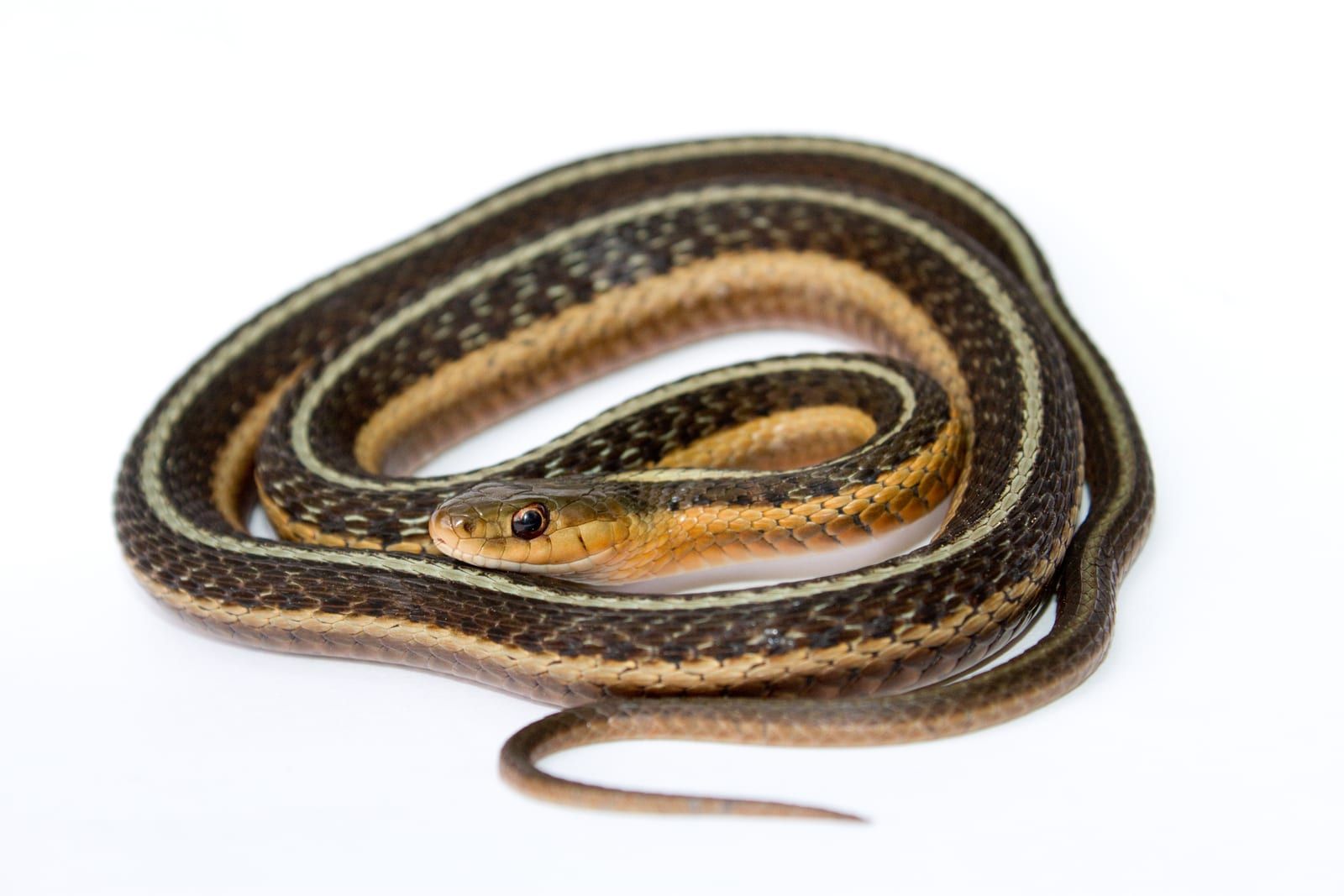
Common Garter Snake
Thamnophis sirtalis — Colubridae
Native
- Description & ID
- variable; typically three yellow stripes on a dark body. PA's most common snake.
- Habitat
- nearly everywhere — fields, woods, wetlands, gardens.
- County status
- present and abundant; 80 research-grade records — the most-recorded reptile in the county [S1].
- Conservation status
- native; secure. (confirm against PNHP)
- Notes
- harmless; bears live young; eats earthworms, amphibians, and small prey.
More on Wikipedia →
Common Watersnake
Nerodia sipedon — Colubridae
Native
- Description & ID
- heavy-bodied, banded/blotched brown snake; darkens with age. Often misidentified as a "water moccasin" (which does not occur in PA).
- Habitat
- streams, ponds, lakes, and wetlands; basks on banks and overhanging branches.
- County status
- present and common; 49 research-grade records [S1].
- Conservation status
- native; secure. (confirm against PNHP)
- Notes
- non-venomous but bites readily and musks when handled; eats fish and amphibians.
More on Wikipedia →
Ring-necked Snake
Diadophis punctatus — Colubridae
Native
- Description & ID
- small, slate-gray snake with a yellow-orange neck ring and belly.
- Habitat
- moist woodlands under rocks, logs, and bark.
- County status
- present; 36 research-grade records [S1].
- Conservation status
- native; secure. (confirm against PNHP)
- Notes
- secretive; eats salamanders, worms, and small snakes.
More on Wikipedia →
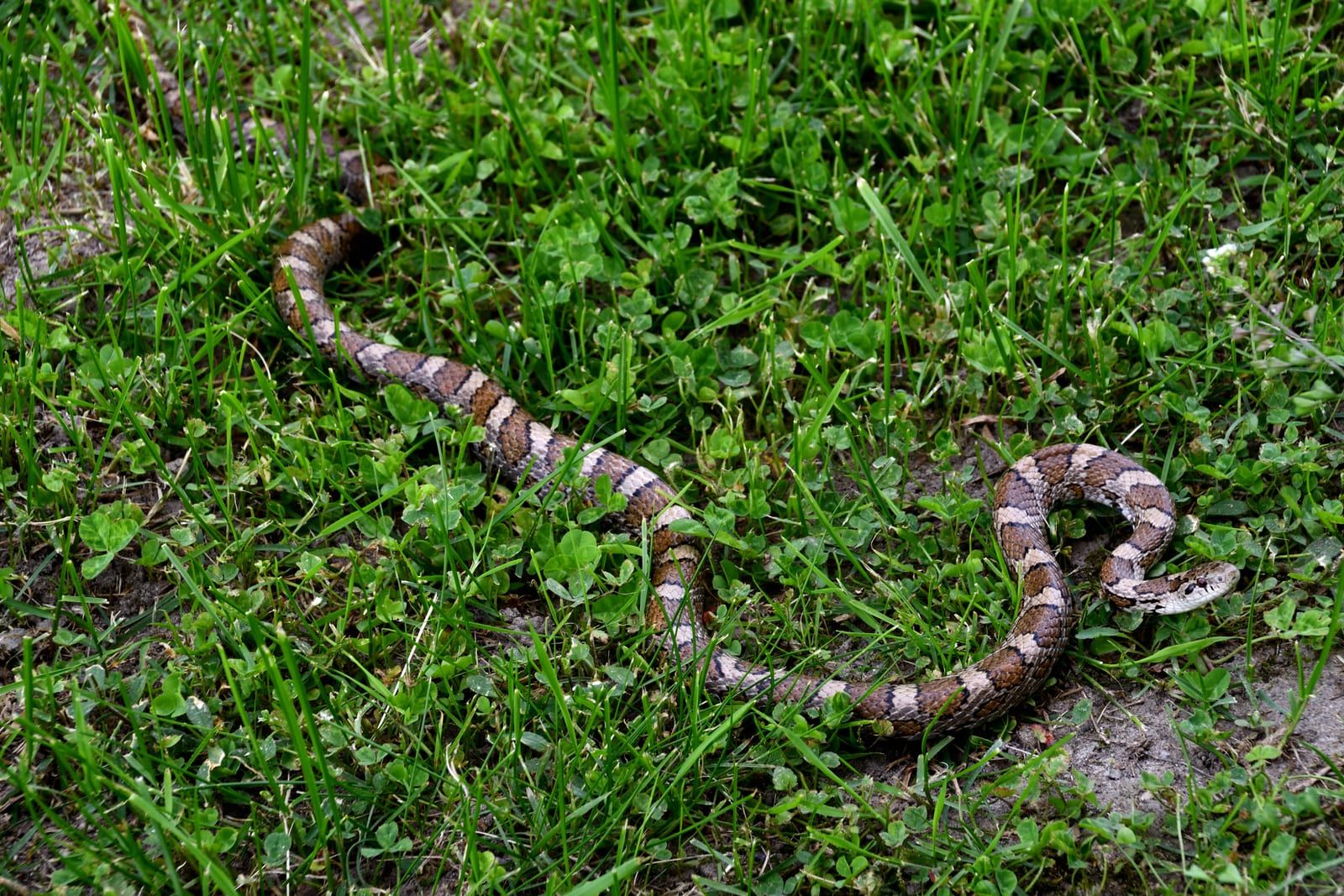
Eastern Milksnake
Lampropeltis triangulum — Colubridae
Native
- Description & ID
- gray with reddish-brown, black-bordered blotches; a "Y" or "V" mark on the nape. Often killed out of mistaken fear.
- Habitat
- fields, woodland edges, barns, and rocky areas.
- County status
- present; 25 research-grade records [S1].
- Conservation status
- native; secure. (confirm against PNHP)
- Notes
- harmless constrictor; eats rodents and other snakes — beneficial around farms.
More on Wikipedia →
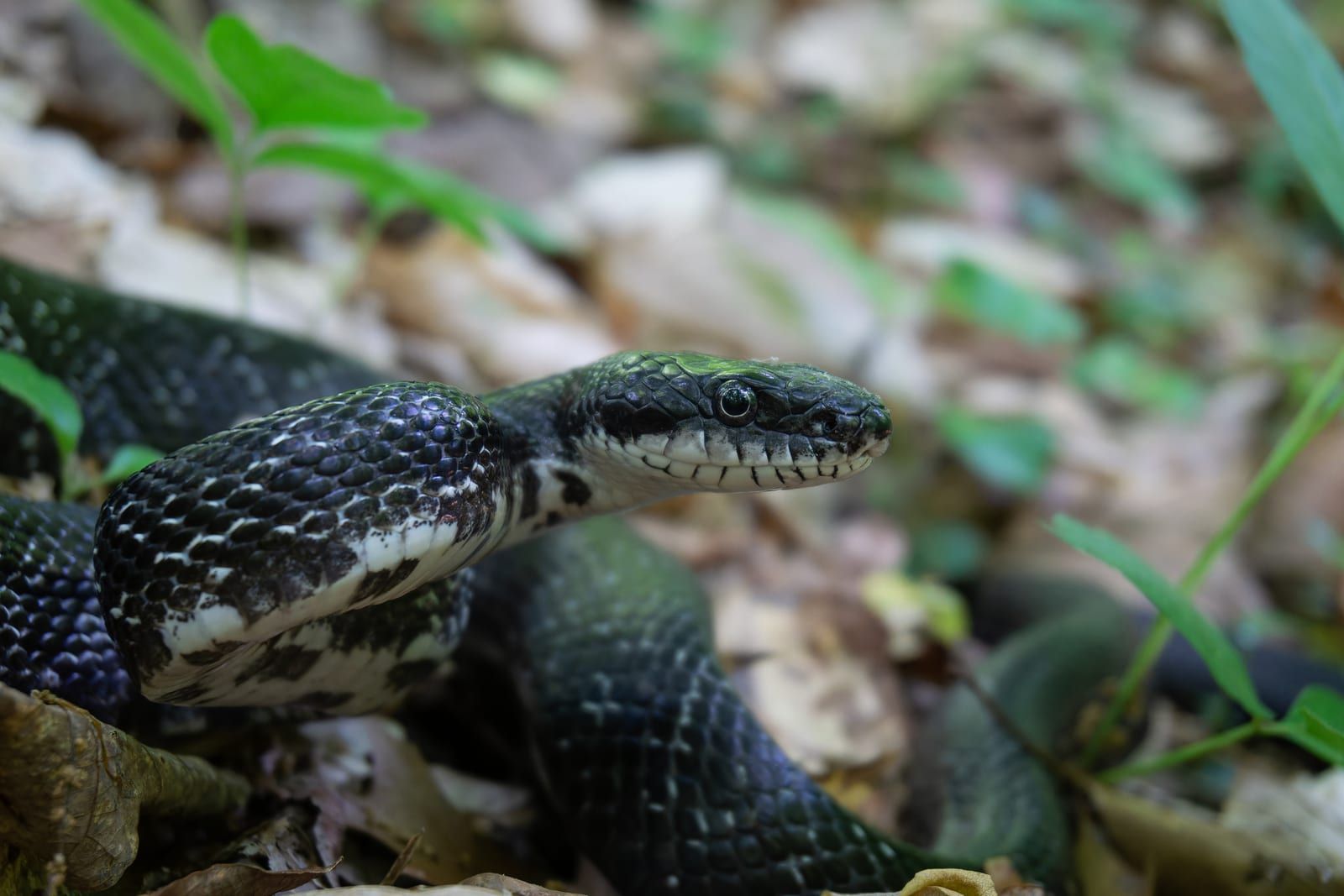
Eastern Ratsnake
Pantherophis alleghaniensis — Colubridae
Native
- Also known as
- black ratsnake.
- Description & ID
- PA's longest snake (to ~1.8 m); glossy black above, often with a pale chin and weak blotching.
- Habitat
- woodlands, farmland, and rocky hillsides; an excellent climber.
- County status
- present; 17 research-grade records [S1].
- Conservation status
- native; secure. (confirm against PNHP)
- Notes
- powerful constrictor controlling rodents; valuable around barns. (A few county records are entered as the closely related Gray Ratsnake, P. spiloides, 3 records [S1] — reflecting taxonomic boundary uncertainty in the region.)
More on Wikipedia →
North American Racer
Coluber constrictor — Colubridae
Native
- Also known as
- black racer.
- Description & ID
- slender, fast, uniformly black (eastern form) with a white chin; large eyes.
- Habitat
- open woods, fields, and brushy edges.
- County status
- present; 10 research-grade records [S1].
- Conservation status
- native; secure. (confirm against PNHP)
- Notes
- fast-moving, alert diurnal hunter; despite the name, not a constrictor.
More on Wikipedia →
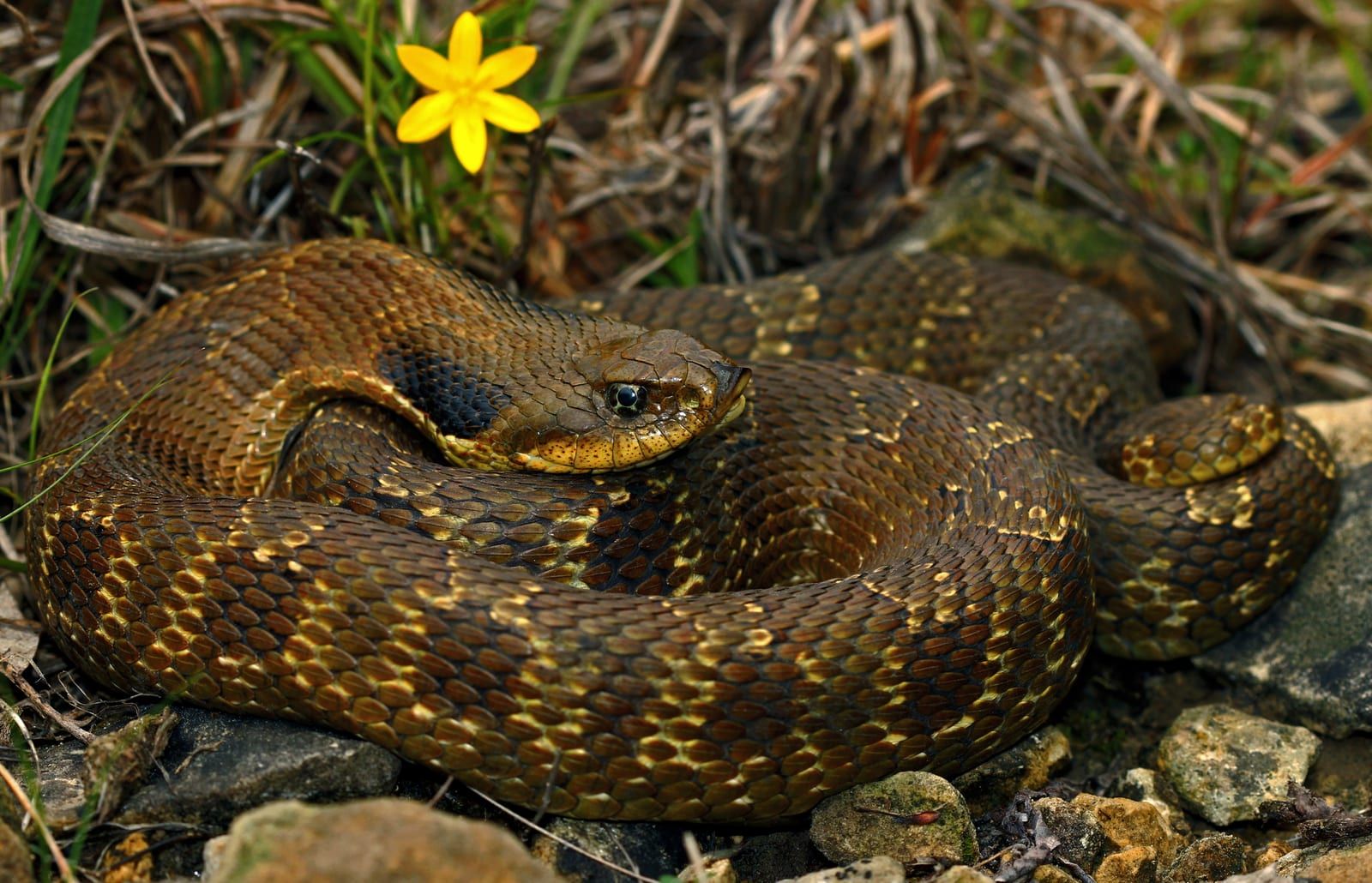
Eastern Hognose Snake
Heterodon platirhinos — Colubridae
Native
- Description & ID
- stout snake with an upturned snout; highly variable color. Famous for elaborate bluffing then playing dead.
- Habitat
- sandy or loose-soil areas, fields, and open woods.
- County status
- present; 7 research-grade records [S1].
- Conservation status
- native; secure but locally uncommon. (confirm against PNHP)
- Notes
- toad specialist; rear-fanged but essentially harmless to humans.
More on Wikipedia →
DeKay's Brownsnake
Storeria dekayi — Colubridae
Native
- Description & ID
- small brown snake with two rows of dark spots down the back; common even in cities.
- Habitat
- moist areas under cover; gardens, parks, vacant lots, woodland edges.
- County status
- present; 2 research-grade records [S1] (under-recorded).
- Conservation status
- native; secure. (confirm against PNHP)
- Notes
- harmless; eats earthworms and slugs.
More on Wikipedia →
Red-bellied Snake
Storeria occipitomaculata — Colubridae
Native
- Description & ID
- tiny snake with a bright red-orange belly and usually three pale neck spots.
- Habitat
- moist woodlands and edges, under logs and rocks.
- County status
- present; 2 research-grade records [S1].
- Conservation status
- native; secure. (confirm against PNHP)
- Notes
- harmless; a slug and snail specialist.
More on Wikipedia →
Smooth Greensnake
Opheodrys vernalis — Colubridae
Native
- Description & ID
- slender, bright green snake with a white-yellow belly; blends into grass.
- Habitat
- moist meadows, grassy fields, and marsh edges.
- County status
- present; 1 research-grade record [S1] — secretive and easily overlooked.
- Conservation status
- native; secure but declining in some areas due to pesticide impacts on its insect prey. (confirm against PNHP)
- Notes
- one of the few insectivorous snakes; harmless.
More on Wikipedia →
Queensnake
Regina septemvittata — Colubridae
Native
- Description & ID
- slender brown snake with yellowish lower stripes; specialized on freshly molted crayfish.
- Habitat
- clean, rocky streams with crayfish; highly water-quality dependent.
- County status
- present; 1 research-grade record [S1].
- Conservation status
- native; PA S3S4 (vulnerable) [S1][S9]; localities obscured. An indicator of good stream health. (confirm against PNHP)
- Notes
- decline tracks crayfish and water-quality loss.
More on Wikipedia →
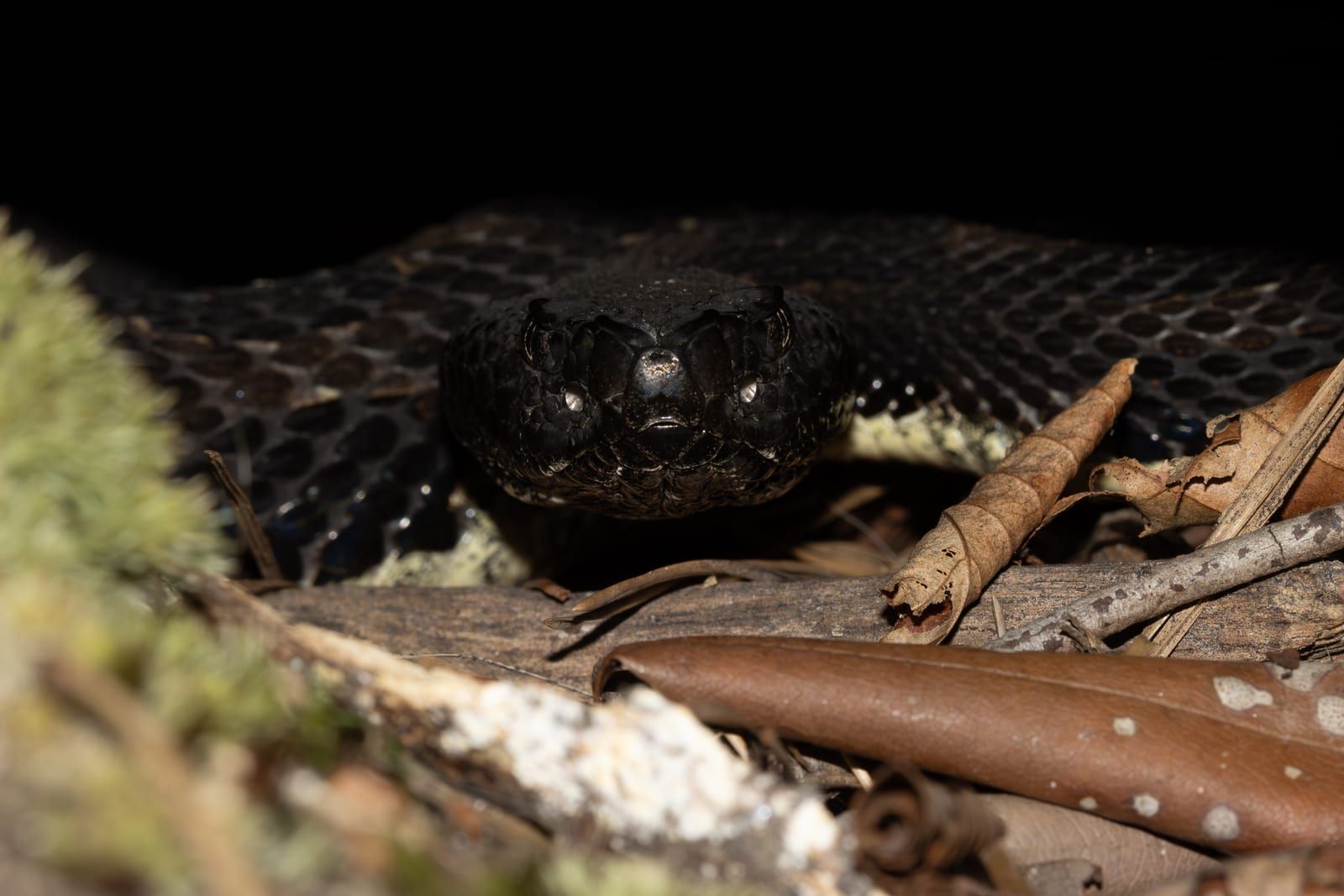
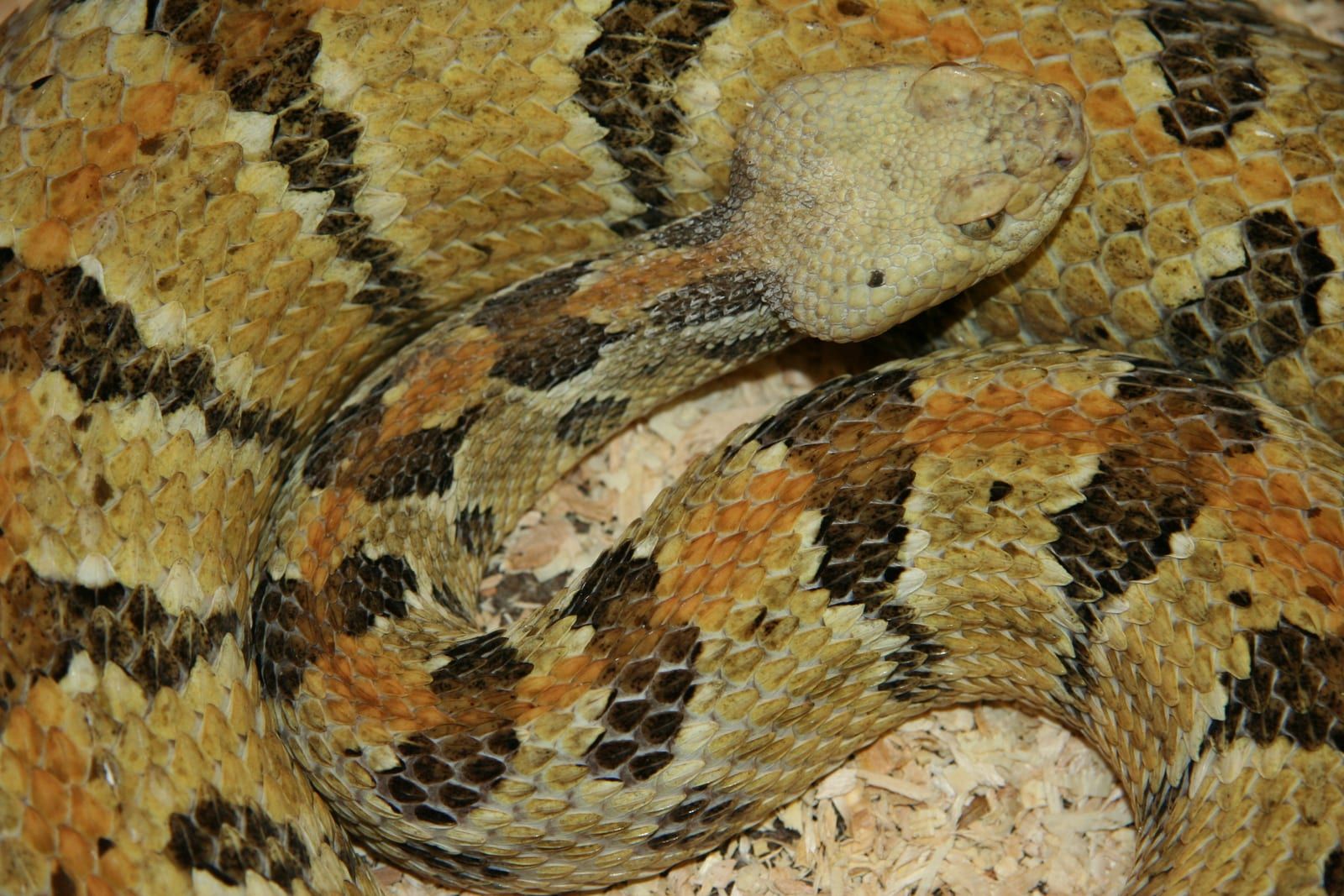
Timber Rattlesnake venomous
Crotalus horridus — Viperidae
Native venomous
- Description & ID
- large, heavy-bodied pit viper with dark chevron crossbands, a rattle, and a broad head; yellow and black color morphs occur. PA's largest venomous snake.
- Habitat
- forested rocky ridges, talus slopes, and den sites; basks near gestation areas.
- County status
- present; 32 research-grade records [S1] — well-documented on the county's ridges.
- Conservation status
- native; PA S3S4 (vulnerable) [S1][S9]; a PA "candidate" species with regulated, permit-only harvest; localities obscured. (confirm against PNHP)
- Notes
- venomous — observe from a distance and do not handle. Generally non-aggressive; vital rodent predator. Slow-reproducing and den-site dependent, making it vulnerable to persecution and collection.
More on Wikipedia →
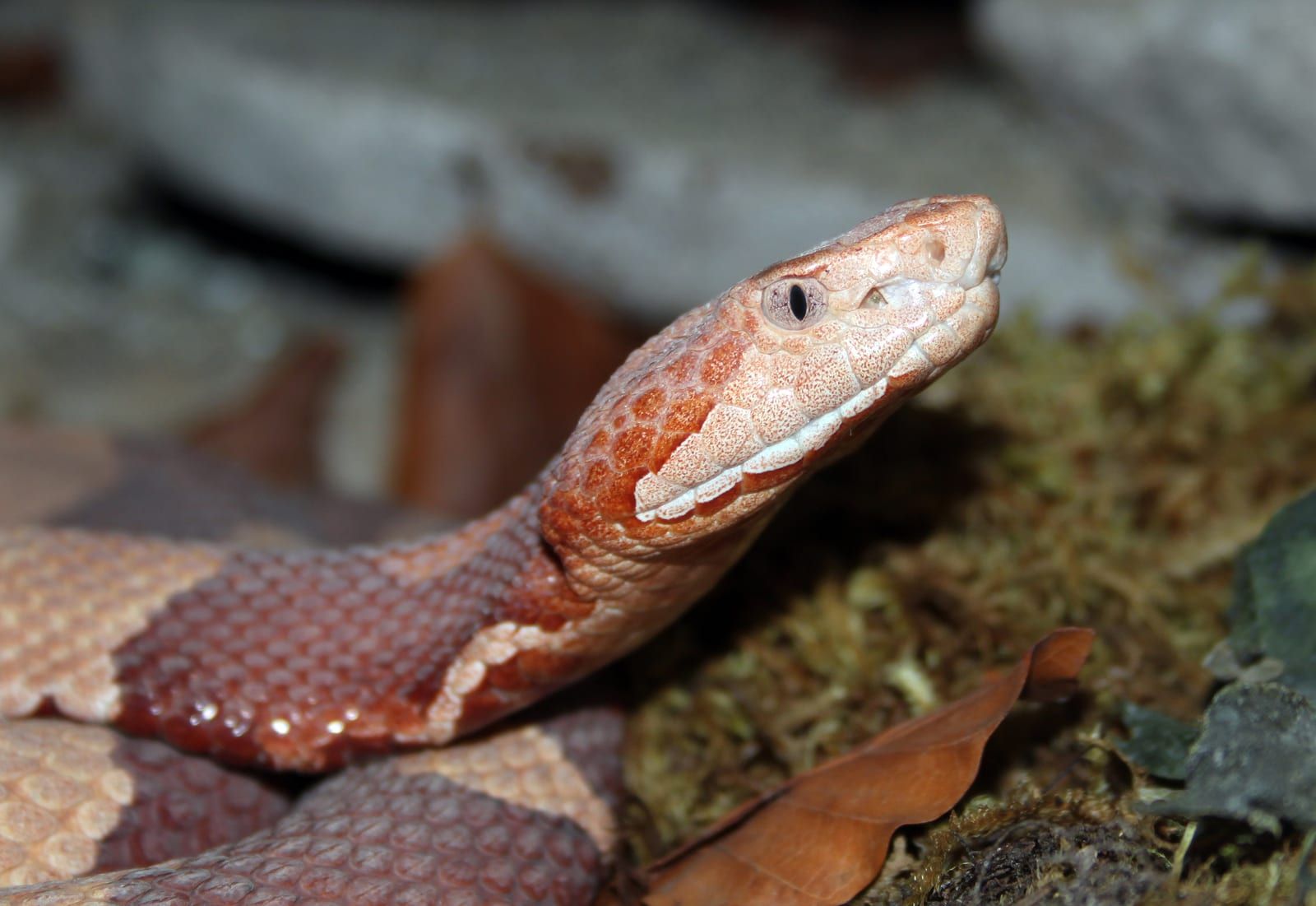
Eastern Copperhead venomous
Agkistrodon contortrix — Viperidae
Native venomous
- Description & ID
- coppery-tan pit viper with hourglass-shaped crossbands; coppery head. Juveniles have a yellow tail tip.
- Habitat
- rocky, wooded hillsides, stone walls, and woodland edges.
- County status
- present; 9 research-grade records [S1].
- Conservation status
- native; PA S3S4 (vulnerable) [S1][S9]; localities obscured. (confirm against PNHP)
- Notes
- venomous — do not handle; bites are rarely fatal but require medical care. Well camouflaged in leaf litter; relies on ambush.
More on Wikipedia →
Complete checklist
Every taxon recorded research-grade for Schuylkill County as of 2026-06-18,
by provenance tier. 24 are
iNaturalist research-grade records.
24 iNaturalist county records
Expected but not yet confirmed
These species plausibly occur in the county's habitats but lack a
county-level record as of 2026-06-18. They are candidates, not
county records — listed so the checklist's silence on them is not
mistaken for confirmed absence, and excluded from the counts and the dataset
above. Confirmation should cite a county-level record.
- Eastern Wormsnake (Carphophis amoenus) — Eastern Gartersnake intergrades.
- Northern Ribbonsnake (Thamnophis sauritus) — Eastern Gartersnake intergrades.
- Shorthead Gartersnake (Thamnophis brachystoma) — Eastern Gartersnake intergrades.
- Eastern Spiny Softshell (Apalone spinifera) — along major waterways.
Sources
← All wildlife