28 documented taxa of class Mammalia recorded in Schuylkill County, Pennsylvania — by iNaturalist research-grade records as of 2026-06-18 — with detailed accounts of the most notable, signature, and introduced species.
How this list is sourced. County presence is anchored to
records filtered to Schuylkill County — iNaturalist research-grade
observations (place 1470).
Observation counts are an effort-biased signal of recording activity as of
2026-06-18, not a census. Biology and identification draw on state
and museum authorities; per-species links go to Wikipedia for cross-reference
only.
Conservation ranks here are relayed from NatureServe / iNaturalist and are not definitive Pennsylvania ranks — confirm against the Pennsylvania Natural Heritage Program (PNHP) before relying on them.
Detailed accounts
28 of the 28 documented taxa are
profiled in detail below — the most-recorded, signature, introduced, and
notable species. The complete checklist follows.
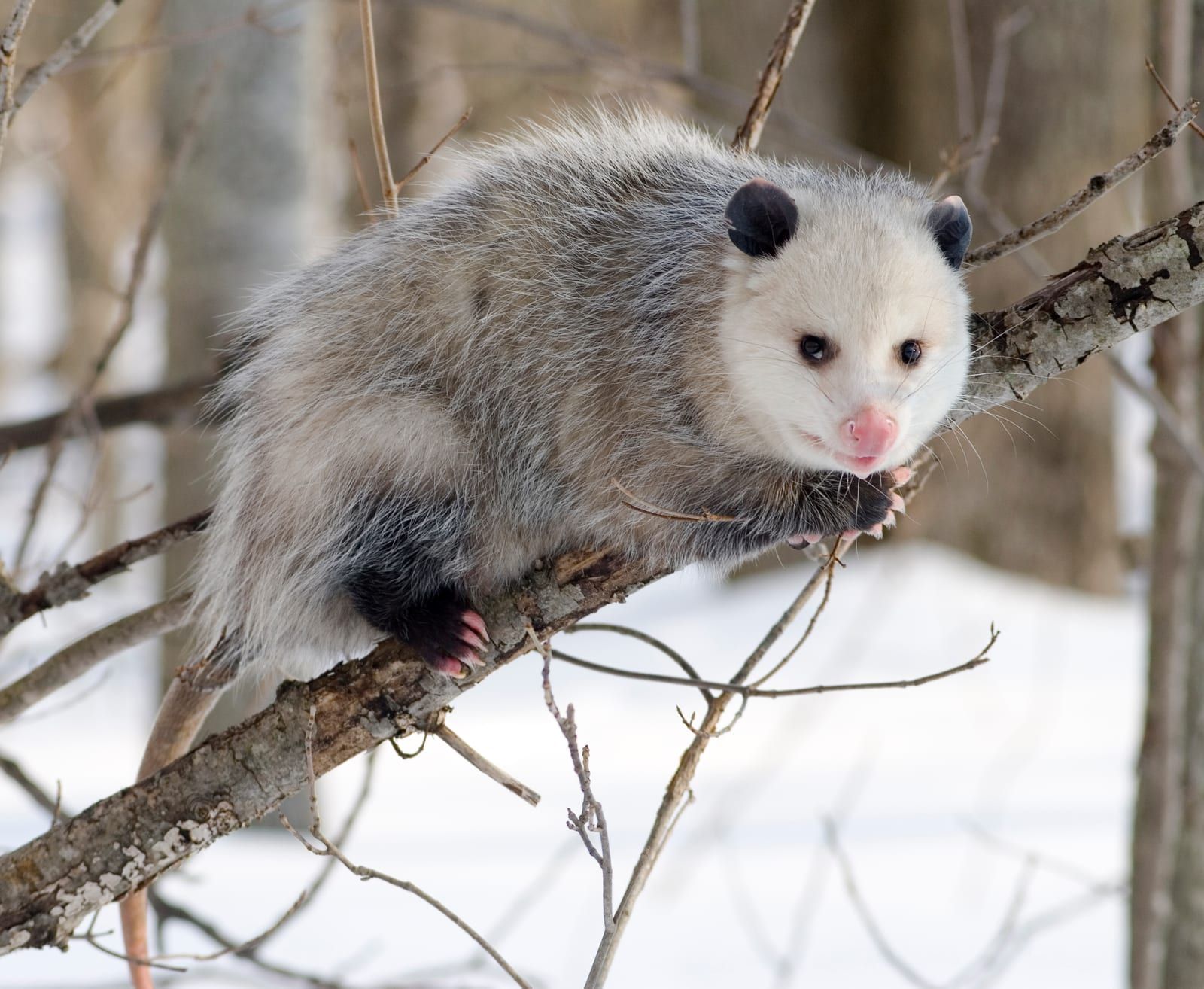
Virginia Opossum
Didelphis virginiana — Didelphidae
Native
Virginia opossum (Didelphis virginiana), North America's only marsupial, with a pointed white face and hairless ears. Photo: Cody Pope / CC BY-SA 2.5, via Wikimedia Commons
Also known as
opossum, possum.
Description & ID
house-cat-sized, grizzled gray fur, pointed white face, naked scaly prehensile tail, hairless ears, opposable hind "thumbs." Up to ~50 prominent teeth.
native and present; 4 research-grade iNaturalist records for the county [S1]. Common but under-recorded due to nocturnal habits.
Conservation status
native; secure. No special status. (confirm against PNHP)
Notes
omnivorous scavenger; famous for "playing possum" (involuntary tonic immobility). Low body temperature makes it a poor rabies reservoir; eats large numbers of ticks and carrion.
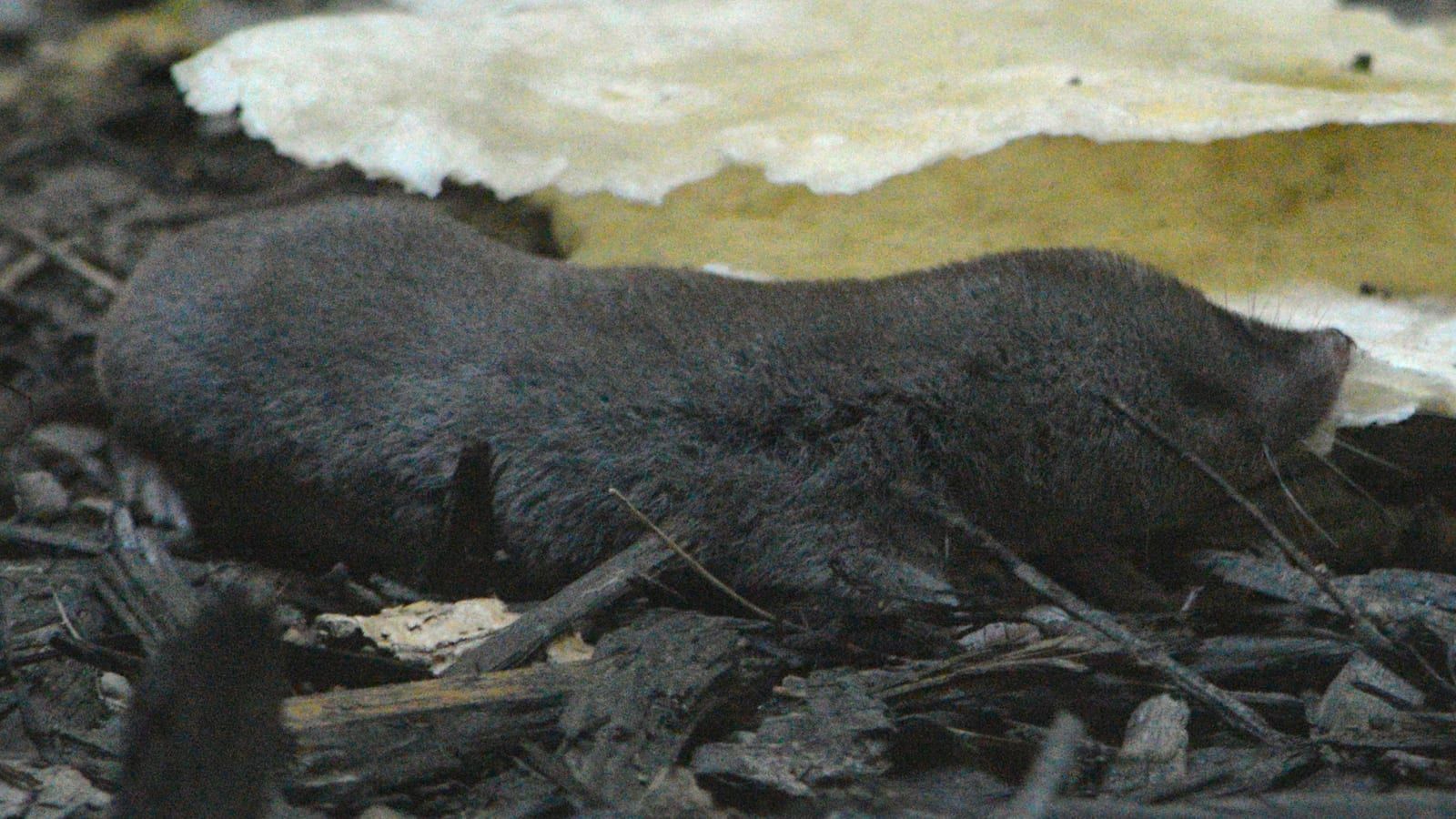
Northern short-tailed shrew (Blarina brevicauda), one of the few venomous mammals, with toxic saliva that subdues prey. Photo: Ryan Hodnett / CC BY-SA 4.0, via Wikimedia Commons
Also known as
big short-tailed shrew.
Description & ID
robust shrew, slate-gray velvety fur, very short tail, tiny eyes, concealed ears, long pointed snout. One of the few venomous mammals — toxic saliva subdues prey.
Habitat
moist woodlands, fields, and leaf litter with abundant cover; common in forest-floor runways.
County status
present; 8 research-grade iNaturalist records [S1] — relatively well-recorded for a shrew.
Conservation status
native; secure. (confirm against PNHP)
Notes
voracious insectivore that also eats small vertebrates; uses echolocation-like clicks. A key prey item for owls and foxes.
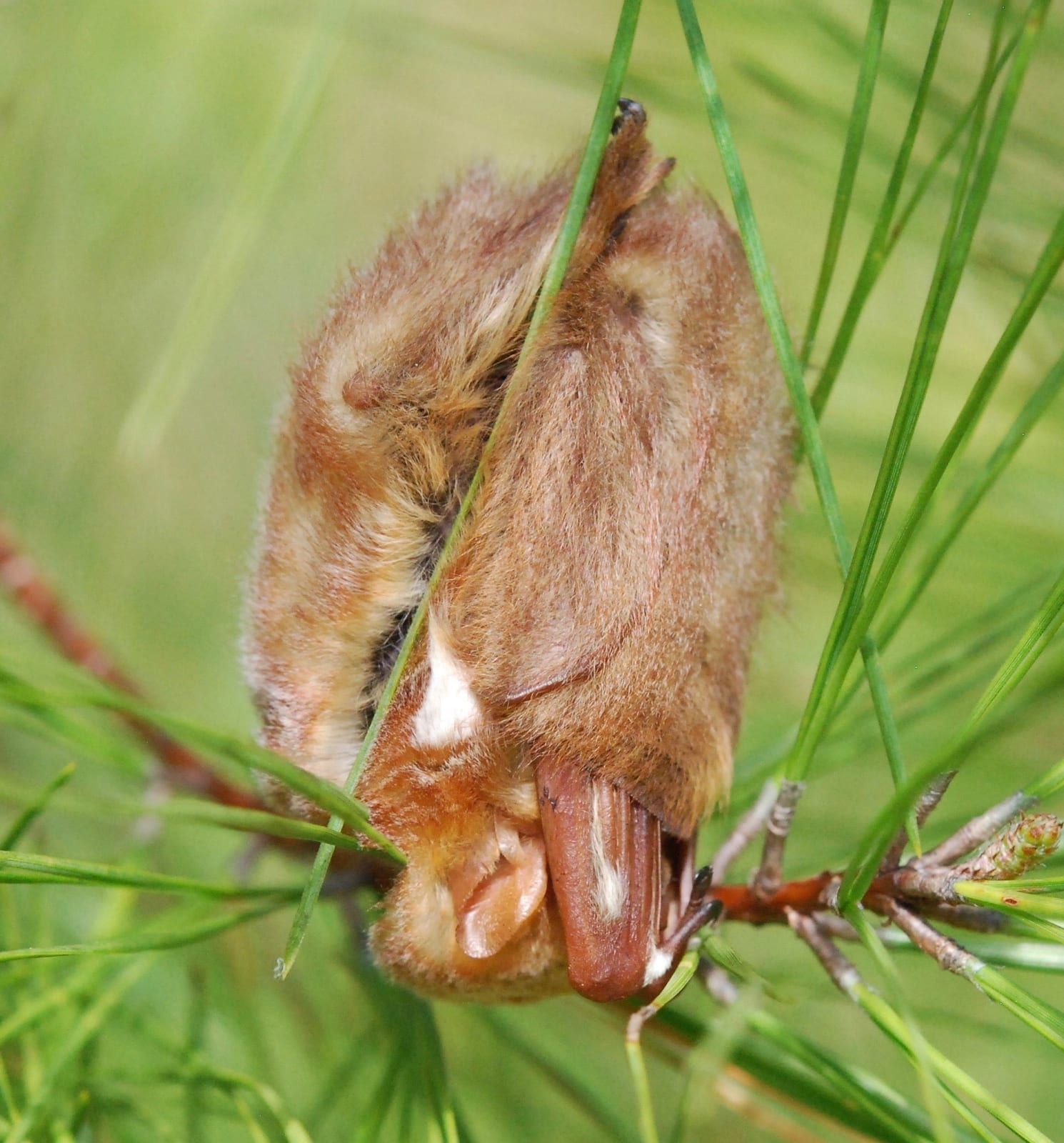
Eastern red bat (Lasiurus borealis), a solitary tree bat that roosts in foliage like a dead leaf. Photo: Christina Butler / CC BY 2.0, via Wikimedia Commons
Description & ID
medium tree bat with rusty-red to orange fur (males brighter), heavily furred tail membrane; roosts solitarily in foliage, resembling a dead leaf.
Habitat
woodland edges and riparian areas; a migratory, foliage-roosting species rather than a cave bat.
County status
present; 1 research-grade iNaturalist record [S1].
Conservation status
native; PA NatureServe rank S4 (apparently secure) [S1][S9]. Less affected by white-nose syndrome but vulnerable to wind turbines. (confirm against PNHP)
Notes
migrates south in winter; among the few mammals where females routinely bear large litters (up to 4–5 young).
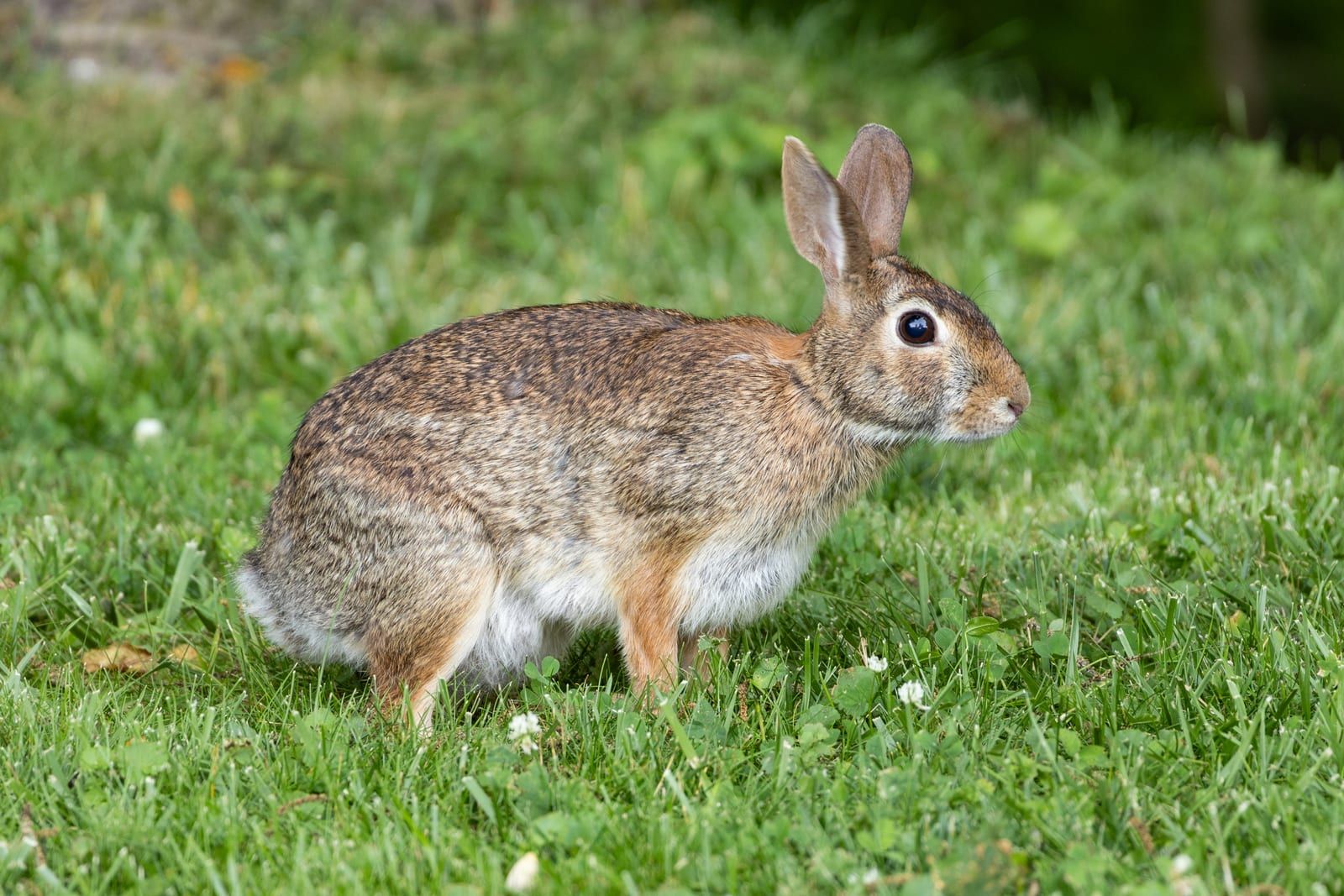
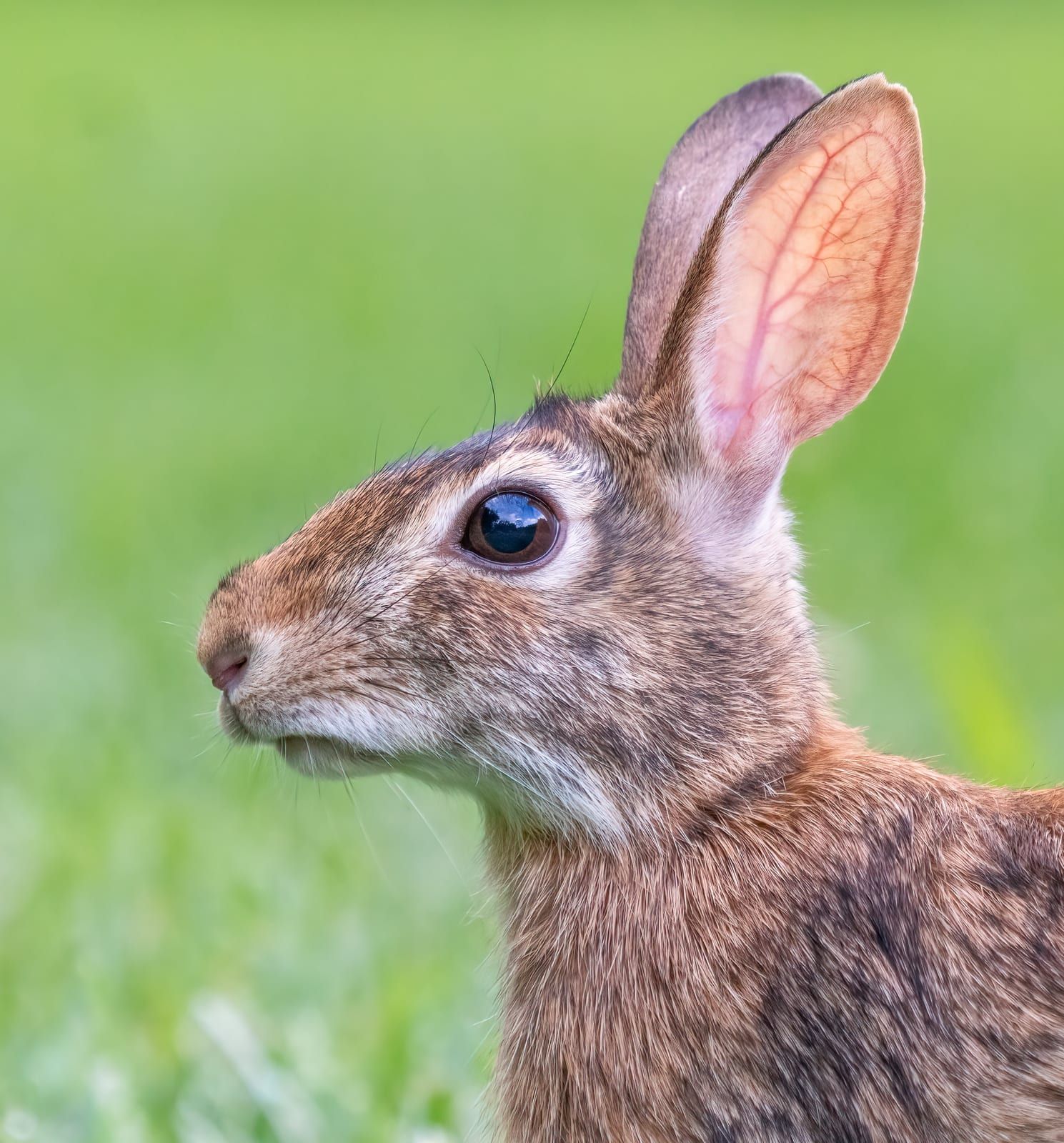
Eastern cottontail (Sylvilagus floridanus), the familiar brown rabbit of field edges and thickets. Photo: Chris Woodrich / CC BY-SA 4.0, via Wikimedia CommonsEastern cottontail (Sylvilagus floridanus), its large thin ears helping to shed heat and detect predators. Photo: Rhododendrites / CC BY-SA 4.0, via Wikimedia Commons
Description & ID
familiar brown rabbit with white cottony tail underside, large ears, rusty nape. Distinguishing it from the rare Appalachian cottontail requires close examination.
Habitat
brushy field edges, thickets, hedgerows, gardens, and early-successional habitat throughout the county.
County status
present and common; 24 research-grade iNaturalist records [S1] — among the most-recorded county mammals.
Conservation status
native; secure. A primary small-game species in PA [S5]. (confirm against PNHP)
Notes
prolific breeder; key prey for foxes, hawks, and owls. The very similar Appalachian cottontail (S. obscurus), a higher-elevation species of conservation concern, may occur on the county's ridges but is not confirmed by county research-grade records.
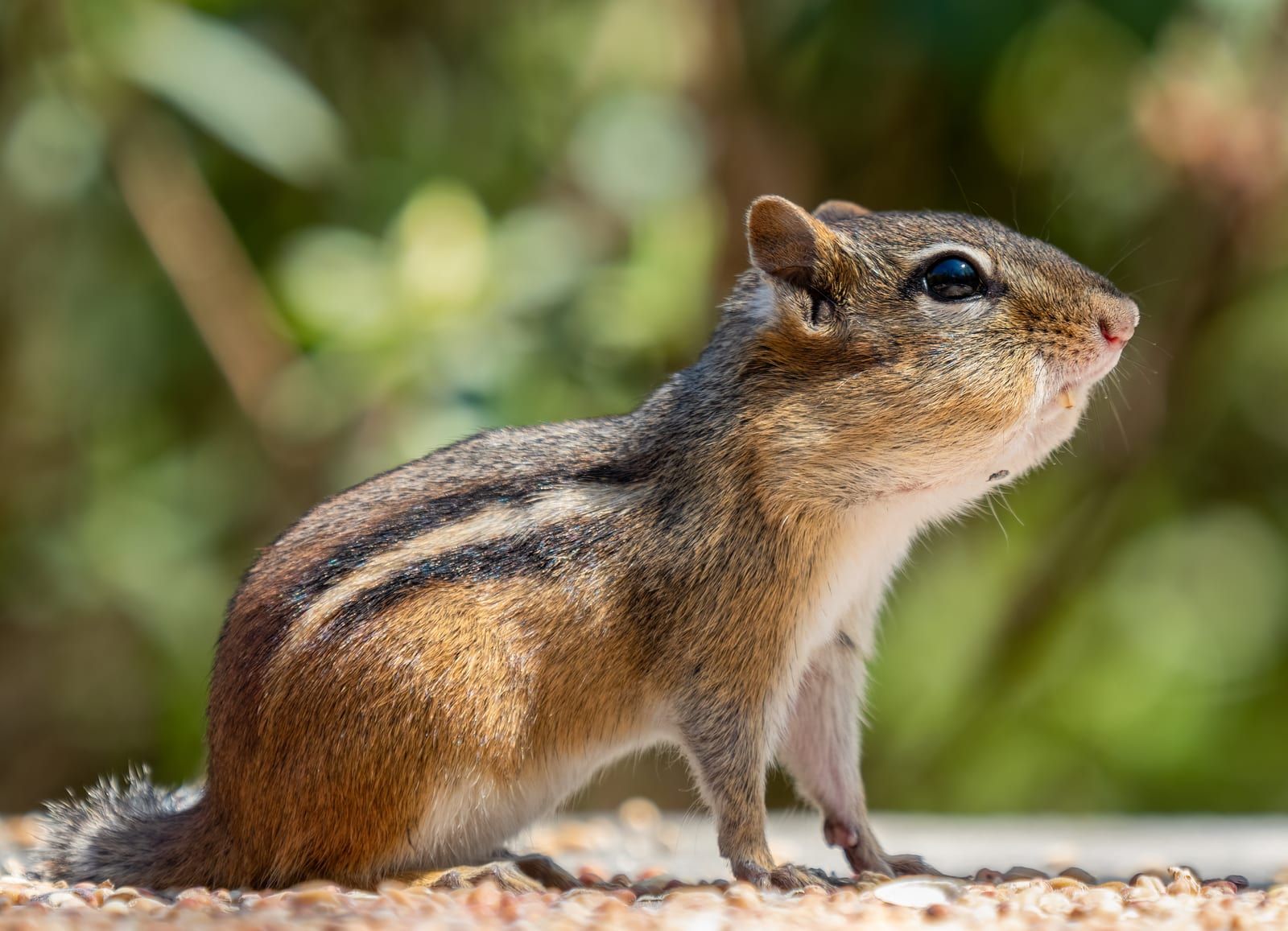
Eastern chipmunk (Tamias striatus), a small striped ground squirrel with cheek pouches for caching seeds. Photo: Rhododendrites / CC BY-SA 4.0, via Wikimedia Commons
Description & ID
small ground squirrel, reddish-brown with five dark and two light dorsal stripes and striped face; cheek pouches for caching seeds.
Habitat
deciduous woodlands, stone walls, woodpiles, suburban edges; needs cover and burrow sites.
County status
present and abundant; 62 research-grade iNaturalist records — the most-recorded mammal in the county [S1].
Conservation status
native; secure. (confirm against PNHP)
Notes
semi-hibernates, waking to feed from cached stores. Important seed disperser and prey species.
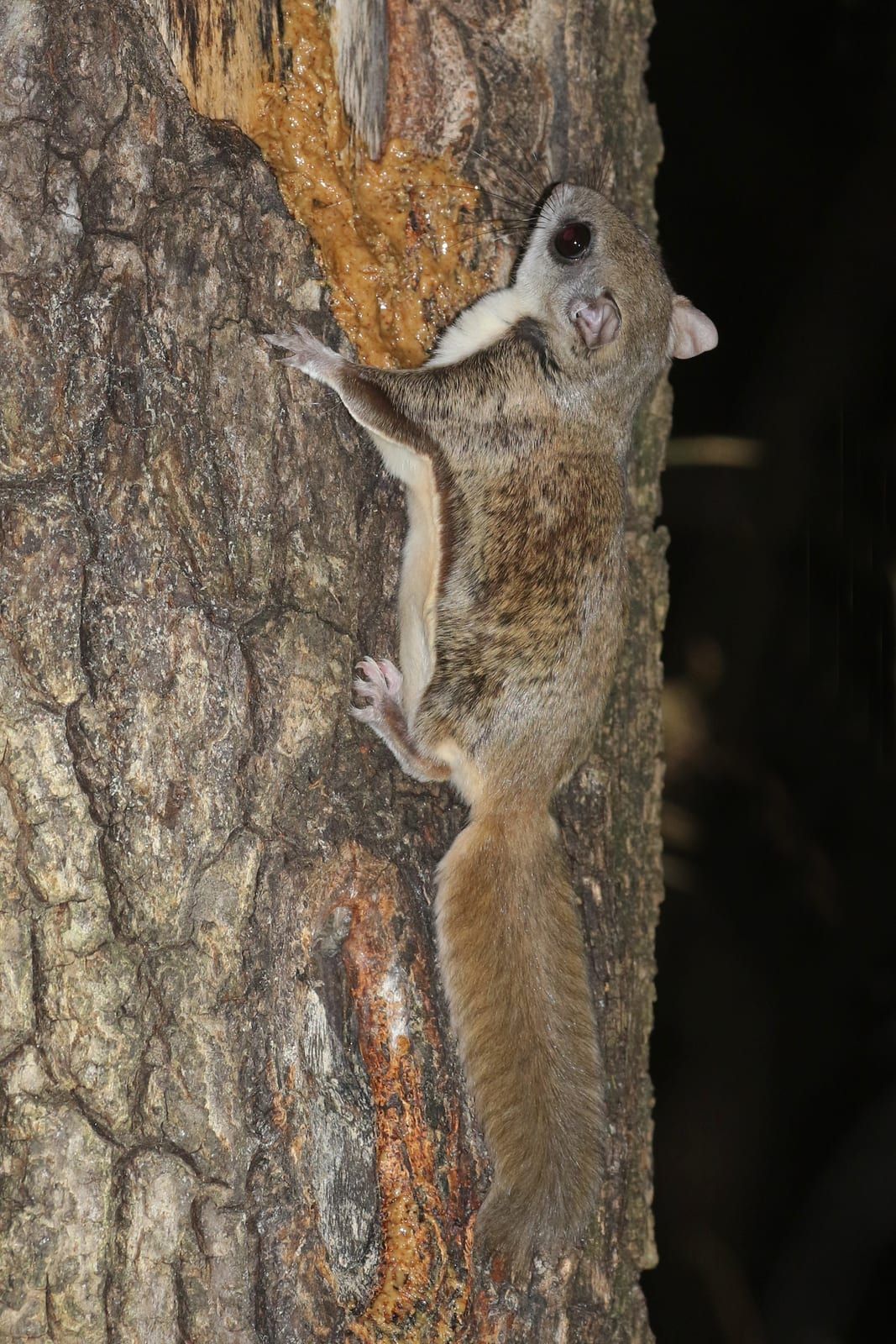
Southern flying squirrel (Glaucomys volans), a nocturnal squirrel that glides between trees on a membrane of skin. Photo: Judy Gallagher / CC BY 2.0, via Wikimedia Commons
Description & ID
small, nocturnal, soft gray-brown fur, large dark eyes, and a patagium (gliding membrane) between fore- and hind-limbs; flattened tail.
Habitat
mature deciduous and mixed forests with cavities; often unnoticed despite being common.
County status
present; 4 research-grade iNaturalist records [S1] — under-recorded due to nocturnality.
Conservation status
native; secure. (The northern flying squirrel, G. sabrinus, is state-endangered but a higher-elevation specialist not confirmed for the county.) (confirm against PNHP)
Notes
glides up to ~45 m between trees; cavity-nester that caches nuts. Largely insectivorous/omnivorous.
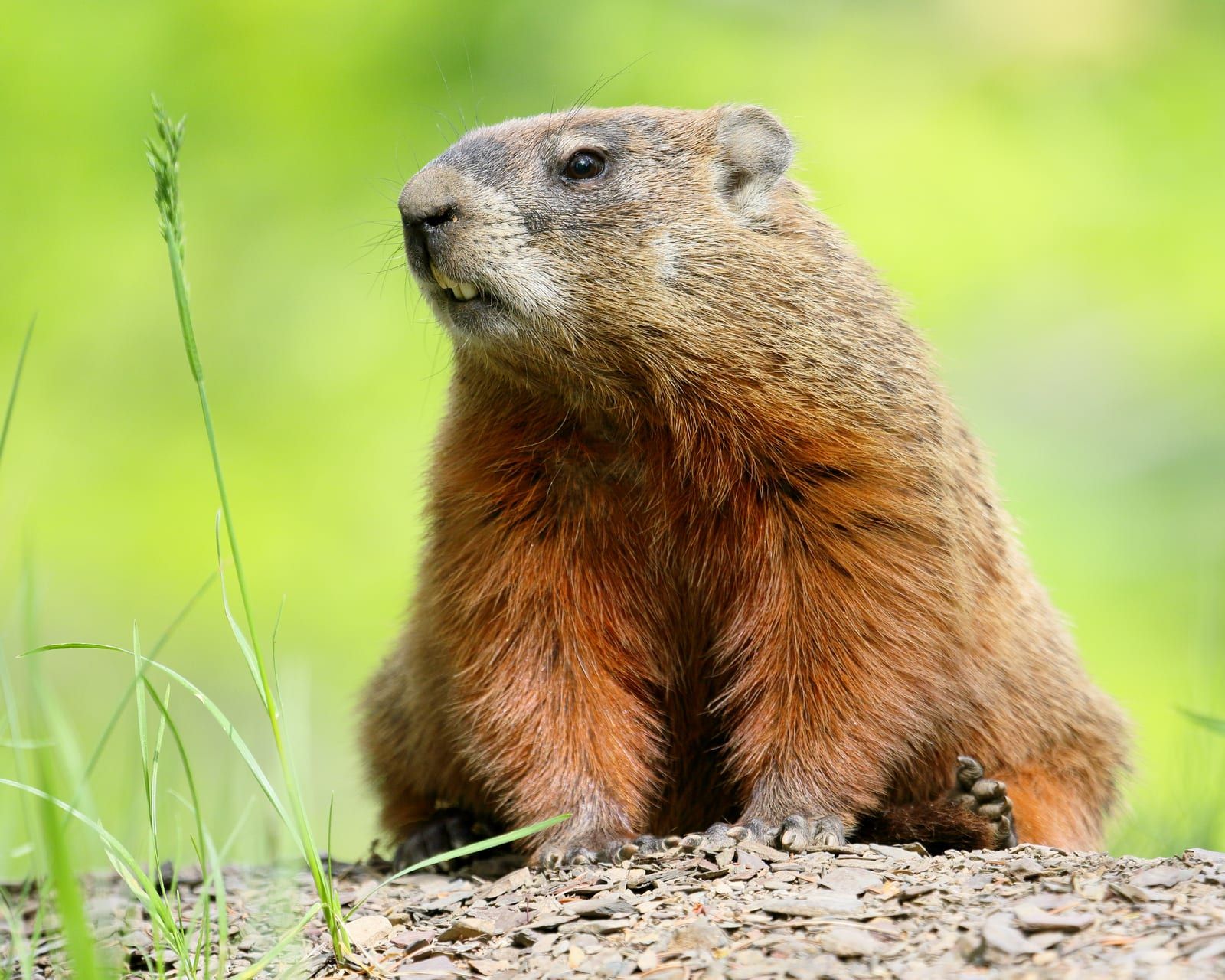
Groundhog (Marmota monax), also called the woodchuck, the largest member of the squirrel family in Pennsylvania. Photo: Cephas / CC BY-SA 4.0, via Wikimedia Commons
Also known as
woodchuck, whistle-pig.
Description & ID
stout, grizzled brown marmot with short legs and bushy tail; the largest sciurid in PA.
Habitat
field edges, meadows, roadsides, fencerows; digs extensive burrows.
County status
present and common; 23 research-grade iNaturalist records [S1].
Conservation status
native; secure. (confirm against PNHP)
Notes
a true hibernator. Abandoned burrows shelter foxes, skunks, and rabbits. Herbivorous.
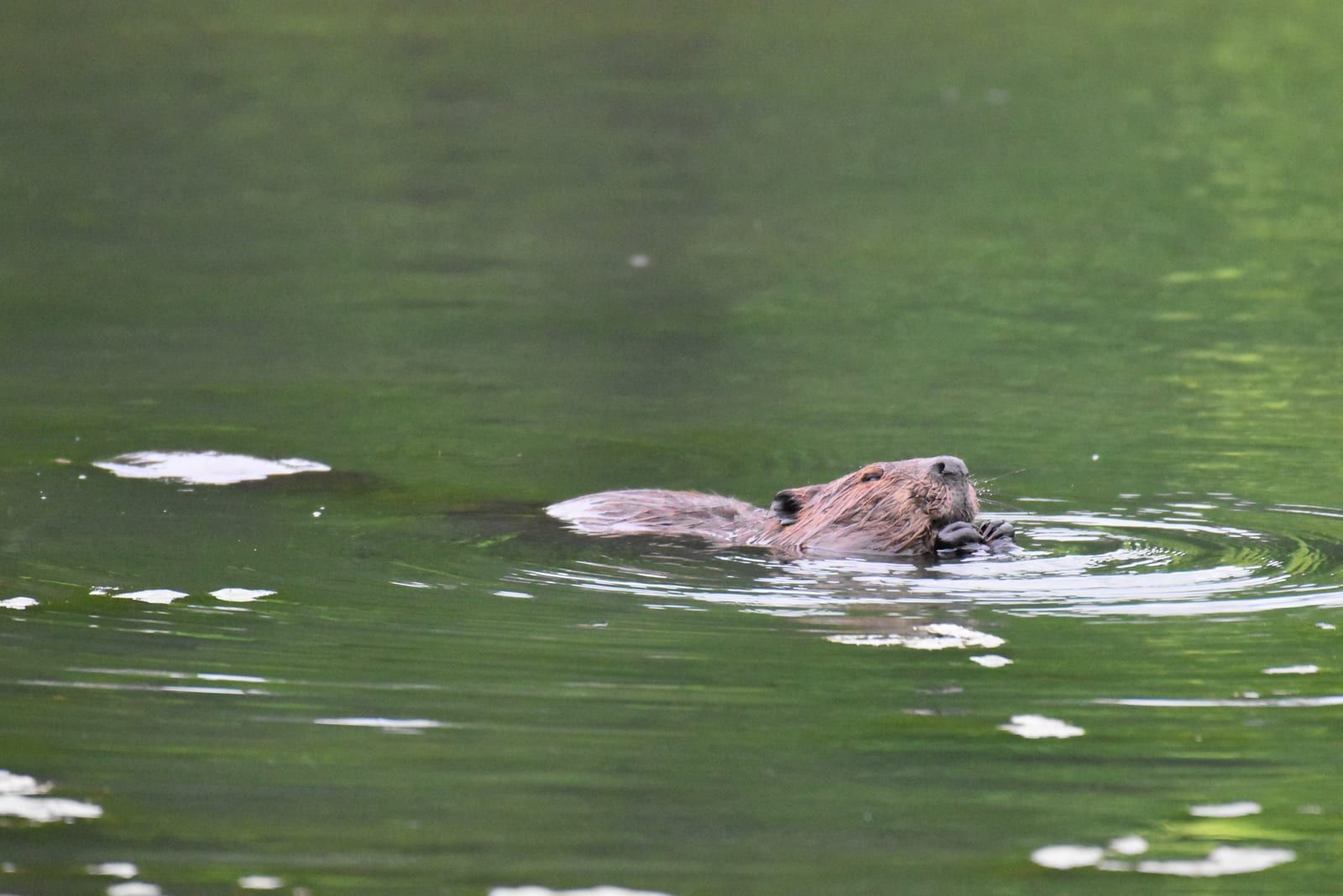
American beaver (Castor canadensis), the largest North American rodent, holding food at the water's surface. Photo: Laura Wolf / CC BY 2.0, via Wikimedia Commons
Description & ID
largest North American rodent; dense brown fur, webbed hind feet, and a flat scaly paddle tail.
Habitat
streams, ponds, and wetlands with woody vegetation; builds dams and lodges.
County status
present; 1 research-grade iNaturalist record [S1]. Extirpated historically in PA and restored through 20th-century reintroduction [S5].
Conservation status
native; secure and managed as a furbearer [S5]. (confirm against PNHP)
Notes
keystone ecosystem engineer — its dams create wetlands benefiting fish, amphibians, and waterfowl.
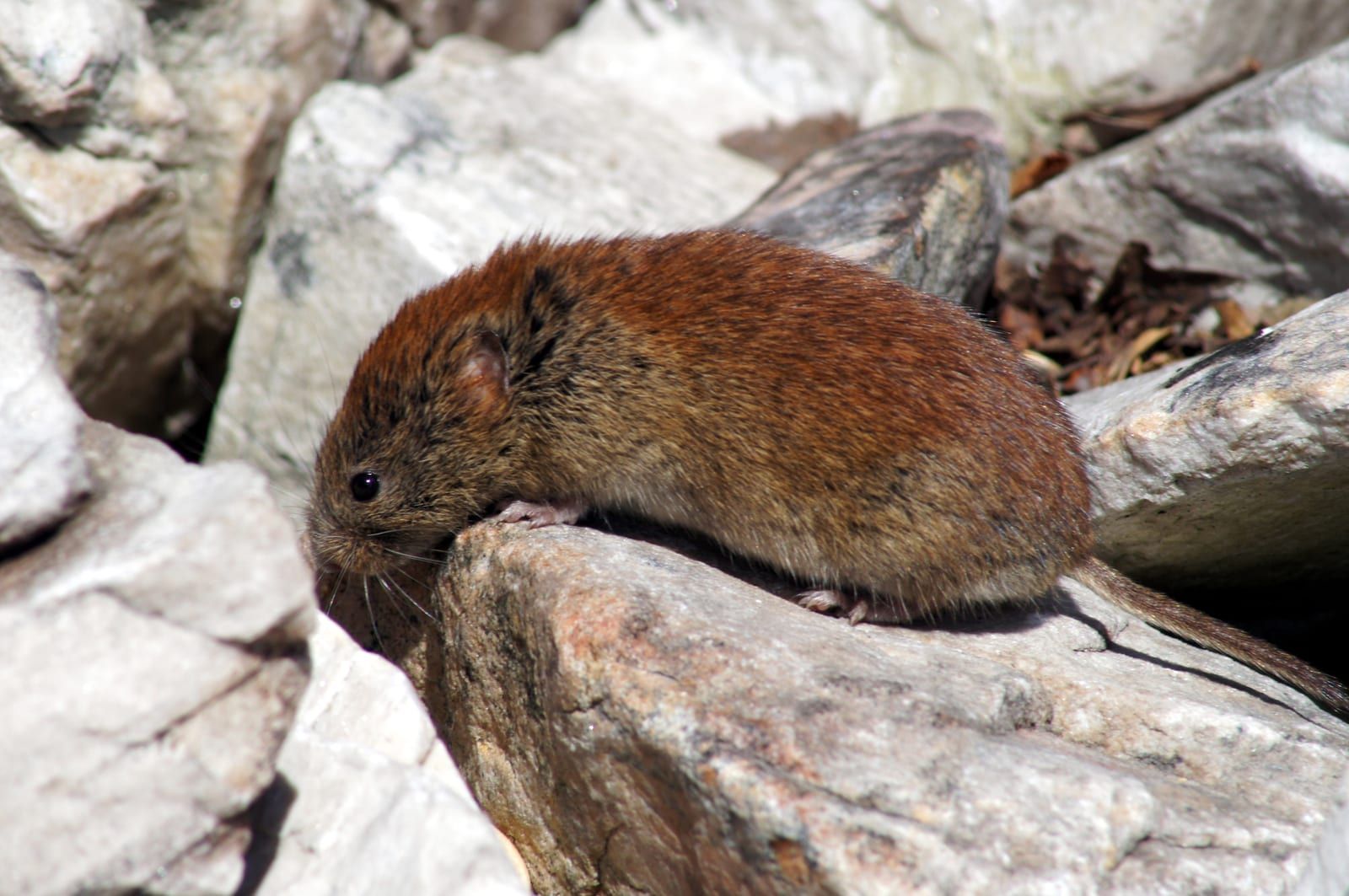
Southern red-backed vole (Clethrionomys gapperi), a woodland vole of cool, moist forests named for its rusty back stripe. Photo: psweet (iNaturalist) / CC BY-SA 4.0, via Wikimedia Commons
Description & ID
small vole with a rusty-red dorsal band contrasting gray sides; longer-tailed than meadow vole.
Habitat
cool, moist forests with mossy logs, rocks, and abundant litter; favors hemlock and northern hardwood stands.
County status
present; 7 research-grade iNaturalist records [S1].
Conservation status
native; secure. (confirm against PNHP)
Notes
eats fungi, seeds, and vegetation; disperses mycorrhizal fungal spores important to forest trees.
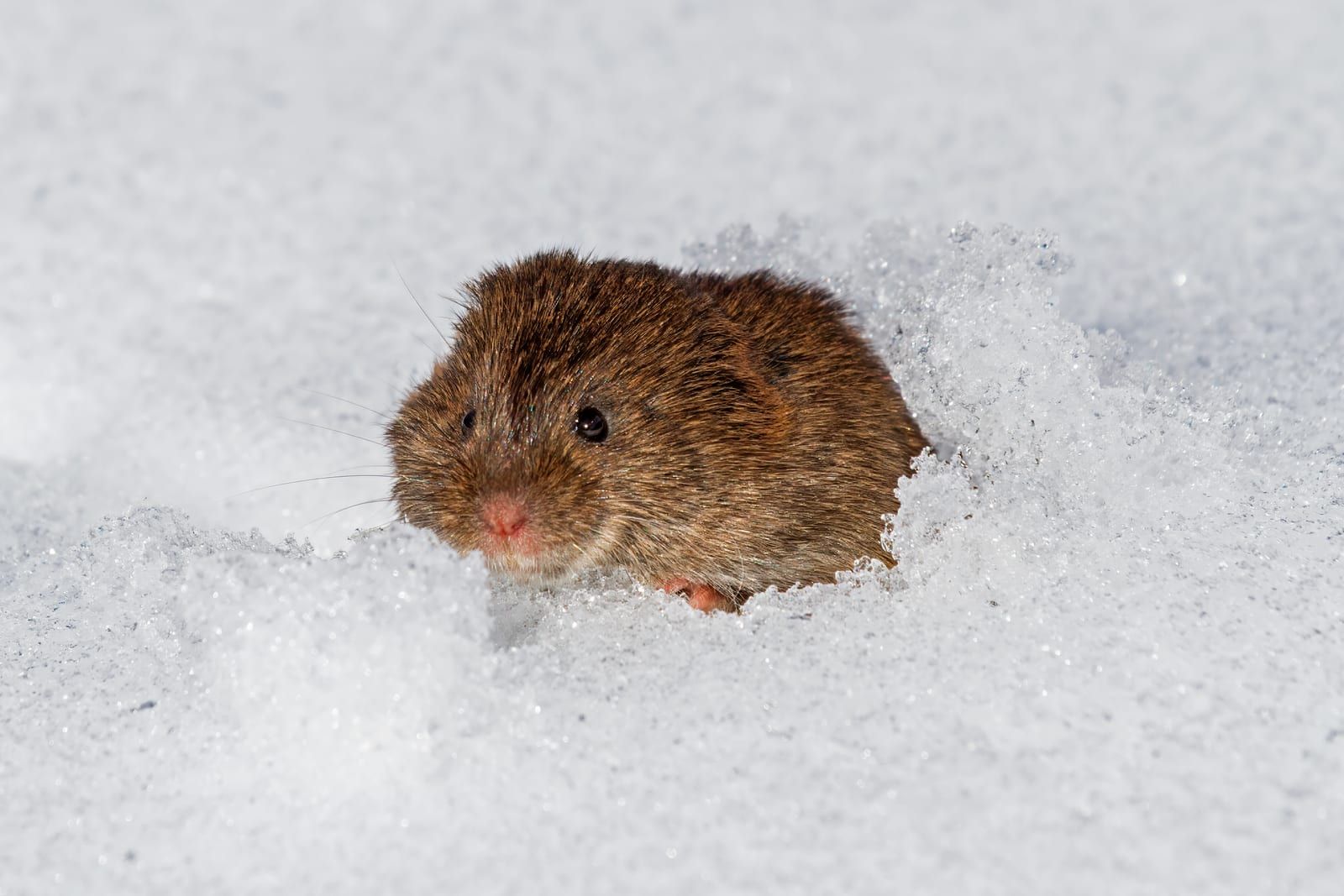
Eastern meadow vole (Microtus pennsylvanicus), a stocky short-tailed vole of grassy habitats, using a snow runway. Photo: Chuck Homler / Focus On Wildlife / CC BY-SA 4.0, via Wikimedia Commons
Also known as
field mouse, meadow mouse.
Description & ID
stocky, short-tailed vole, brown to blackish fur, small ears and eyes.
Habitat
grasslands, old fields, marsh edges, and meadows with dense ground cover.
County status
present; 2 research-grade iNaturalist records [S1] — almost certainly far more abundant than records suggest.
Conservation status
native; secure. (confirm against PNHP)
Notes
one of the most prolific mammals; central prey base for hawks, owls, foxes, and weasels. Creates surface runways through grass.
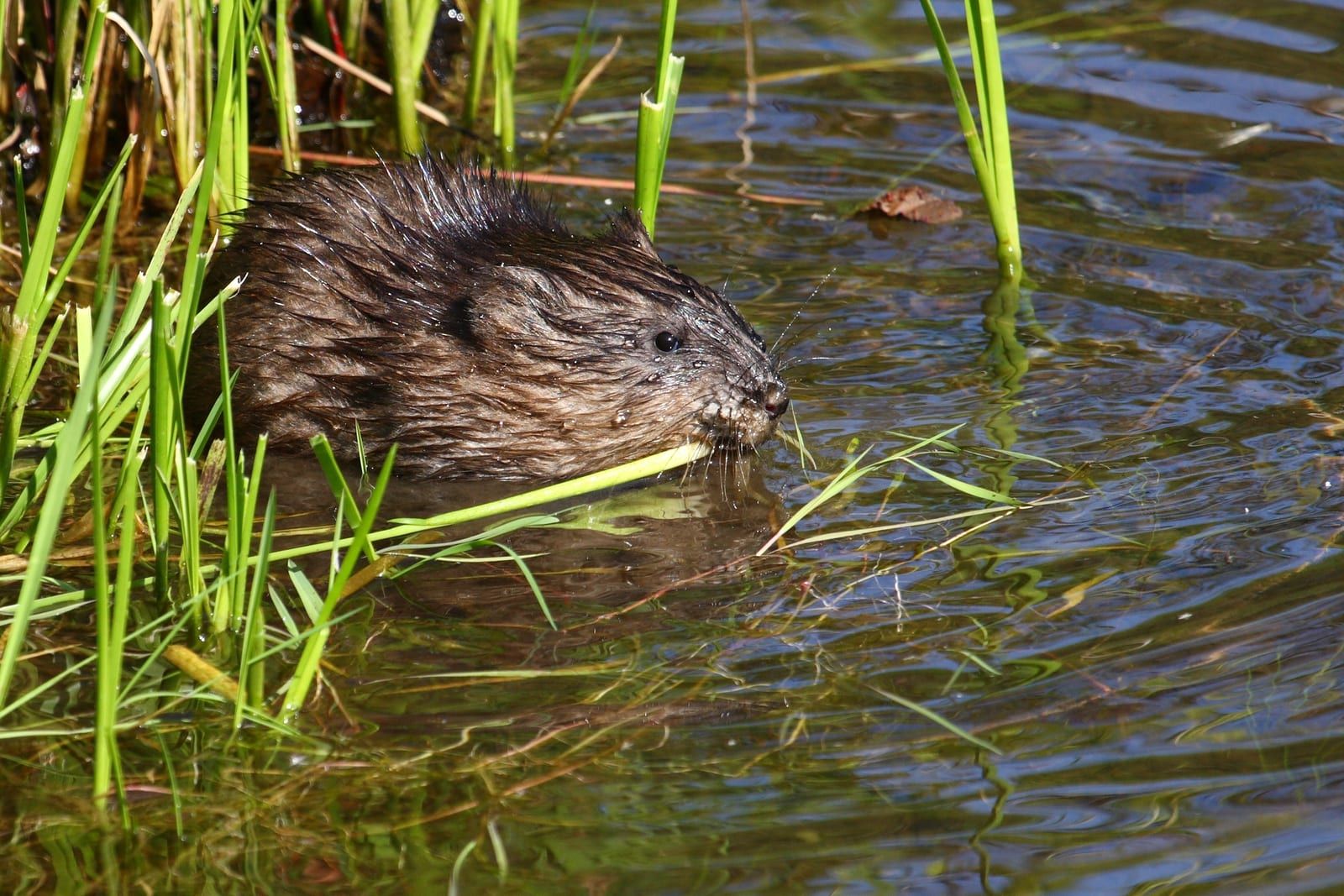
Muskrat (Ondatra zibethicus), a semiaquatic rodent of marshes and slow streams, feeding on aquatic vegetation. Photo: Cephas / CC BY-SA 3.0, via Wikimedia Commons
Description & ID
large semiaquatic rodent, dense brown fur, partially webbed hind feet, and a laterally flattened, scaly tail.
Habitat
marshes, ponds, slow streams, and ditches with emergent vegetation; builds lodges of cattails or bank burrows.
County status
present; 2 research-grade iNaturalist records [S1].
Conservation status
native; secure; harvested furbearer [S5]. (confirm against PNHP)
Notes
primarily herbivorous (cattails, rushes); important prey for mink and a wetland-shaping species.
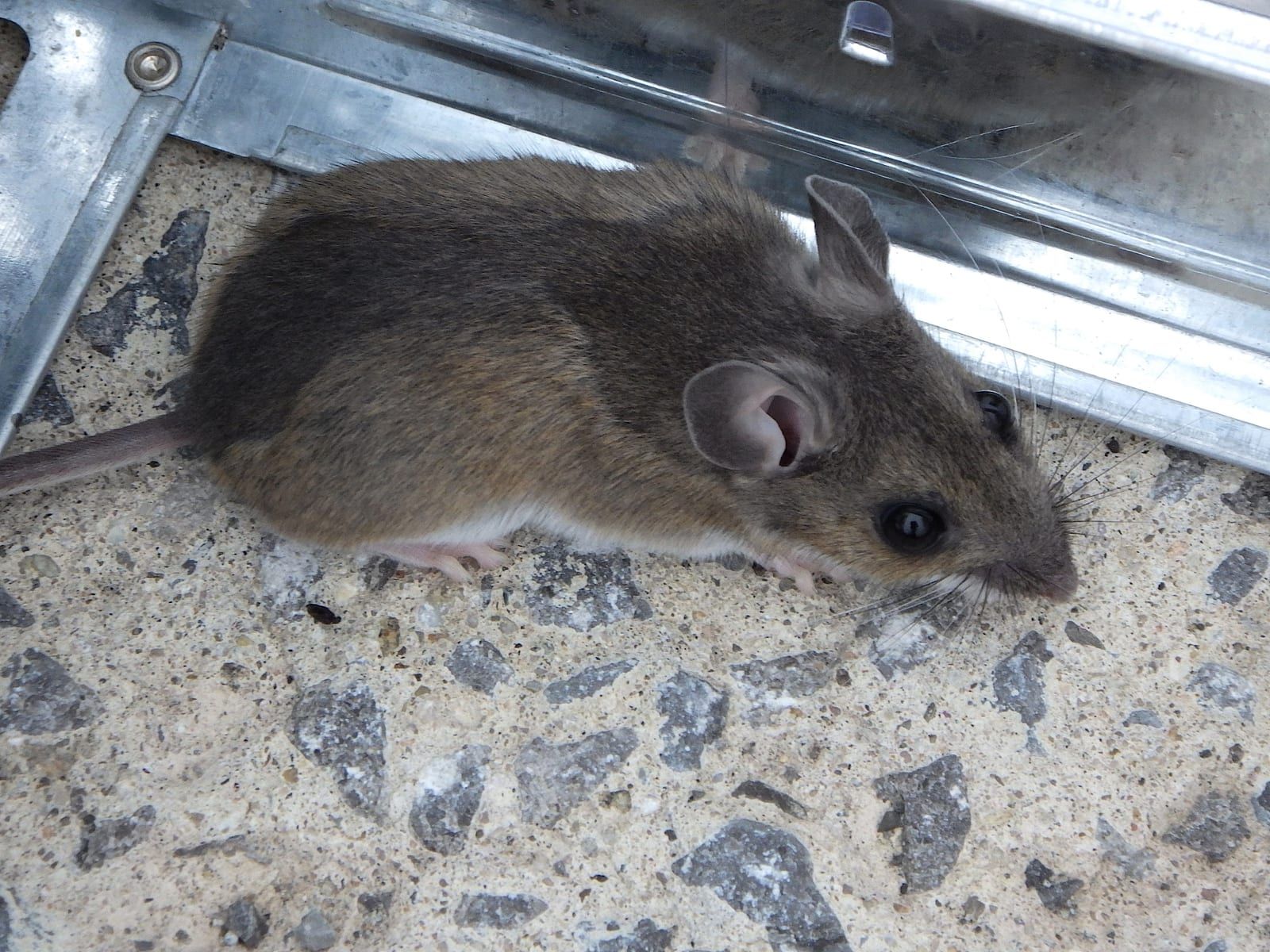
House mouse (Mus musculus), an Old World species now living commensally in and around human buildings. Photo: Ahunt / CC0 (public domain), via Wikimedia Commons
Description & ID
small gray-brown mouse with relatively large ears, scaly nearly hairless tail, and a musky odor; smaller-eyed than native deer mice.
Habitat
strongly commensal — buildings, barns, granaries; less common far from human structures.
County status
present; 1 research-grade iNaturalist record [S1]. Introduced (Old World origin) [S1].
Conservation status
non-native; not of conservation concern. (confirm against PNHP)
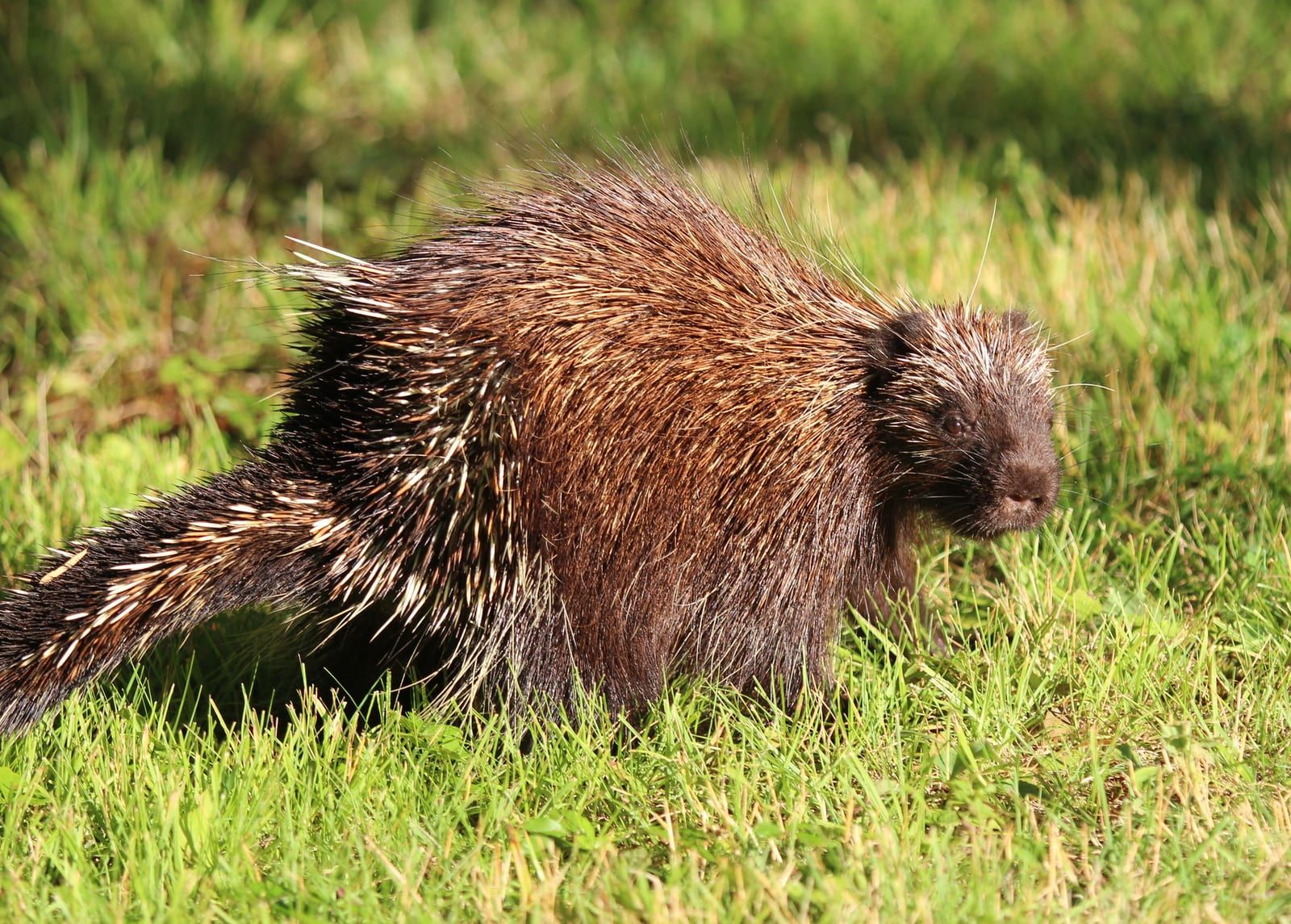
North American porcupine (Erethizon dorsatum), a large slow-moving rodent armored with barbed quills. Photo: Steven Lamonde / CC BY 4.0, via Wikimedia Commons
Description & ID
large, slow rodent covered in up to 30,000 barbed quills over dark guard hairs; rounded body and small face.
Habitat
mixed and coniferous forests, rocky slopes; dens in hollow trees, logs, and rock crevices.
County status
present; 9 research-grade iNaturalist records [S1] — well-recorded for a nocturnal species.
Conservation status
native; secure. (confirm against PNHP)
Notes
herbivore that gnaws bark and buds, sometimes girdling trees; quills cannot be "thrown" but detach on contact. Chief predator is the fisher.
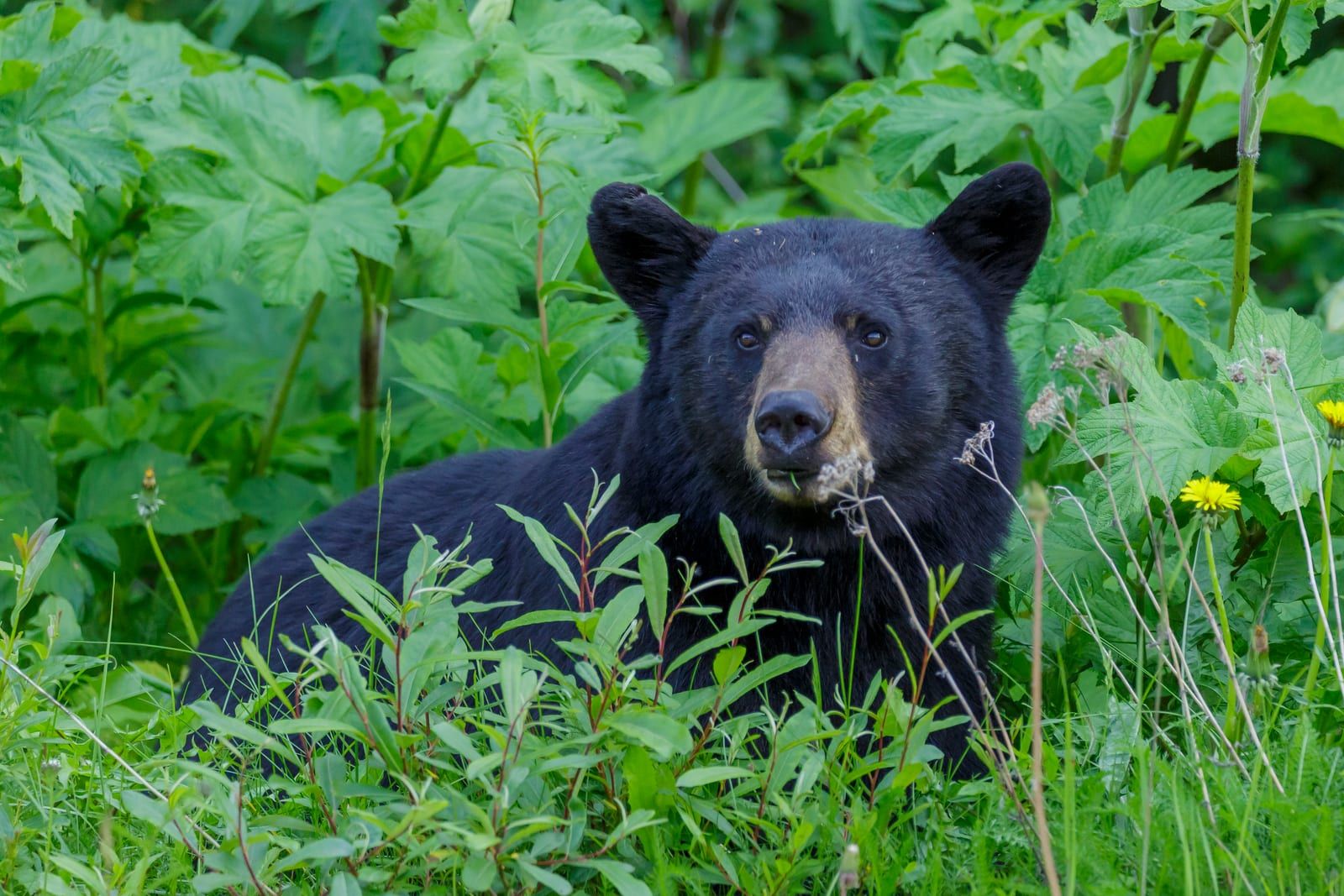
American black bear (Ursus americanus), the only bear native to Pennsylvania, browsing in summer greenery. Photo: Thomas Fuhrmann / CC BY-SA 4.0, via Wikimedia Commons
Description & ID
large, glossy black bear (occasionally cinnamon), tan muzzle, no shoulder hump; PA's only bear.
Habitat
extensive forested ridges, swamps, and mountain laurel thickets; ranges widely.
County status
present; 8 research-grade iNaturalist records [S1]. Schuylkill County lies within PA's well-established bear range, and populations have grown statewide [S5].
Conservation status
native; secure and managed with a regulated hunting season [S5]. (confirm against PNHP)
Notes
omnivorous; enters winter dormancy. Generally shy but draws to human food sources.
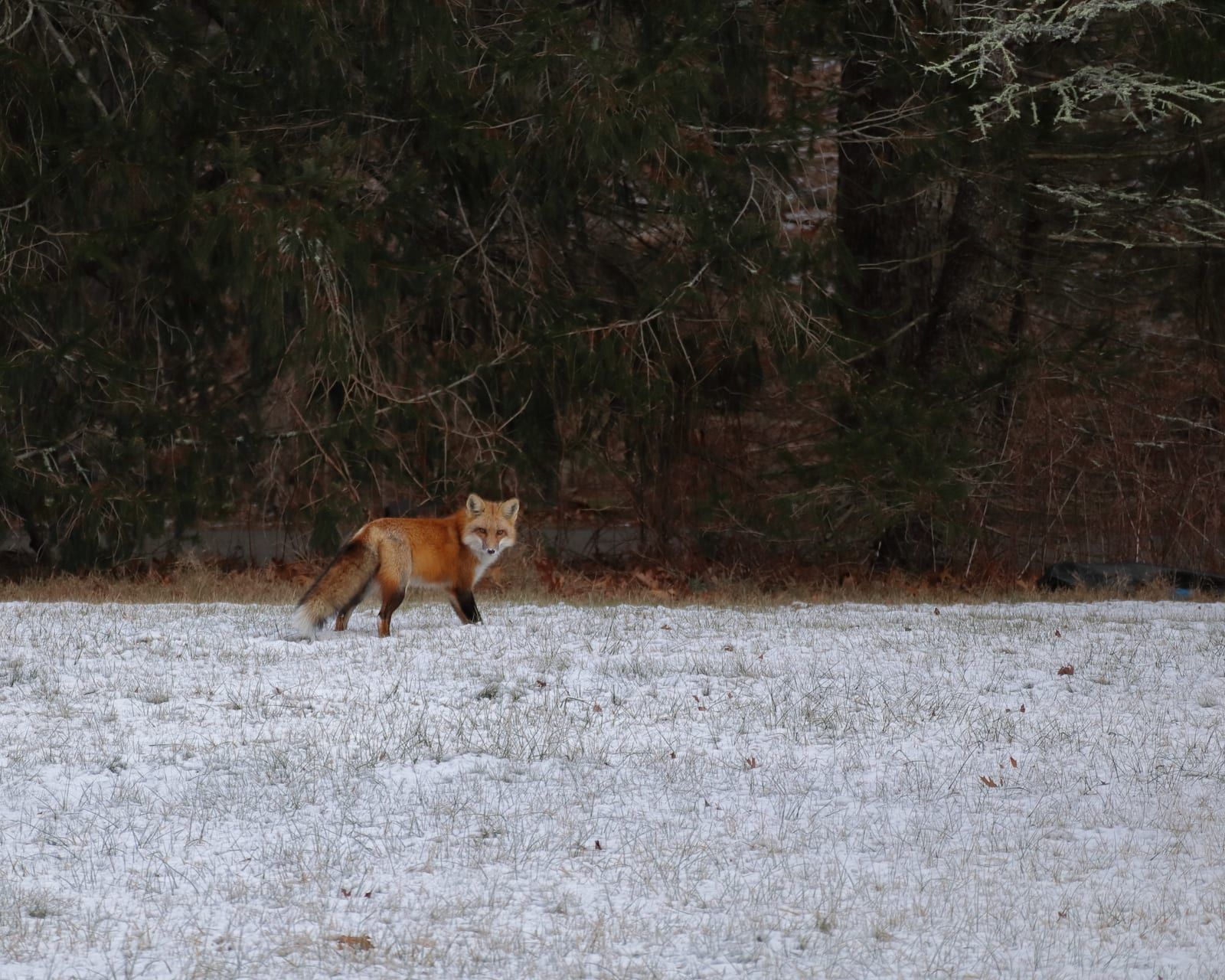
Red fox (Vulpes vulpes), an opportunistic predator recognizable by its white-tipped bushy tail and black legs. Photo: Peter Cooper Jr. / CC0 1.0 (public domain), via Wikimedia Commons
Description & ID
rusty-red coat, black legs and ears, white-tipped bushy tail.
Habitat
mosaic of fields, woodland edges, and farmland; tolerant of suburban areas.
County status
native and present; 8 research-grade iNaturalist records [S1].
Conservation status
native; secure; furbearer [S5]. (confirm against PNHP)
Notes
opportunistic predator of rodents and rabbits; caches food. Often shares range with the gray fox but uses more open habitat.
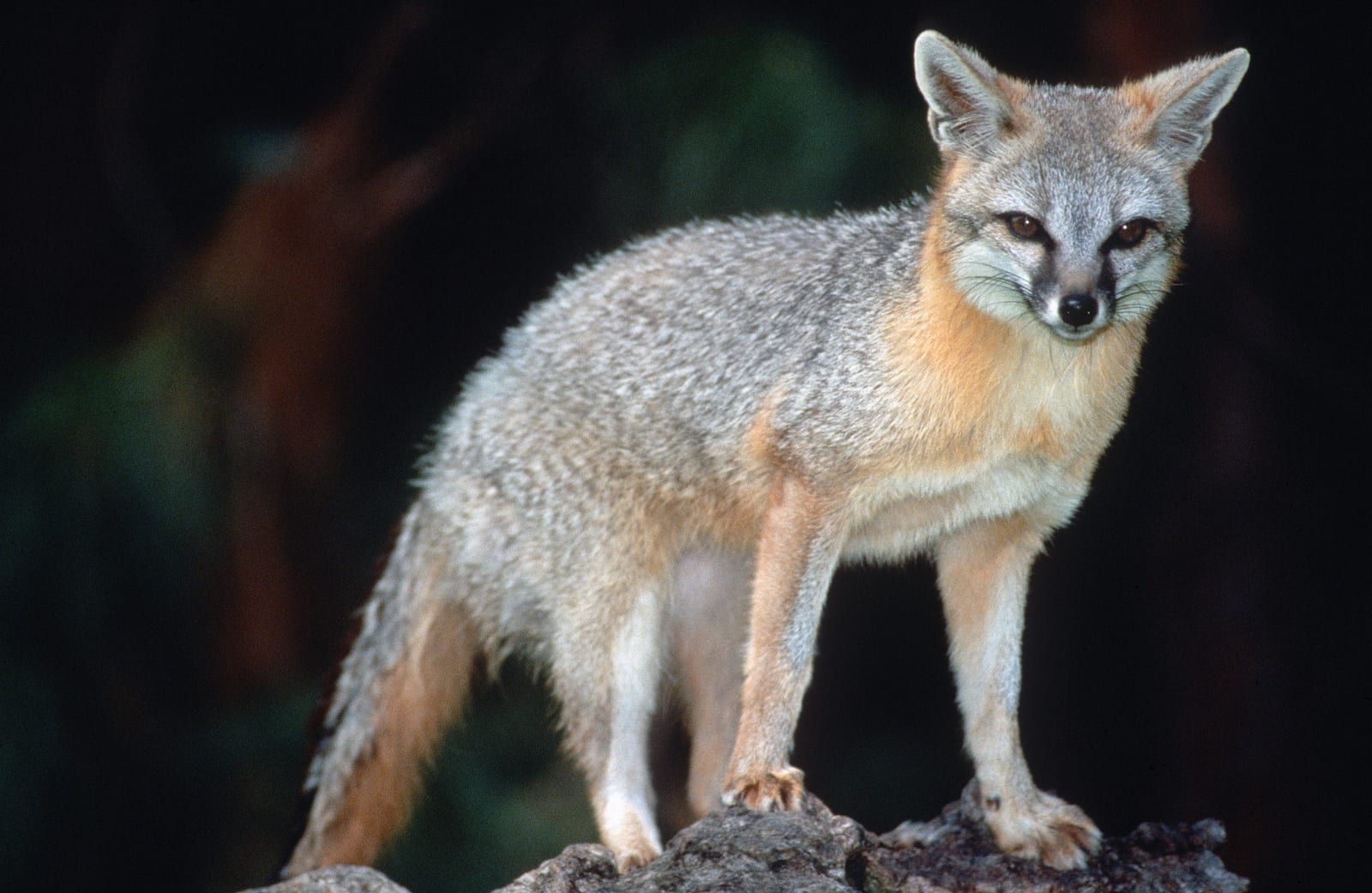
Gray fox (Urocyon cinereoargenteus), the only American canid that regularly climbs trees. Photo: California Department of Water Resources / Public domain, via Wikimedia Commons
Description & ID
grizzled gray back, rusty flanks/neck, and a black-tipped (not white-tipped) tail with a black dorsal mane.
Habitat
prefers brushy woodlands and rocky terrain; more forest-associated than the red fox.
County status
present; 4 research-grade iNaturalist records [S1].
Conservation status
native; secure; furbearer [S5]. (confirm against PNHP)
Notes
the only North American canid that routinely climbs trees; omnivorous, eating fruit and small animals.
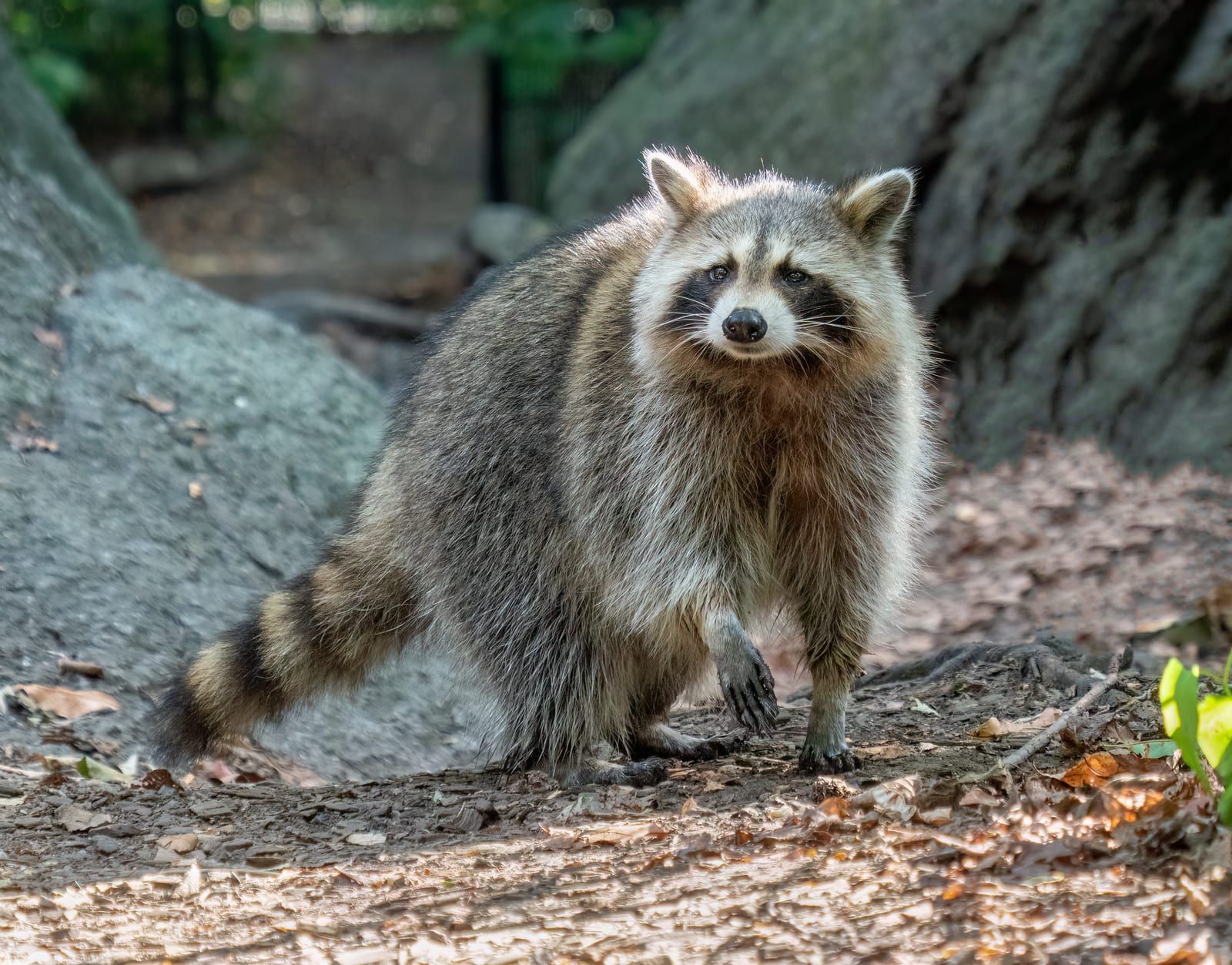
Common raccoon (Procyon lotor), instantly recognizable by its black facial mask and ringed tail. Photo: Rhododendrites / CC BY-SA 4.0, via Wikimedia Commons
Description & ID
stocky, gray-brown, black facial mask and ringed bushy tail; dexterous front paws.
Habitat
woodlands near water, wetlands, farmland, and urban/suburban areas; dens in tree cavities and structures.
County status
present and common; 7 research-grade iNaturalist records [S1].
Conservation status
native; secure; furbearer [S5]. A primary rabies-vector species in the eastern US. (confirm against PNHP)
Notes
highly omnivorous and adaptable; strong night vision and tactile foraging.
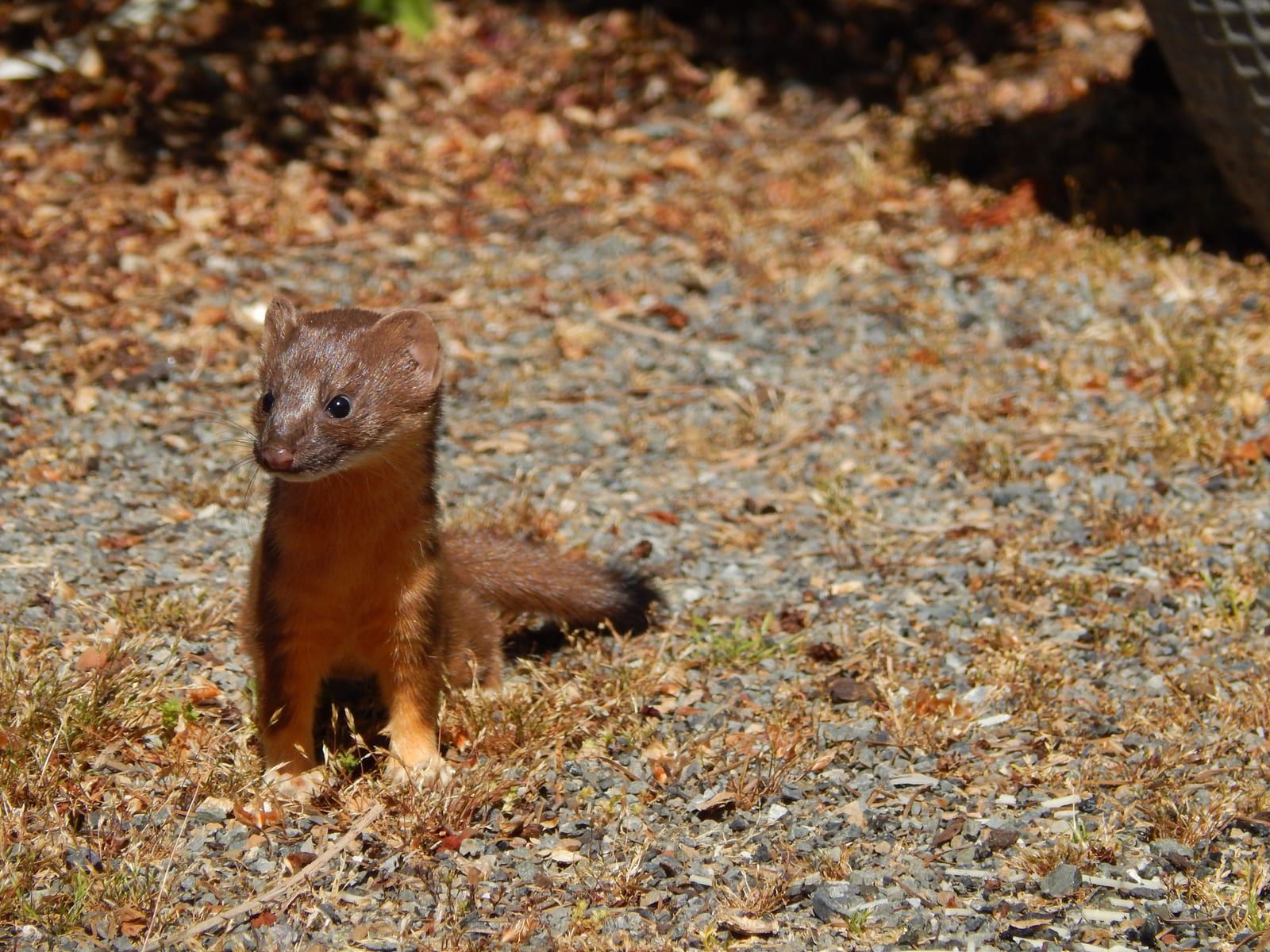
Long-tailed weasel (Neogale frenata), a slender, ferocious predator of rodents and rabbits. Photo: Tanis Coralee Leonhardi / CC BY-SA 4.0, via Wikimedia Commons
Description & ID
slender weasel, brown above with buff/yellowish underparts and a black-tipped tail; turns white ("ermine"-like) in northern winters.
Habitat
diverse — fields, brush, woodland edges, and farmland, usually near water and prey.
County status
present; 1 research-grade iNaturalist record [S1].
Conservation status
native; secure. (confirm against PNHP)
Notes
ferocious rodent and rabbit predator far larger than itself; an important control on small-mammal populations.
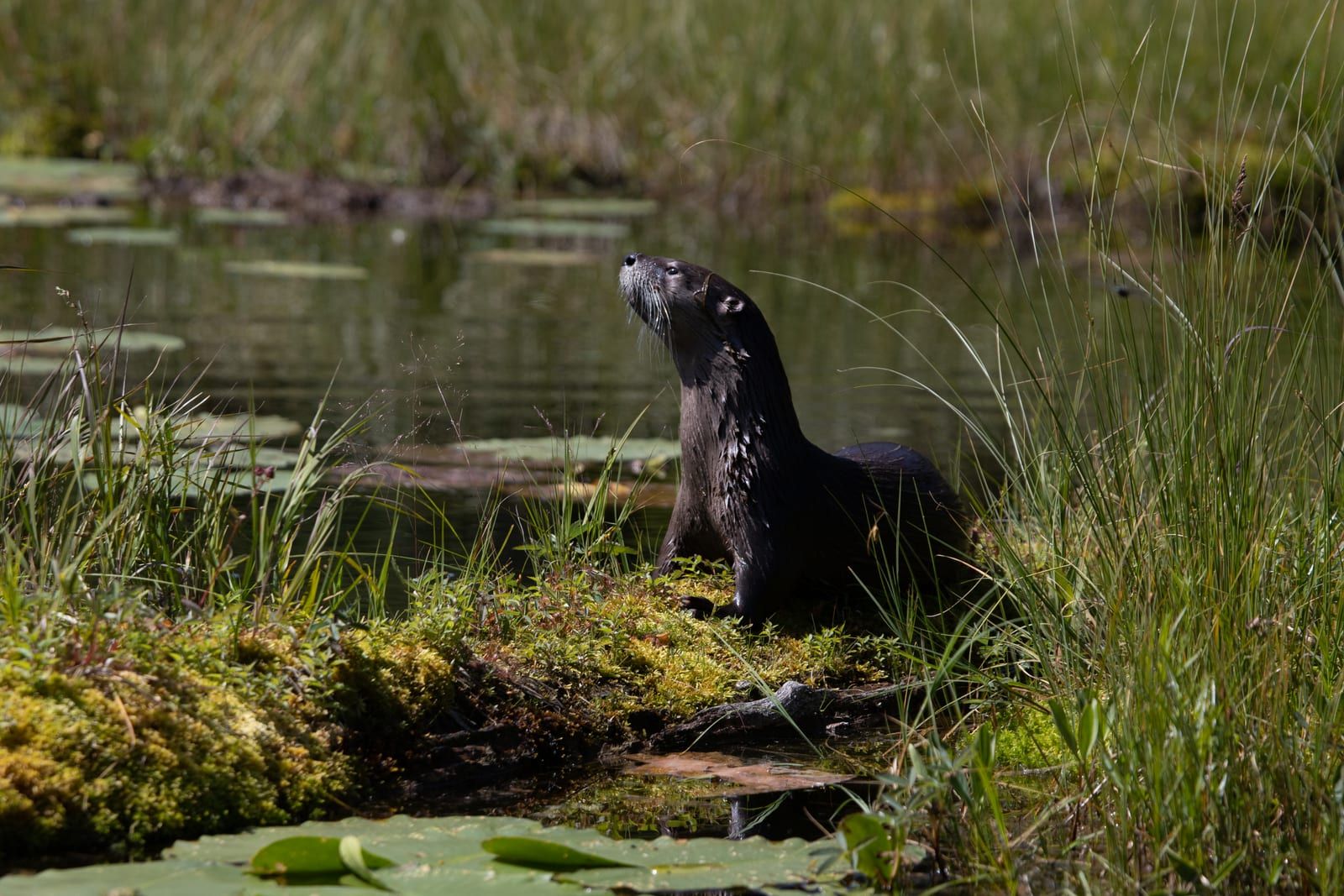
North American river otter (Lontra canadensis), a streamlined semiaquatic mustelid sensitive to water quality. Photo: GlacierNPS (U.S. National Park Service) / Public domain, via Wikimedia Commons
Description & ID
large, streamlined semiaquatic mustelid, dark-brown with a paler throat, webbed feet, and thick tapering tail.
Habitat
clean rivers, streams, lakes, and wetlands with abundant fish.
County status
present; 3 research-grade iNaturalist records [S1]. A conservation success — recovered in PA after historical decline.
Conservation status
native; PA NatureServe rank S3 (vulnerable) [S1][S9]; observation localities are obscured to protect the species. (confirm against PNHP)
Notes
sensitive to water quality; primarily piscivorous. Its recovery reflects improving stream conditions in the region.
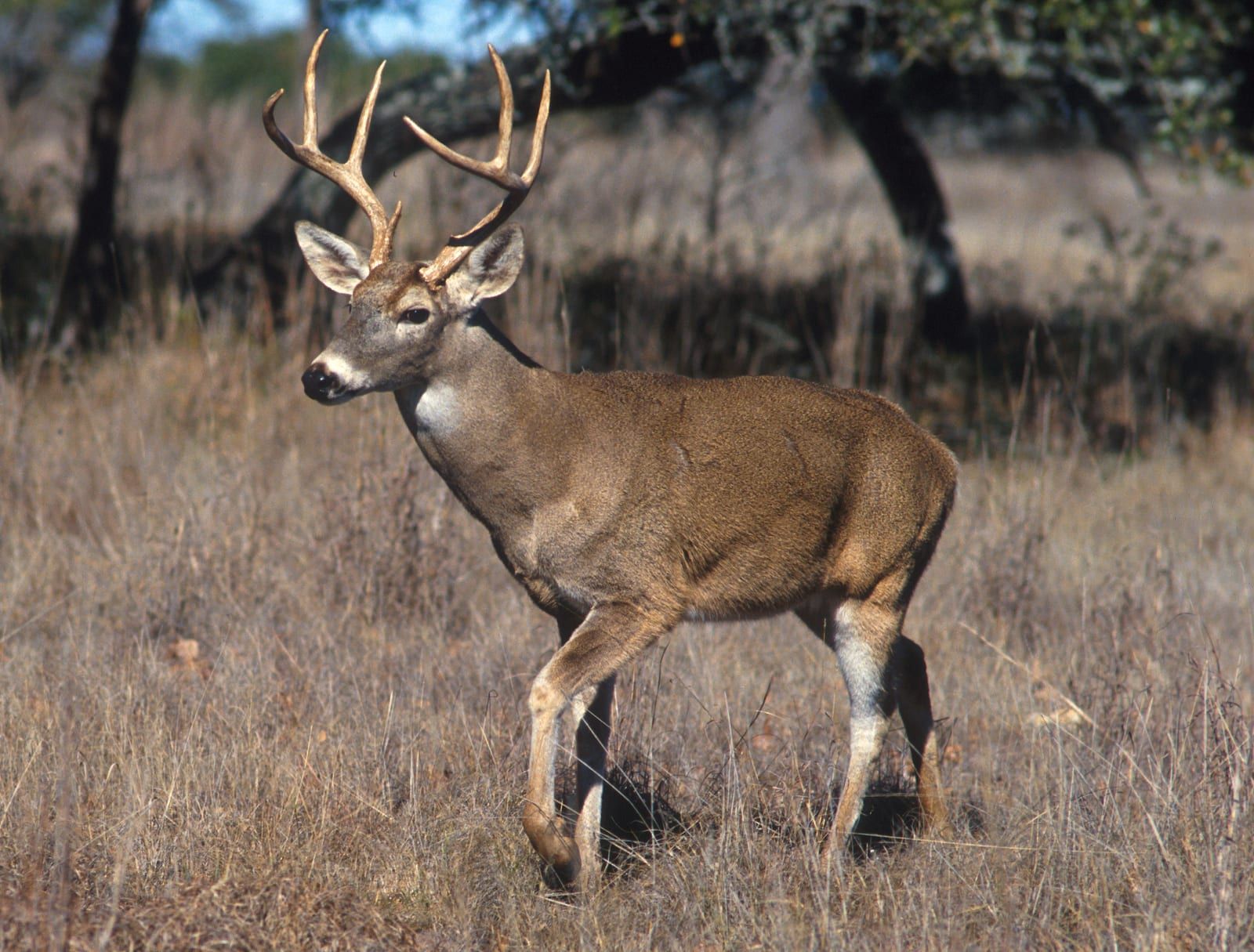
White-tailed deer (Odocoileus virginianus), the state mammal of Pennsylvania, shown as an antlered buck. Photo: Scott Bauer (USDA) / Public domain, via Wikimedia Commons
Description & ID
PA's familiar large deer; reddish-brown in summer, gray-brown in winter, white tail underside raised when alarmed. Males grow branching antlers shed annually.
Habitat
forest-field edges, woodlands, farmland, and suburbs — ubiquitous across the county.
County status
present and abundant; 50 research-grade iNaturalist records — the second-most-recorded mammal in the county [S1].
Conservation status
native; secure; PA's premier big-game species under managed hunting [S5]. (confirm against PNHP)
Notes
keystone herbivore whose high densities strongly shape forest regeneration; vector host for blacklegged ticks. State mammal of Pennsylvania.
These species plausibly occur in the county's habitats but lack a
county-level record as of 2026-06-18. They are candidates, not
county records — listed so the checklist's silence on them is not
mistaken for confirmed absence, and excluded from the counts and the dataset
above. Confirmation should cite a county-level record.
Bobcat (Lynx rufus) — forested ridges; expanding in PA. [S5][S10]
Fisher (Pekania pennanti) — reintroduced to PA forests; range now includes the region. [S5]
Little Brown Bat (Myotis lucifugus) — expected from PA's bat fauna; cave species severely reduced by white-nose syndrome. [S5][S8]
Northern Long-eared Bat (Myotis septentrionalis) — expected from PA's bat fauna; cave species severely reduced by white-nose syndrome. [S5][S8]
Tricolored Bat (Perimyotis subflavus) — expected from PA's bat fauna; cave species severely reduced by white-nose syndrome. [S5][S8]
Indiana Bat (Myotis sodalis) — expected from PA's bat fauna; cave species severely reduced by white-nose syndrome. [S5][S8]
Eastern Small-footed Bat (Myotis leibii) — expected from PA's bat fauna; cave species severely reduced by white-nose syndrome. [S5][S8]
Hoary Bat (Lasiurus cinereus) — expected from PA's bat fauna; cave species severely reduced by white-nose syndrome. [S5][S8]
Silver-haired Bat (Lasionycteris noctivagans) — expected from PA's bat fauna; cave species severely reduced by white-nose syndrome. [S5][S8]
We use cookies for analytics and, when advertising is active, to show
ads. You can accept or decline non-essential cookies, and change your
mind anytime. See our Cookie Policy.
Opt-out request honored. We detected your browser's
Global Privacy Control signal and turned off advertising data sharing.