Schuylkill Hub Search

Outdoor Life · Plants, fungi & lichens

Fungi & Lichens of Schuylkill County

268 documented taxa of kingdom Fungi, including lichenized fungi recorded in Schuylkill County, Pennsylvania — by iNaturalist research-grade records as of 2026-06-18 — with detailed accounts of the most notable, signature, and introduced species.

A note on classification. Fungi are a separate kingdom — neither plants nor animals. A lichen is a fungus–alga (or fungus–cyanobacterium) symbiosis, conventionally treated with the fungi. They are grouped here under plant life as a field-reference convenience, not a botanical claim.

Not an identification or edibility guide. This is a reference, not an identification or edibility guide. Many fungi are toxic — some deadly — and dangerous look-alikes abound. Never eat any wild fungus based on a description, photograph, or list. If you suspect mushroom poisoning, contact Poison Control immediately.

How this list is sourced. County presence is anchored to records filtered to Schuylkill County — iNaturalist research-grade observations (place 1470). Observation counts are an effort-biased signal of recording activity as of 2026-06-18, not a census. Biology and identification draw on state and museum authorities; per-species links go to Wikipedia for cross-reference only.

Conservation ranks here are relayed from NatureServe / iNaturalist and are not definitive Pennsylvania ranks — confirm against the Pennsylvania Natural Heritage Program (PNHP) before relying on them.

Detailed accounts

25 of the 268 documented taxa are profiled in detail below — the most-recorded, signature, introduced, and notable species. The complete checklist follows.

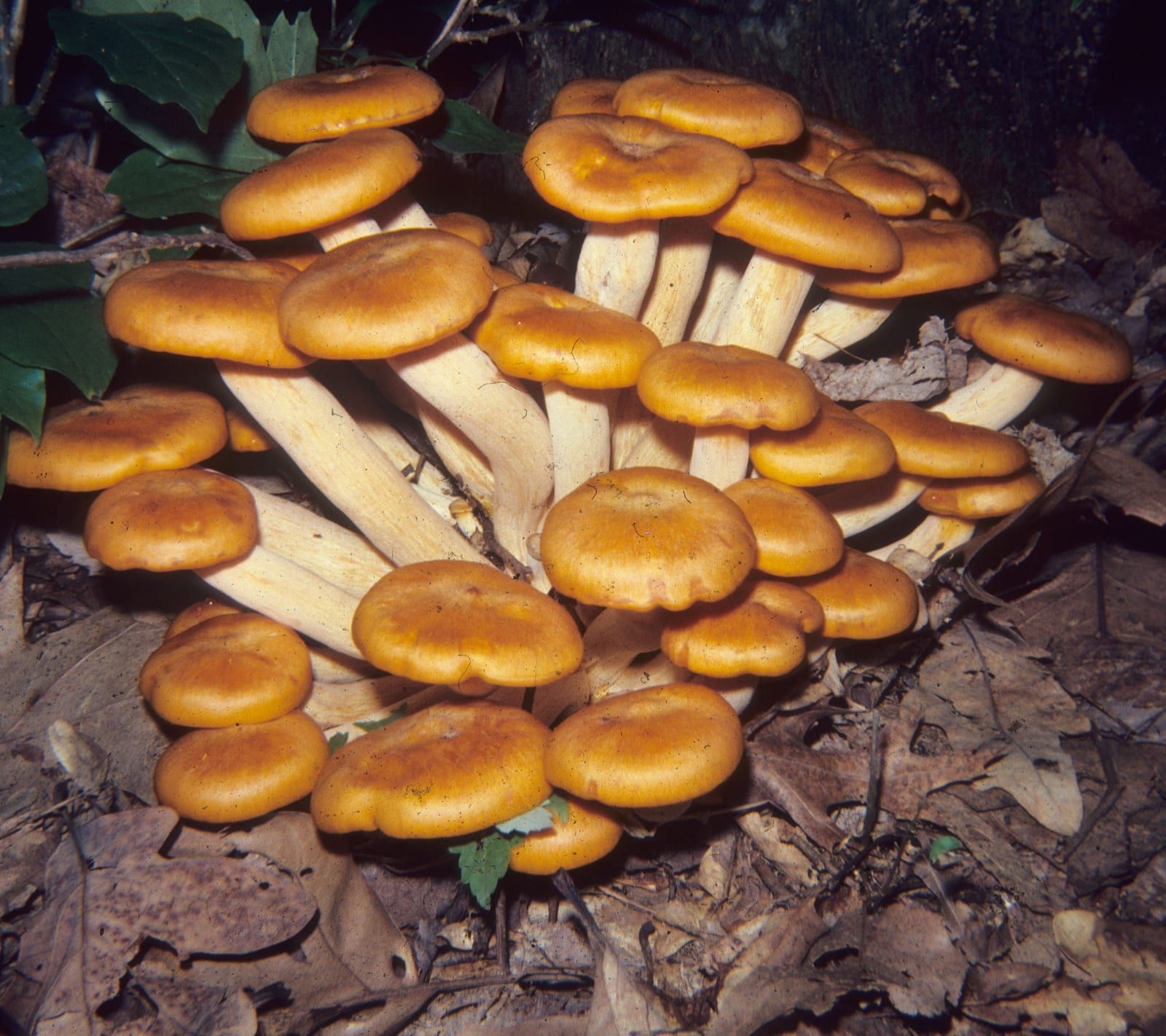
Eastern American Jack-o'-lantern

Omphalotus illudens — Omphalotaceae

Native

Description & ID
bright orange, fleshy, gilled mushroom growing in dense clusters at the base of hardwood stumps and buried roots; gills run down the stem (decurrent).
Habitat
on and around hardwood stumps and roots, especially oak; late summer to fall.
County status
native; the most-recorded gilled mushroom in the county — 30 research-grade records [S1].
Conservation status
native; secure. (confirm against PNHP)
Notes
toxic — causes severe gastrointestinal illness if eaten; it is a notorious look-alike of edible chanterelles, but grows in clusters on wood (chanterelles grow singly from soil) and has true blade-like gills. Its gills are famously bioluminescent, glowing faintly green in the dark. No edibility advice is given here.

More on Wikipedia →

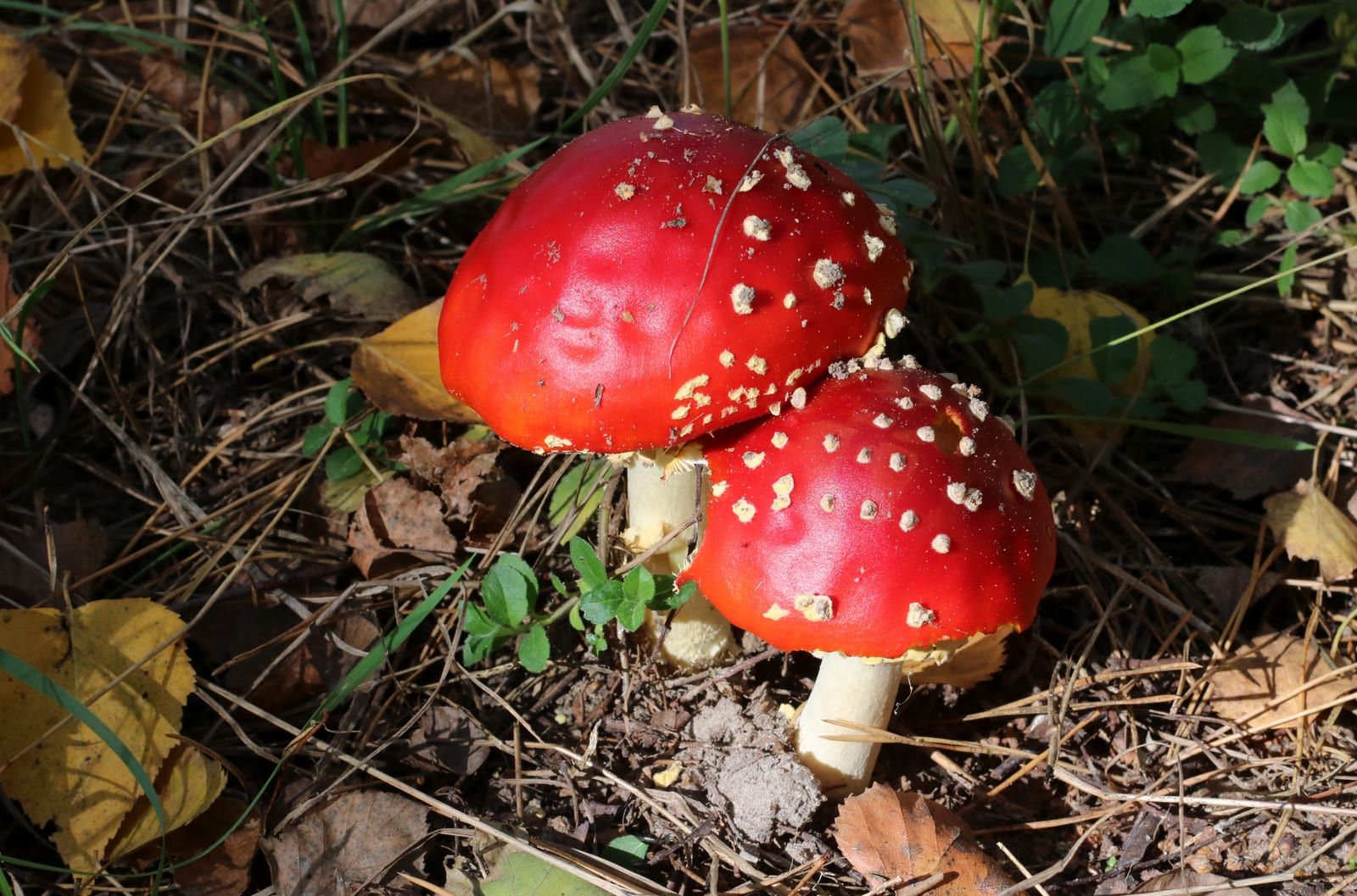
Fly Agaric

Amanita muscaria — Amanitaceae

Native

Description & ID
iconic red-to-orange-capped mushroom dotted with white wart-like veil remnants; white gills, ring, and a bulbous, scaly stem base.
Habitat
mycorrhizal with pine, birch, and other trees; woodlands and edges, summer to fall.
County status
native; 15 research-grade records [S1].
Conservation status
native; secure. (confirm against PNHP)
Notes
toxic and psychoactive — contains ibotenic acid and muscimol; the storybook "toadstool." The genus Amanita also contains the deadliest mushrooms in the world (e.g., death cap and destroying angels), several of which occur regionally. Treat all white-gilled, ringed, volva-bearing mushrooms as dangerous. No edibility advice is given here.

More on Wikipedia →

Viscid Violet Cort

Cortinarius iodes — Cortinariaceae

Native

Description & ID
slimy purple-capped mushroom fading to yellow-spotted lilac; rusty-brown spores and a cobweb-like partial veil (cortina) typical of the huge genus Cortinarius.
Habitat
mycorrhizal in hardwood forests, often with oak; summer to fall.
County status
native; 25 research-grade records [S1].
Conservation status
native; secure. (confirm against PNHP)
Notes
Cortinarius is an enormous, difficult genus; some members are deadly (containing kidney-destroying orellanine), so the genus is best left strictly to experts. No edibility advice is given here.

More on Wikipedia →

Splitgill Mushroom

Schizophyllum commune — Schizophyllaceae

Native

Description & ID
small, tough, fan-shaped, fuzzy gray-white bracket with distinctive split, gill-like folds on the underside; grows shelving on dead wood.
Habitat
on dead and decaying hardwood logs and branches; one of the most widespread fungi on Earth.
County status
native; 11 research-grade records [S1].
Conservation status
native; secure. (confirm against PNHP)
Notes
famous for having thousands of mating types; a wood-decay fungus, not a typical fleshy mushroom. Tough and leathery, it persists year-round on wood.

More on Wikipedia →

Luminescent Panellus (Bitter Oyster)

Panellus stipticus — Mycenaceae

Native

Description & ID
small tan, kidney-shaped, short-stemmed bracket with crowded gills, growing in shelving clusters on hardwood.
Habitat
on dead hardwood logs and stumps; year-round but most visible in fall.
County status
native; 8 research-grade records [S1].
Conservation status
native; secure. (confirm against PNHP)
Notes
one of the best-known bioluminescent fungi — North American populations glow green from the gills in darkness. Bitter-tasting and not a food species.

More on Wikipedia →

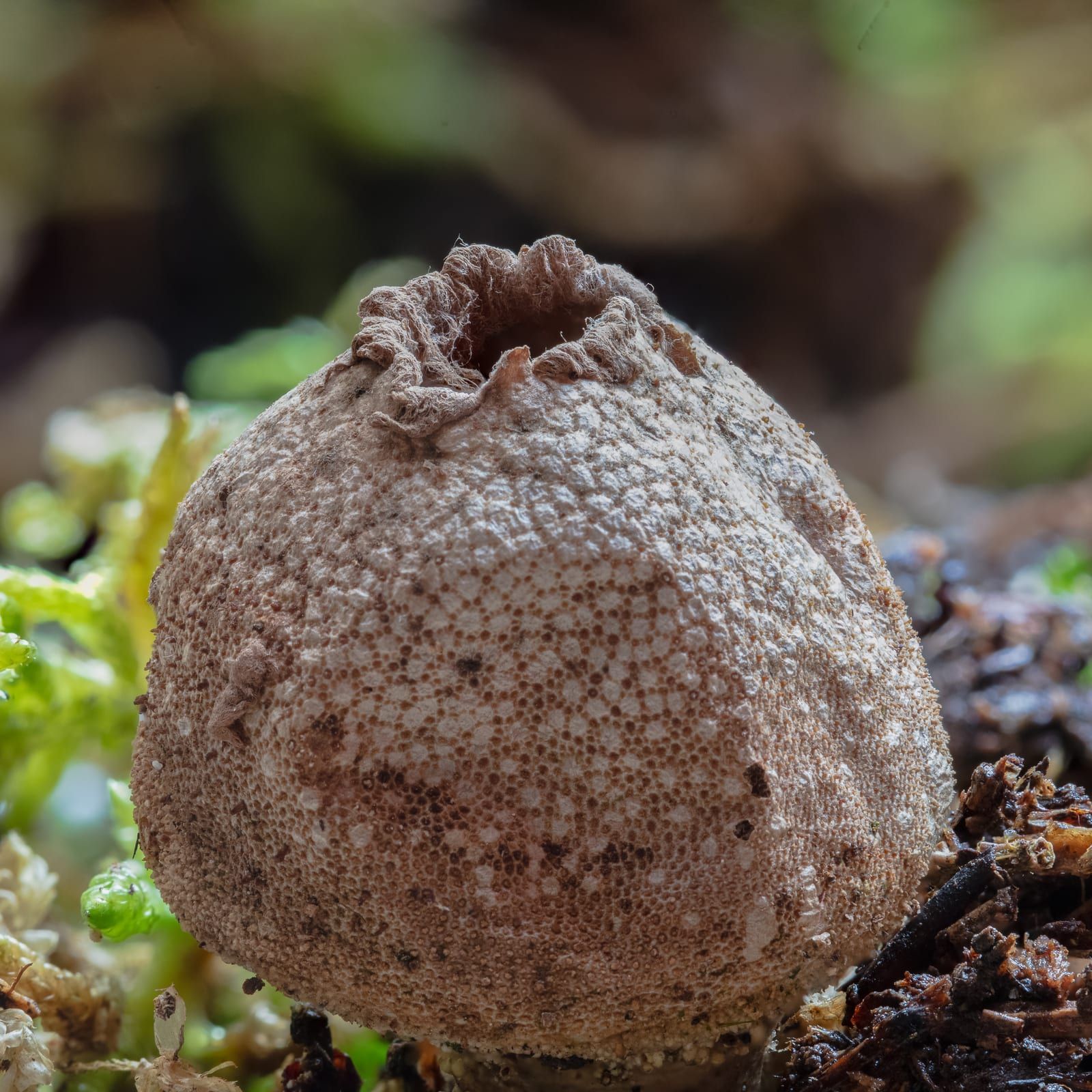
Common Puffball

Lycoperdon perlatum — Agaricaceae

Native

Description & ID
white-to-tan, pear- or club-shaped puffball covered in cone-shaped spines that leave a net-like scar pattern; releases brown spore "smoke" through a top pore when mature.
Habitat
soil and litter in woods, edges, and grassy areas; summer to fall.
County status
native; 7 research-grade records [S1].
Conservation status
native; secure. (confirm against PNHP)
Notes
caution — young puffballs can be confused with the deadly button stage of Amanita species; only a cut cross-section (uniform white interior vs. an embryonic gilled mushroom) distinguishes them, and this is a job for experts. No edibility advice is given here.

More on Wikipedia →

Asian Beauty

Radulomyces copelandii — Pterulaceae

Introduced

Description & ID
striking white-to-cream toothed crust fungus that hangs dense icicle-like spines from the underside of dead wood.
Habitat
on dead hardwood logs and branches.
County status
INTRODUCED (East Asian) [S1]; 12 research-grade records [S1] — one of the few clearly non-native fungi on the county list.
Conservation status
non-native, naturalized in the eastern US; a wood-decay fungus with no known major impact. (confirm against PNHP)
Notes
a recent eastern-US arrival, spreading and increasingly recorded by naturalists.

More on Wikipedia →

Common Earthball

Scleroderma citrinum — Sclerodermataceae

Native

Description & ID
firm, rounded, yellow-brown ball with a thick, scaly, cracked rind; interior turns solid purple-black at maturity.
Habitat
on soil and moss in woodlands, often with oak and beech; summer to fall.
County status
native; 6 research-grade records [S1].
Conservation status
native; secure. (confirm against PNHP)
Notes
toxic — causes gastrointestinal illness; superficially puffball-like but with a thick, hard, dark-interior rind. No edibility advice is given here.

More on Wikipedia →

Old-man-of-the-woods

Strobilomyces strobilaceus — Boletaceae

Native

Description & ID
distinctive bolete with a shaggy, coarse gray-black scaly cap and stem; pore surface whitish, bruising red then black.
Habitat
mycorrhizal in hardwood forests; summer to fall.
County status
native; 3 research-grade records [S1].
Conservation status
native; secure. (confirm against PNHP)
Notes
unmistakable among boletes for its shaggy "old-man" appearance; a much-photographed woodland find.

More on Wikipedia →

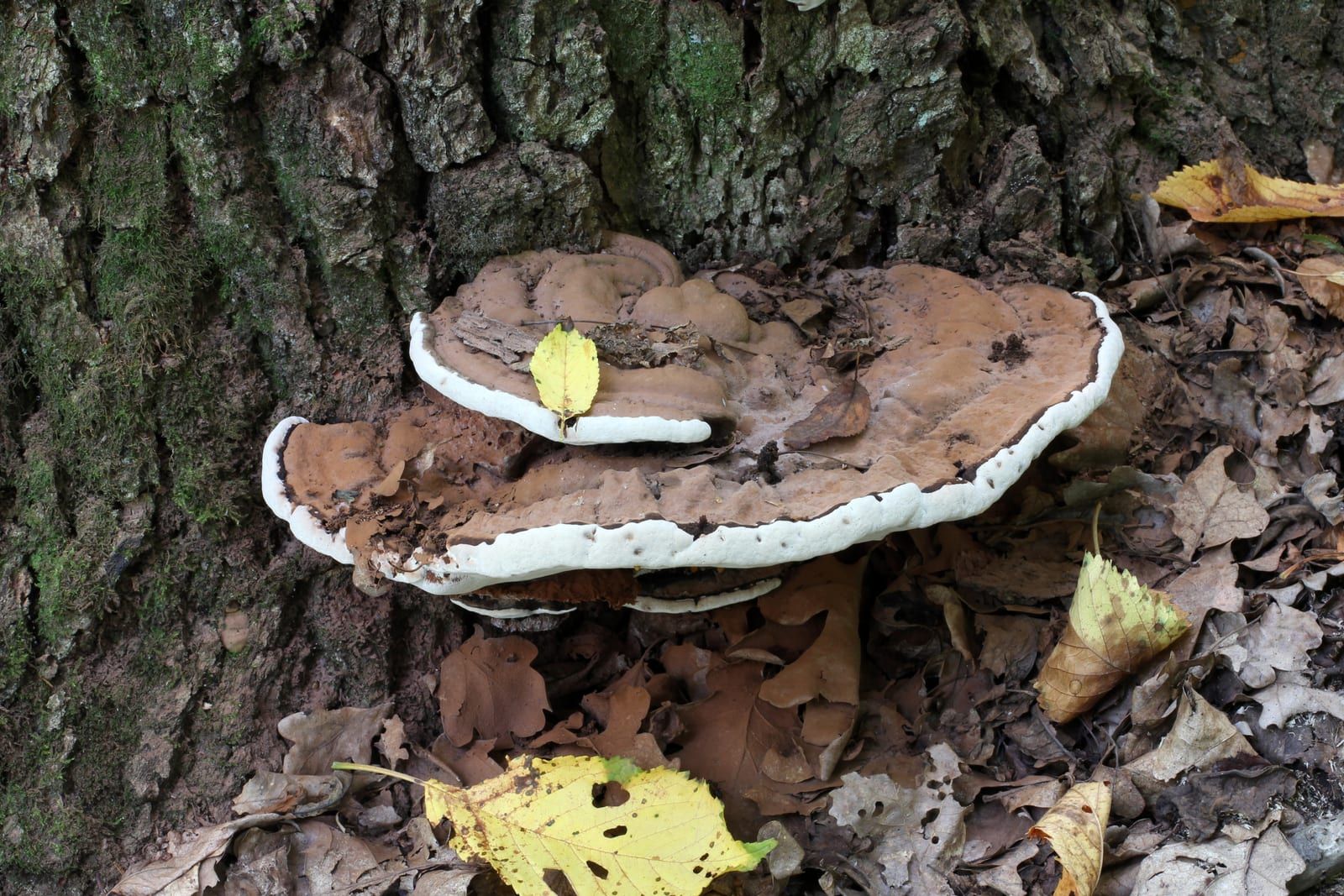
Hemlock Varnish Shelf

Ganoderma tsugae — Ganodermataceae

Native

Description & ID
glossy, lacquered, reddish-mahogany kidney-shaped bracket with a pale margin and white pore surface; often stalked.
Habitat
on dead and dying eastern hemlock (and other conifers); the county's hemlock ravines.
County status
native; the most-recorded fungus in the county — 51 research-grade records [S1].
Conservation status
native; secure. Its abundance tracks the county's hemlock-rich forests (now stressed by hemlock woolly adelgid). (confirm against PNHP)
Notes
the eastern hemlock counterpart of the famous Ganoderma "reishi" group; tough and woody, not a fleshy edible.

More on Wikipedia →

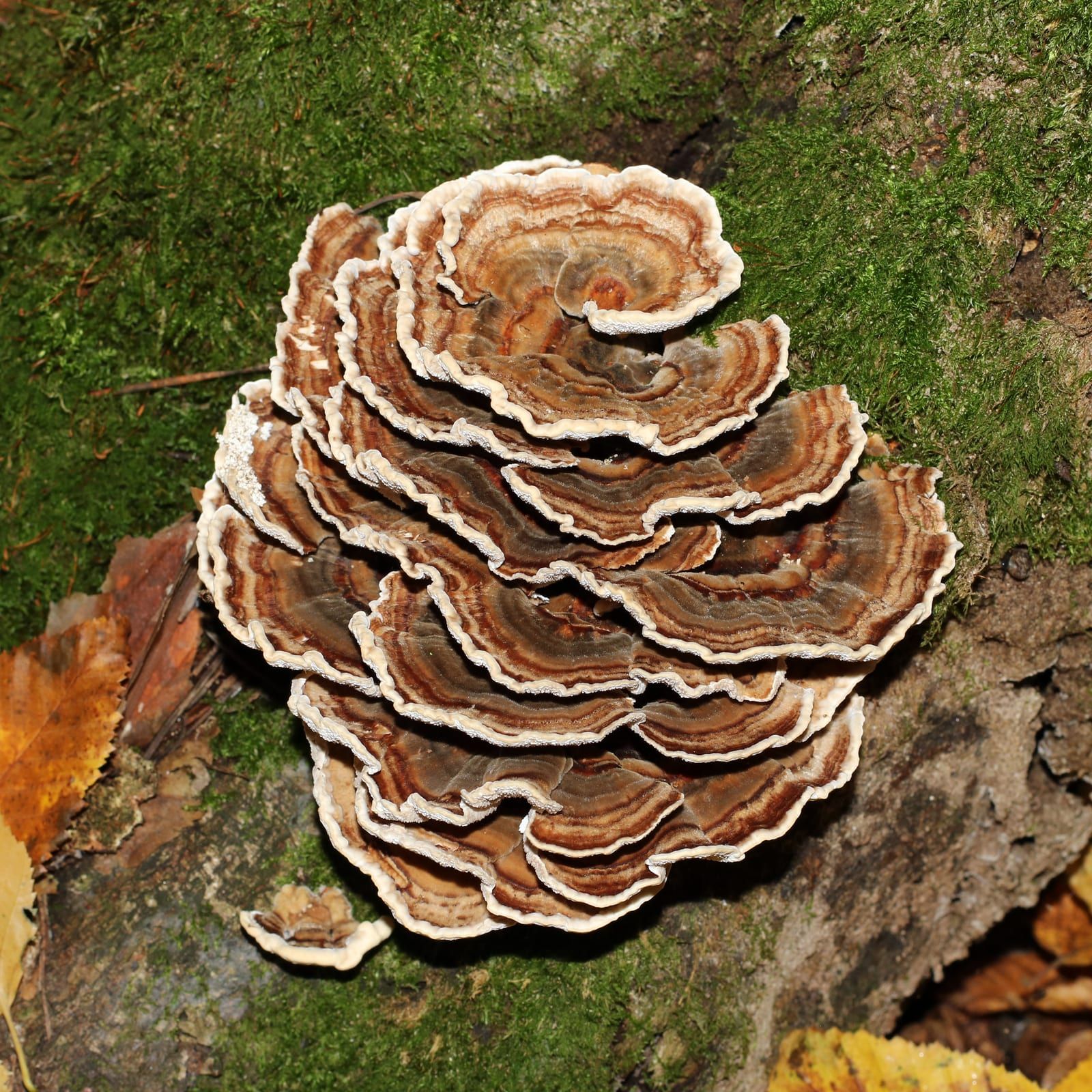
Turkey-tail

Trametes versicolor — Polyporaceae

Native

Description & ID
thin, leathery, fan-shaped brackets in overlapping rosettes, zoned in concentric bands of brown, tan, gray, and blue; whitish finely pored underside.
Habitat
on dead hardwood logs, stumps, and branches; year-round.
County status
native and abundant; 39 research-grade records [S1].
Conservation status
native; secure. (confirm against PNHP)
Notes
one of the most common and recognizable wood-decay fungi; look-alikes (e.g., "false turkey-tail," Stereum species) lack true pores. A key forest decomposer.

More on Wikipedia →

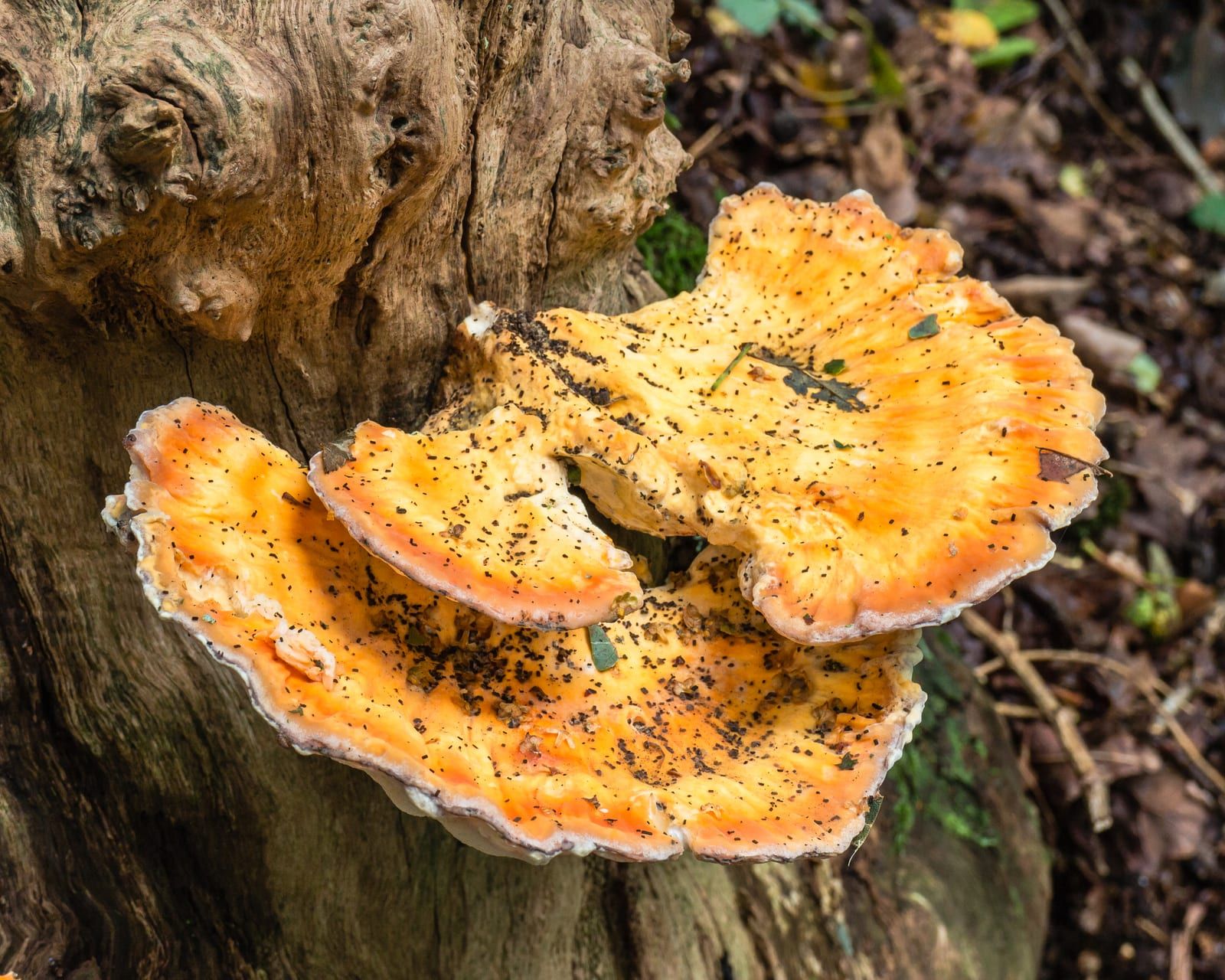
Chicken of the Woods

Laetiporus sulphureus — Fomitopsidaceae

Native

Description & ID
large, fleshy, shelving brackets in bright sulphur-yellow to orange, fading pale with age; pore surface bright yellow.
Habitat
on living and dead hardwoods (especially oak); summer to fall.
County status
native; 30 research-grade records [S1].
Conservation status
native; secure. A heart-rot fungus of standing trees. (confirm against PNHP)
Notes
caution — though sometimes foraged, it causes adverse reactions in some people and look-alikes exist; this reference gives no edibility advice. A related white-pored species (L. cincinnatus) is also recorded in the county.

More on Wikipedia →

Birch Polypore

Fomitopsis betulina — Fomitopsidaceae

Native

Description & ID
smooth, rounded, grayish-tan bracket with an inrolled margin and white pore surface; grows almost exclusively on birch.
Habitat
on dead and dying birch trees.
County status
native; 23 research-grade records [S1].
Conservation status
native; secure. (confirm against PNHP)
Notes
host-specific to birch; tough and corky. Historically used as a strop ("razor strop fungus") and for tinder.

More on Wikipedia →

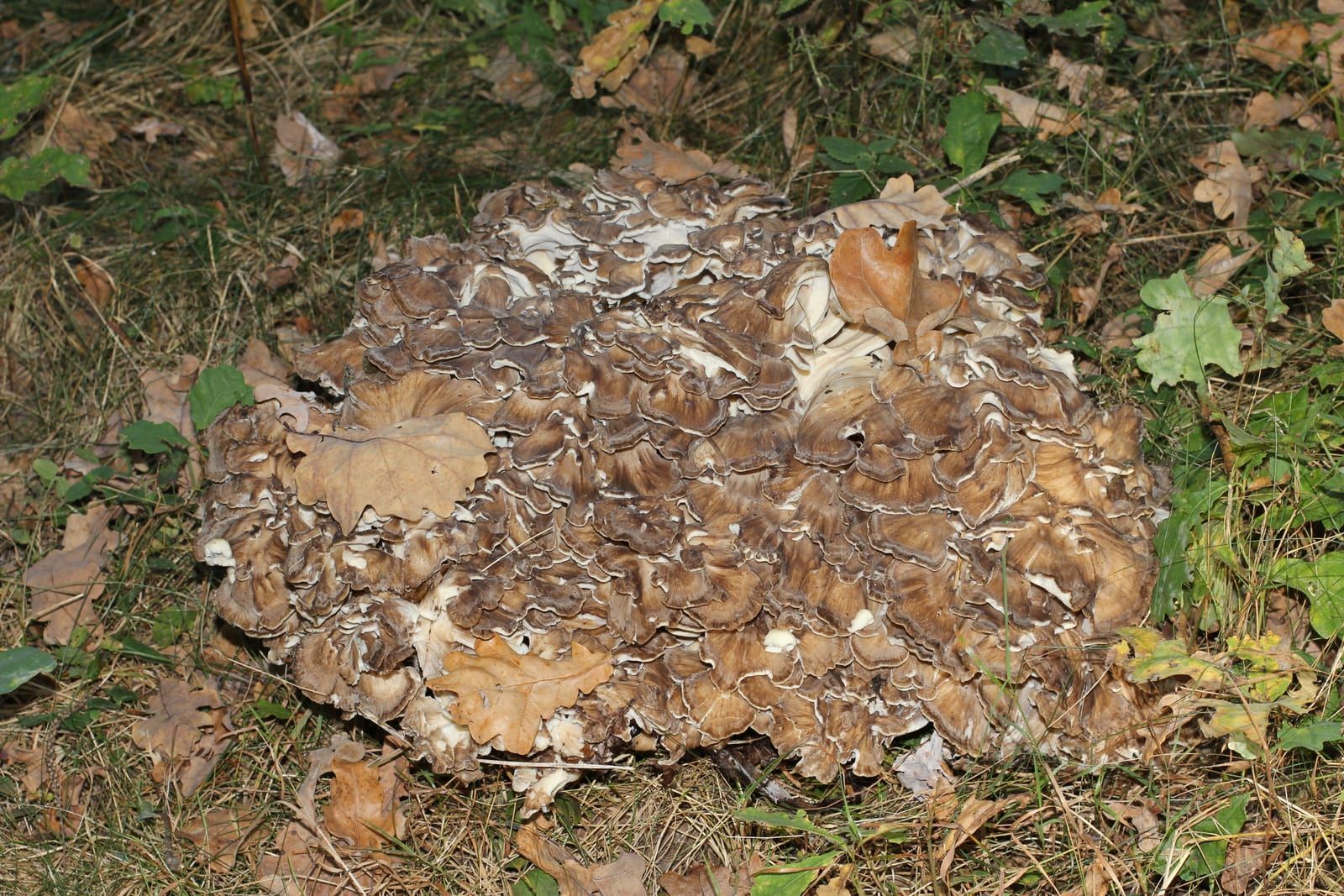
Eastern Cauliflower Mushroom

Sparassis spathulata — Sparassidaceae

Native

Description & ID
large, pale, ruffled mass of flattened, wavy, leaf-like lobes resembling a cauliflower or a sea sponge, at the base of hardwoods.
Habitat
at the base of oaks and other hardwoods, from roots; late summer to fall.
County status
native; 11 research-grade records [S1].
Conservation status
native; secure. (confirm against PNHP)
Notes
a distinctive, much-sought woodland fungus; despite a benign appearance, this reference gives no edibility advice — always verify fungi with an expert.

More on Wikipedia →

Crowded Parchment

Stereum complicatum — Stereaceae

Native

Description & ID
small, thin, curling, orange-tan crust/bracket that fuses into masses on dead wood; smooth (non-pored) underside.
Habitat
on fallen hardwood branches and logs; year-round.
County status
native and common; 19 research-grade records [S1] — the most-recorded fungus in this group.
Conservation status
native; secure. (confirm against PNHP)
Notes
a "false turkey-tail" — distinguished from true turkey-tail by its smooth (not pored) underside. A ubiquitous wood decomposer.

More on Wikipedia →

Crown-tipped Coral Fungus

Artomyces pyxidatus — Auriscalpiaceae

Native

Description & ID
pale, much-branched coral-like fungus; each branch tip has a tiny crown of points (a "crown-tipped" cup).
Habitat
on dead, often decorticated hardwood logs; summer to fall.
County status
native; 16 research-grade records [S1].
Conservation status
native; secure. (confirm against PNHP)
Notes
the only common wood-growing coral fungus with crown-shaped tips; many true coral fungi grow from soil instead.

More on Wikipedia →

Lion's-mane Mushroom

Hericium erinaceus — Hericiaceae

Native

Description & ID
unmistakable white, rounded mass hanging long, soft, icicle-like spines (teeth) from a single clump on wood.
Habitat
on wounds and dead areas of living hardwoods (especially oak and beech); late summer to fall.
County status
native; 3 research-grade records [S1].
Conservation status
native; secure. (confirm against PNHP)
Notes
a striking toothed fungus; a related coral-tooth species (H. coralloides) is also recorded. Distinctive enough to be widely admired, but this reference gives no edibility advice.

More on Wikipedia →

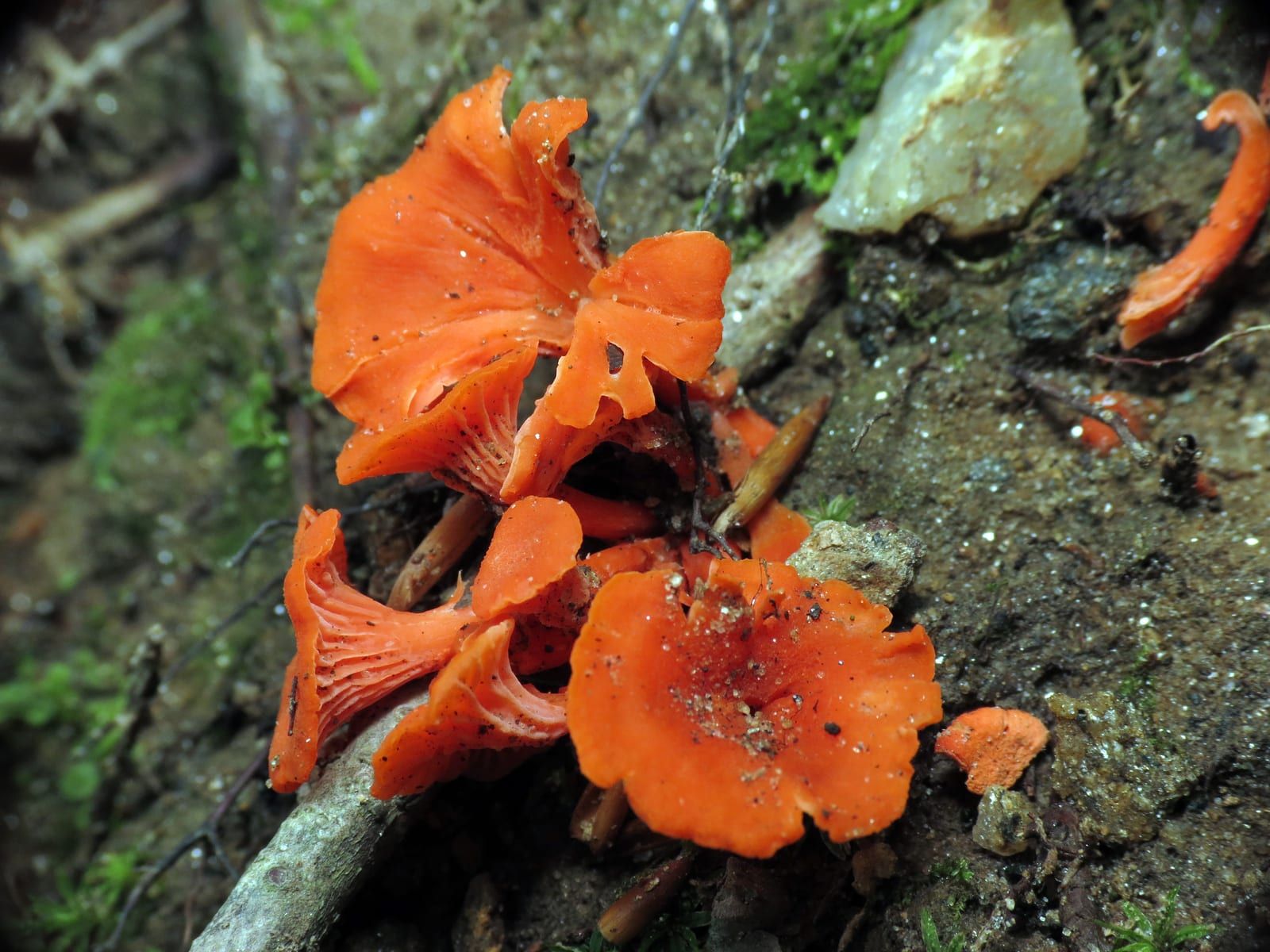
Red Chanterelle (Cinnabar Chanterelle)

Cantharellus cinnabarinus — Cantharellaceae

Native

Description & ID
small, vivid pinkish-red to cinnabar mushroom with shallow, blunt false-gills (ridges, not true blades) running down the stem.
Habitat
on soil in hardwood forests, often with oak; summer.
County status
native; the most-recorded fungus in this group — 15 research-grade records [S1].
Conservation status
native; secure. (confirm against PNHP)
Notes
chanterelles have ridge-like false gills, unlike the true sharp gills of toxic look-alikes such as the jack-o'-lantern (Omphalotus); distinguishing them is a job for experts. No edibility advice is given here.

More on Wikipedia →

Eastern Black Trumpet

Craterellus fallax — Cantharellaceae

Native

Description & ID
thin, trumpet- or vase-shaped fungus in dark gray-black to brown, hollow to the base; smooth to faintly wrinkled outer surface.
Habitat
on soil and moss in hardwood forests, often hidden in leaf litter; summer to fall.
County status
native; 7 research-grade records [S1].
Conservation status
native; secure. (confirm against PNHP)
Notes
cryptic and easily overlooked against dark forest litter; a relative of the chanterelles.

More on Wikipedia →

Devil's Dipstick (Elegant Stinkhorn)

Mutinus elegans — Phallaceae

Native

Description & ID
slender, tapering orange-pink stalk topped with a dark, slimy, foul-smelling spore mass; emerges from a gelatinous "egg."
Habitat
mulch, garden beds, wood chips, and rich soil; summer to fall.
County status
native; 5 research-grade records [S1].
Conservation status
native; secure. (confirm against PNHP)
Notes
stinkhorns attract flies with a carrion odor to disperse spores; several stinkhorns occur in the county (including the stinky squid, Pseudocolus fusiformis). Harmless but memorable.

More on Wikipedia →

Toothed Jelly Fungus

Pseudohydnum gelatinosum — Auriculariales

Native

Description & ID
small, translucent, gelatinous, tongue- or spatula-shaped fungus with soft tooth-like spines on the underside.
Habitat
on rotting conifer wood, especially in cool, damp woods; fall.
County status
native; 2 research-grade records [S1].
Conservation status
native; secure. (confirm against PNHP)
Notes
the only common jelly fungus with teeth — a curious, rubbery woodland find.

More on Wikipedia →

Witch's Butter

Tremella mesenterica — Tremellaceae

Native

Description & ID
bright yellow-orange, brain-like gelatinous blob on dead wood; firm when wet, shriveled and hard when dry.
Habitat
on dead hardwood branches, often still attached; most visible in damp weather, fall through spring.
County status
native; the most-recorded fungus in this group — 13 research-grade records [S1].
Conservation status
native; secure. (confirm against PNHP)
Notes
actually a parasite of other wood-decay (crust) fungi rather than the wood itself; a familiar splash of color on winter logs. The similar orange "jelly spot" (Dacrymyces) also occurs.

More on Wikipedia →

Smooth Rock Tripe

Umbilicaria mammulata — Umbilicariaceae

Native

Description & ID
large, leathery, brown lichen attached to rock at a single central point (umbilicate), smooth above and dark below; floppy when wet, brittle when dry.
Habitat
on shaded, often acidic rock faces, boulders, and cliffs — abundant on the county's ridge outcrops.
County status
native; the most-recorded lichen in the county — 26 research-grade records [S1].
Conservation status
native; secure. Sensitive to air pollution, so its abundance is a positive air-quality sign. (confirm against PNHP)
Notes
"rock tripe" lichens are famous survival food in extremity, but lichens require special processing and are not a casual food — no consumption advice is given here. A lichen is a fungus-alga symbiosis, included with the fungi.

More on Wikipedia →

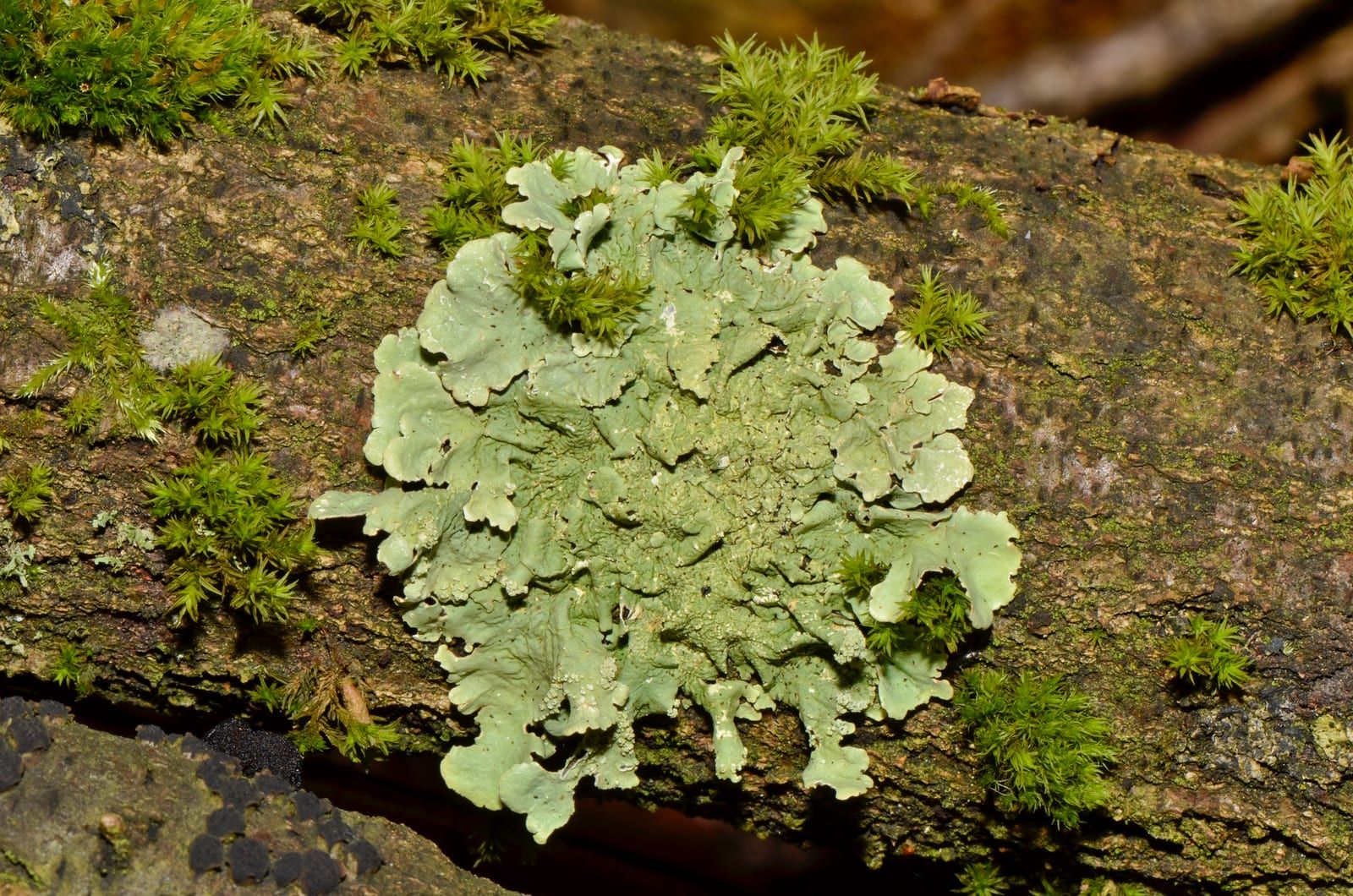
Common Greenshield Lichen

Flavoparmelia caperata — Parmeliaceae

Native

Description & ID
flat, leafy (foliose) lichen forming pale yellow-green rosettes on bark and rock, with a wrinkled surface and powdery patches (soredia).
Habitat
on tree bark, fence rails, and rock in well-lit, reasonably clean-air sites; one of the most common foliose lichens in eastern North America.
County status
native and common; 9 research-grade records [S1].
Conservation status
native; secure. A useful air-quality indicator — abundant where air is relatively clean. (confirm against PNHP)
Notes
a rock-dwelling relative (F. baltimorensis) is also recorded. Lichens are slow-growing and pollution-sensitive, making them valuable bioindicators.

More on Wikipedia →

Chestnut Blight

Cryphonectria parasitica — Cryphonectriaceae

Invasive invasive

Description & ID
a bark-canker fungus; visible as orange pustules and sunken, cracked cankers on American chestnut bark, often with orange spore tendrils.
Habitat
on American chestnut (and chinquapin), in hardwood forests.
County status
INTRODUCED / INVASIVE (Asian) [S1]; 4 research-grade records [S1].
Conservation status
non-native, a catastrophically important forest pathogen [S7]. It functionally eliminated the American chestnut — once a dominant canopy tree of the region's forests — as a mature timber tree across the eastern US in the early 20th century. Surviving chestnuts persist mainly as repeatedly resprouting, blight-killed root systems. (confirm against PNHP)
Notes
one of the most ecologically consequential introduced organisms in North American forest history; restoration efforts (blight-resistant breeding and hypovirulence) continue. Directly tied to the county's surviving American chestnut sprouts.

More on Wikipedia →

Complete checklist

Every taxon recorded research-grade for Schuylkill County as of 2026-06-18, by provenance tier. 268 are iNaturalist research-grade records.

268 iNaturalist county records
Common name Scientific name Records Status
hemlock varnish shelf Ganoderma tsugae 51 Native
turkey-tail Trametes versicolor 39 Native
chicken of the woods Laetiporus sulphureus 30 Native
Eastern American jack-o'-lantern Omphalotus illudens 30 Native
Smooth Rock Tripe Umbilicaria mammulata 26 Native
Viscid Violet Cort Cortinarius iodes 25 Native
birch polypore Fomitopsis betulina 23 Native
crowded parchment Stereum complicatum 19 Native
Yellow Patches Amanita flavoconia 16 Native
crown-tipped coral fungus Artomyces pyxidatus 16 Native
Eastern American Platterful Mushroom Megacollybia rodmanii 16 Native
Black-staining Polypore Meripilus sumstinei 16 Native
Fly Agaric Amanita muscaria 15 Native
Red Chanterelle Cantharellus cinnabarinus 15 Native
witch's butter Tremella mesenterica 13 Native
Asian Beauty Radulomyces copelandii 12 Introduced
splitgill mushroom Schizophyllum commune 11 Native
Eastern cauliflower mushroom Sparassis spathulata 11 Native
Snaketongue Truffleclub Tolypocladium ophioglossoides 11 Native
violet-toothed polypore Trichaptum biforme 11 Native
common greenshield lichen Flavoparmelia caperata 9 Native
Luminescent Panellus Panellus stipticus 8 Native
Orange Spindle Clavulinopsis aurantiocinnabarina 7 Native
Eastern Black Trumpet Craterellus fallax 7 Native
White-pored Chicken of the Woods Laetiporus cincinnatus 7 Native
common puffball Lycoperdon perlatum 7 Native
Moth Urchin Fungus Akanthomyces aculeatus 6 Native
Orange Jelly Spot Dacrymyces chrysospermus 6 Native
Thin-walled Maze Polypore Daedaleopsis confragosa 6 Native
Ringless Honey Mushroom Desarmillaria caespitosa 6 Native
Aborted entoloma Entoloma abortivum 6 Native
American Amber Jelly Fungus Exidia crenata 6 Native
Fistulina americana 6 Native
green cheese polypore Fomitopsis spraguei 6 Native
common earthball Scleroderma citrinum 6 Native
spotted bolete Xanthoconium affine 6 Native
Pear-shaped Puffball Apioperdon pyriforme 5 Native
Collared Calostoma Calostoma lutescens 5 Native
White Coral Fungus Clavulina coralloides 5 Native
mica cap Coprinellus micaceus 5 Native
Shaggy Mane Coprinus comatus 5 Native
rock greenshield lichen Flavoparmelia baltimorensis 5 Native
Brick Cap Hypholoma lateritium 5 Native
Resinous Polypore Ischnoderma resinosum 5 Native
devil's dipstick Mutinus elegans 5 Native
Mountain Laurel Leaf Spot Mycosphaerella colorata 5 Native
Honey Mushroom Armillaria mellea 4 Native
Poor Man's Licorice Bulgaria inquinans 4 Native
Smooth Chanterelle Cantharellus lateritius 4 Native
Small Chanterelle Cantharellus minor 4 Native
Chestnut Blight Cryphonectria parasitica 4 Introduced
fluted bird's nest fungus Cyathus striatus 4 Native
shining waxcap Gloioxanthomyces nitidus 4 Native
hen of the woods Grifola frondosa 4 Native
pallid bolete Imleria pallida 4 Native
Inocybe tahquamenonensis 4 Native
Brittle Cinder Kretzschmaria deusta 4 Native
Common Toadskin Lichen Lasallia papulosa 4 Native
Pennsylvania Toadskin Lichen Lasallia pensylvanica 4 Native
swamp beacon Mitrula elegans 4 Native
Chicken Fat Mushroom Suillus americanus 4 Native
Painted Suillus Suillus spraguei 4 Native
Northern Cinnabar Polypore Trametes cinnabarina 4 Native
ceramic parchment Xylobolus frustulatus 4 Native
black knot Apiosporina morbosa 3 Native
Dryad's Saddle Cerioporus squamosus 3 Native
Green Wood Cup Chlorociboria aeruginascens 3 Native
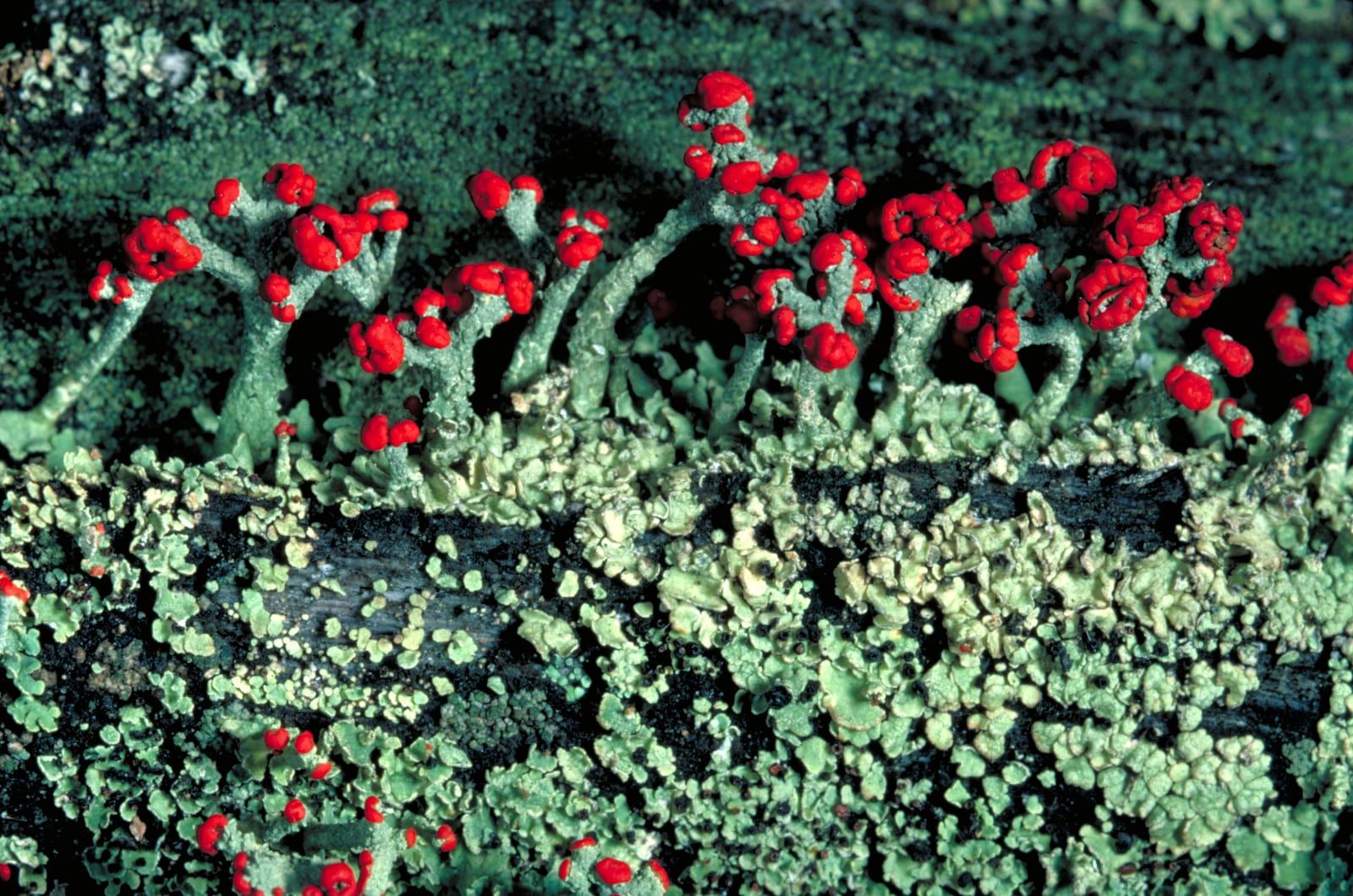
British soldier lichen Cladonia cristatella 3 Native
spring pin Cudoniella clavus 3 Native
Cedar-apple rust Gymnosporangium juniperi-virginianae 3 Native
lion's-mane mushroom Hericium erinaceus 3 Native
Honeysuckle Leaf Blight Insolibasidium deformans 3 Introduced
Hairy Oyster Mushroom Panus lecomtei 3 Native
Golden Pholiota Pholiota aurivella 3 Native
Sharp-scaly Pholiota Pholiota squarrosoides 3 Native
Smokey-eyed Boulder Lichen Porpidia albocaerulescens 3 Native
stinky squid Pseudocolus fusiformis 3 Native
Orange Moss Navel Rickenella fibula 3 Native
Wrinkly Stinkhorn Satyrus rugulosus 3 Native
False Turkeytail Stereum lobatum 3 Native
Old-man-of-the-woods Strobilomyces strobilaceus 3 Native
Lumpy Bracket Trametes gibbosa 3 Native
Purplepore Bracket Trichaptum abietinum 3 Native
Violet Gray Bolete Tylopilus plumbeoviolaceus 3 Native
dead man's fingers Xylaria polymorpha 3 Native
Eastern North American Destroying Angel Amanita bisporigera 2 Native
Brown American Star-footed Amanita Amanita brunnescens 2 Native
Tawny Grisette Amanita fulva 2 Native
False Caesar's Mushroom Amanita parcivolvata 2 Native
Hygroscopic Earthstar Astraeus hygrometricus 2 Native
clustered brown bolete Aureoboletus innixus 2 Native
Graceful Bolete Austroboletus gracilis 2 Native
hypoxylon canker Biscogniauxia atropunctata 2 Native
lilac bolete Boletus separans 2 Native
stalked puffball-in-aspic Calostoma cinnabarinum 2 Native
Chromelosporiopsis coerulescens 2 Native
Dixie Reindeer Lichen Cladonia subtenuis 2 Native
Golden Spindles Clavulinopsis fusiformis 2 Native
violet webcap Cortinarius violaceus 2 Native
flame trumpet Craterellus ignicolor 2 Native
Daldinia childiae 2 Native
Pink Earth Lichen Dibaeis baeomyces 2 Native
Straight-stalked Entoloma Entoloma strictius 2 Native
Warlock's Butter Exidia nigricans 2 Native
Moss Bell Galerina hypnorum 2 Native
hairy rubber cup Galiella rufa 2 Native
artist's bracket Ganoderma applanatum 2 Native
golden reishi Ganoderma curtisii 2 Native
Ganoderma megaloma 2 Native
Conifer Mazegill Gloeophyllum sepiarium 2 Native
Oak-loving Gymnopus Gymnopus dryophilus 2 Native
brown-toothed crust fungus Hydnoporia olivacea 2 Native
Amanita Mold Hypomyces hyalinus 2 Native
chaga Inonotus obliquus 2 Native
Sheathed Woodtuft Kuehneromyces marginellus 2 Native
Peck's milky cap Lactarius peckii 2 Native
Weeping Milk Cap Lactifluus volemus 2 Native
Chicken Lips Leotia viscosa 2 Native
flowerpot parasol Leucocoprinus birnbaumii 2 Native
collared parachute Marasmius rotula 2 Native
Morchella angusticeps 2 Native
hexagonal-pored polypore Neofavolus alveolaris 2 Native
Beech Rooter Oudemansiella furfuracea 2 Native
Netted shield lichen Parmelia sulcata 2 Native
Skirted Stinkhorn Phallus duplicatus 2 Native
Common Brown Cup Phylloscypha phyllogena 2 Native
Stinking Orange Oyster Phyllotopsis nidulans 2 Native
Oyster Mushroom Pleurotus ostreatus 2 Introduced
pale oyster Pleurotus pulmonarius 2 Introduced
scaly shield Pluteus petasatus 2 Native
Toothed Jelly Fungus Pseudohydnum gelatinosum 2 Native
Black Tar Spot Rhytisma acerinum 2 Introduced
Poplar Bracket Rigidoporus populinus 2 Native
Late Oyster Sarcomyxa serotina 2 Native
jellied false coral fungus Sebacina schweinitzii 2 Native
Wine-cap Stropharia Stropharia rugosoannulata 2 Native
Velvet-footed Tap Tapinella atrotomentosa 2 Native
Common Fiber Vase Thelephora terrestris 2 Native
Gilled Polypore Trametes betulina 2 Native
Tulasnella aurantiaca 2 Native
Bitter Bolete Tylopilus felleus 2 Native
White Cheese Polypore Tyromyces chioneus 2 Native
Xanthoconium purpureum 2 Native
Blushing Rosette Abortiporus biennis 1 Native
Meadow Mushroom Agaricus campestris 1 Introduced
Common Fieldcap Agrocybe pediades 1 Native
American Abrupt-bulbed Lepidella Amanita abrupta 1 Native
American Floury Amanita Amanita farinosa 1 Native
Amanita fuscozonata 1 Native
Jackson's slender Caesar Amanita jacksonii 1 Native
blusher Amanita rubescens 1 Native
Antrodiella semisupina 1 Native
Bulbous Honey Fungus Armillaria gallica 1 Native
Honey Mushroom Armillaria ostoyae 1 Native
Auricularia angiospermarum 1 Native
Wood Ear mushroom Auricularia polytricha 1 Native
two-colored bolete Baorangia bicolor 1 Native
Icing sugar fungus Beauveria bassiana 1 Native
Boletus atkinsonii 1 Native
Boletus variipes 1 Native
Berkeley's Polypore Bondarzewia berkeleyi 1 Native
club-like tuning fork Calocera cornea 1 Native
Dog's nose fungus Camarops petersii 1 Native
Cantharellus corallinus 1 Native
Mulberry Leaf Spot Cercospora moricola 1 Native
Elegant Polypore Cerioporus varius 1 Native
Mossy Maze Polypore Cerrena unicolor 1 Native
Shaggy Parasol Chlorophyllum rhacodes 1 Introduced
Clavaria falcata 1 Native
Rye Ergot Claviceps purpurea 1 Native
Miller's oysterling Clitopilus hobsonii 1 Native
Blewit Collybia nuda 1 Native
clustered toughshank Collybiopsis confluens 1 Native
Collybiopsis dichroa 1 Native
Oak-leaf Pinwheel Collybiopsis quercophila 1 Native
milky conecap Conocybe apala 1 Native
Trooping Crumble Cap Coprinellus disseminatus 1 Native
hare's foot inkcap Coprinopsis lagopus 1 Native
Coprinopsis stercorea 1 Native
Cordyceps tenuipes 1 Native
Wrinkled Cortinarius Cortinarius caperatus 1 Native
Yellowfoot Craterellus tubaeformis 1 Native
Flat Crep Crepidotus applanatus 1 Native
common bird's nest fungus Crucibulum laeve 1 Native
field bird's nest fungus Cyathus olla 1 Native
Dark Fieldcap Cyclocybe erebia 1 Native
golden coincap Cyptotrama chrysopepla 1 Native
Fan-shaped Jelly Fungus Dacrymyces spathularia 1 Native
salmon pinkgill Entoloma quadratum 1 Native
Black Witches' Butter Exidia glandulosa 1 Native
Frost's Bolete Exsudoporus frostii 1 Native
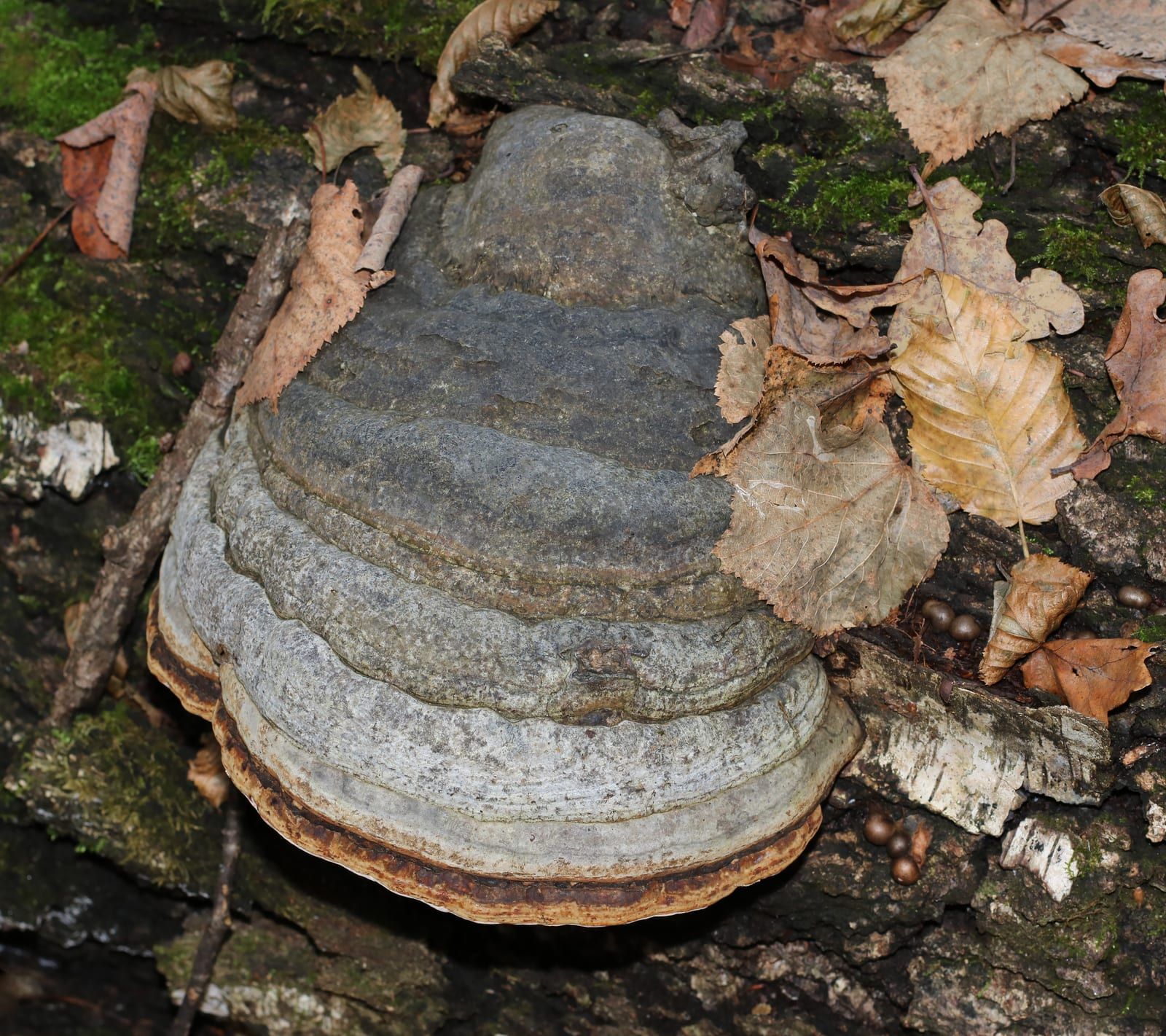
Hoof Fungus Fomes fomentarius 1 Native
Cracked Cap Polypore Fulvifomes robiniae 1 Native
Furia ithacensis 1 Native
Mustard Yellow Polypore Fuscoporia gilva 1 Native
Funeral Bell Galerina marginata 1 Native
Ganoderma sessile 1 Native
Common Script Lichen Graphis scripta 1 Native
Yellow Gymnopilus Gymnopilus luteus 1 Native
Gymnopus alkalivirens 1 Native
hairy-stalked collybia Gymnopus spongiosus 1 Native
False Morel Gyromitra esculenta 1 Native
Chrome-footed Bolete Harrya chromipes 1 Native
Helicogloea compressa 1 Native
White Saddle Helvella crispa 1 Native
Coral tooth fungus Hericium coralloides 1 Native
Hesperomyces harmoniae 1 Introduced
Goblet Waxcap Hygrocybe cantharellus 1 Native
Candy Apple Waxy Cap Hygrocybe cuspidata 1 Native
bolete mould Hypomyces chrysospermus 1 Native
Irpiciporus mollis 1 Native
Purple-and-White Deceiver Laccaria ochropurpurea 1 Native
weeping widow Lacrymaria lacrymabunda 1 Native
Orange-latex Milky Lactarius deterrimus 1 Native
Chocolate Milky Lactarius lignyotus 1 Native
Lactarius psammicola 1 Native
Lactarius subpurpureus 1 Native
Corrugated-cap Milky Lactifluus corrugis 1 Native
Lactifluus gerardii 1 Native
hygrophorus milkcap Lactifluus hygrophoroides 1 Native
Peppery Milkcap Lactifluus piperatus 1 Native
Leccinum longicurvipes 1 Native
Winter polypore Lentinus brumalis 1 Native
Ochre Jelly Club Leotia lubrica 1 Native
Decorated Pholiota Leucopholiota decorosa 1 Native
Mallocybe unicolor 1 Native
Marasmius capillaris 1 Native
Orange Pinwheel Marasmius siccus 1 Native
Trembling Crust Merulius tremellosus 1 Native
common grey disco Mollisia cinerea 1 Native
White green-algae coral Multiclavula mucida 1 Native
Bleeding Bonnet Mycena sanguinolenta 1 Native
Mycetinis opacus 1 Native
Neofavolus suavissimus 1 Native
Ophiocordyceps melolonthae 1 Native
Ophiocordyceps stylophora 1 Native
Mower's Mushroom Panaeolus foenisecii 1 Native
powdered ruffle lichen Parmotrema hypotropum 1 Native
Phaeotremella frondosa 1 Native
Ravenel's stinkhorn Phallus ravenelii 1 Native
Golden Gilled Bolete Phylloporus rhodoxanthus 1 Native
American Dyeball Pisolithus arenarius 1 Native
angel's wings Pleurocybella porrigens 1 Native
Golden Oyster Mushroom Pleurotus citrinopileatus 1 Introduced
crimped gill Plicatura crispa 1 Native
Pluteus americanus 1 Native
Deer Mushroom Pluteus cervinus 1 Native
Parasitic Bolete Pseudoboletus parasiticus 1 Native
The Goblet Pseudoclitocybe cyathiformis 1 Native
oak bracket Pseudoinonotus dryadeus 1 Native
Hollyhock Rust Puccinia malvacearum 1 Introduced
powdery sulfur bolete Pulveroboletus ravenelii 1 Native
Hairy Long Stem Marasmius Rhizomarasmius pyrrhocephalus 1 Native
Russula ochroleucoides 1 Native
Variable Russula Russula variata 1 Native
American cauliflower mushroom Sparassis americana 1 Native
Sprucecone cap Strobilurus esculentus 1 Introduced
Oak Leaf Blister Taphrina caerulescens 1 Native
Black-stalked Marasmius Tetrapyrgos nigripes 1 Native
Thelephora vialis 1 Native
Hairy Bracket Trametes hirsuta 1 Native
Decorated Mop Tricholomopsis decora 1 Native
scurfy twiglet Tubaria furfuracea 1 Native
Tulasnella violea 1 Native
Bare-bottom Sunburst Lichen Xanthomendoza weberi 1 Native
rock shield lichens Xanthoparmelia 1 Native
Pinewood Gingertail Xeromphalina campanella 1 Native
Xylaria flabelliformis 1 Native

Sources

← All plants, fungi & lichens