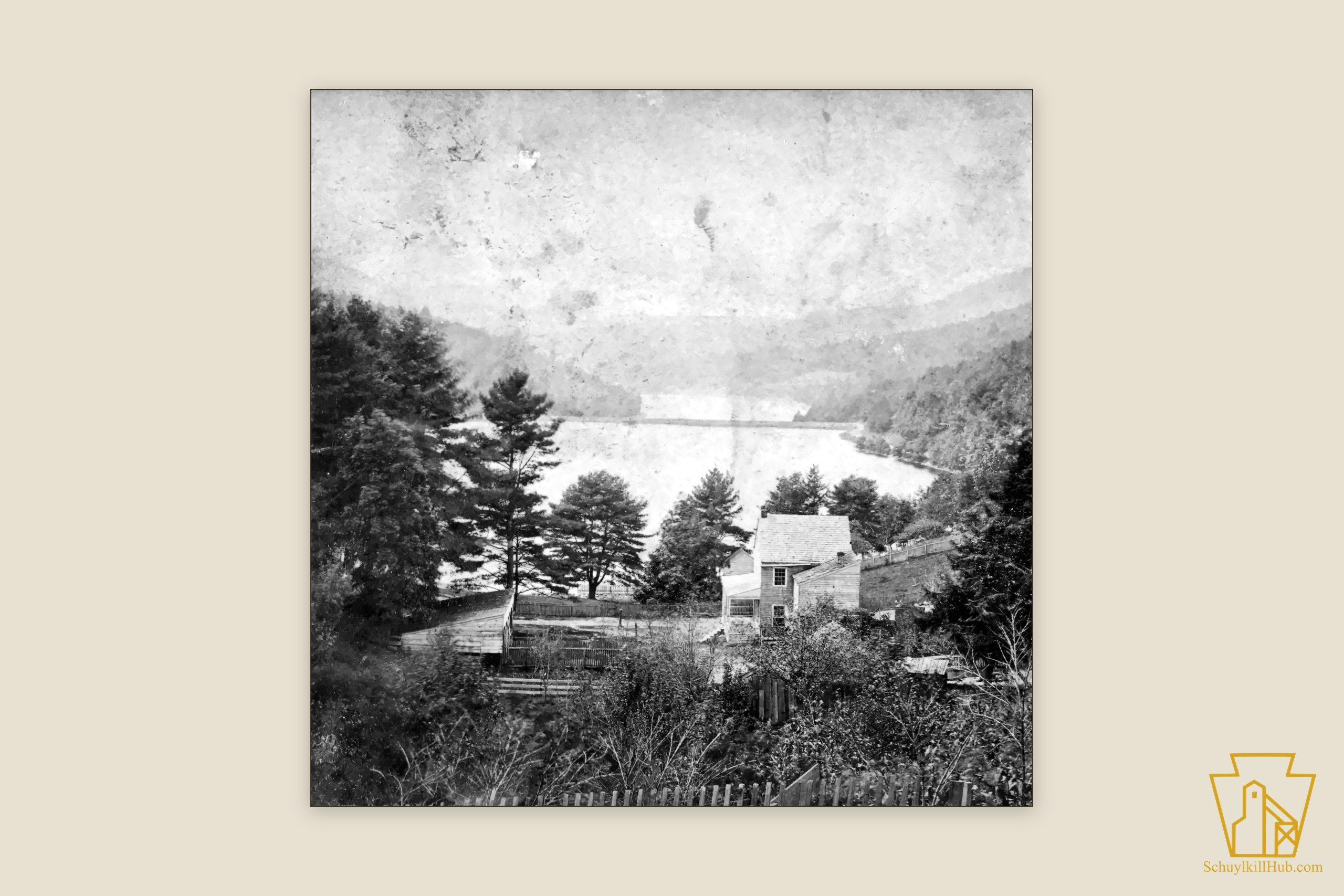
Pottsville · 1927–1982

A virtual anthracite cinema

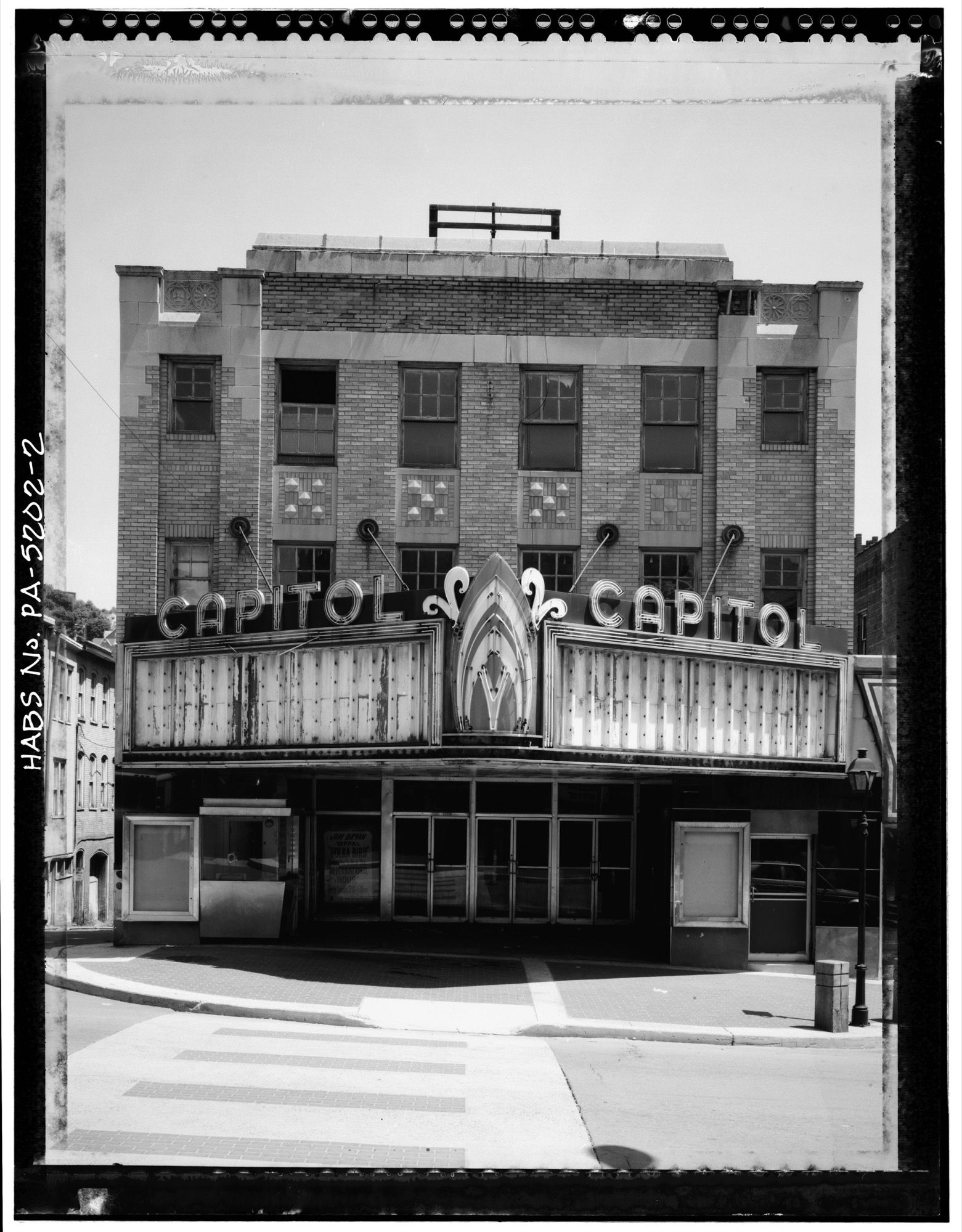
The Capitol was Pottsville's grand movie palace — some 2,700 seats on North Centre Street — until it was demolished in 1982. Here, its marquee glows once more, and the anthracite region's own story plays on the screen. Six public-domain pictures, 1904–1942.

Step inside

Now showing

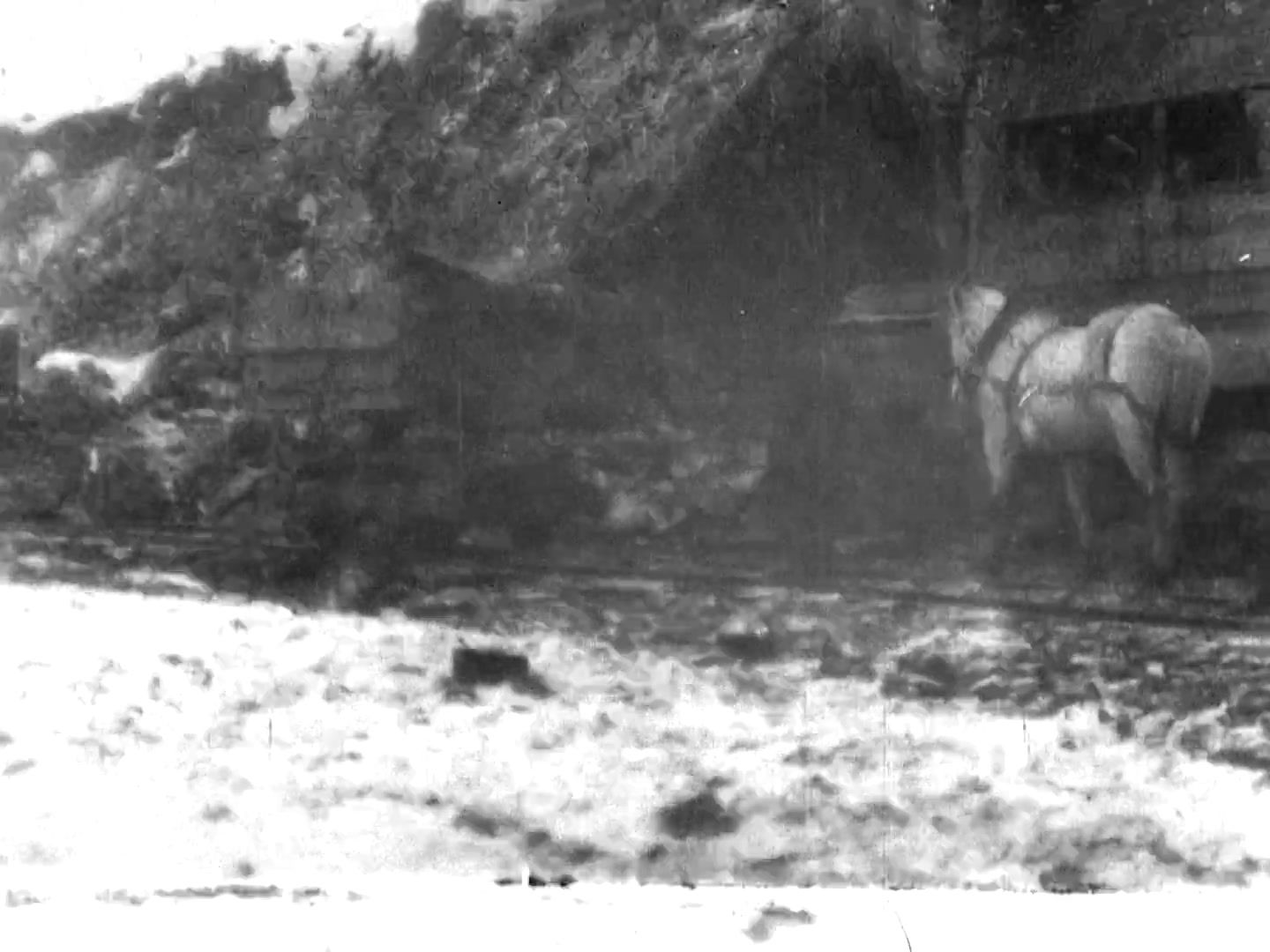
1904 · 2:31 · Silent film

Mining Operations, Pennsylvania Coal Fields

The oldest film in the program: a Thomas Edison company “actuality” filmed December 17, 1904 at Drifton, in the eastern-middle anthracite field. Its two and a half minutes catch a working colliery yard — a mine mule hauling cars amid the culm — the moving-picture equivalent of the archive’s turn-of-the-century photographs.

Source: Library of Congress · No known restrictions

Tonight’s program

Six pictures of the coal region

A curated bill of public-domain films of Pennsylvania anthracite. Choose one to bring it up on the screen.
Intermission

And now, a word from our sponsor
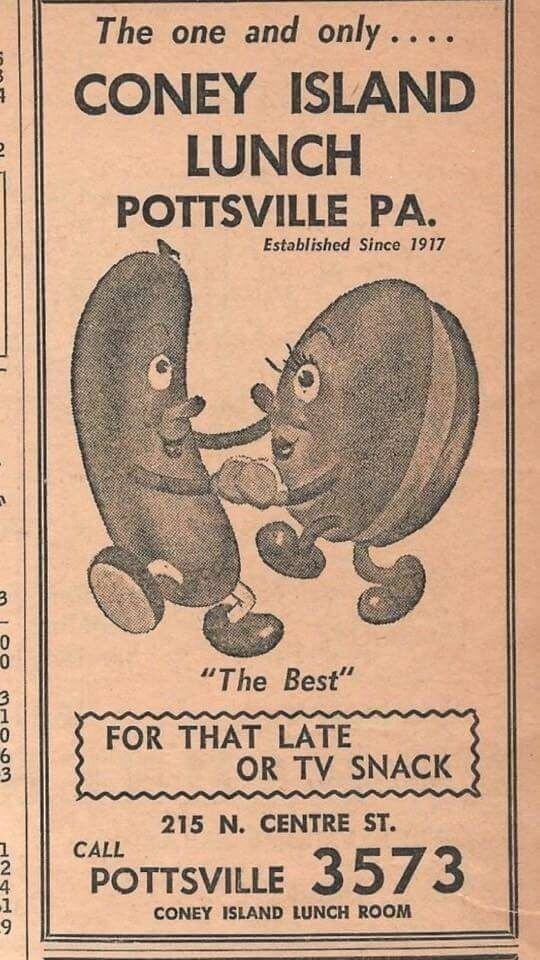
Vintage newspaper advertisement for Coney Island Lunch, Pottsville: 'The one and only,' 'Established Since 1917,' with two cartoon hot-dog characters, the slogan 'The Best,' and the period address 215 N. Centre Street and telephone 'Pottsville 3573.'
An original vintage advertisement

Presented by

Schuylkill County’s 24/7 Classic.

Today at 2290 West Market Street, Pottsville570-622-7722

Proudly serving the same family recipe since 1917

The second act

The Lantern Show

Historic Schuylkill County in 77 restored plates — bird’s-eye views, town streets, collieries, railroads, the Molly Maguire years, portraits, and river scenery. Each plate carries its source and rights; select plates are available as prints.

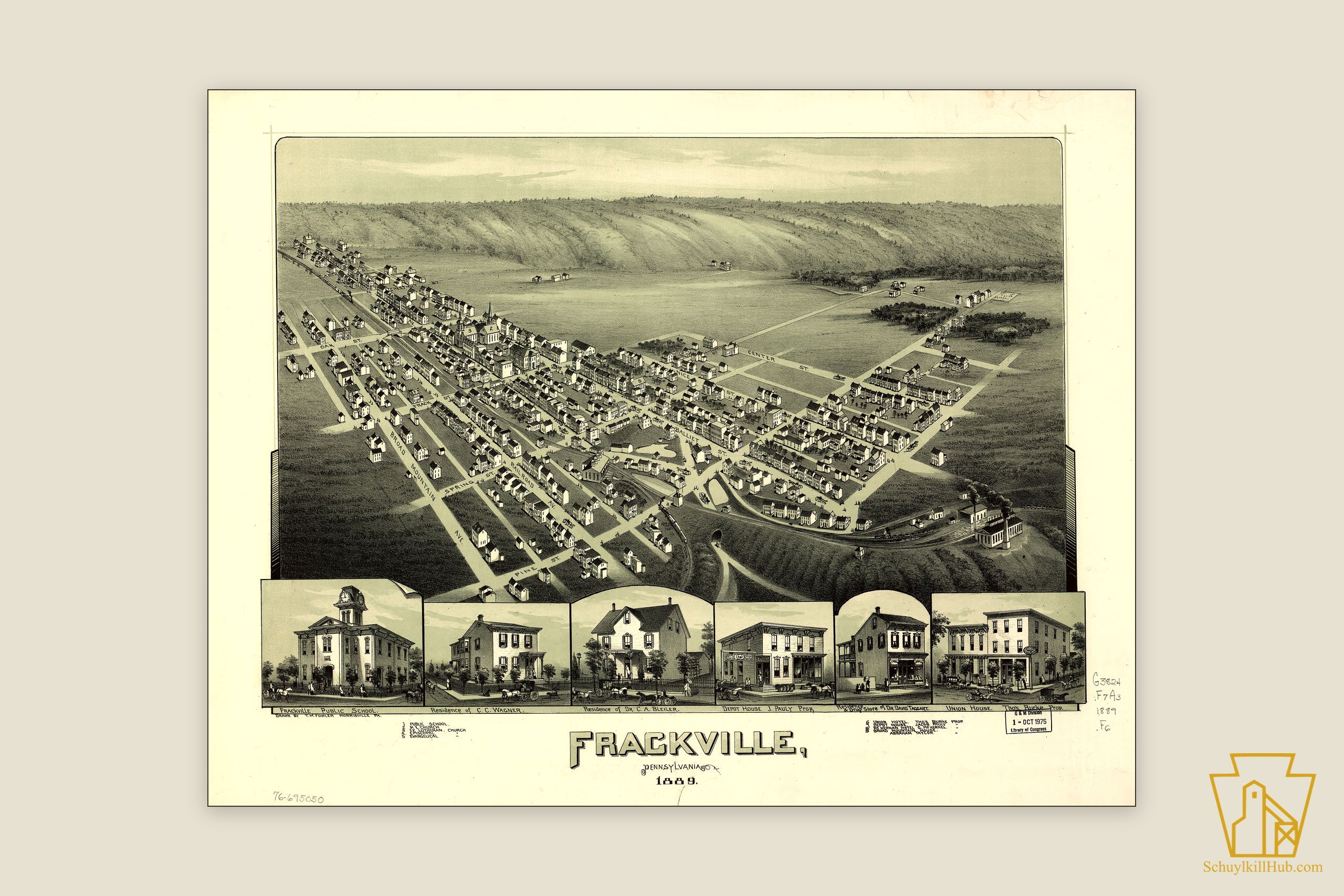
  • Bird’s-eye-view lithograph of Frackville, Pennsylvania, 1889 — the town’s streets and buildings drawn in aerial perspective.

    Bird’s-eye views · Slide 1 of 77

    Bird's-eye view of Frackville (1889)

    Bird's-eye view: T. M. Fowler & J. B. Moyer, 1889, Library of Congress (public domain) · Public Domain (PD-old / PD-US)

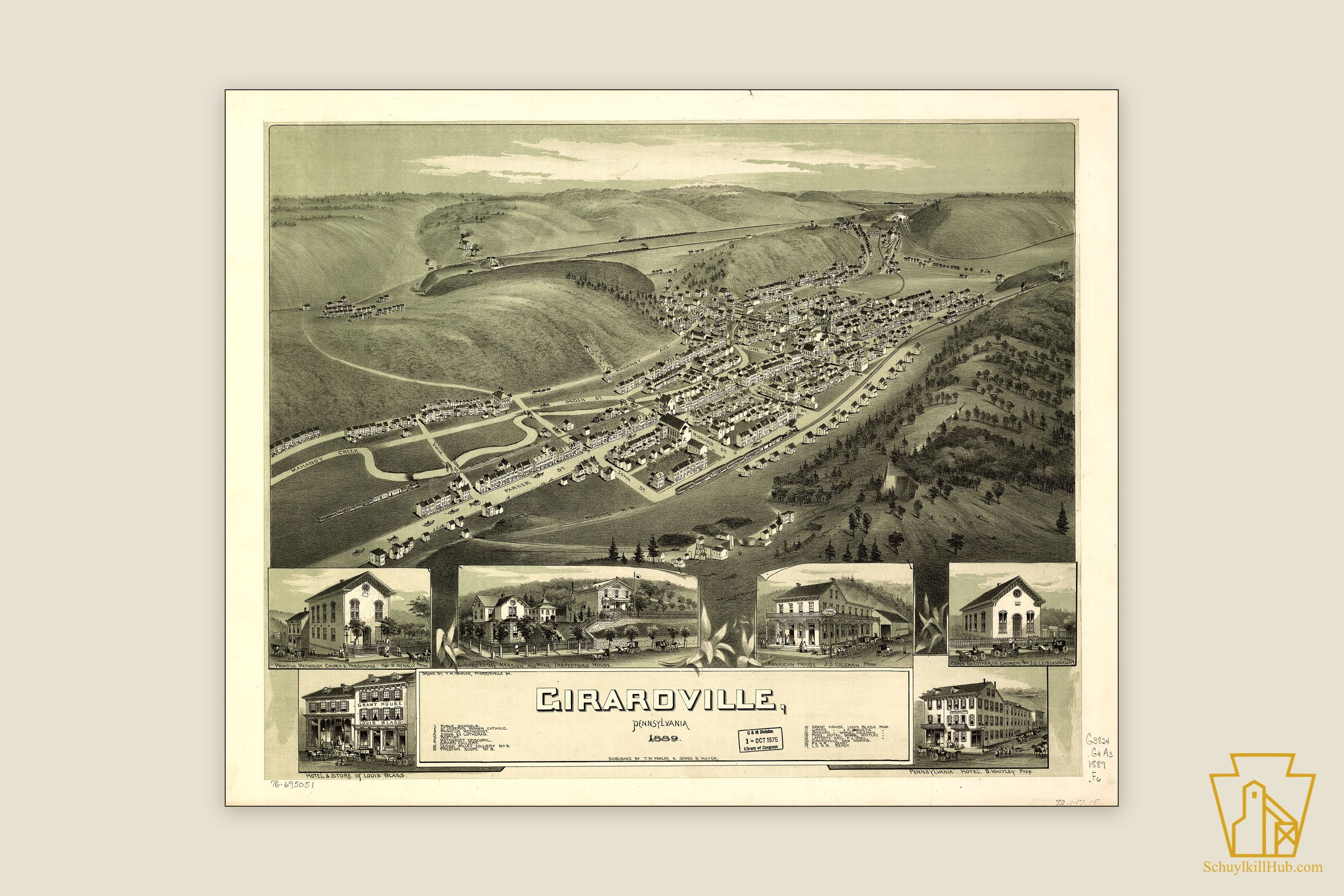
  • Bird’s-eye-view lithograph of Girardville, Pennsylvania, 1889, its street grid drawn in aerial perspective along the valley.

    Bird’s-eye views · Slide 2 of 77

    Bird's-eye view of Girardville (1889)

    Bird's-eye view: T. M. Fowler & J. B. Moyer, 1889, Library of Congress (public domain) · Public Domain (PD-old / PD-US)

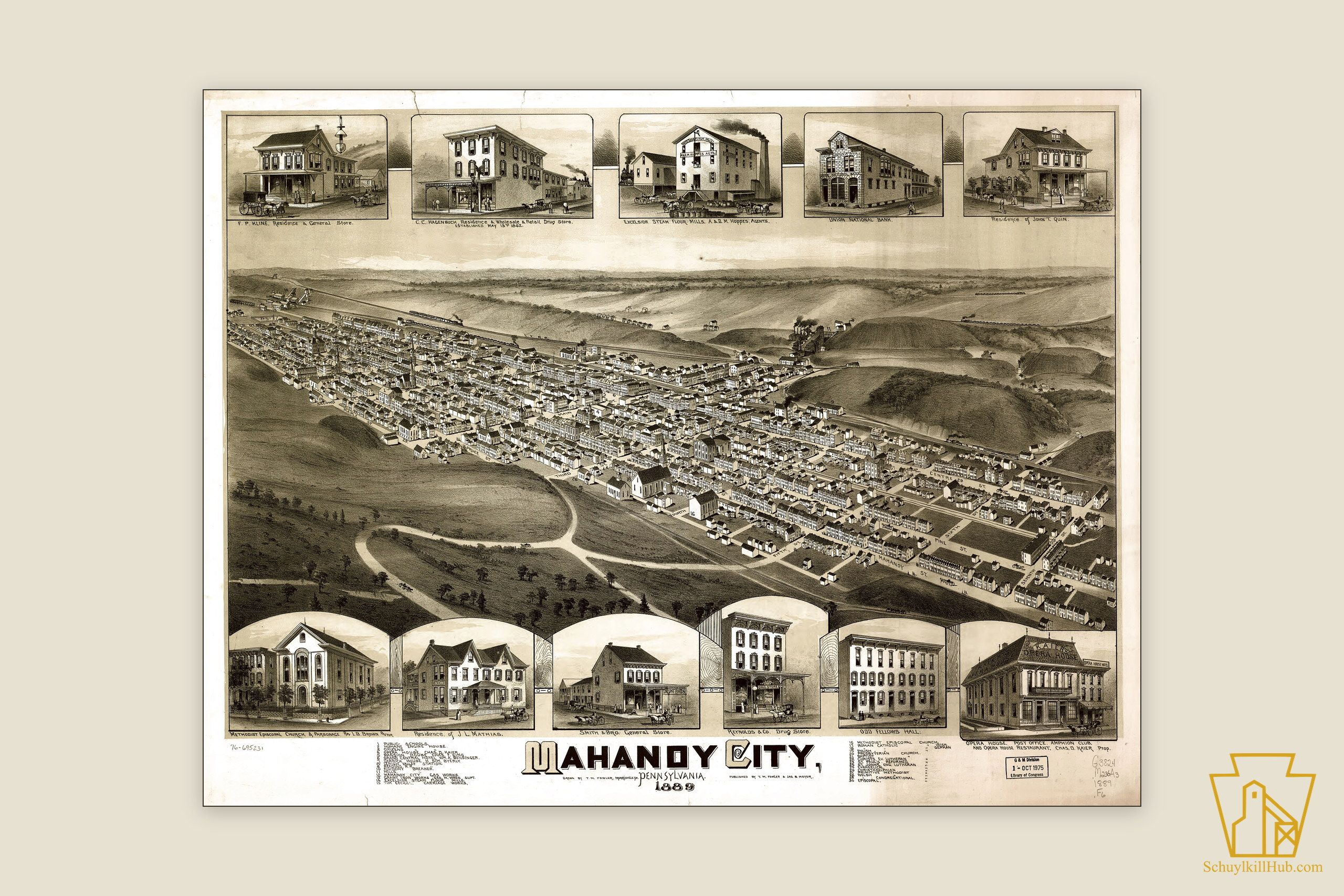
  • Bird’s-eye-view lithograph of Mahanoy City, Pennsylvania, 1889, streets and collieries drawn in aerial perspective.

    Bird’s-eye views · Slide 3 of 77

    Bird's-eye view of Mahanoy City (1889)

    Bird's-eye view: T. M. Fowler & J. B. Moyer, 1889, Library of Congress (public domain) · Public Domain (PD-old / PD-US)

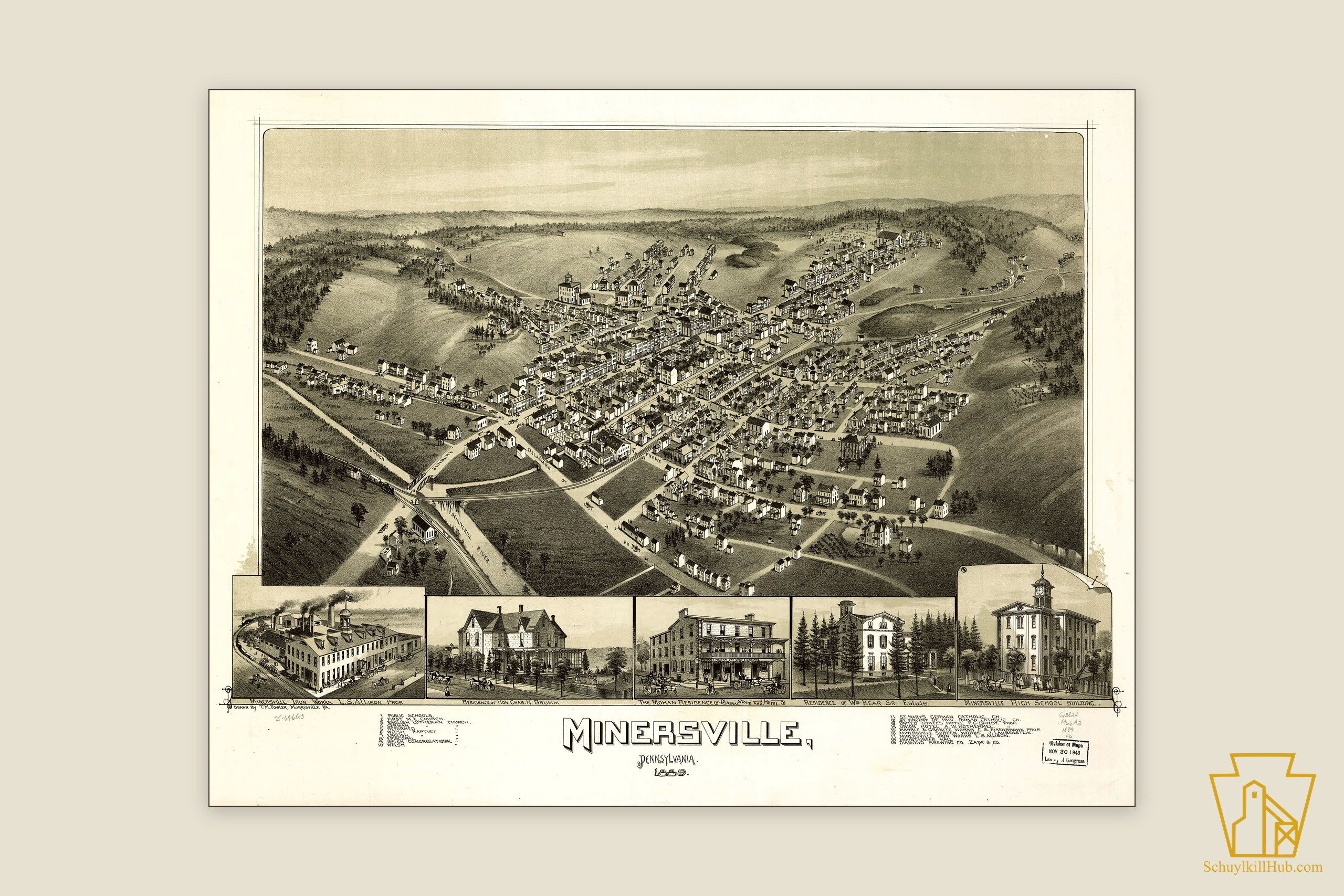
  • Bird’s-eye-view lithograph of Minersville, Pennsylvania, 1889, the borough’s streets drawn in aerial perspective.

    Bird’s-eye views · Slide 4 of 77

    Bird's-eye view of Minersville (1889)

    Bird's-eye view: T. M. Fowler & J. B. Moyer, 1889, Library of Congress (public domain) · Public Domain (PD-old / PD-US)

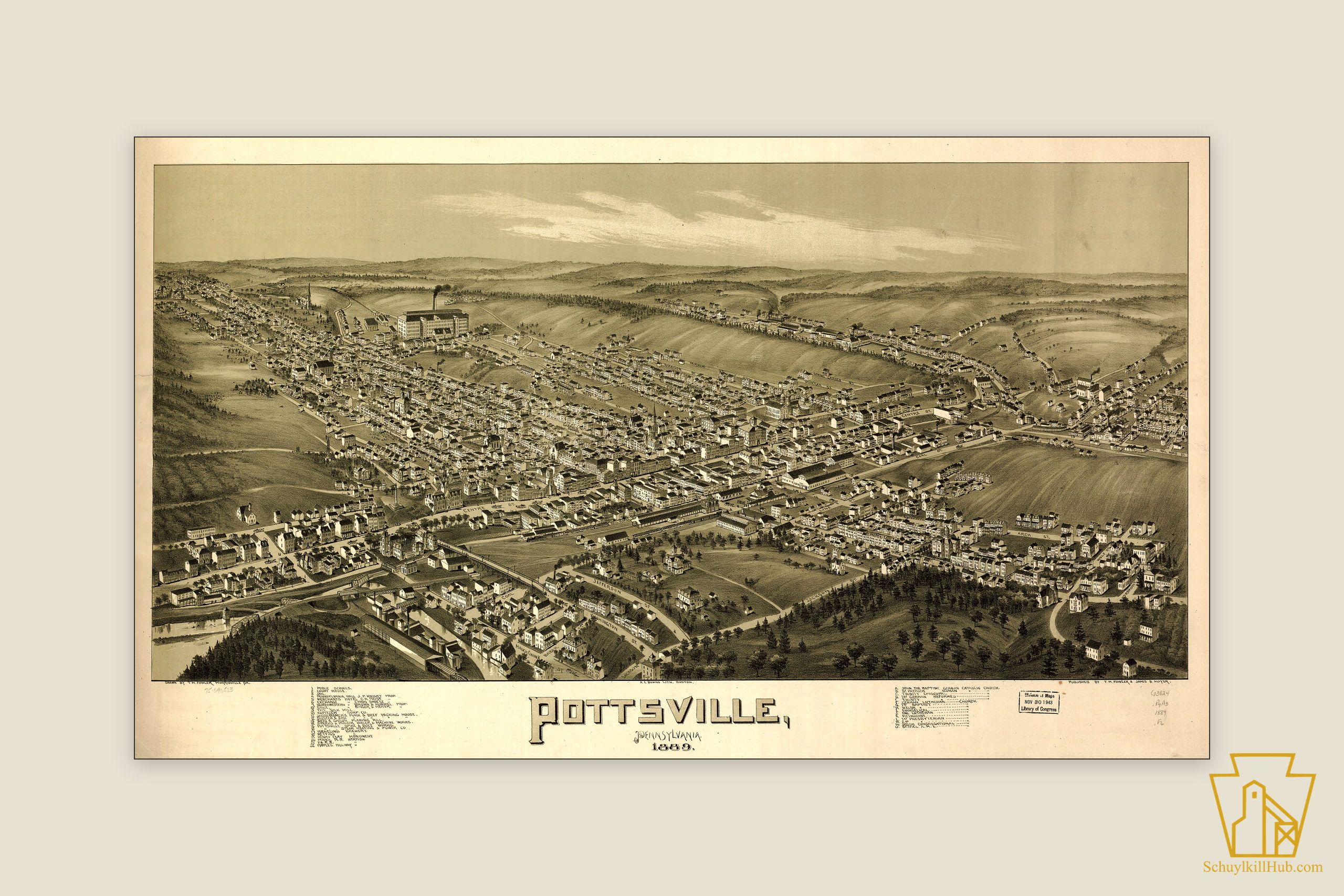
  • Bird’s-eye-view lithograph of Pottsville, Pennsylvania, 1889, the county seat’s hillside streets drawn in aerial perspective.

    Bird’s-eye views · Slide 5 of 77

    Bird's-eye view of Pottsville (1889)

    Bird's-eye view: T. M. Fowler & J. B. Moyer, 1889, Library of Congress (public domain) · Public Domain (PD-old / PD-US)

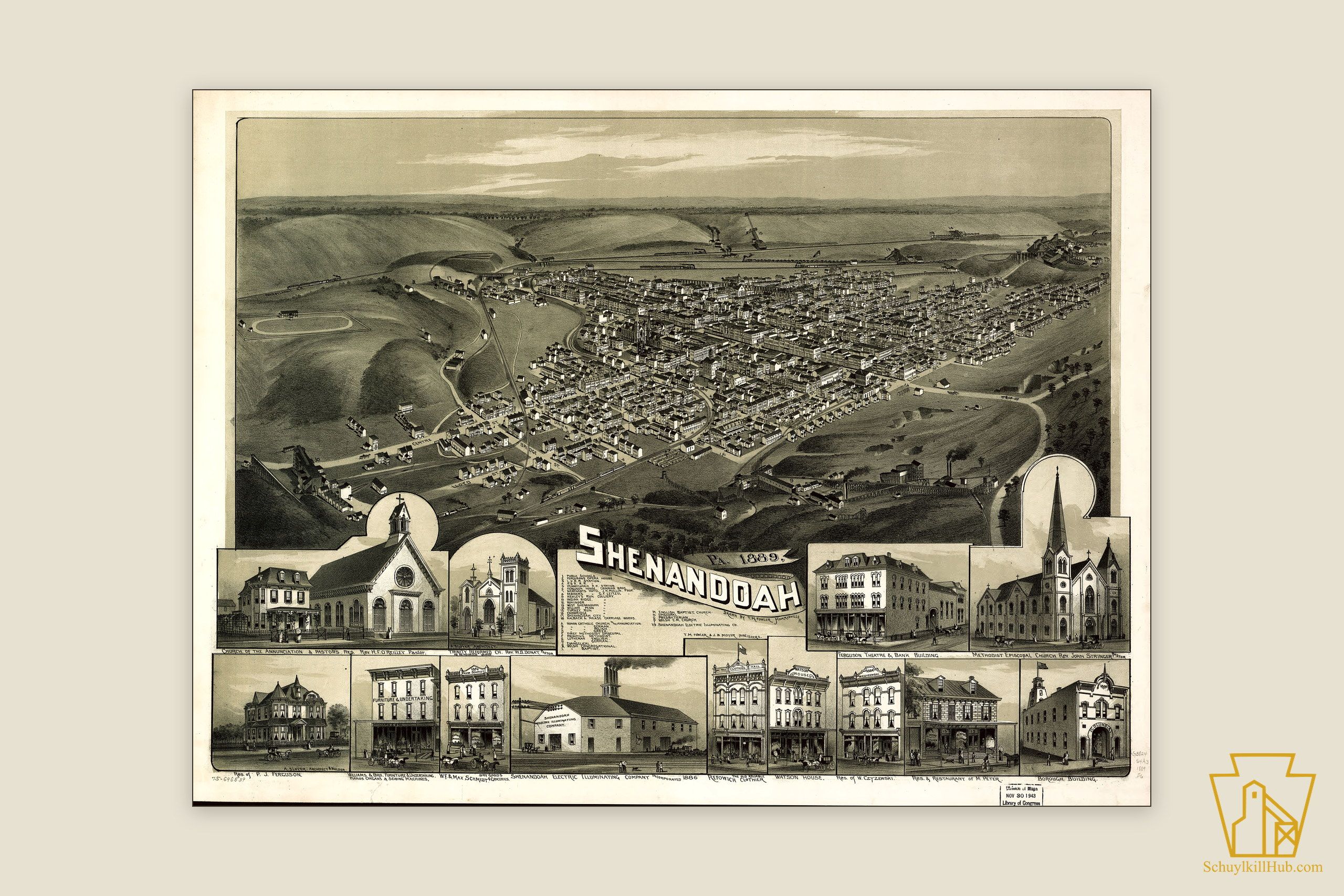
  • Bird’s-eye-view lithograph of Shenandoah, Pennsylvania, 1889, the mining town’s dense grid drawn in aerial perspective.

    Bird’s-eye views · Slide 6 of 77

    Bird's-eye view of Shenandoah (1889)

    Bird's-eye view: T. M. Fowler & J. B. Moyer, 1889, Library of Congress (public domain) · Public Domain (PD-old / PD-US)

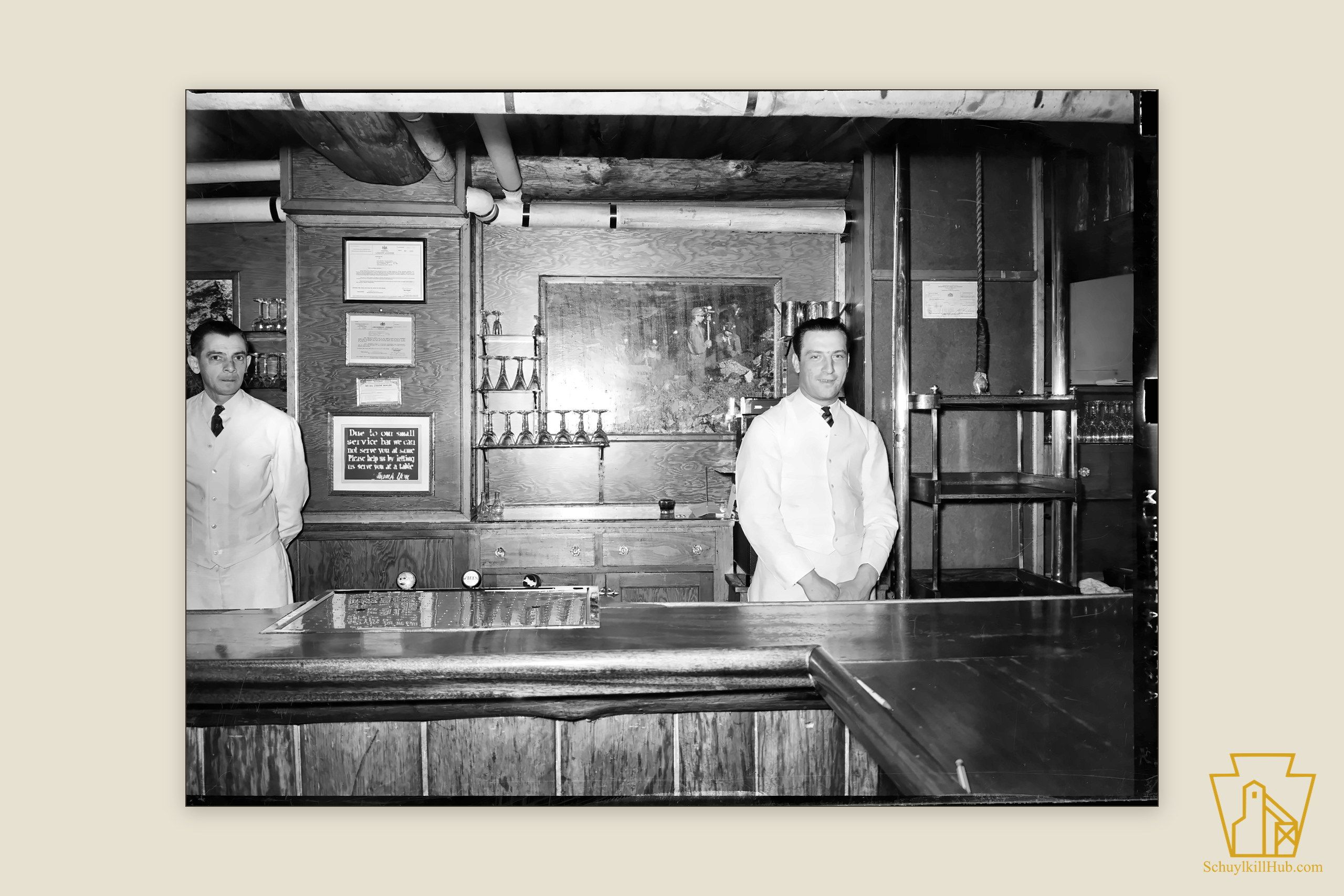
  • Two bartenders in white jackets behind the long polished bar of the Necho Allen Hotel.

    Town views · Slide 7 of 77

    The Bar at the Necho Allen Hotel, Pottsville

    Two bartenders in white jackets behind the polished service bar of the Necho Allen Hotel at Pottsville — named for the frontiersman credited with discovering anthracite. Sheldon Dick for the Farm Security Administration, 1938.

    Photo: Sheldon Dick, U.S. Farm Security Administration, 1938, Library of Congress (no known restrictions) · No known restrictions (Library of Congress, FSA/OWI)

    Own this print
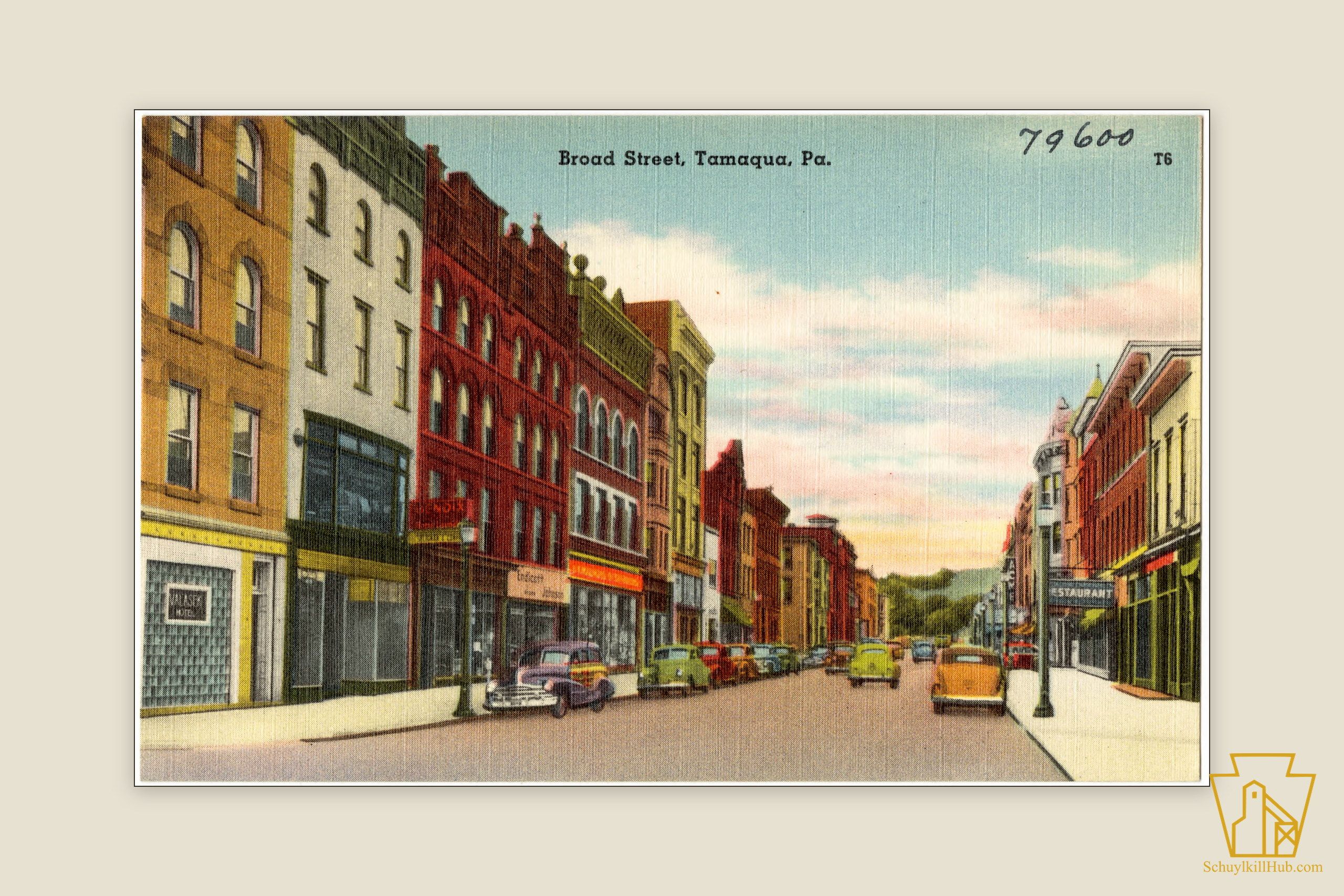
  • Color linen postcard of Broad Street, Tamaqua, lined with three- and four-story commercial blocks and parked cars.

    Town views · c. 1930–1945 · Slide 8 of 77

    Broad Street, Tamaqua

    The commercial canyon of Broad Street, Tamaqua, with its three- and four-story blocks and parked cars, on a Tichnor Brothers linen postcard (no. 79600), printed c. 1930–1945; from the Boston Public Library's Tichnor Brothers Collection.

    Postcard: Tichnor Bros. (Boston Public Library), c.1930-1945 (public domain), via Wikimedia Commons · Public Domain (PD-US, published without notice)

    Own this print
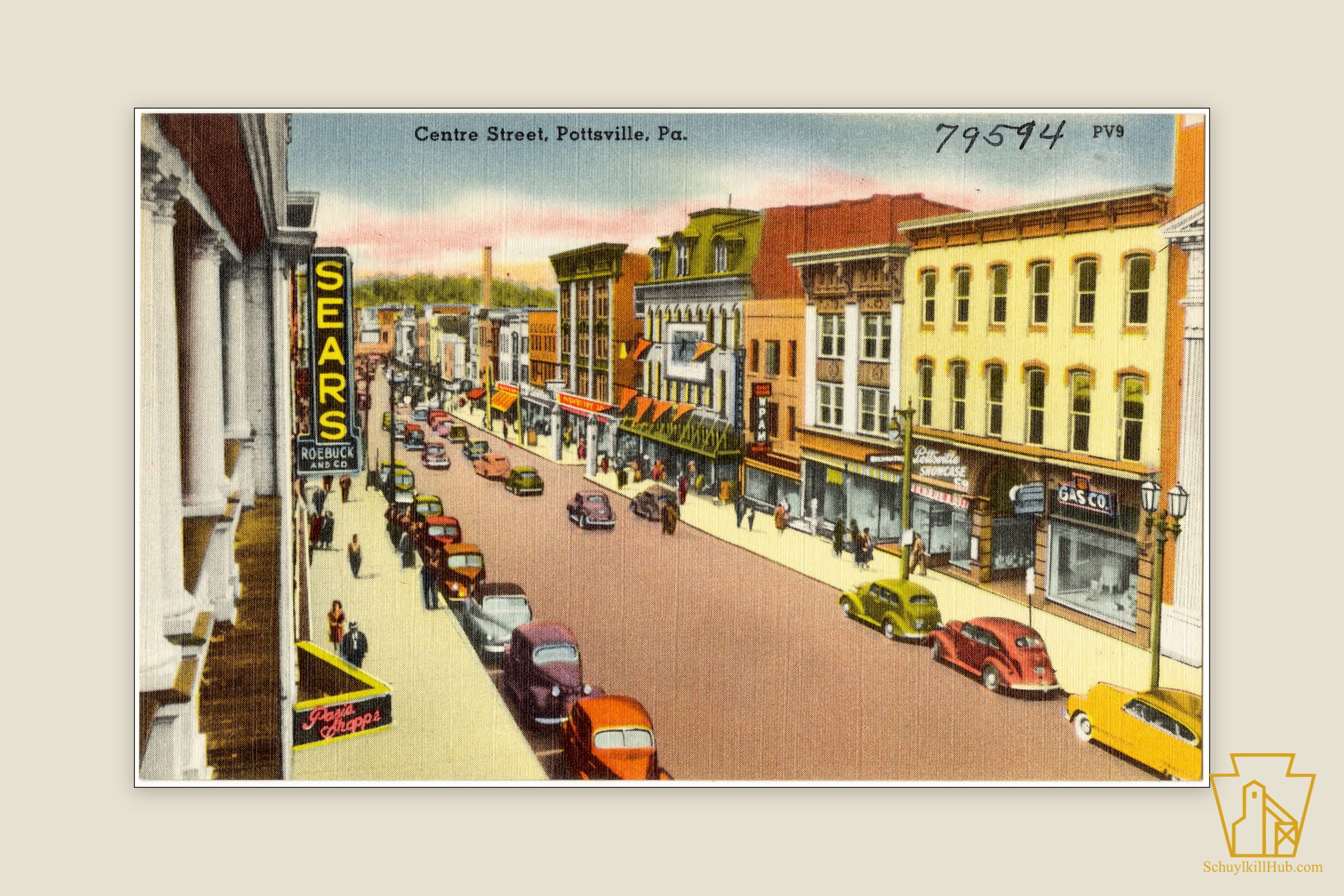
  • Color linen postcard looking down Centre Street, Pottsville — storefronts, blade signs and parked automobiles.

    Town views · c. 1930–1945 · Slide 9 of 77

    Centre Street, Pottsville

    Looking down Centre Street, Pottsville — storefronts, a Sears Roebuck blade sign and parked automobiles — on a Tichnor Brothers linen postcard (no. 79594), printed c. 1930–1945; from the Boston Public Library's Tichnor Brothers Collection.

    Postcard: Tichnor Bros. (Boston Public Library), c.1930-1945 (public domain), via Wikimedia Commons · Public Domain (PD-US, published without notice)

    Own this print
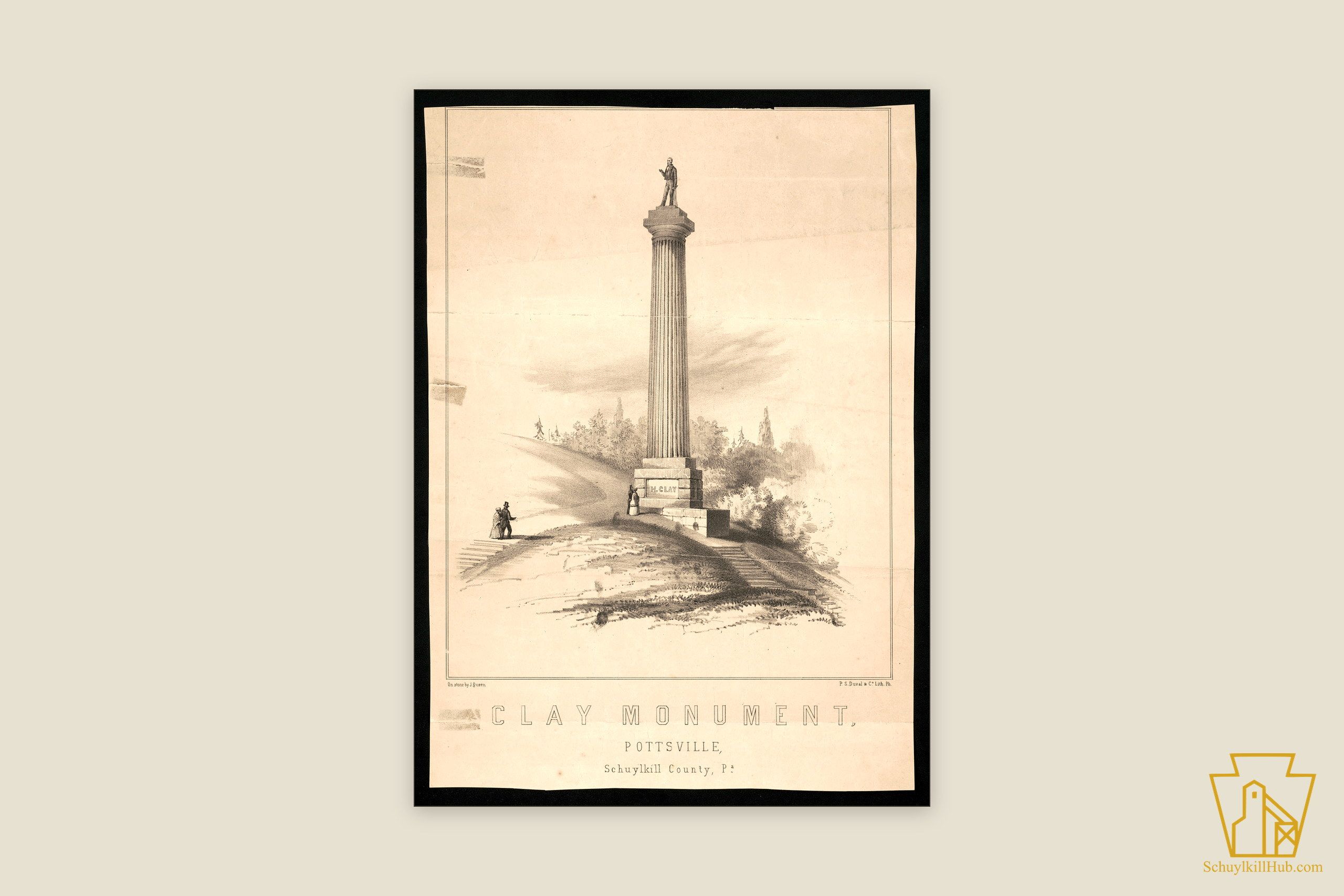
  • Lithograph of the Henry Clay Monument at Pottsville, an iron statue atop a fluted column.

    Town views · c. 1851–1857 · Slide 10 of 77

    Clay Monument, Pottsville, Schuylkill County

    The Henry Clay Monument at Pottsville — the first monument raised to Clay in the United States — drawn on stone by James F. Queen and printed by P.S. Duval & Co. of Philadelphia, c. 1851–1857. The iron statue atop its fluted Doric column still stands above the town.

    Lithograph: J. Queen / P.S. Duval & Co. (c.1851-1857), Library of Congress (public domain) · Public Domain (PD-old)

    Own this print
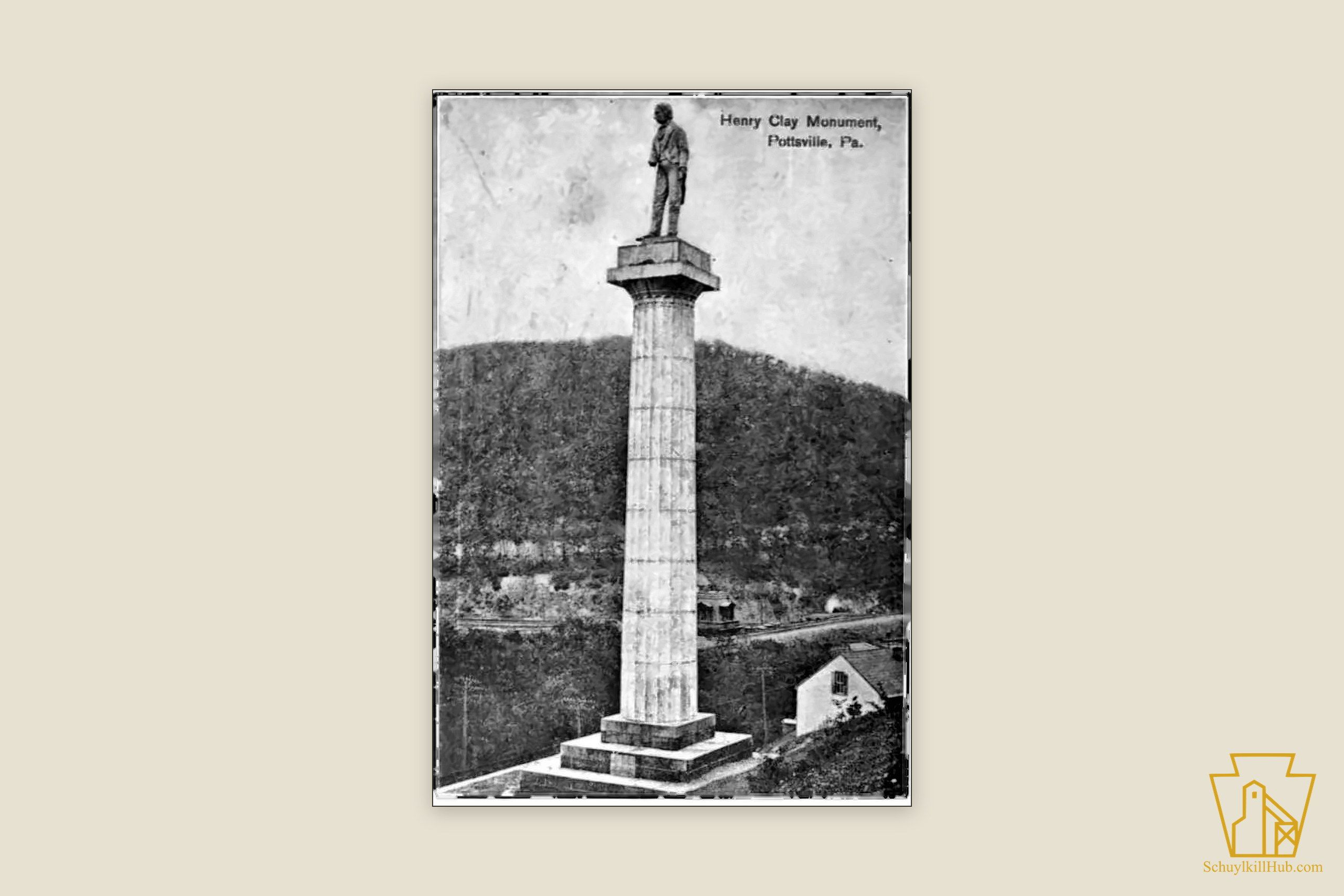
  • The Henry Clay Monument column on its hilltop above Pottsville.

    Town views · c. 1910 · Slide 11 of 77

    Henry Clay Monument, Pottsville

    The monument on its hilltop above Pottsville, as reproduced in the Publications of the Historical Society of Schuylkill County in 1910 — the photographic record of what Queen's lithograph had pictured a half-century earlier.

    Photo: Historical Society of Schuylkill County, c.1910 (public domain), via Wikimedia Commons · Public Domain (PD-old)

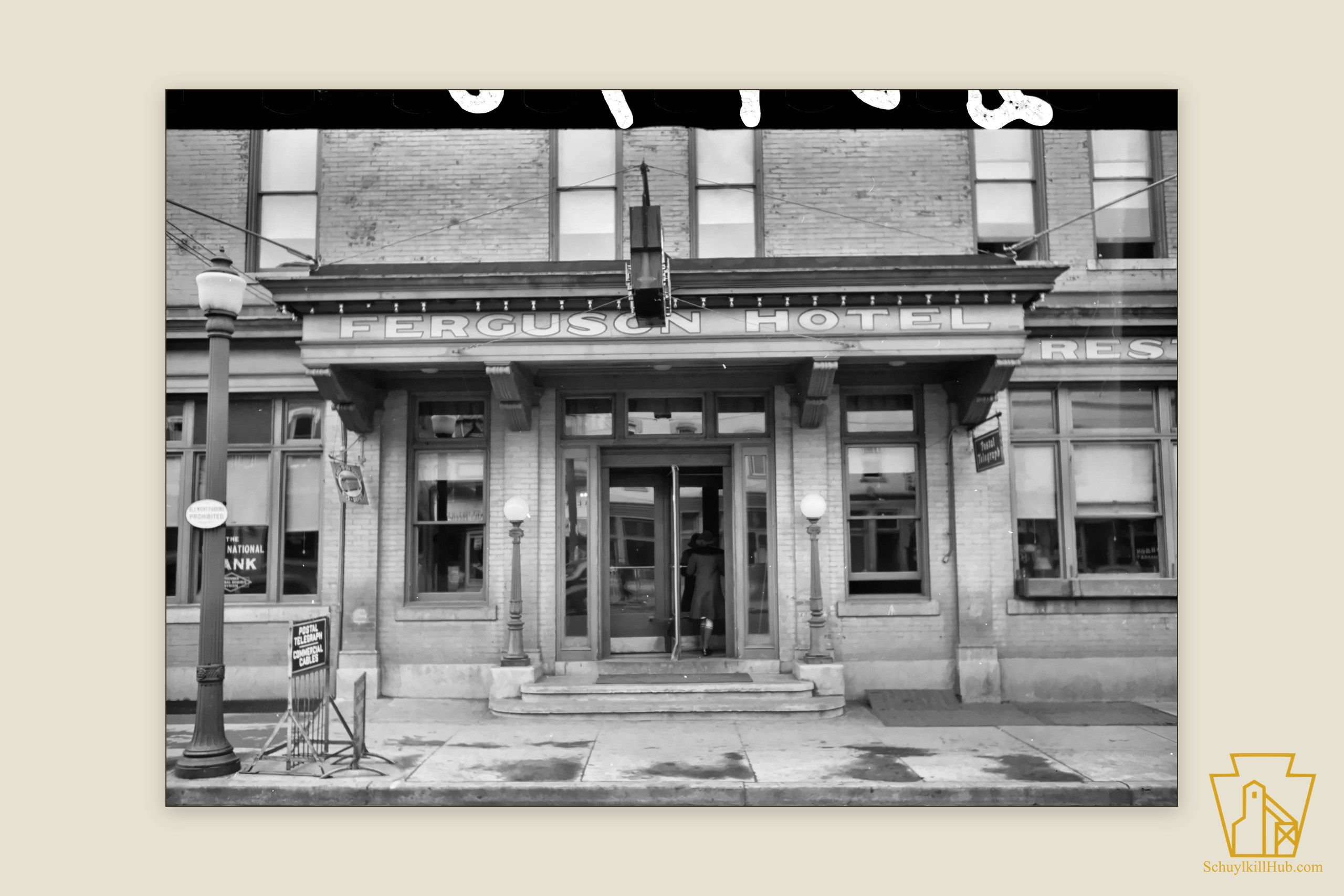
  • The ornamented entrance and revolving door of the Ferguson Hotel at Shenandoah.

    Town views · Slide 12 of 77

    Entrance to the Ferguson Hotel, Shenandoah

    The ornamented entrance and revolving door of the Ferguson Hotel at Shenandoah, sharing its block with a national bank and a Postal Telegraph office. Sheldon Dick for the Farm Security Administration, 1938.

    Photo: Sheldon Dick, U.S. Farm Security Administration, 1938, Library of Congress (public domain), via Wikimedia Commons · Public Domain (U.S. FSA/OWI, Library of Congress)

    Own this print
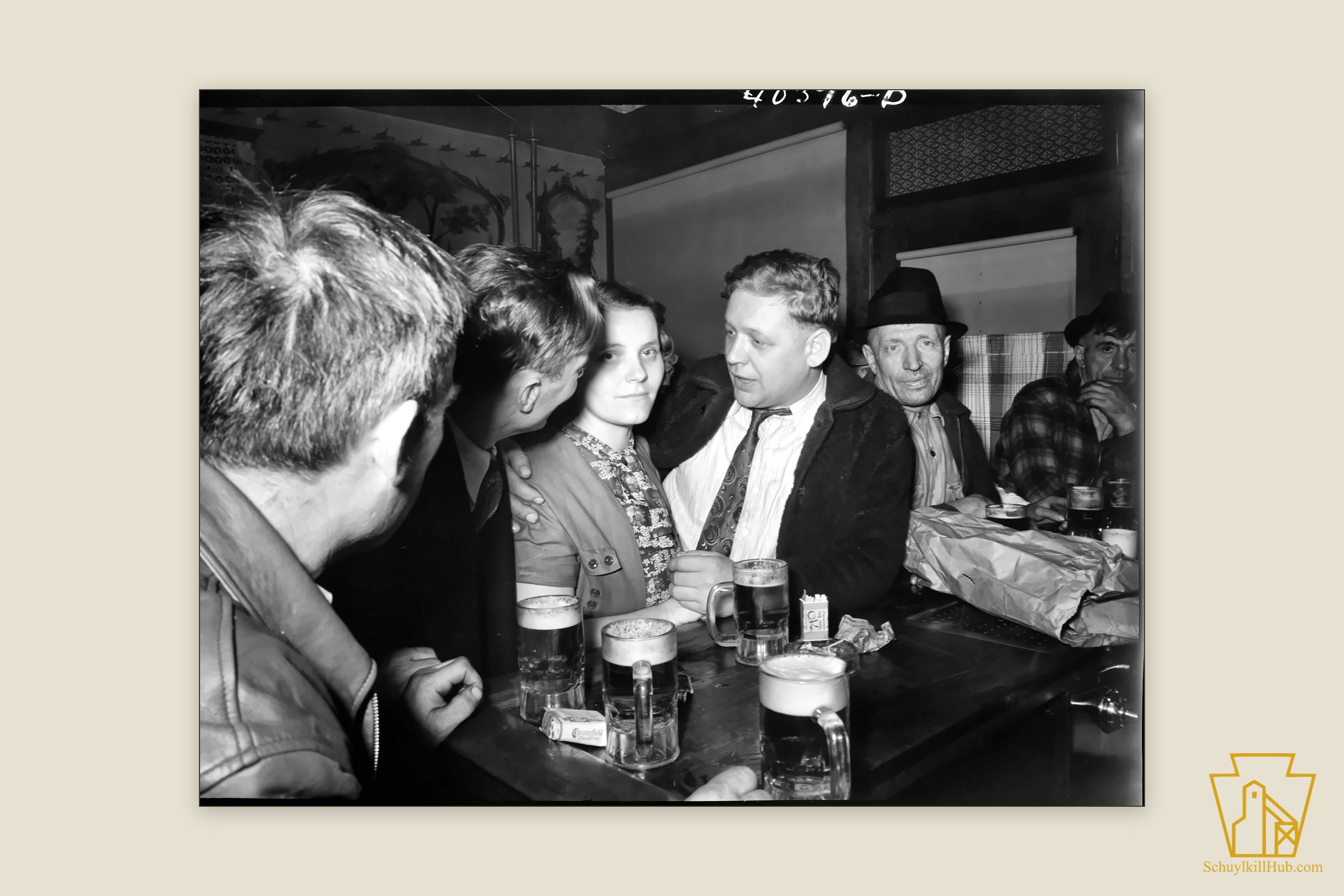
  • Men and a young woman leaning at Filipek’s bar in Shenandoah, beer mugs and cigarettes on the rail.

    Town views · Slide 13 of 77

    At Filipek's Bar, Shenandoah

    Men and a young woman lean at Filipek's bar in Shenandoah, beer mugs and cigarettes on the rail. Sheldon Dick for the Farm Security Administration, 1938.

    Photo: Sheldon Dick, U.S. Farm Security Administration, 1938, Library of Congress (public domain), via Wikimedia Commons · Public Domain (U.S. FSA/OWI, Library of Congress)

    Own this print
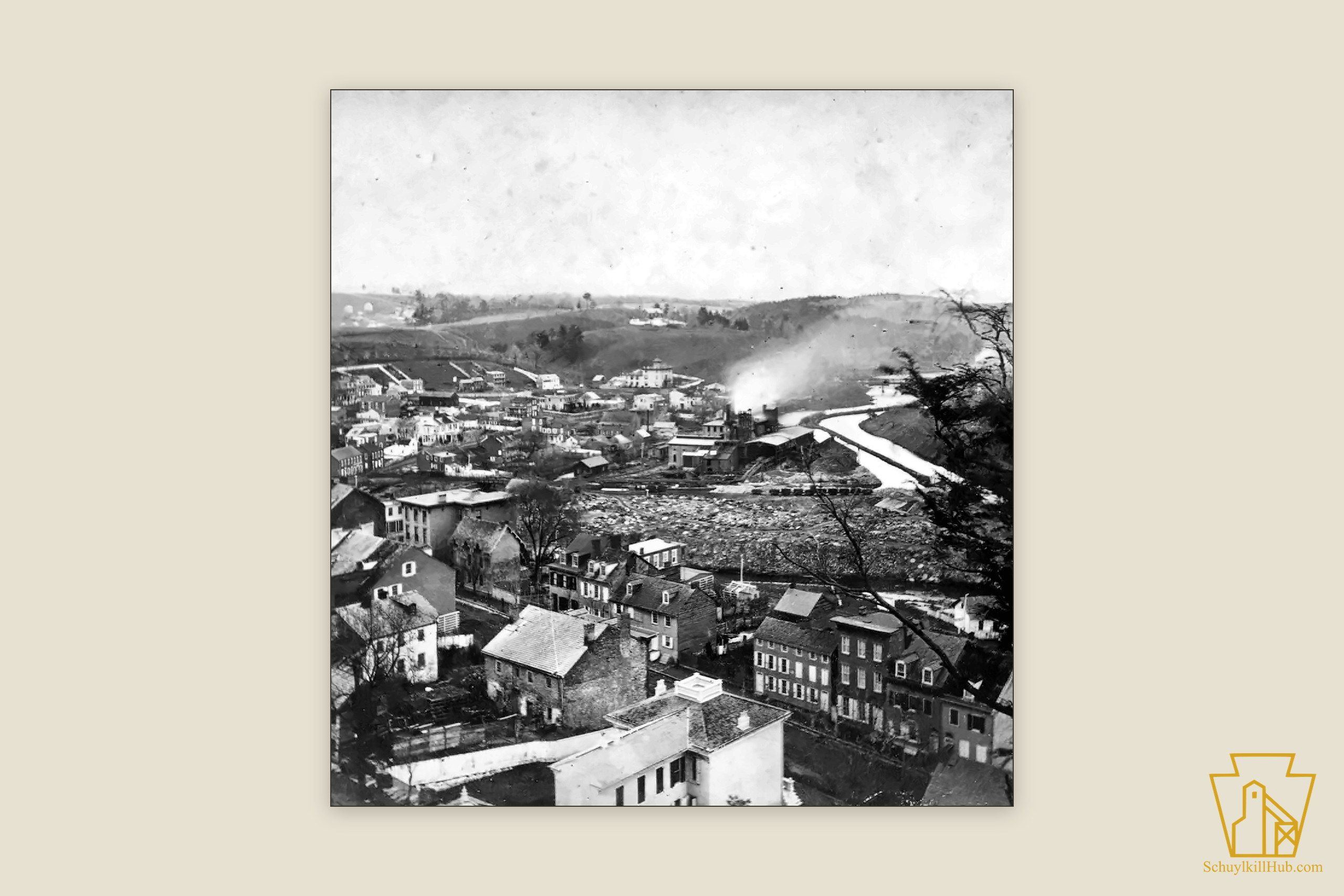
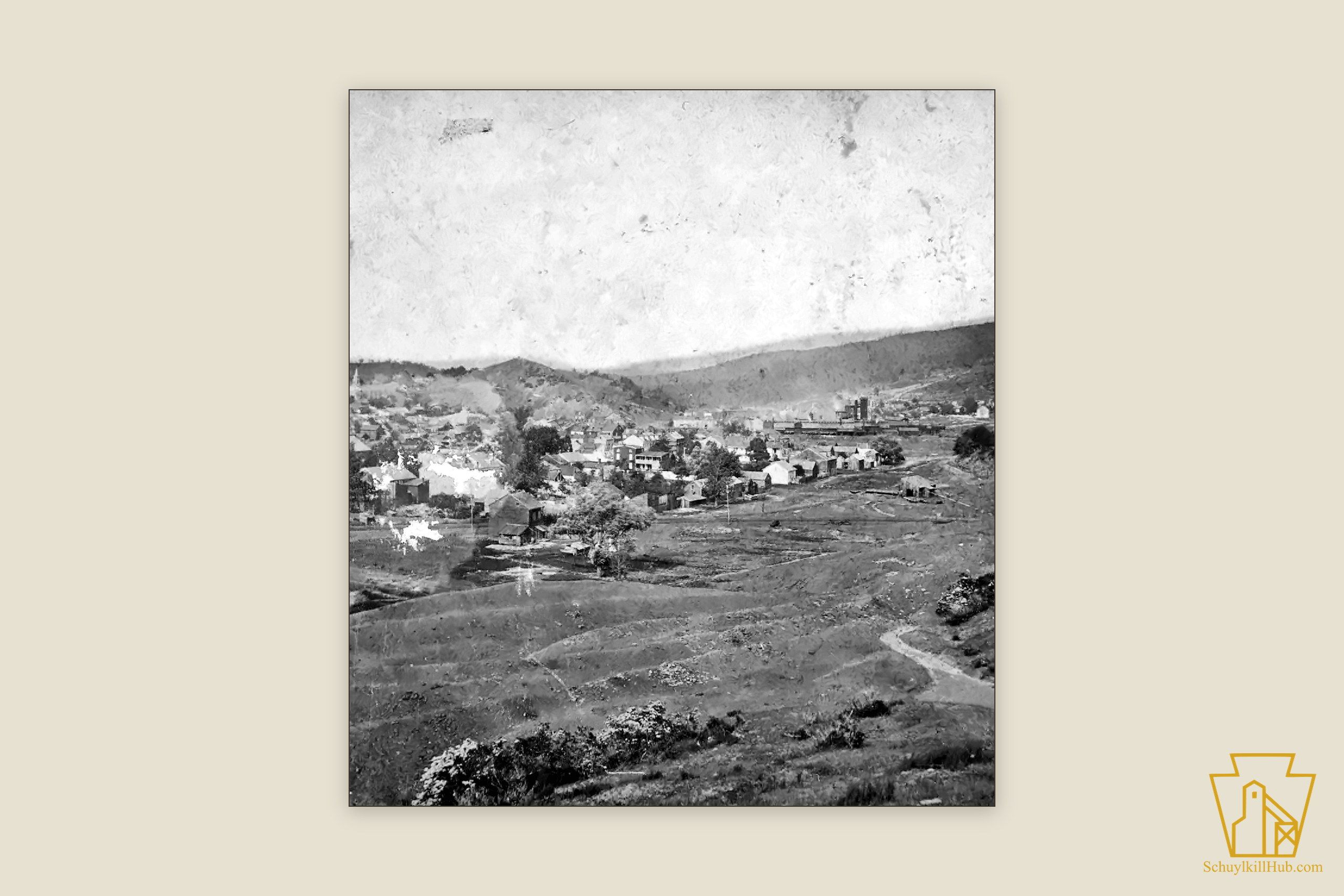
  • Pottsville spread across its hillside, canal and rail cars in the valley below — a stereograph frame.

    Town views · Slide 14 of 77

    General View of Pottsville

    Pottsville on its hillside with the canal and rail cars in the valley below, photographed by Amos M. Allen (1823–1907) of Pottsville. One frame of Allen's albumen stereograph card, from the NYPL Robert N. Dennis collection.

    Photo: A. M. Allen, c.1865-1885, The New York Public Library (public domain), via Wikimedia Commons · Public Domain (PD-scan / PD-US)

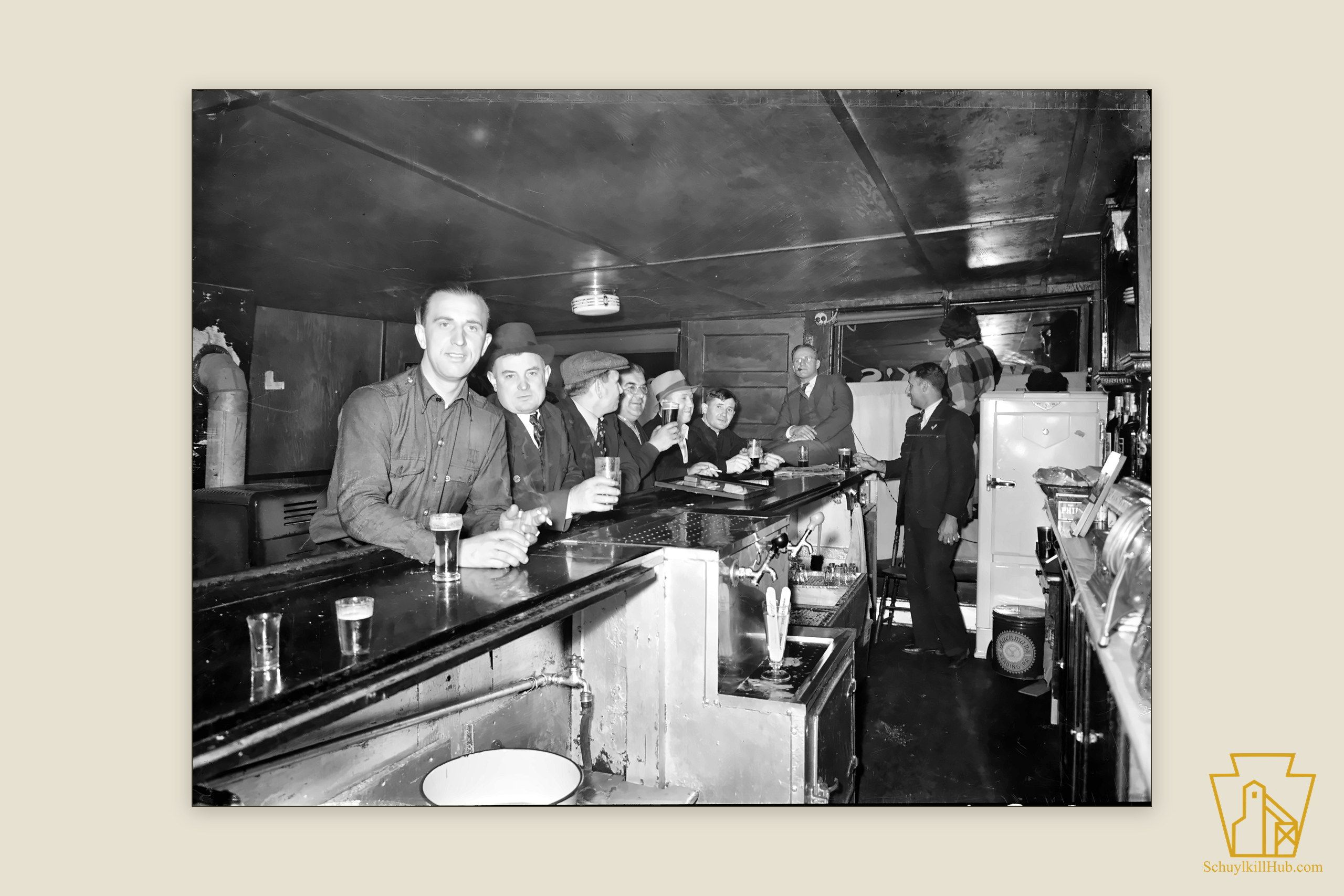
  • A line of men with beer glasses along a bar in Gilberton.

    Town views · Slide 15 of 77

    Men at a Bar, Gilberton

    A line of men with beer glasses along a Gilberton bar — the mining town's saloon at the end of a shift. Sheldon Dick for the Farm Security Administration, 1938.

    Photo: Sheldon Dick, U.S. Farm Security Administration, 1938 (public domain), via Wikimedia Commons · Public Domain (U.S. FSA/OWI, Library of Congress)

    Own this print
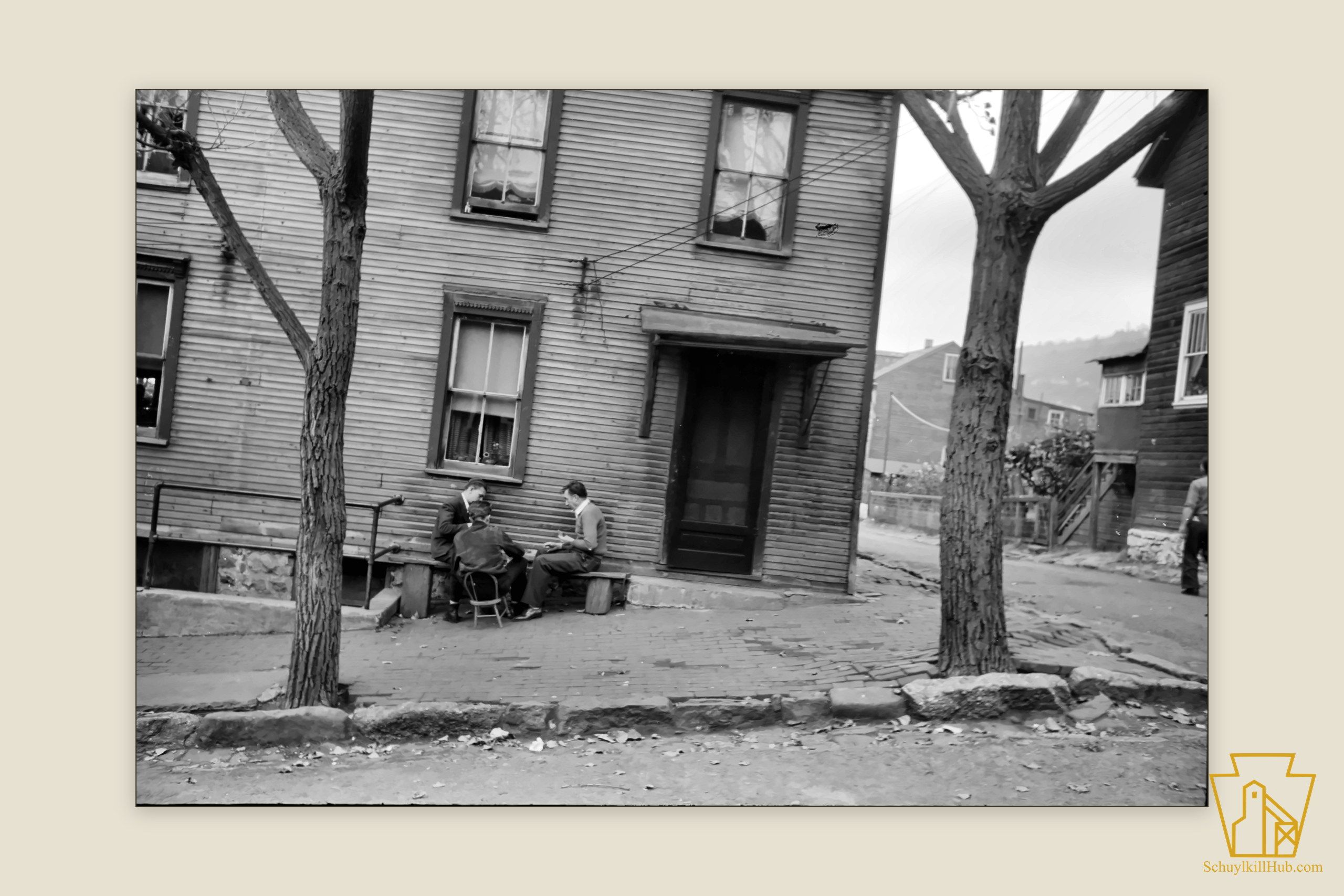
  • Three men playing a board game on a plank bench outside a weatherboard house.

    Town views · Slide 16 of 77

    A Game on the Sunken Streets

    Three men play a board game on a plank bench outside a weatherboard house on one of the sunken, mine-subsided streets — possibly Shenandoah, per the Farm Security Administration's own caption. Sheldon Dick, 1938.

    Photo: Sheldon Dick, U.S. Farm Security Administration, 1938 (public domain), via Wikimedia Commons · Public Domain (U.S. FSA/OWI, Library of Congress)

    Own this print
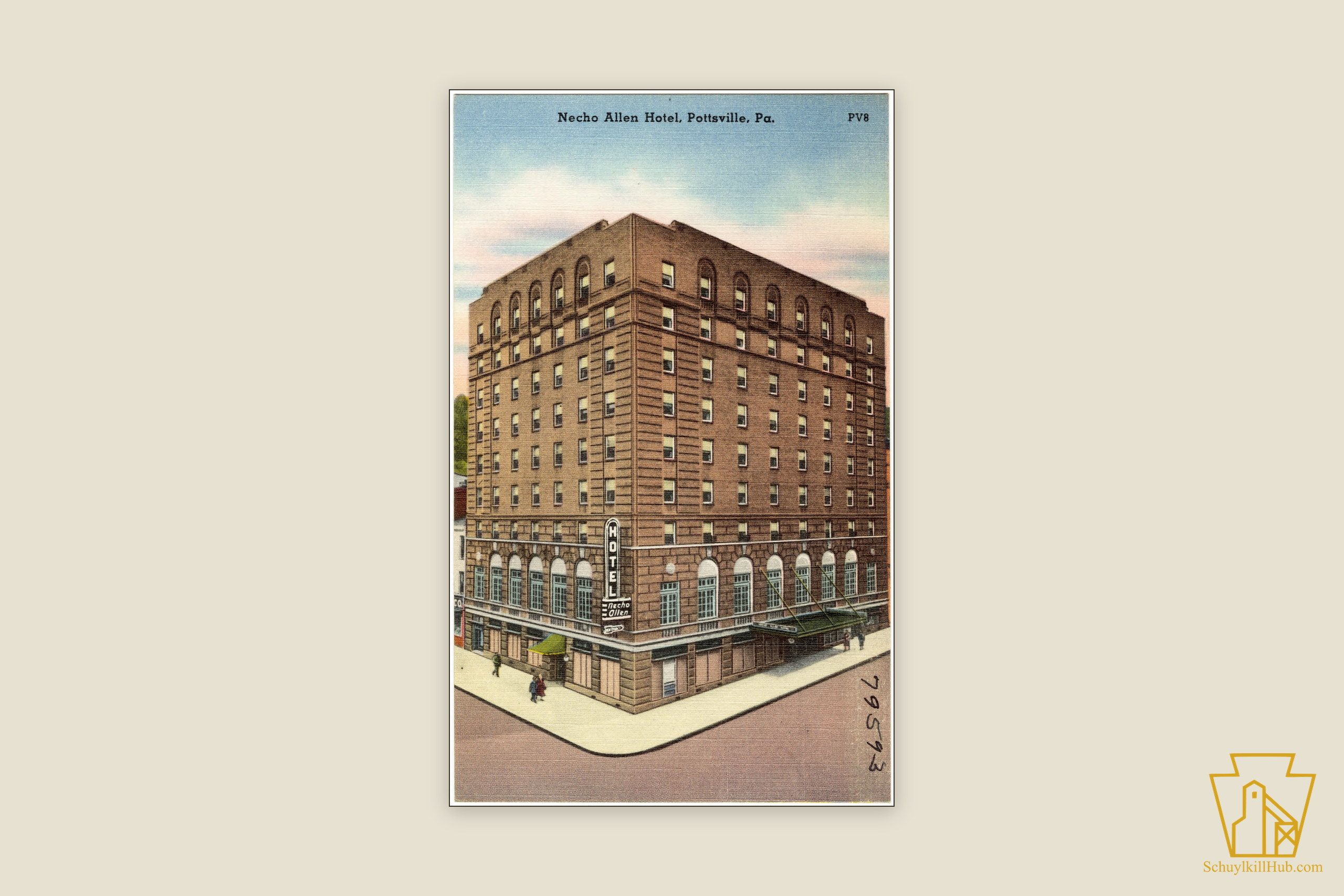
  • Color linen postcard of the tall brick Necho Allen Hotel with its vertical rooftop sign.

    Town views · c. 1930–1945 · Slide 17 of 77

    Necho Allen Hotel, Pottsville

    The tall brick Necho Allen Hotel — named for the frontiersman credited with discovering anthracite — with its vertical neon sign, on a Tichnor Brothers linen postcard (no. 79593), printed c. 1930–1945.

    Postcard: Tichnor Bros. (Boston Public Library), c.1930-1945 (public domain), via Wikimedia Commons · Public Domain (PD-US, published without notice)

    Own this print
  • The borough of Port Carbon in its valley, seen from Laurel Hill — a stereograph frame.

    Town views · Slide 18 of 77

    Port Carbon from Laurel Hill

    The borough of Port Carbon in its valley, seen from Laurel Hill, by Pottsville photographer Amos M. Allen — a rare early view of one of Schuylkill County's smaller boroughs. One frame of Allen's albumen stereograph card.

    Photo: A. M. Allen, c.1865-1885, The New York Public Library (public domain), via Wikimedia Commons · Public Domain (PD-scan / PD-US)

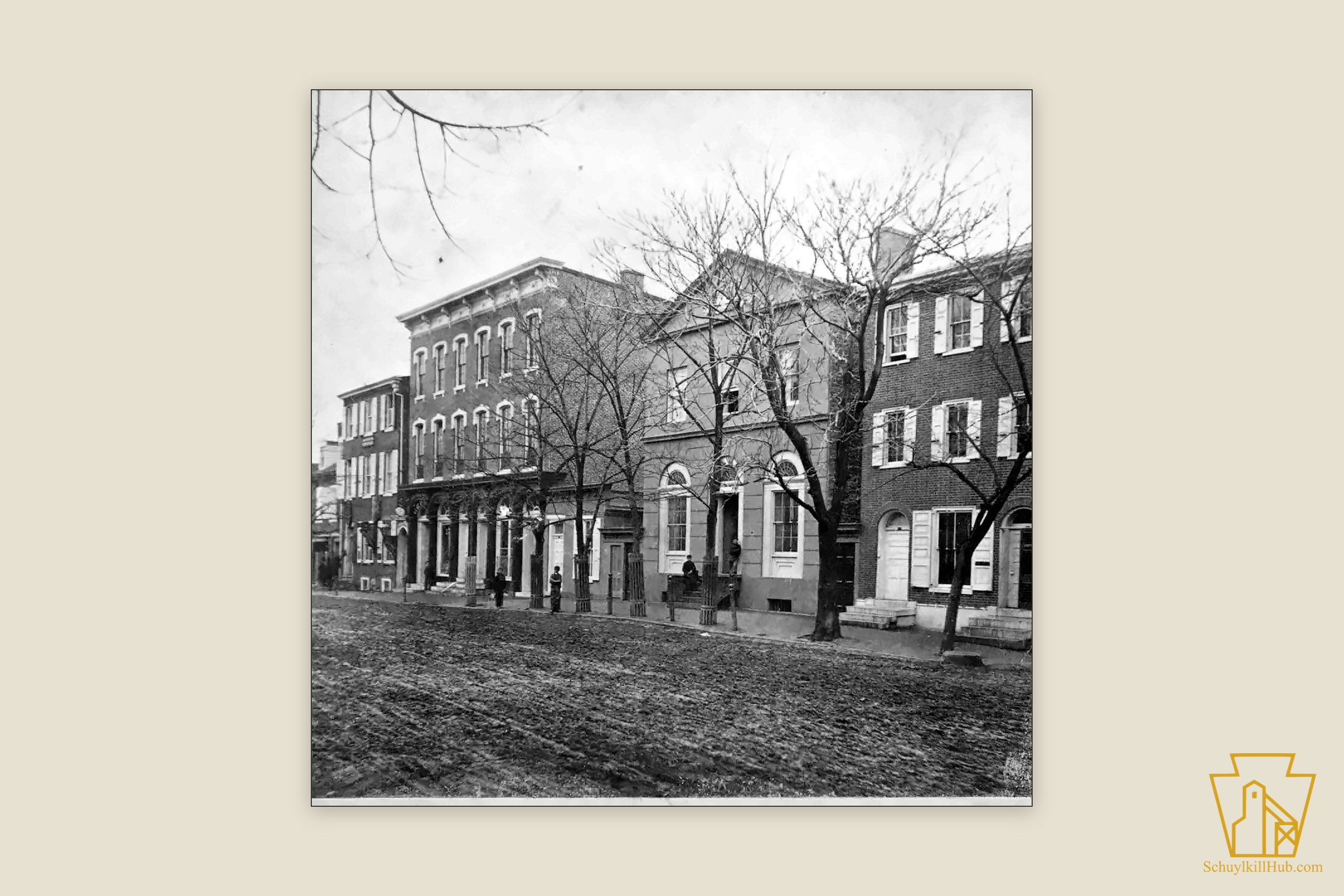
  • Row of three-story brick dwellings along a Pottsville street — a stereograph frame.

    Town views · Slide 19 of 77

    Pottsville Dwellings

    A row of three-story brick dwellings on a cobbled Pottsville street, by Amos M. Allen of Pottsville. One frame of Allen's albumen stereograph card, from the NYPL Robert N. Dennis collection.

    Photo: A. M. Allen, c.1865-1885, The New York Public Library (public domain), via Wikimedia Commons · Public Domain (PD-scan / PD-US)

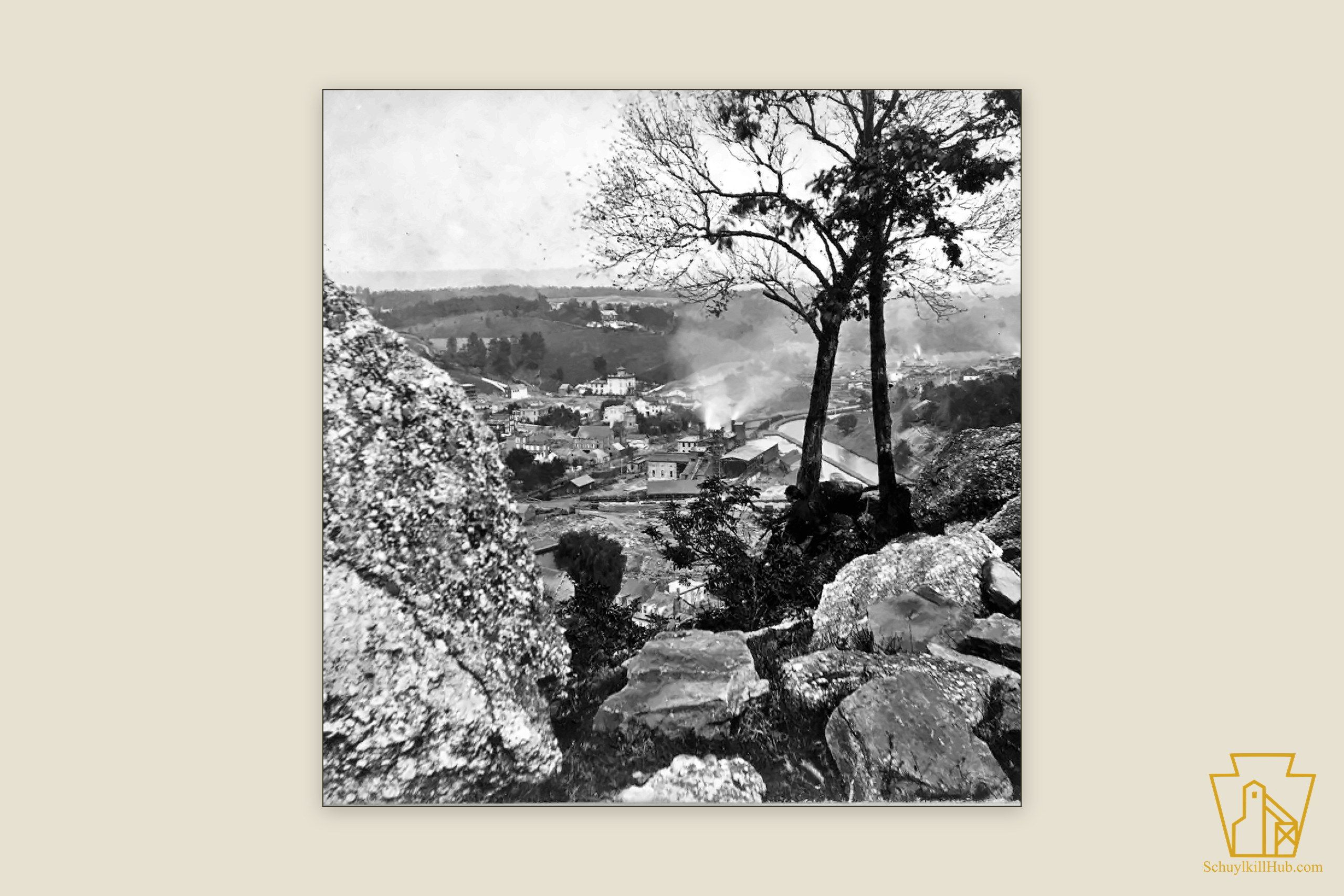
  • Pottsville seen through trees from the rocks of Sharp Mountain, canal and railroad threading the valley.

    Town views · Slide 20 of 77

    Pottsville from Sharp Mountain

    Pottsville seen through the trees from the rocks of Sharp Mountain, the canal and railroad threading the valley, by Amos M. Allen of Pottsville — the photographic descendant of J. R. Smith's 1833 aquatint from a similar vantage. One frame of Allen's albumen stereograph card.

    Photo: A. M. Allen, c.1865-1885, The New York Public Library (public domain), via Wikimedia Commons · Public Domain (PD-scan / PD-US)

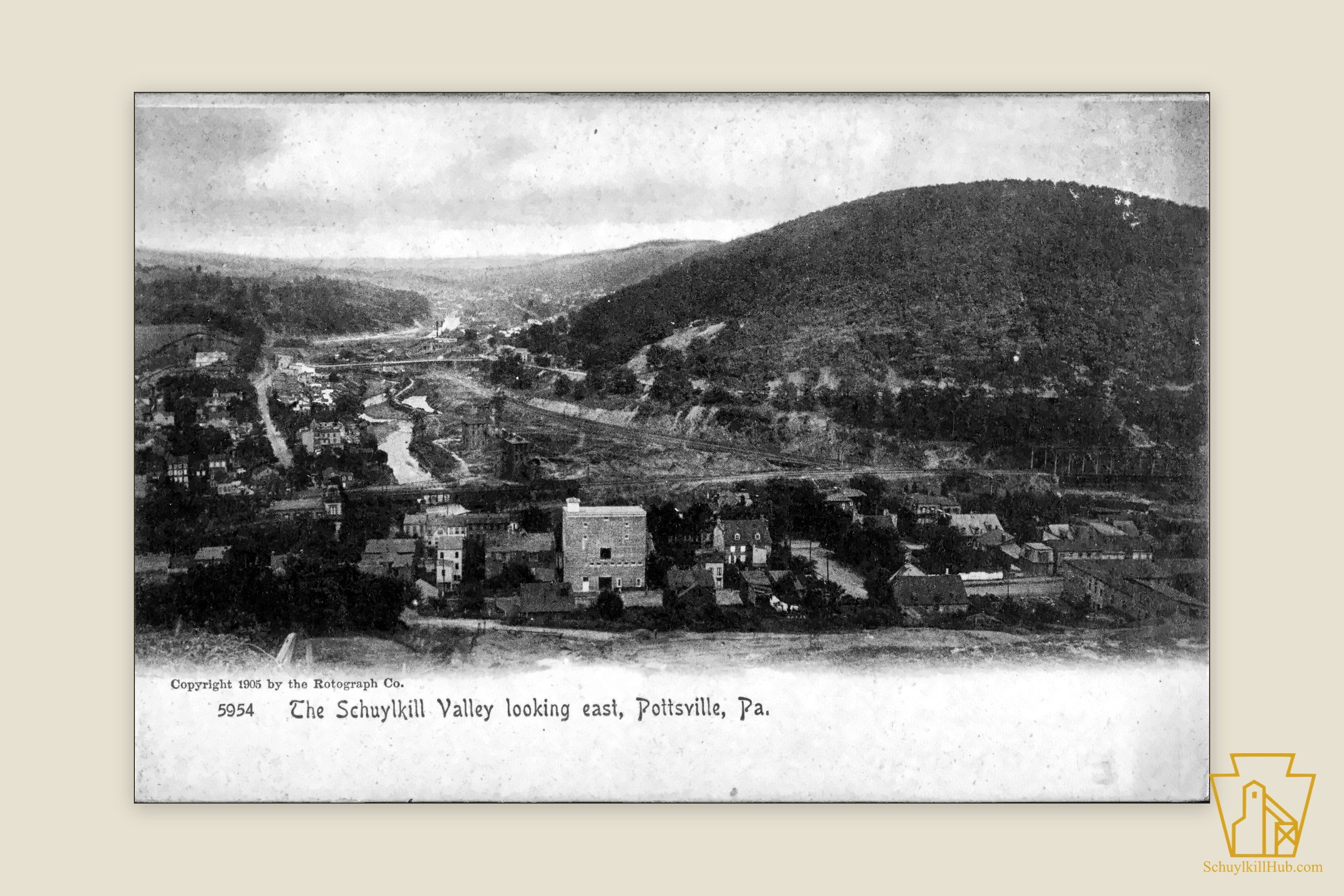
  • The winding Schuylkill, rail lines and mills below wooded ridges east of Pottsville.

    Town views · Slide 21 of 77

    The Schuylkill Valley Looking East, Pottsville

    The winding upper Schuylkill, railroad lines and mills below the wooded ridges east of Pottsville — a Rotograph Company collotype view of 1905.

    Photo/print: Rotograph Co., 1905, Library of Congress (no known restrictions) · No known restrictions on publication (Library of Congress)

    Own this print
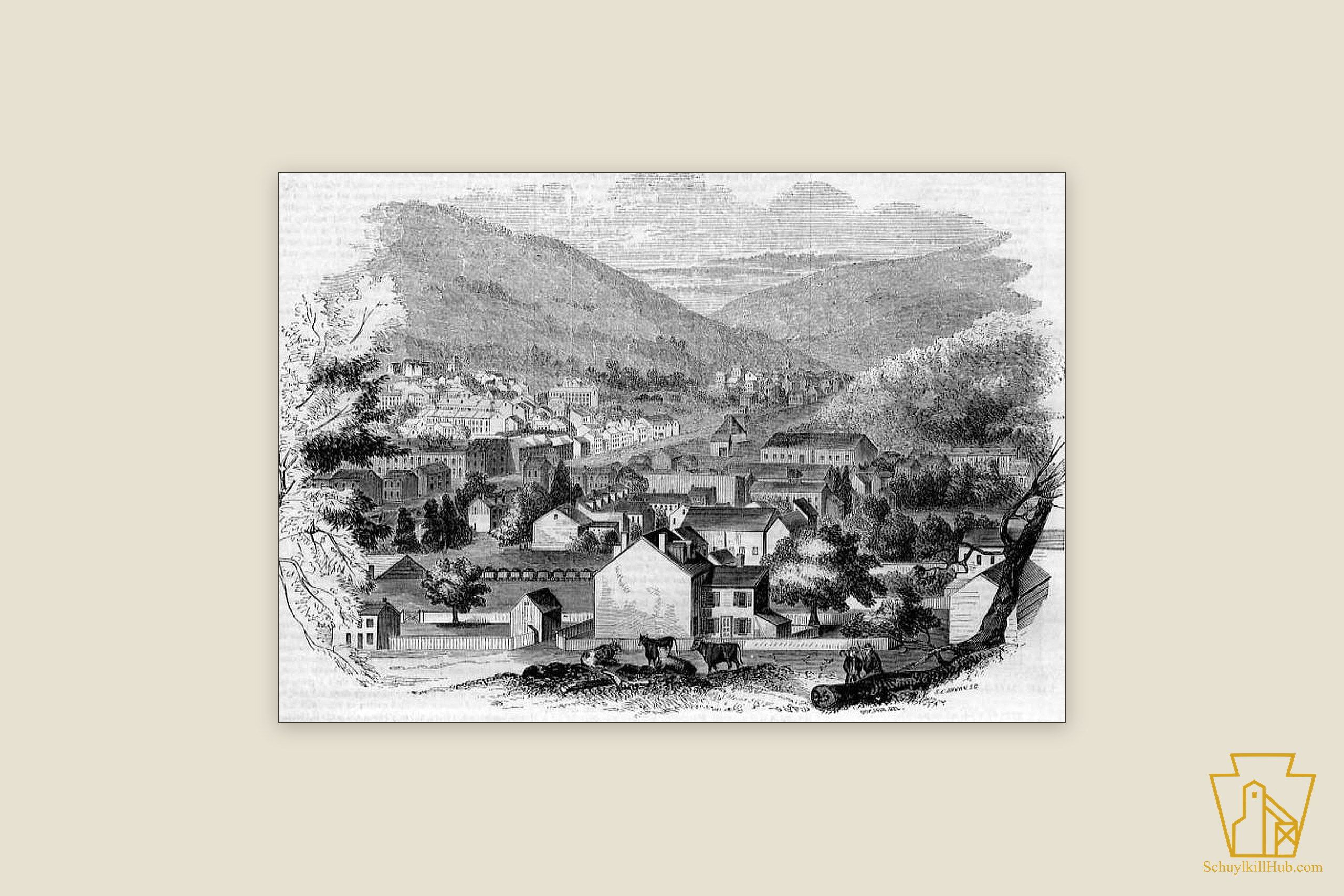
  • Wood engraving of Pottsville on its hillside, published in Gleason’s Pictorial in 1854.

    Town views · Slide 22 of 77

    View of Pottsville (Gleason's Pictorial, 1854)

    The hillside town of Pottsville in its valley, published in October 1854 in Gleason's Pictorial Drawing-Room Companion of Boston — the earliest townscape of Pottsville in this archive.

    Engraving: Gleason's Pictorial Drawing Room Companion, 1854 (public domain), via Wikimedia Commons · Public Domain (PD-old / PD-US)

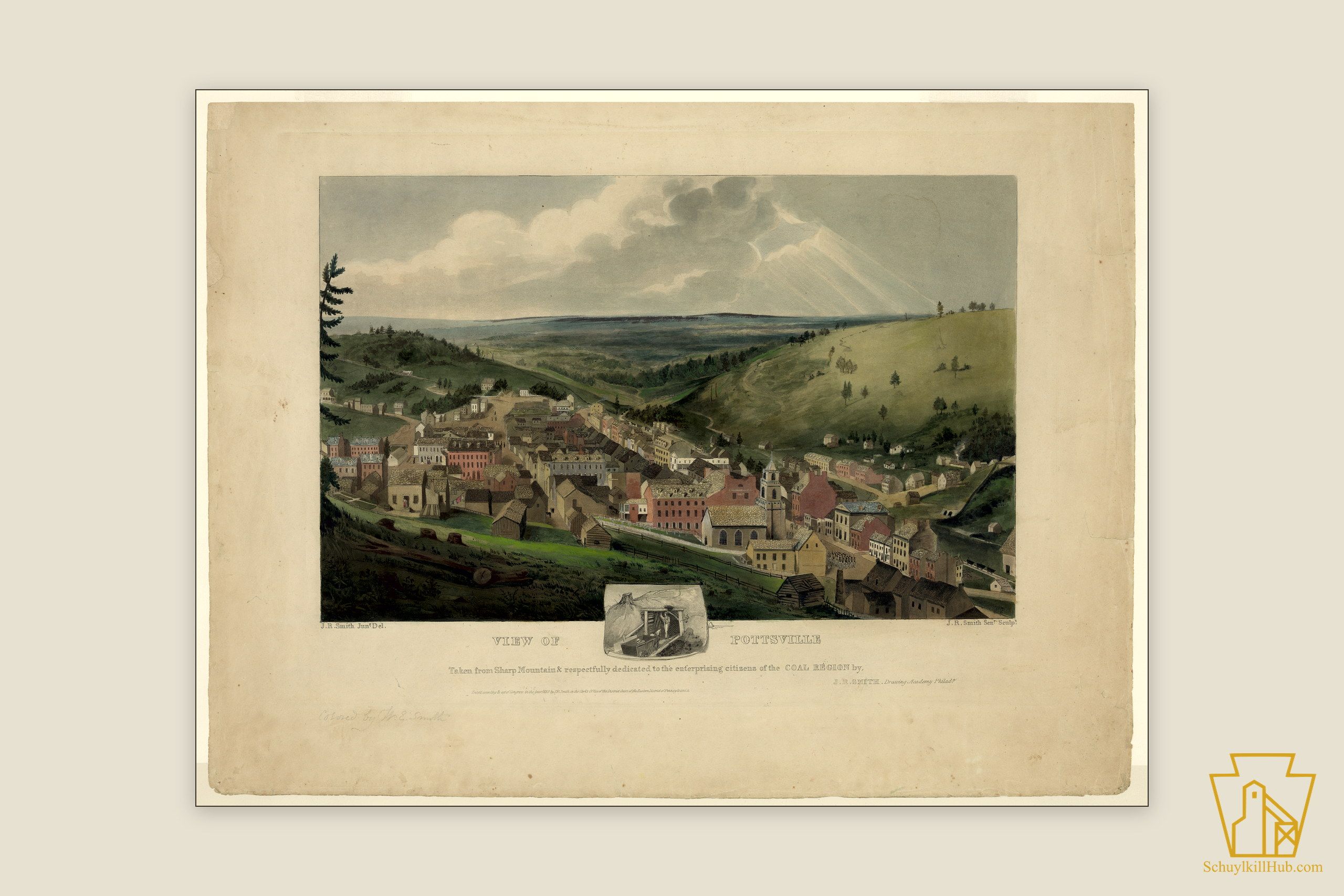
  • Hand-colored aquatint panorama of early Pottsville, with an inset vignette of a miner at a drift mouth.

    Town views · c. 1833 · Slide 23 of 77

    View of Pottsville, Taken from Sharp Mountain

    J. R. Smith's hand-colored aquatint panorama of Pottsville, c. 1833, 'respectfully dedicated to the enterprising citizens of the Coal Region' — the young county seat on its hillside, with an inset vignette of a miner at a drift mouth. Companion to Smith's view of Mount Carbon from Second Mountain.

    Aquatint: J. R. Smith Jr./Sr., 1833, Library of Congress (no known restrictions) · No known restrictions on publication (Library of Congress)

    Own this print
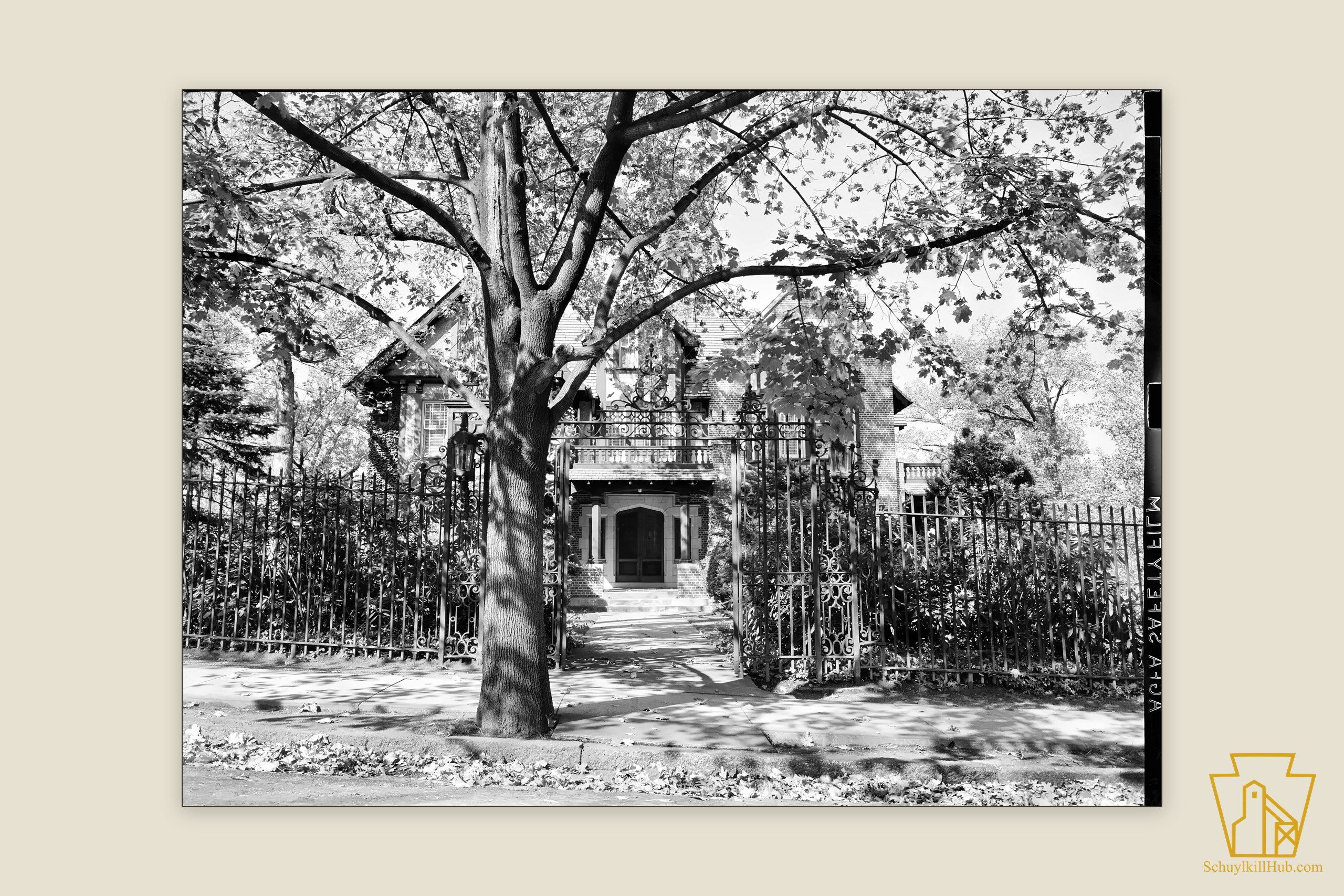
  • The Frank D. Yuengling mansion and its grounds at Pottsville, 1938.

    Town views · Slide 24 of 77

    Frank D. Yuengling Mansion, Pottsville

    The Frank D. Yuengling mansion — the brewing family's Pottsville home — photographed for the U.S. Farm Security Administration by Sheldon Dick in 1938.

    Photo: Sheldon Dick, U.S. Farm Security Administration, 1938, Library of Congress (public domain) · Public Domain (U.S. FSA/OWI, Library of Congress)

    Own this print
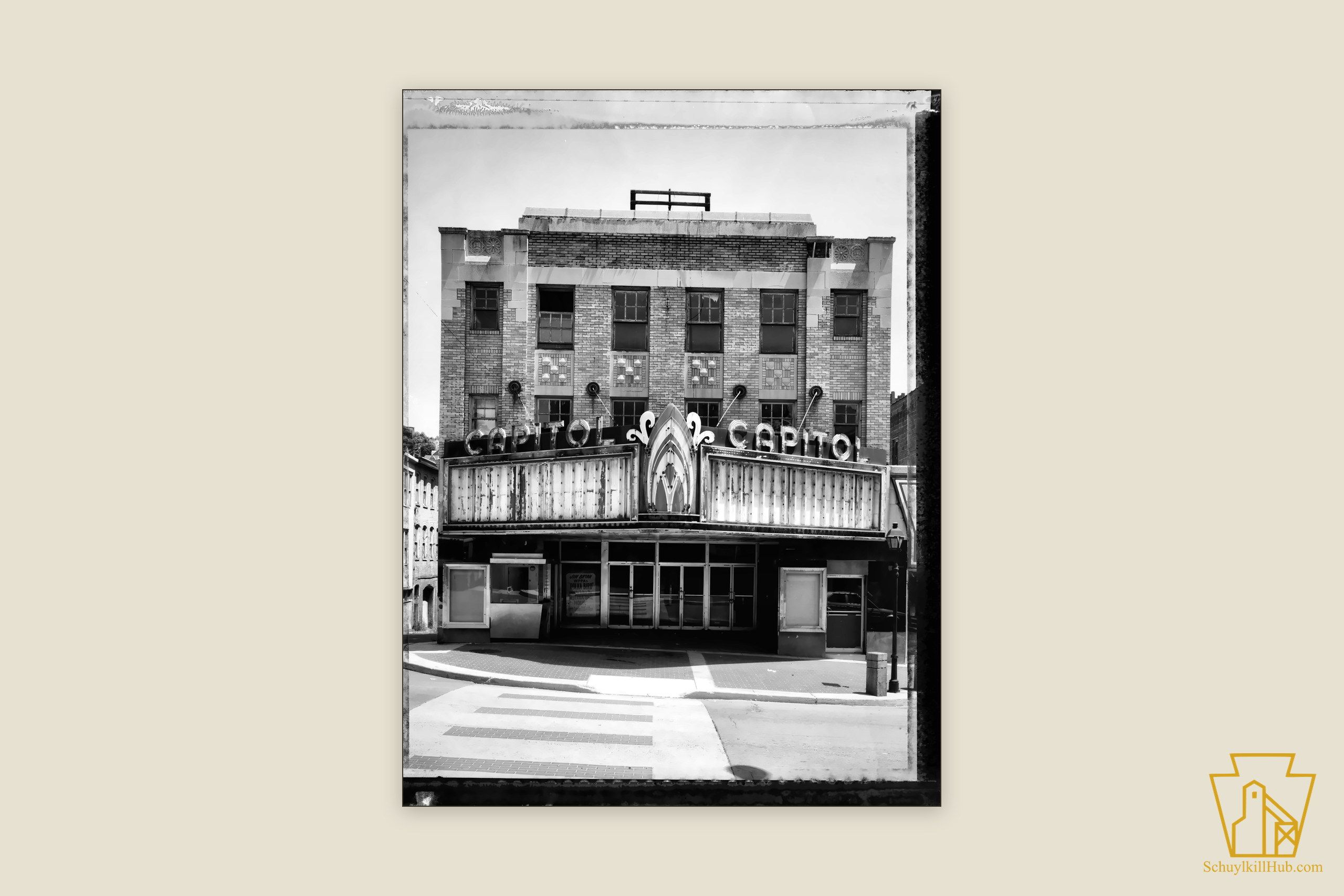
  • Brick facade of the Capitol Theatre on North Centre Street, its two vertical CAPITOL signs above the marquee.

    Institutions · Slide 25 of 77

    Capitol Theatre Facade, Pottsville

    The brick Art Deco facade and twin CAPITOL neon signs of the Capitol Theatre (opened 1927) on North Centre Street, Pottsville, as documented by the Historic American Buildings Survey later in the building's life.

    Photo: Historic American Buildings Survey, Library of Congress (public domain) · Public Domain (HABS / U.S. Government)

    Own this print
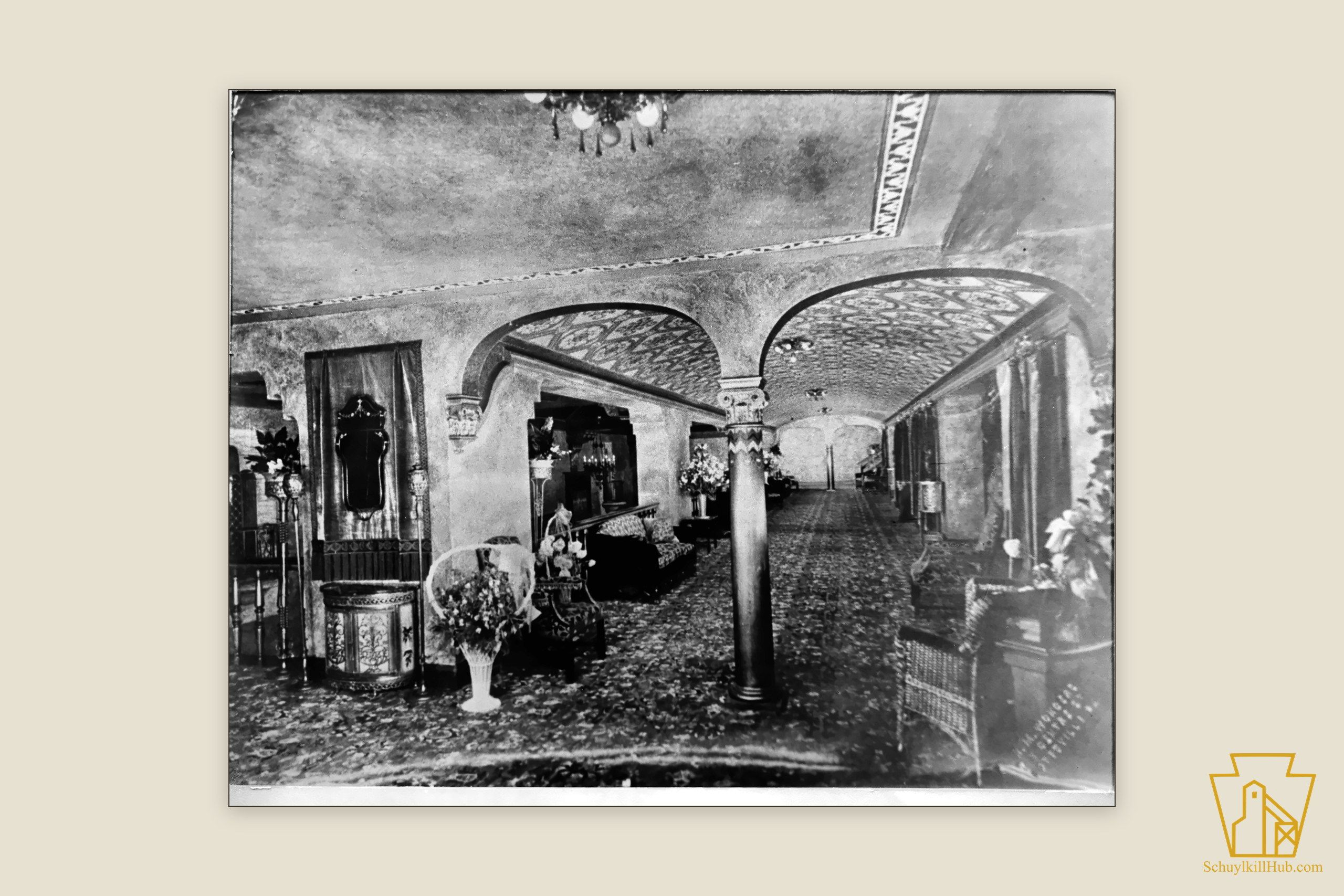
  • The Capitol Theatre’s movie-palace lobby dressed with flowers for opening night, 1927.

    Institutions · Slide 26 of 77

    Capitol Theatre Lobby on Opening Night, Pottsville

    The movie-palace lobby of the Capitol Theatre on North Centre Street, Pottsville, dressed with flowers for its opening night, November 21, 1927 — from a Schuylkill County Historical Society photograph preserved by the Historic American Buildings Survey.

    Photo: Schuylkill County Historical Society, 1927, via HABS, Library of Congress (public domain) · Public Domain (HABS / U.S. Government)

    Own this print
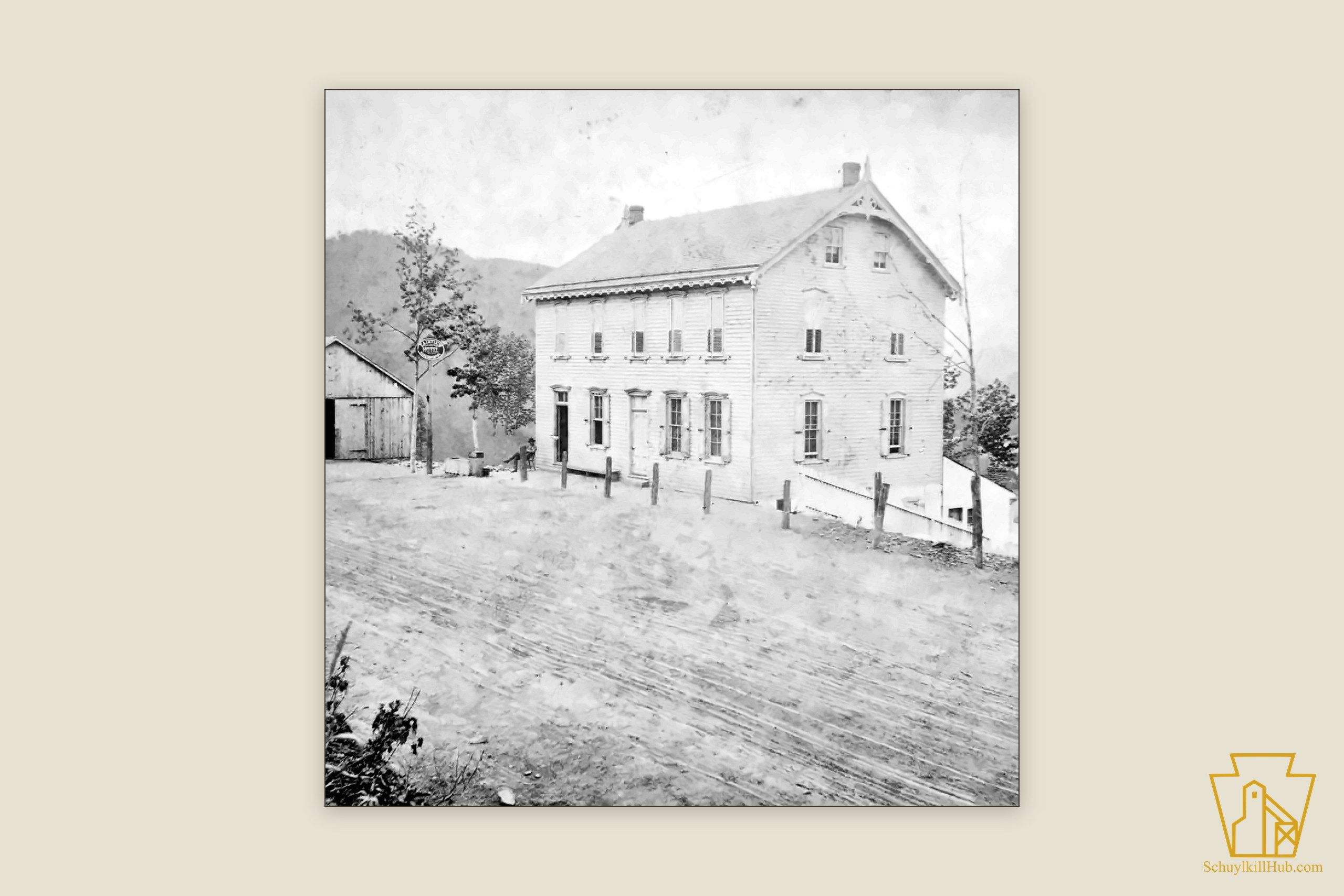
  • The clapboard Fair View Hotel with hanging sign, barn and dirt road in wooded hills — a stereograph frame.

    Institutions · Slide 27 of 77

    Fair View Hotel, Pottsville vicinity

    The clapboard Fair View Hotel with its hanging sign, barn and dirt road in the wooded hills near Pottsville, by Amos M. Allen. One frame of Allen's albumen stereograph card.

    Photo: A. M. Allen, c.1865-1885, The New York Public Library (public domain), via Wikimedia Commons · Public Domain (PD-scan / PD-US)

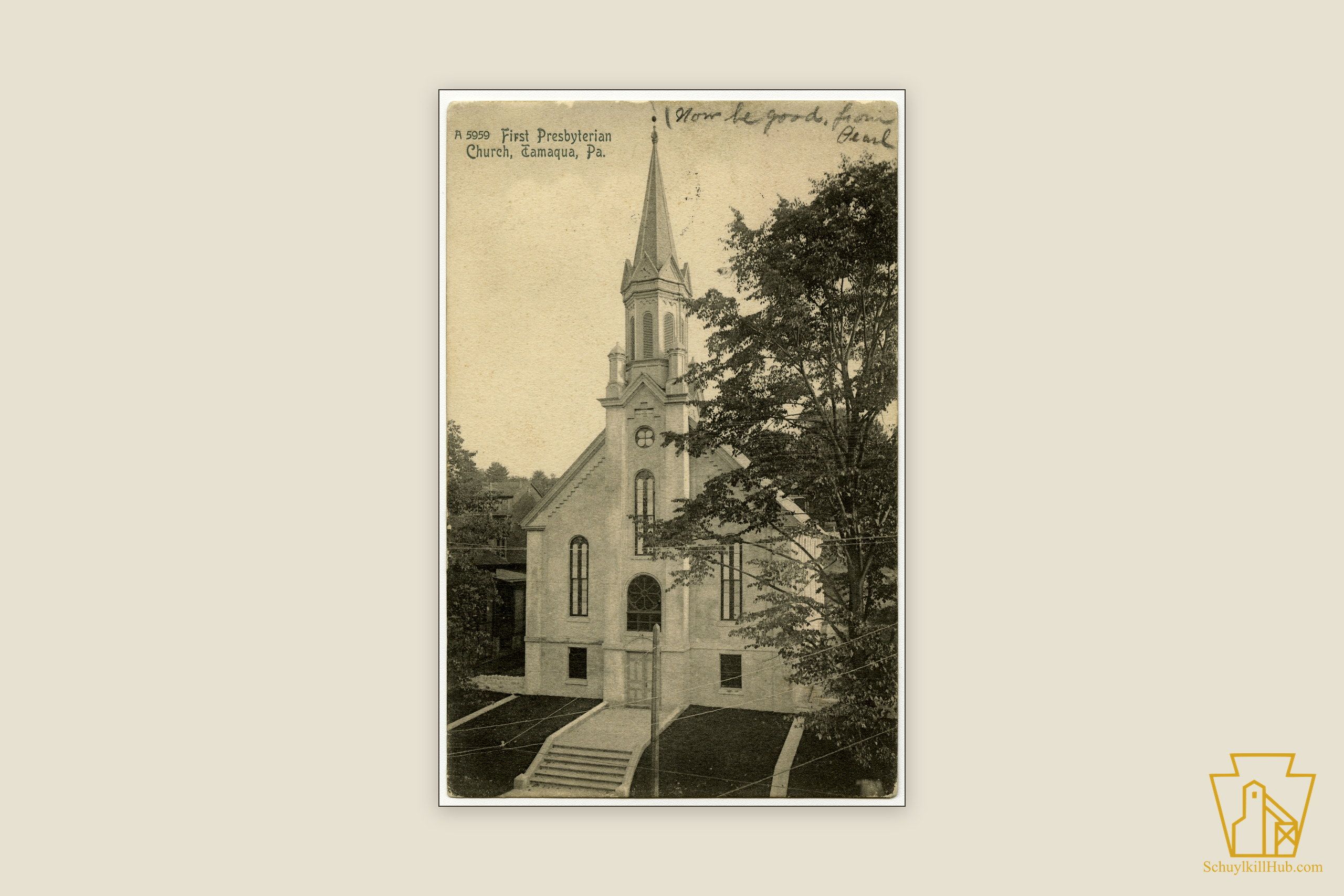
  • Sepia photographic postcard of the Gothic Revival First Presbyterian Church at Tamaqua, its tall clock spire above the trees.

    Institutions · before 1923 · Slide 28 of 77

    First Presbyterian Church, Tamaqua

    The Gothic-Revival First Presbyterian Church at Tamaqua with its tall clock spire, on a sepia photographic postcard printed before 1923; from the Presbyterian Historical Society's postcard collection.

    Postcard: pre-1923, Presbyterian Historical Society (public domain), via Wikimedia Commons · Public Domain (PD-US, pre-1923)

    Own this print
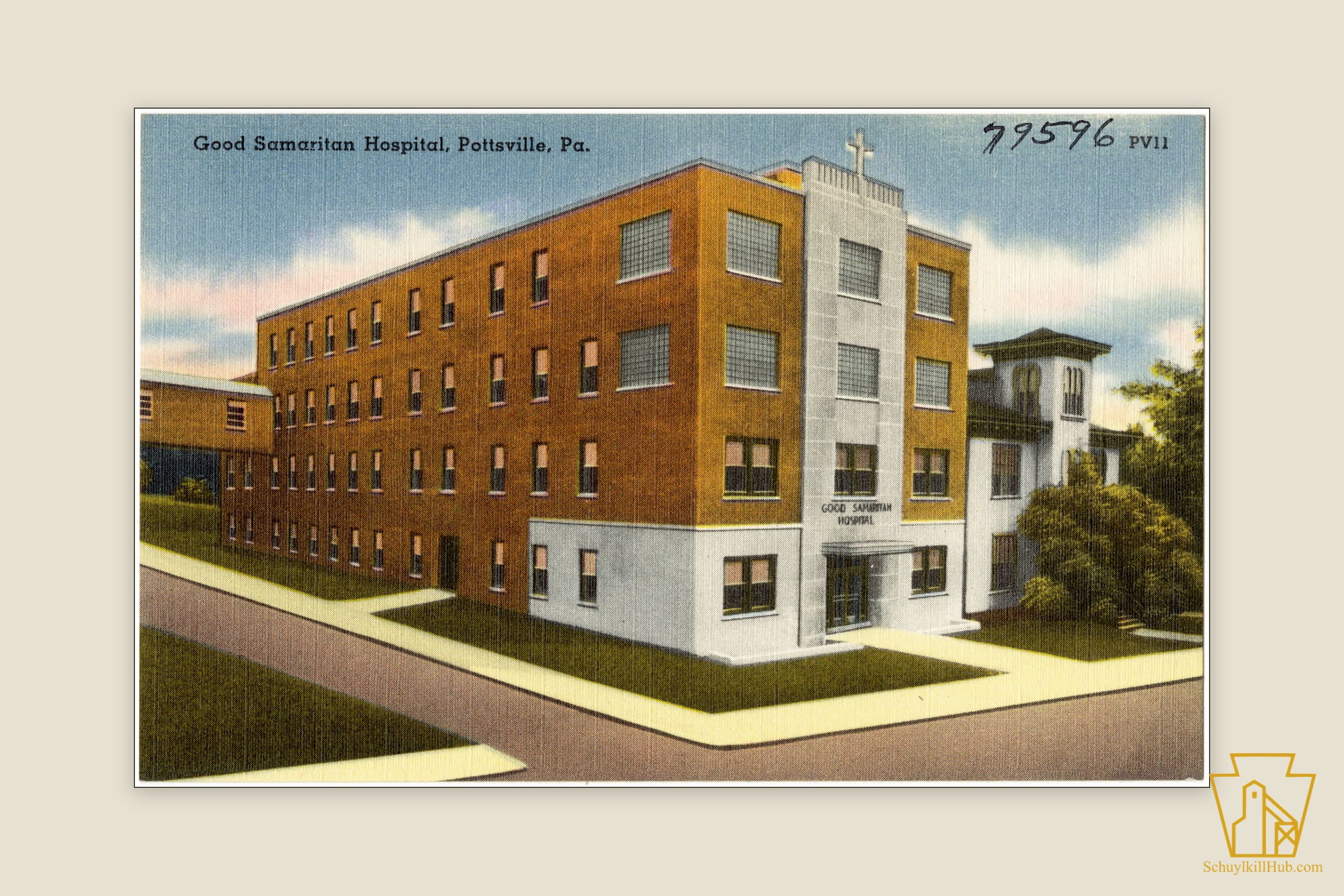
  • Color linen postcard of the brick Good Samaritan Hospital at Pottsville.

    Institutions · c. 1930–1945 · Slide 29 of 77

    Good Samaritan Hospital, Pottsville

    The brick Good Samaritan Hospital at Pottsville on a Tichnor Brothers linen postcard (no. 79596), printed c. 1930–1945; from the Boston Public Library's Tichnor Brothers Collection.

    Postcard: Tichnor Bros. (Boston Public Library), c.1930-1945 (public domain), via Wikimedia Commons · Public Domain (PD-US, published without notice)

    Own this print
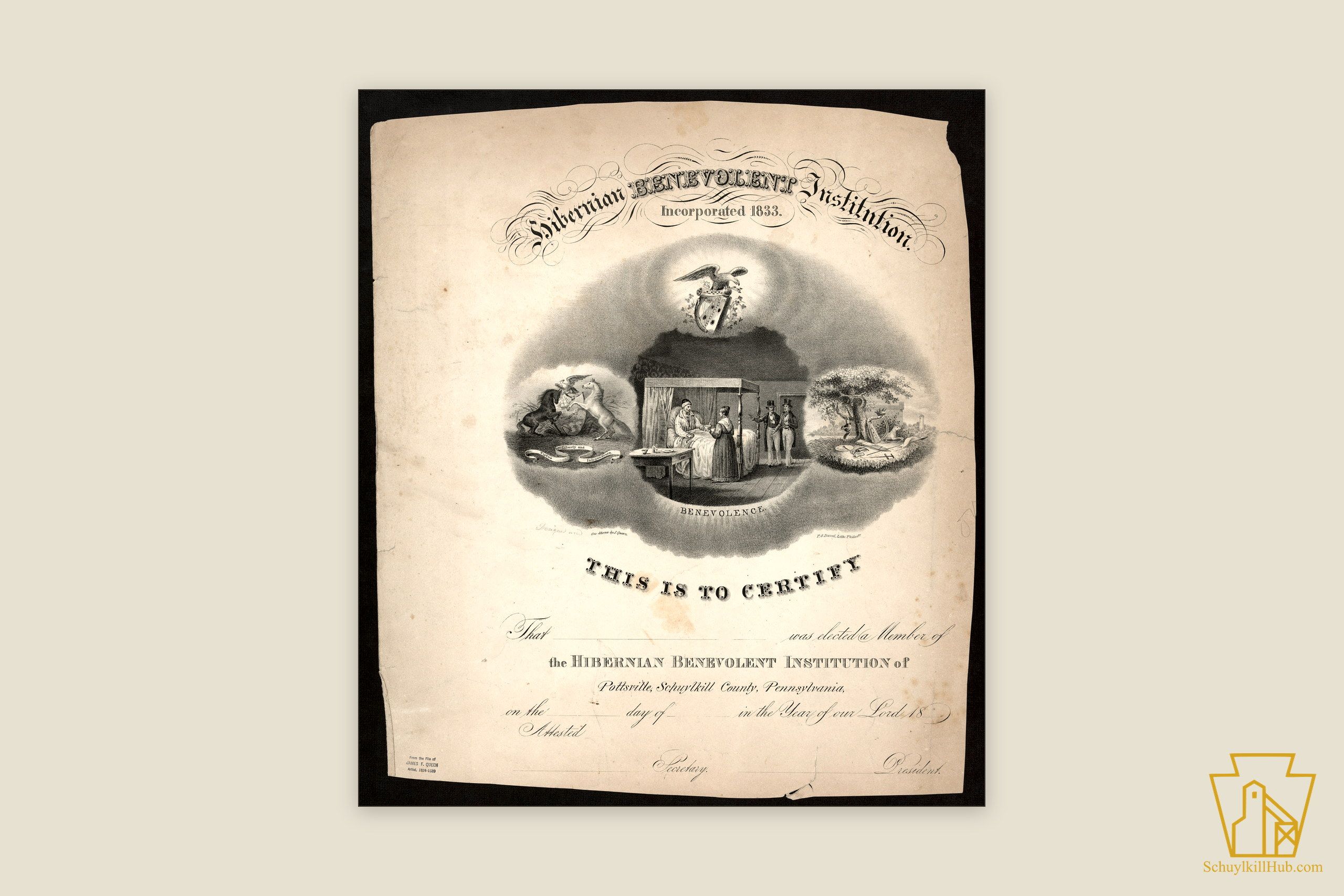
  • Ornate lithographed membership certificate with allegorical female figures and an Irish harp.

    Institutions · Slide 30 of 77

    Membership Certificate, Hibernian Benevolent Institution of Pottsville

    An ornate membership certificate of the Hibernian Benevolent Institution of Pottsville (incorporated 1833), with allegorical vignettes of Benevolence and Liberty and the Irish harp — designed and drawn on stone by James F. Queen and printed by P.S. Duval & Co. of Philadelphia.

    Lithograph: J. F. Queen / P.S. Duval & Co., c.1855, Library of Congress (LCCN 2011645601; public domain) · Public Domain (PD-old); LOC no known restrictions

    Own this print
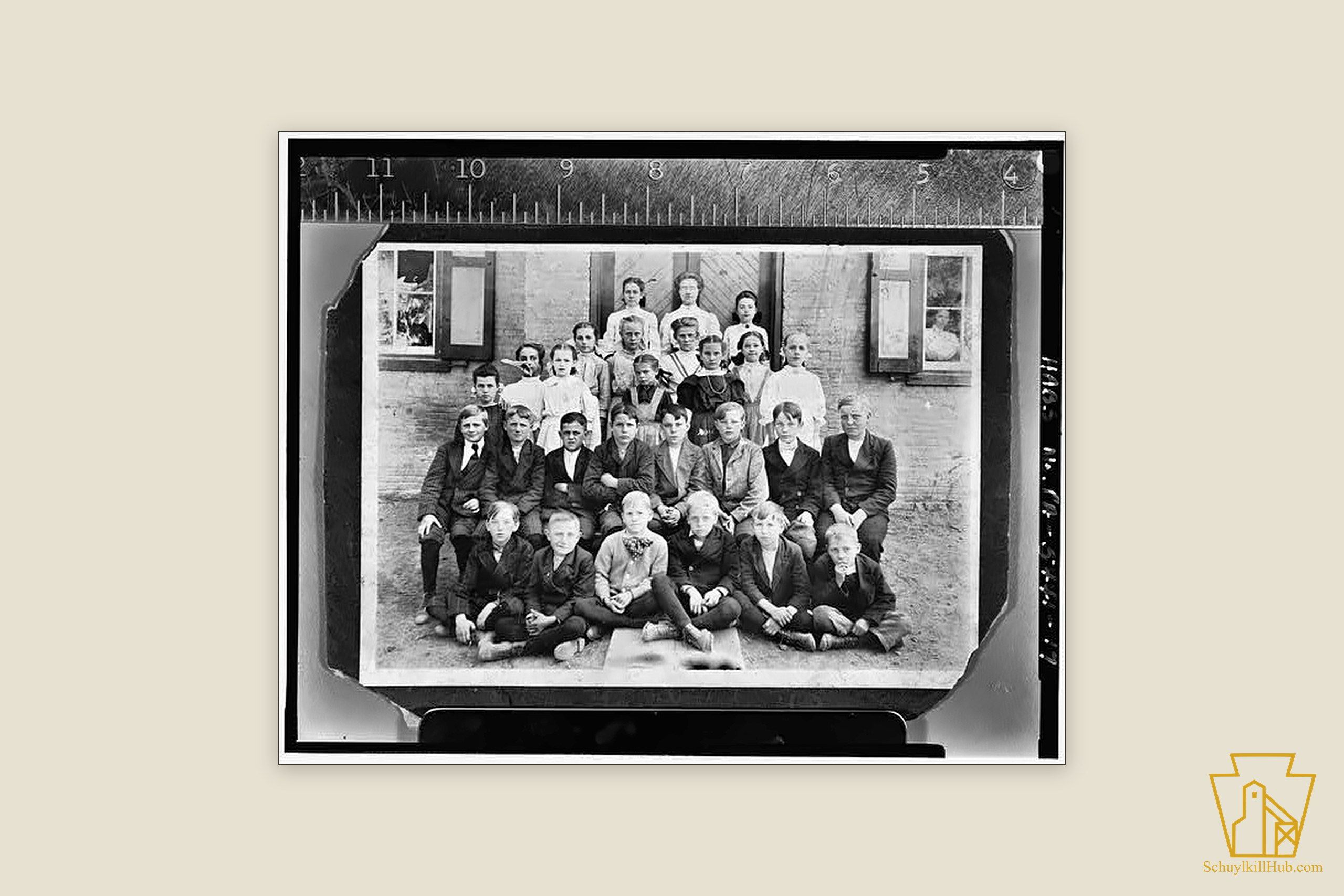
  • Pupils and their teacher posed outside the clapboard Lavelle School, about 1890.

    Institutions · Slide 31 of 77

    Lavelle School and Its First Graduating Class

    About twenty-eight pupils and their teacher, Martha Hornberger, outside the clapboard Lavelle School on Main Street, Lavelle, c. 1890 — a Historic American Buildings Survey copy of a local postcard whose catalog names every sitter.

    Photo: c.1890 (HABS copy), Library of Congress (public domain) · Public Domain (HABS / U.S. Government)

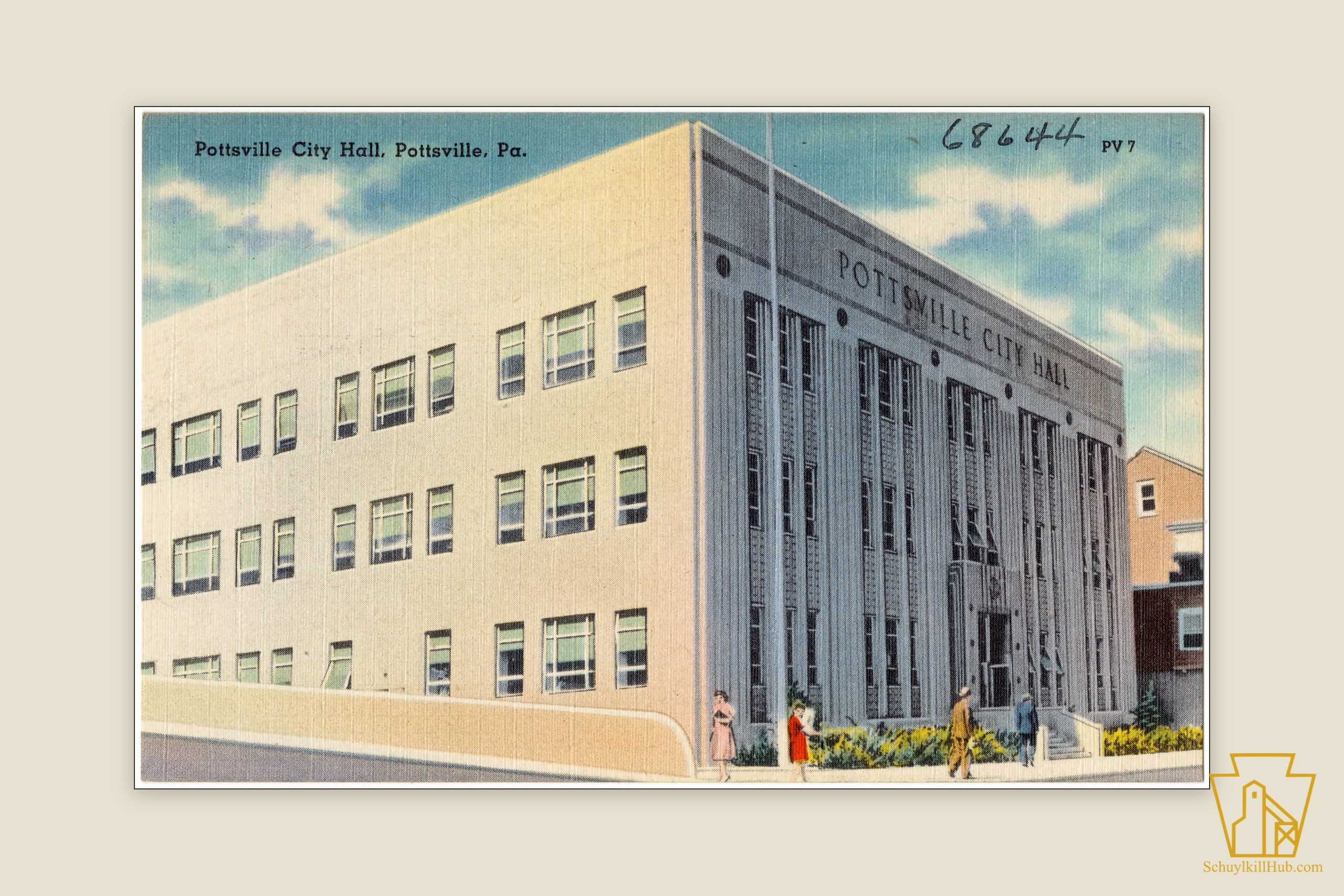
  • Color linen postcard of the Art Deco Pottsville City Hall tower.

    Institutions · c. 1930–1945 · Slide 32 of 77

    Pottsville City Hall

    The Art Deco Pottsville City Hall on a Tichnor Brothers linen postcard (no. 68644), printed c. 1930–1945; from the Boston Public Library's Tichnor Brothers Collection.

    Postcard: Tichnor Bros. (Boston Public Library), c.1930-1945 (public domain), via Wikimedia Commons · Public Domain (PD-US, published without notice)

    Own this print
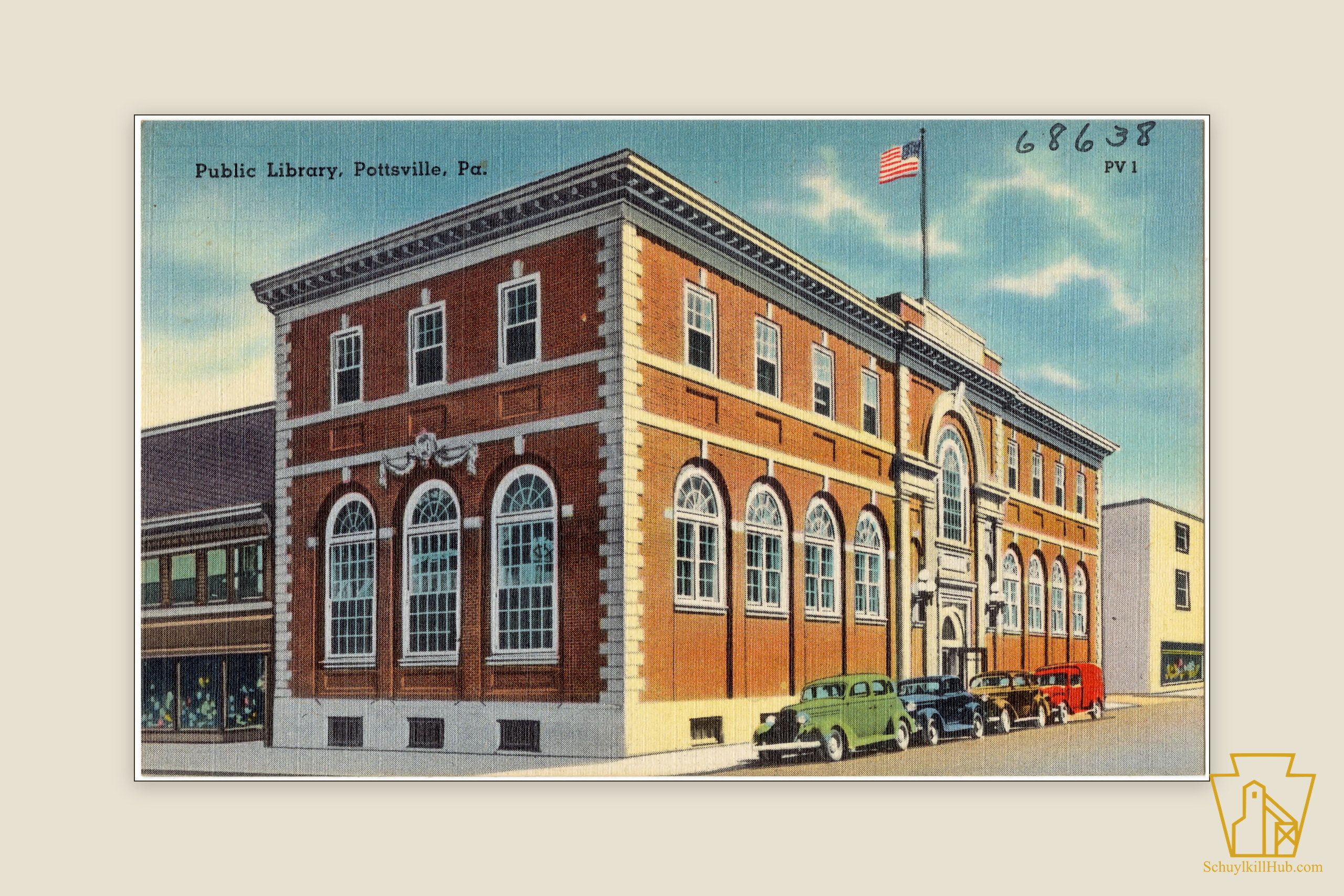
  • Color linen postcard of the red-brick Pottsville Public Library, with stone quoins, round-arched windows, and an arched entrance bay.

    Institutions · c. 1930–1945 · Slide 33 of 77

    Public Library, Pottsville

    The red-brick Georgian Revival Pottsville Public Library on a Tichnor Brothers linen postcard (no. 68638), printed c. 1930–1945; from the Boston Public Library's Tichnor Brothers Collection.

    Postcard: Tichnor Bros. (Boston Public Library), c.1930-1945 (public domain), via Wikimedia Commons · Public Domain (PD-US, published without notice)

    Own this print
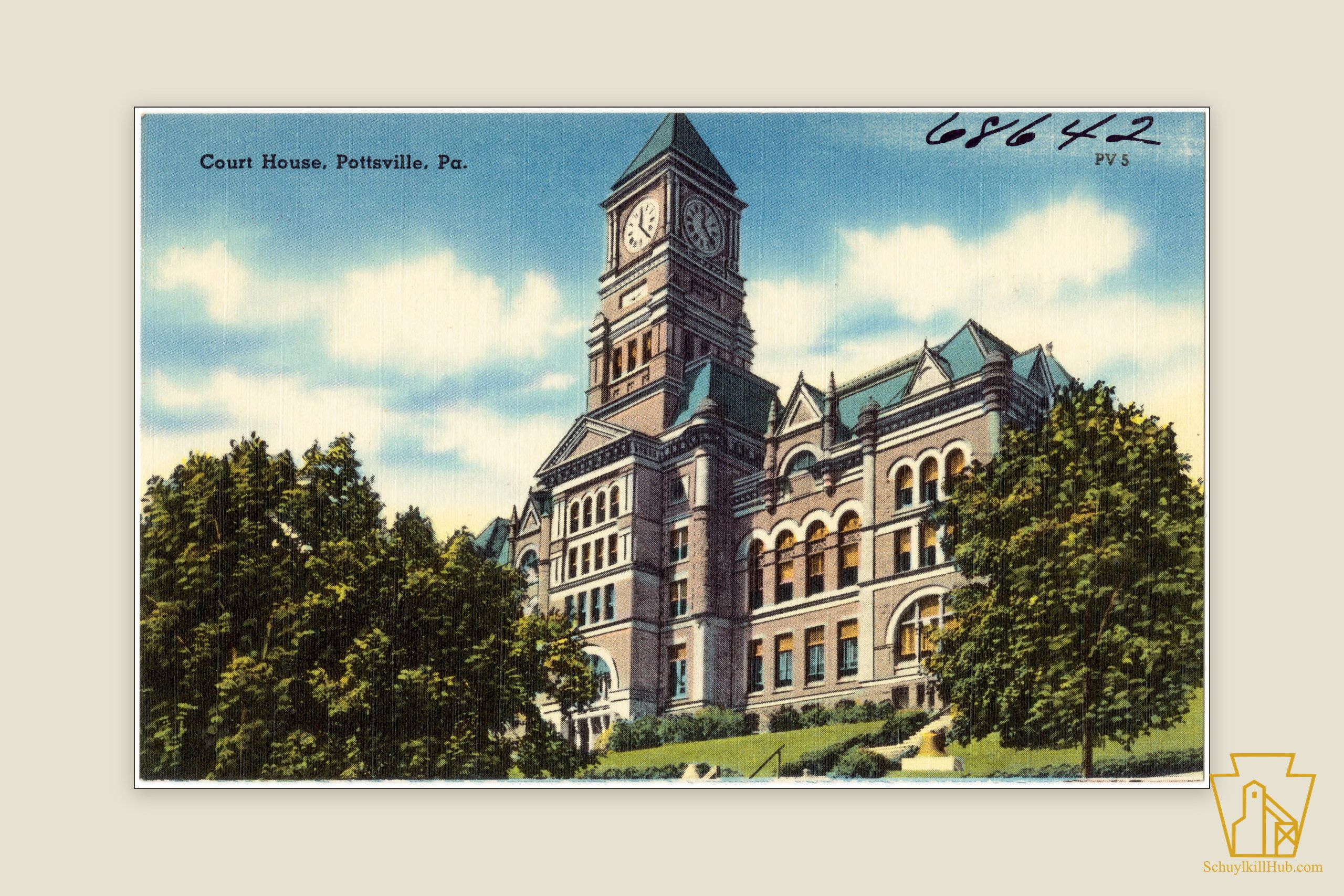
  • Color linen postcard of the Schuylkill County Courthouse and its Romanesque clock tower at Pottsville.

    Institutions · c. 1930–1945 · Slide 34 of 77

    Court House, Pottsville

    The Romanesque clock tower of the Schuylkill County Courthouse at Pottsville on a Tichnor Brothers linen postcard (no. 68642), printed c. 1930–1945; from the Boston Public Library's Tichnor Brothers Collection.

    Postcard: Tichnor Bros. (Boston Public Library), c.1930-1945 (public domain), via Wikimedia Commons · Public Domain

    Own this print
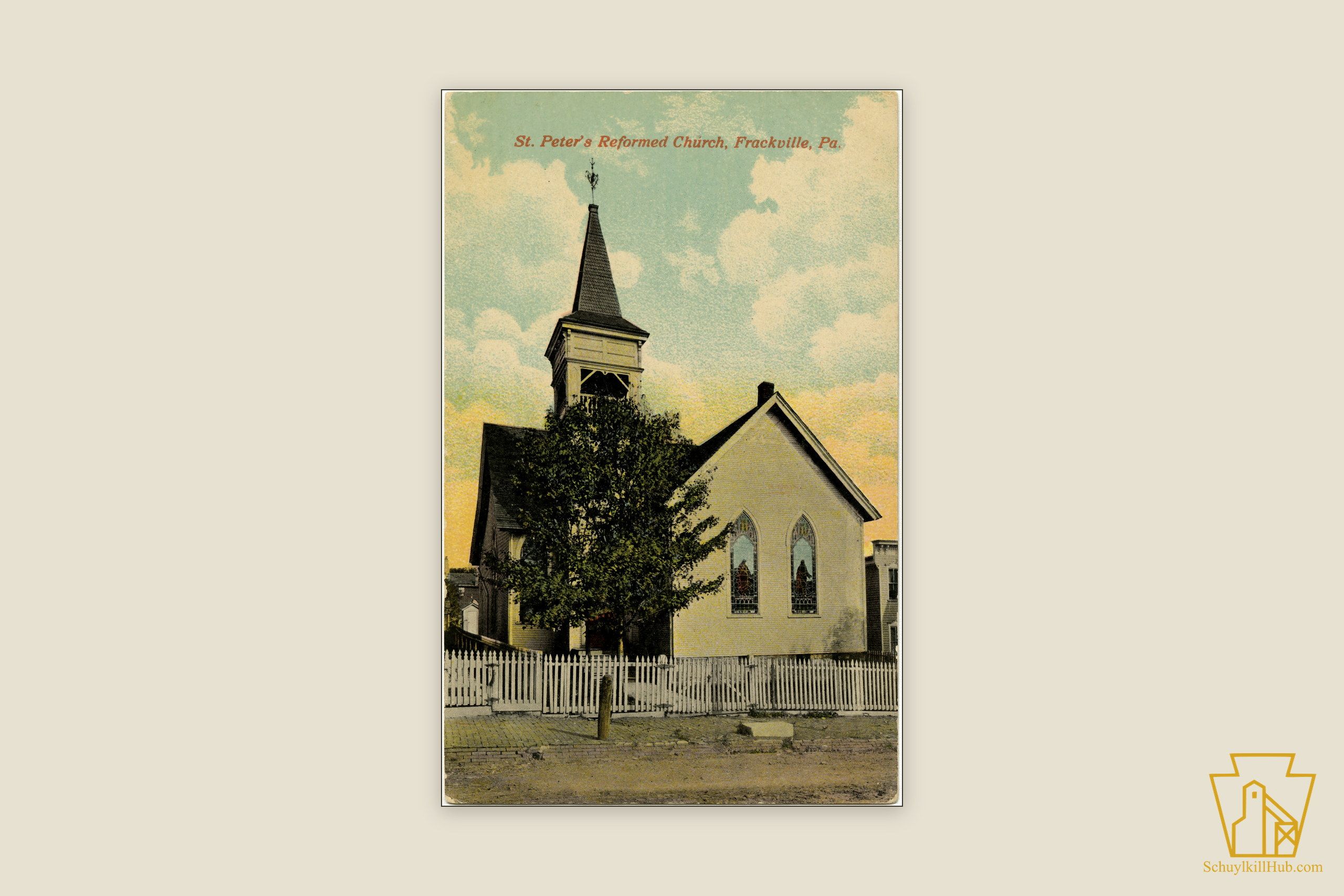
  • Colorized photographic postcard of the clapboard St. Peter’s Reformed Church at Frackville, shingled steeple over a picket fence.

    Institutions · before 1923 · Slide 35 of 77

    St. Peter's Reformed Church, Frackville

    The clapboard St. Peter's Reformed Church at Frackville, with its shingled steeple and picket fence, on a colorized photographic postcard printed before 1923; from the Presbyterian Historical Society's postcard collection.

    Postcard: pre-1923, Presbyterian Historical Society (public domain), via Wikimedia Commons · Public Domain (PD-US, pre-1923)

    Own this print
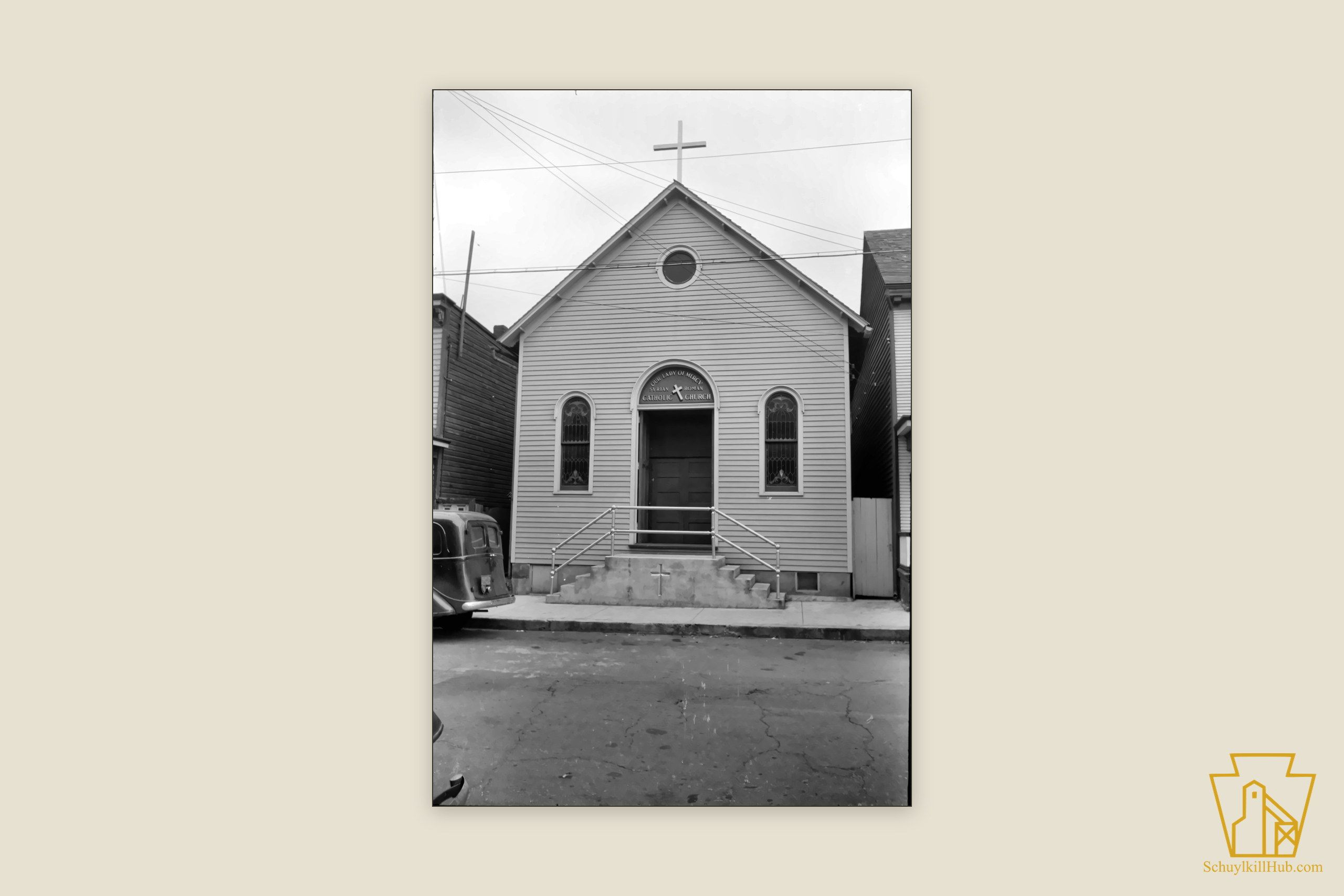
  • The small clapboard church of Our Lady of Mercy on a Shenandoah street.

    Institutions · Slide 36 of 77

    Our Lady of Mercy Syrian Roman Catholic Church, Shenandoah

    The small clapboard church of Our Lady of Mercy at Shenandoah — a record of the anthracite town's Syrian and Lebanese immigrant community. Sheldon Dick for the Farm Security Administration, 1938.

    Photo: Sheldon Dick, U.S. Farm Security Administration, 1938 (public domain), via Wikimedia Commons · Public Domain (U.S. FSA/OWI, Library of Congress)

    Own this print
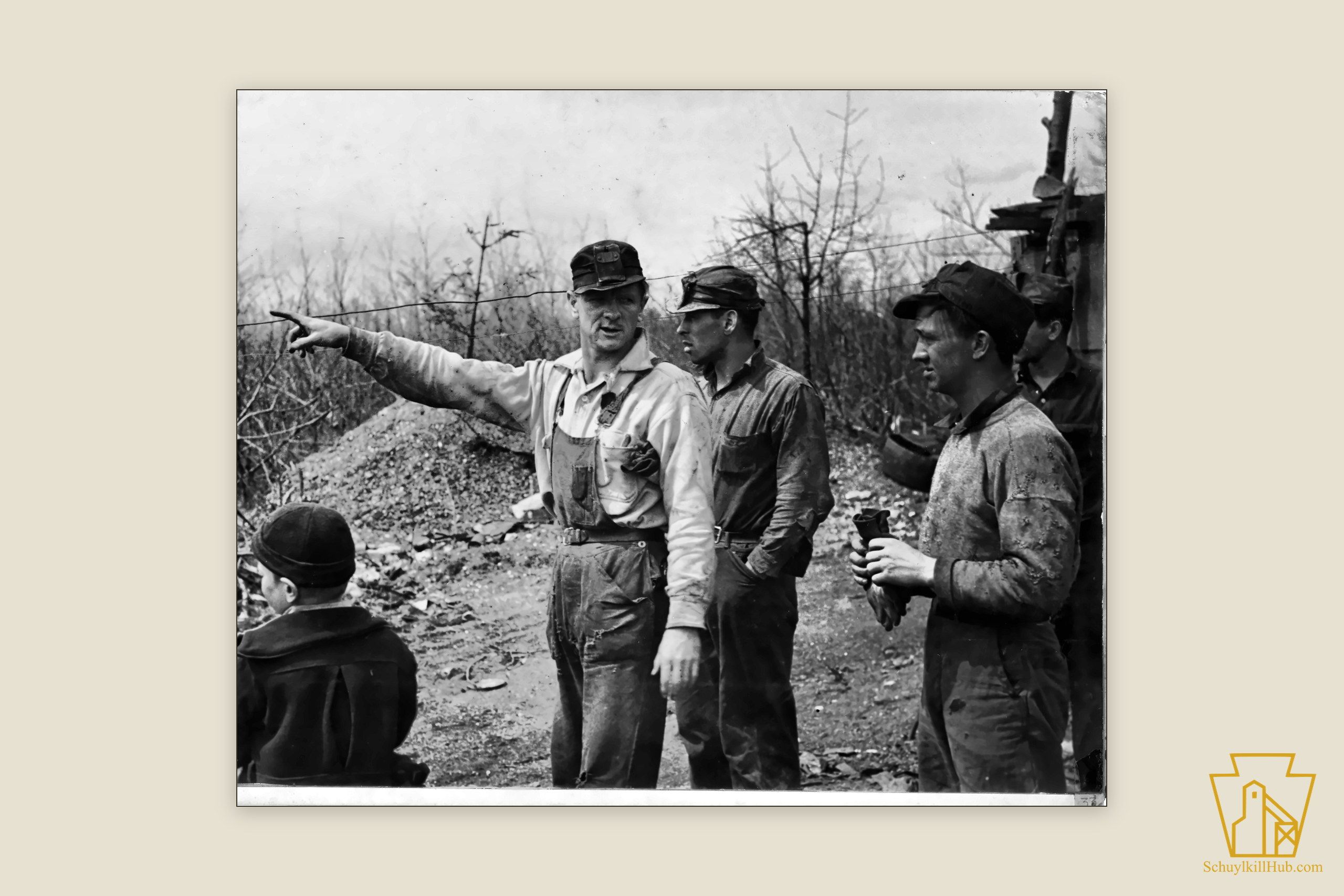
  • Bootleg coal miners conferring at their hillside diggings while a boy looks on.

    Collieries · c. 1938 · Slide 37 of 77

    Bootleg Coal Miners, Schuylkill County

    Bootleg miners confer at their diggings while a boy looks on, from a Farm Security Administration album of Pennsylvania coal miners, about 1938 — the Depression-era 'bootleg' coal economy, when idled miners dug and sold anthracite from workings the companies had closed.

    Photo: U.S. Farm Security Administration, c.1938-1941, Library of Congress (public domain), via Wikimedia Commons · Public Domain (U.S. FSA/OWI, Library of Congress)

    Own this print
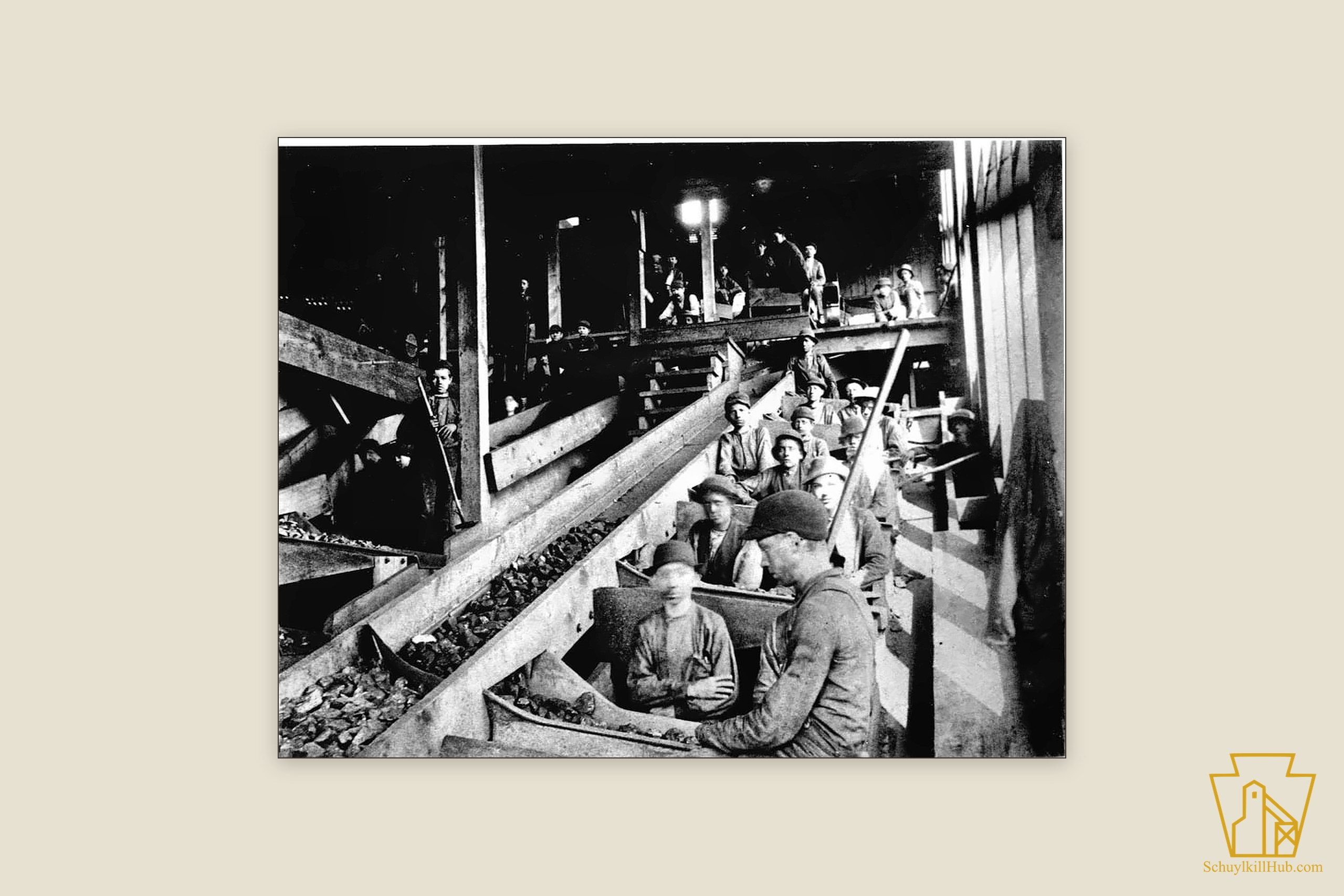
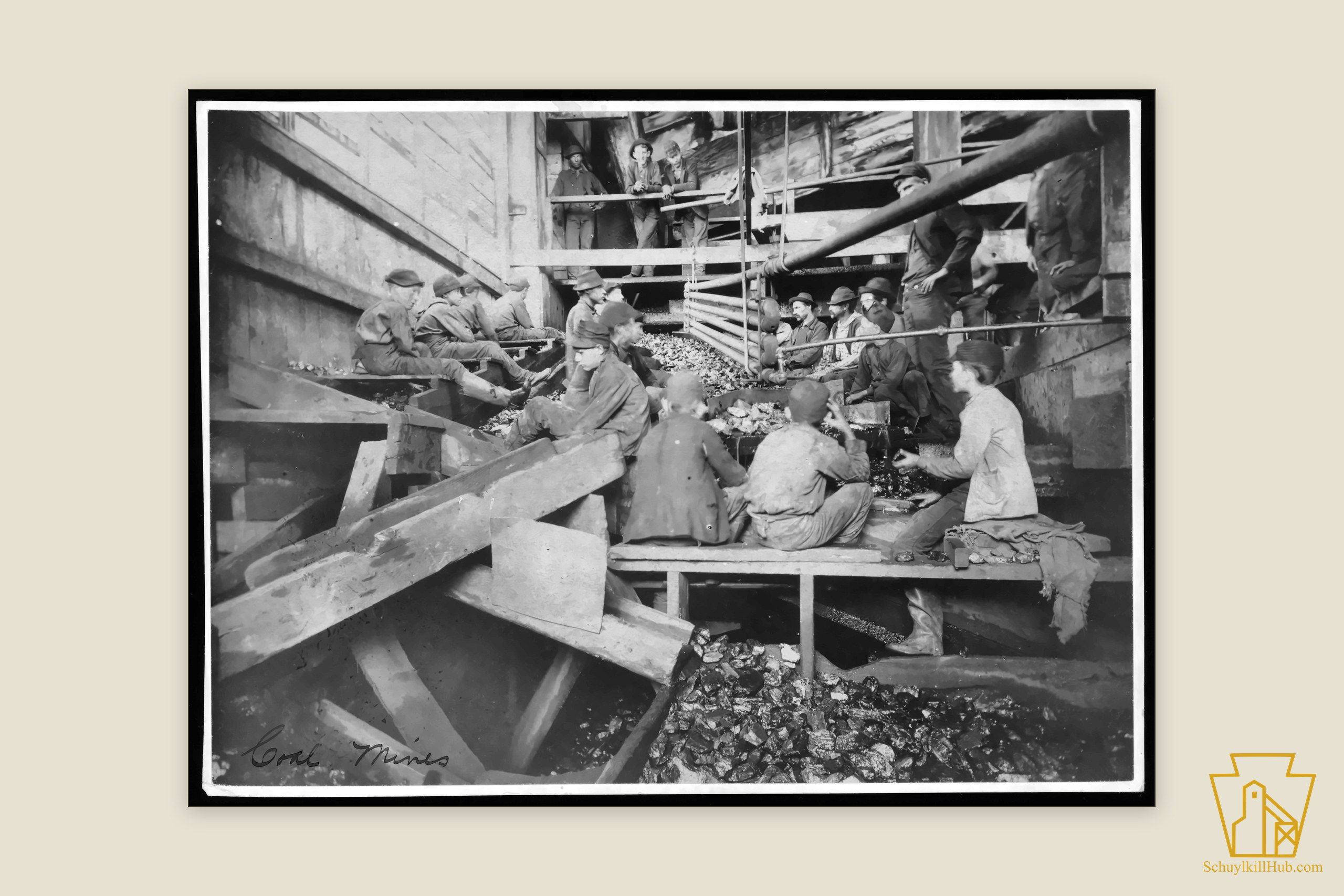
  • Boys seated along wooden chutes picking slate from coal inside the North Ashland breaker.

    Collieries · Slide 38 of 77

    Breaker Boys at Work, North Ashland Colliery

    Boys seated along the chutes picking slate from coal inside the North Ashland colliery breaker, attributed to Pottsville photographer George M. Bretz, c. 1884 — Bretz's anthracite child-labor series predates Lewis Hine's by a quarter century.

    Photo: George M. Bretz, c.1884 (public domain), via Wikimedia Commons (UMBC Bretz Collection) · Public Domain (PD-old; published before 1931)

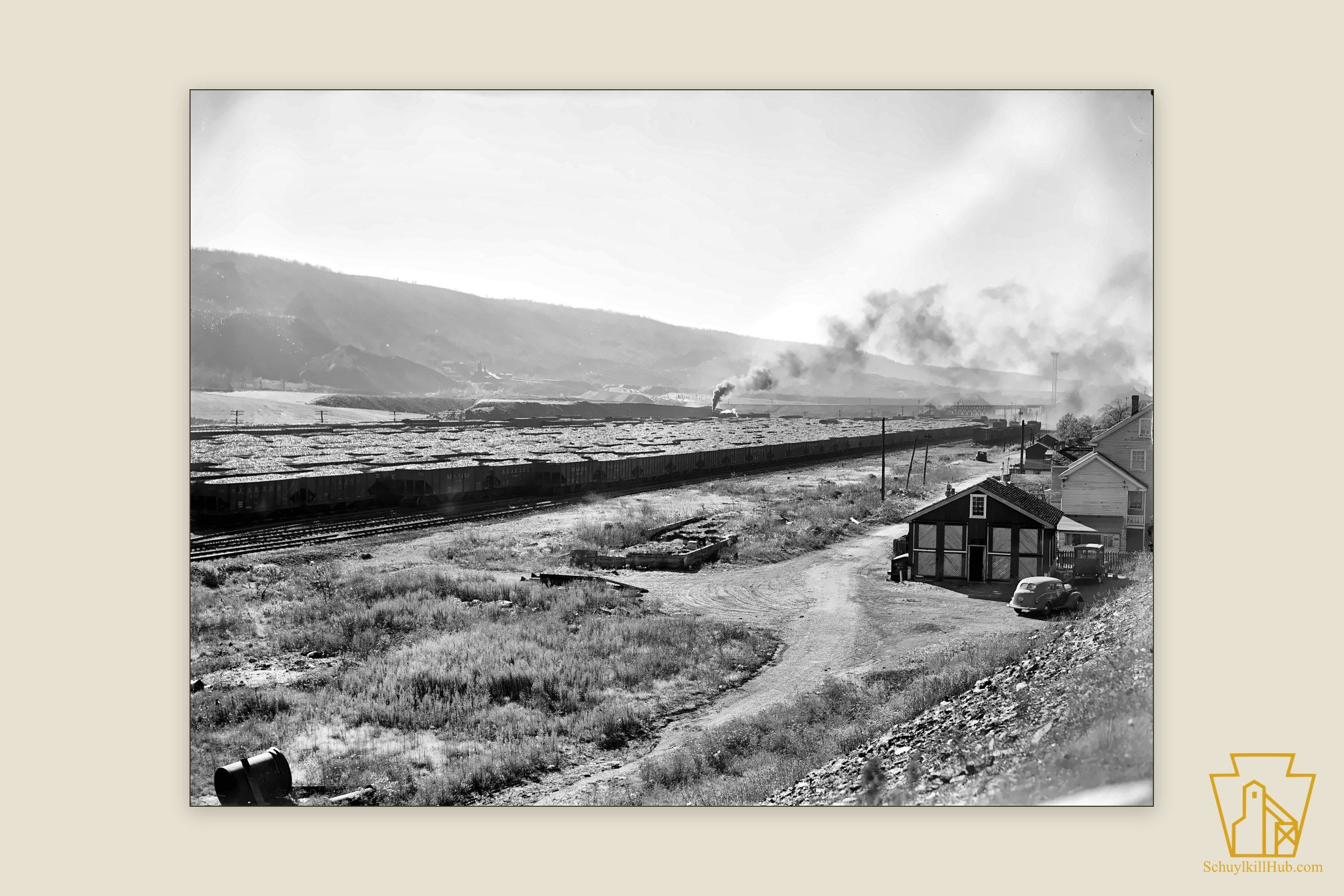
  • A rail yard filled with loaded coal hopper cars near the St. Nicholas breaker.

    Collieries · Slide 39 of 77

    Coal Cars near the St. Nicholas Breaker

    A vast yard of loaded coal hoppers on the tracks serving the St. Nicholas breaker near Shenandoah, photographed by Sheldon Dick for the Farm Security Administration in 1938.

    Photo: Sheldon Dick, U.S. Farm Security Administration, 1938, Library of Congress (LC-USF34-040412-D; no known restrictions) · No known restrictions (Library of Congress, FSA/OWI)

    Own this print
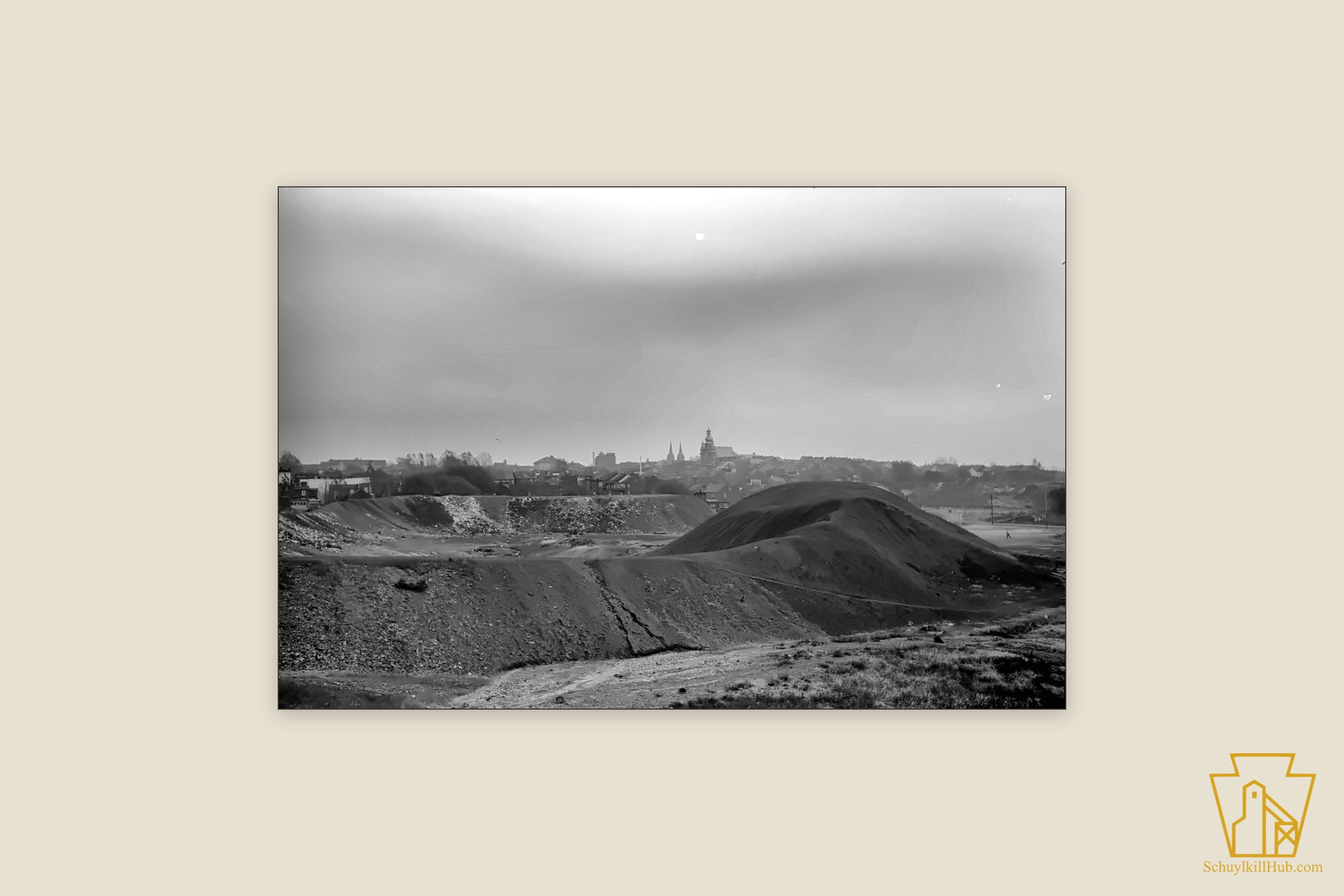
  • Rooftops and church spires of a mining town crowded by culm banks and stripped ground.

    Collieries · Slide 40 of 77

    Culm Banks at the Edge of a Mining Town

    Culm banks and stripped ground crowd the rooftops and church spires of an anthracite town — possibly Shenandoah, per the Farm Security Administration's own caption — photographed by Sheldon Dick in 1938.

    Photo: Sheldon Dick, U.S. Farm Security Administration, 1938 (public domain), via Wikimedia Commons · Public Domain (U.S. FSA/OWI, Library of Congress)

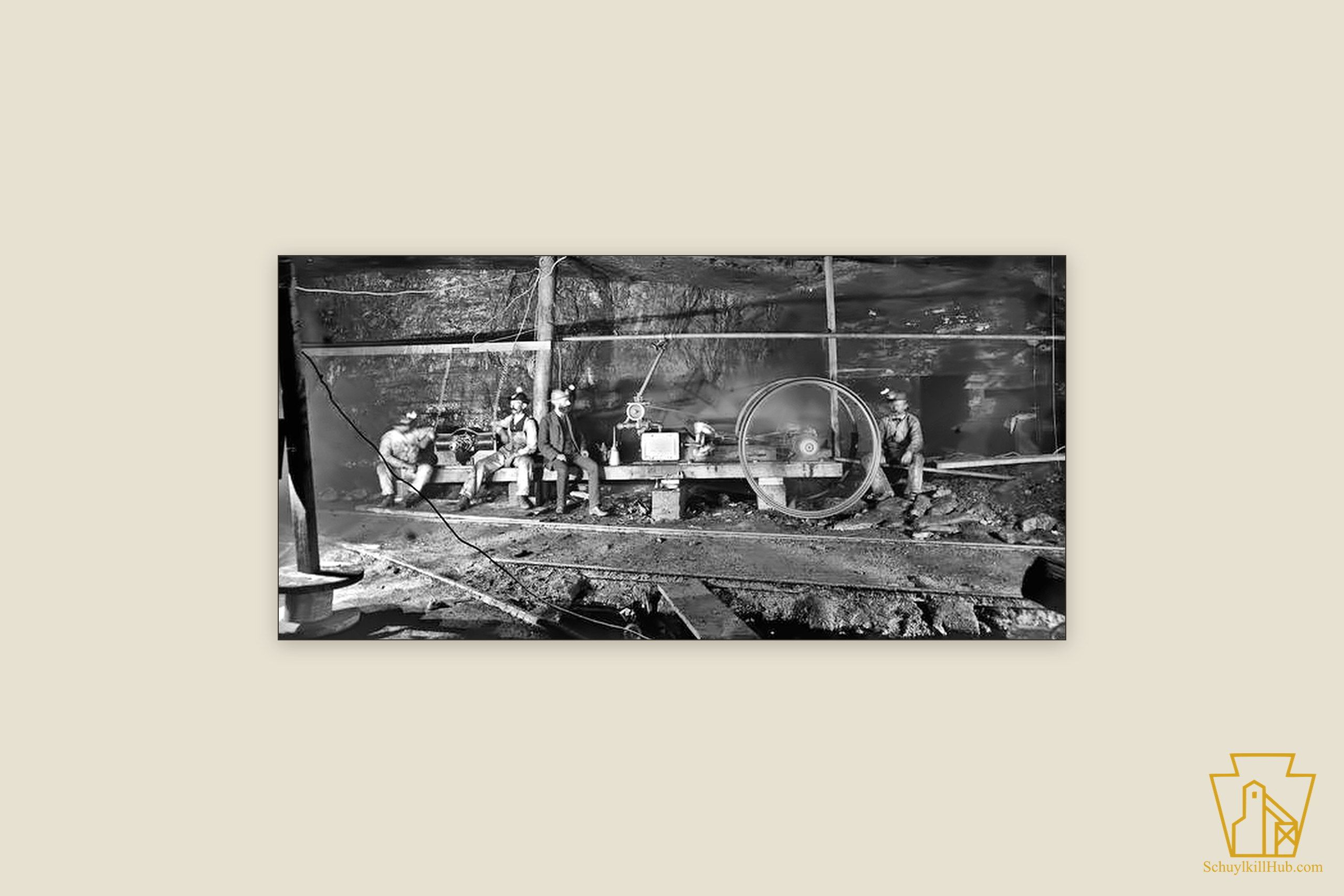
  • Miners with cap lamps beside an underground hoisting engine, lit by magnesium flash.

    Collieries · Slide 41 of 77

    Miners Underground at the Kohinoor Mine

    Miners in cap-lamps beside an underground hoisting engine in the Kohinoor mine at Shenandoah, by George M. Bretz of Pottsville, c. 1884 — among the earliest successful magnesium-flash photographs made inside an anthracite mine.

    Photo: George M. Bretz, c.1884, courtesy Smithsonian Institution (public domain), via Wikimedia Commons · Public Domain (PD-old / PD-US)

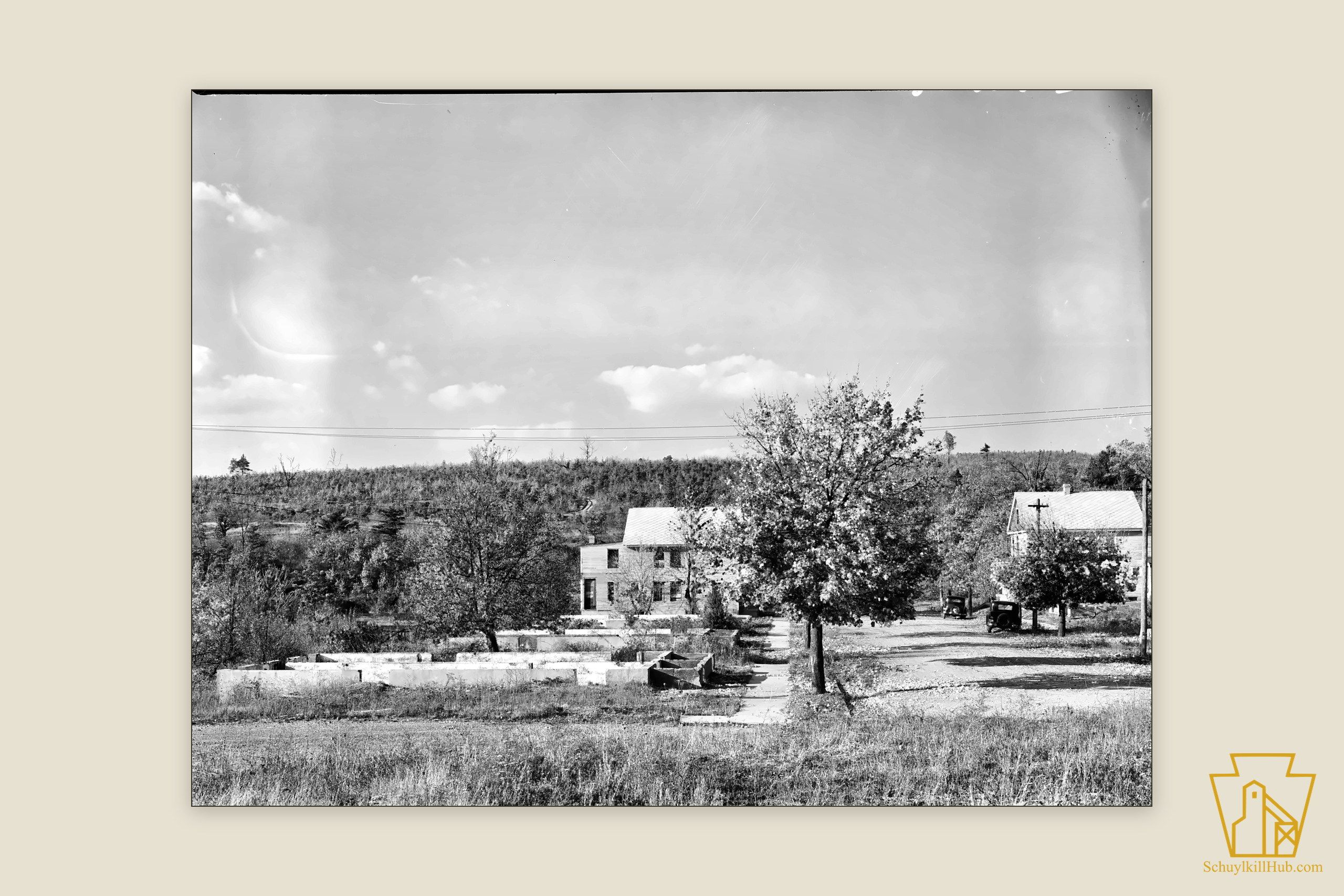
  • A grassy hillside with scattered house foundations — the nearly erased mining patch of Lorain.

    Collieries · Slide 42 of 77

    The Ghost Town of Lorain, near St. Clair

    House foundations in the grass mark the nearly erased colliery patch of Lorain near St. Clair — the Philadelphia & Reading colliery closed eight years earlier, and all but two company houses were removed. Sheldon Dick for the Farm Security Administration, 1938.

    Photo: Sheldon Dick, U.S. Farm Security Administration, 1938, Library of Congress (LC-USF34-040418-D; no known restrictions) · No known restrictions (Library of Congress, FSA/OWI)

    Own this print
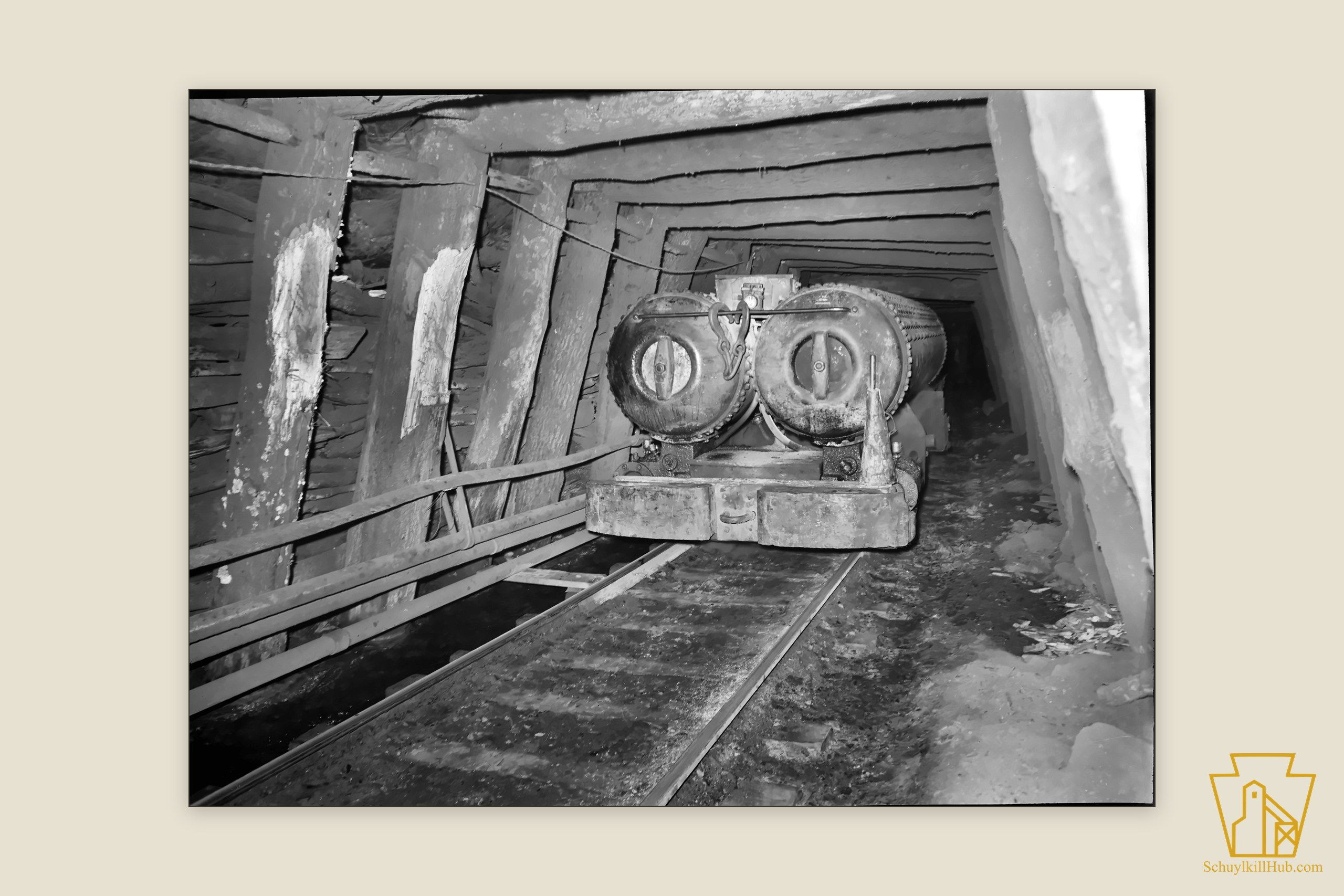
  • A compressed-air haulage engine and mine cars in a timbered underground gangway, air pipes beside the track.

    Collieries · Slide 43 of 77

    Compressed-Air Engine Underground, Maple Hill Mine

    A compressed-air haulage engine approaches with a train of cars in a timbered gangway of the Maple Hill mine near Shenandoah; the pipes beside the track carried eight hundred pounds of air pressure down from the surface. Sheldon Dick for the Farm Security Administration, 1938.

    Photo: Sheldon Dick, U.S. Farm Security Administration, 1938, Library of Congress (LC-USF34-040380-D; no known restrictions) · No known restrictions (Library of Congress, FSA/OWI)

    Own this print
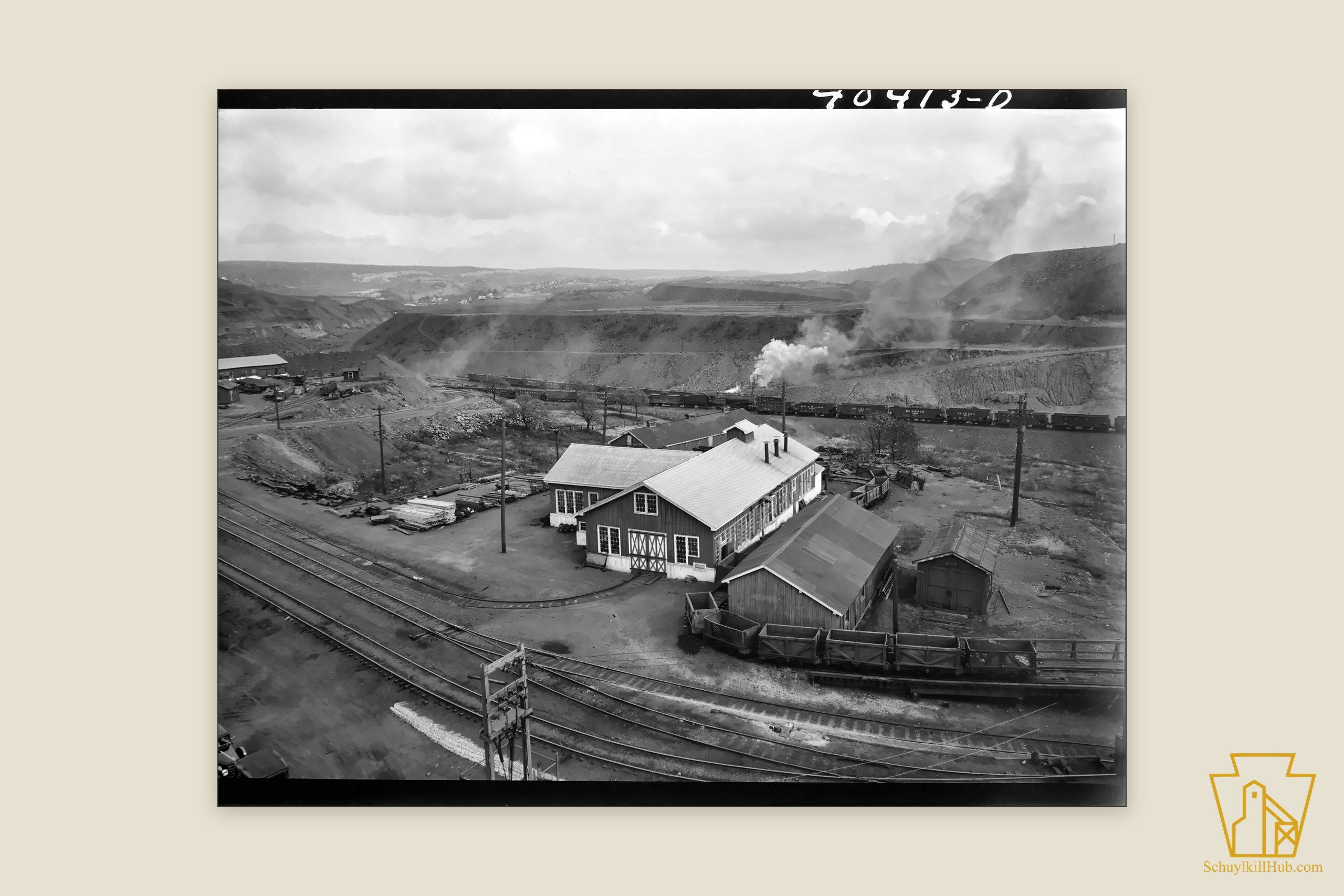
  • The Maple Hill colliery surface from the shaft tower — engine houses, timber stacks, coal cars and converging tracks.

    Collieries · Slide 44 of 77

    Maple Hill Mine from the Shaft Tower

    The Maple Hill colliery surface — engine houses, timber stacks, coal cars and converging tracks under the culm banks — seen from the shaft tower at Shenandoah. Sheldon Dick for the Farm Security Administration, 1938.

    Photo: Sheldon Dick, U.S. Farm Security Administration, 1938, Library of Congress (LC-USF34-040413-D; no known restrictions) · No known restrictions (Library of Congress, FSA/OWI)

    Own this print
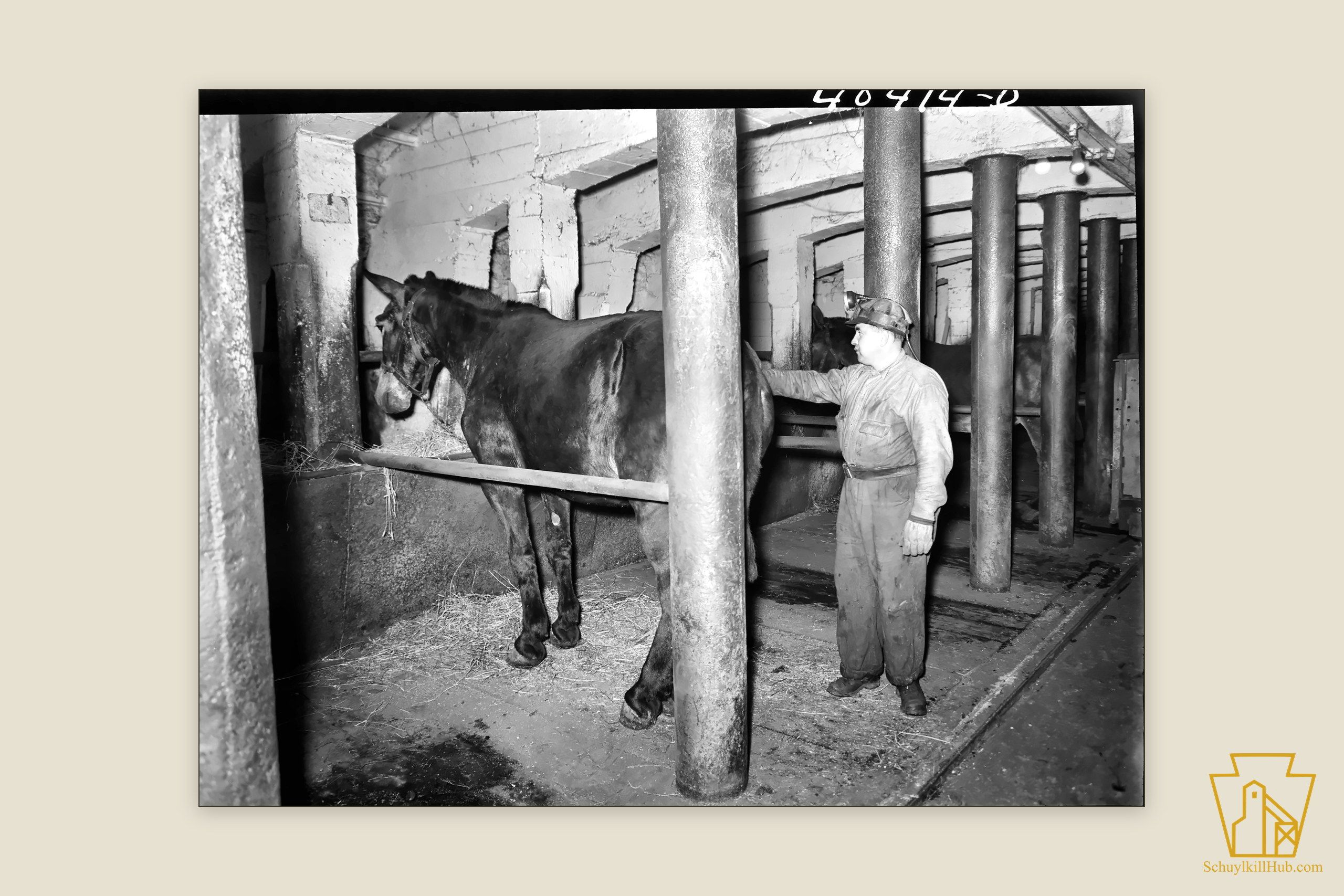
  • A miner tending mules in the whitewashed underground stable of the Maple Hill mine.

    Collieries · Slide 45 of 77

    The Underground Mule Stable, Maple Hill Mine

    A miner tends the mules in the whitewashed underground stable of the Maple Hill mine at Shenandoah, some seven hundred feet below ground. Sheldon Dick for the Farm Security Administration, 1938.

    Photo: Sheldon Dick, U.S. Farm Security Administration, 1938, Library of Congress (public domain), via Wikimedia Commons · Public Domain (U.S. FSA/OWI, Library of Congress)

    Own this print
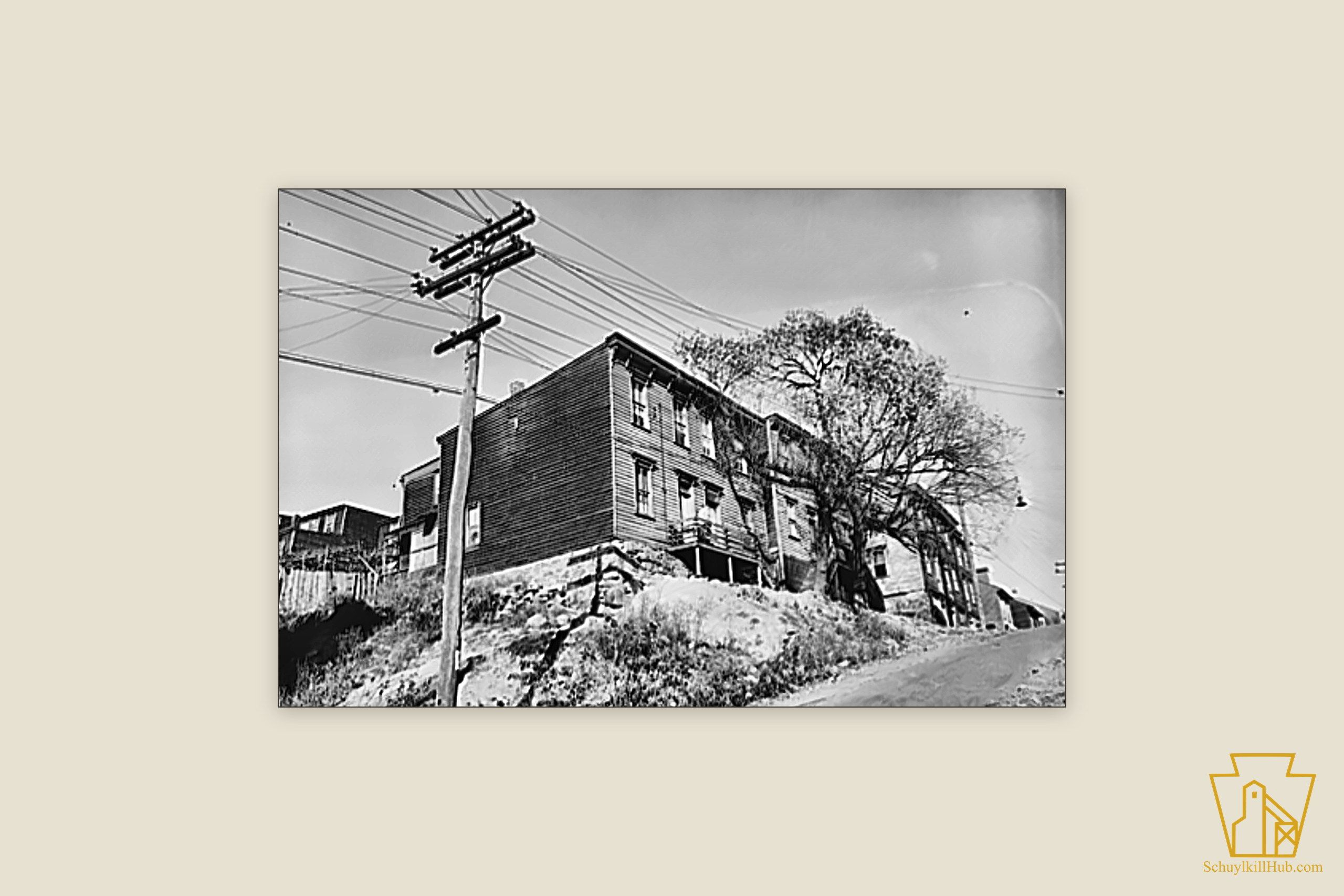
  • Tall clapboard company houses perched on a rocky hillside in Shenandoah.

    Collieries · Slide 46 of 77

    Miners' Homes, Brownsville Sector, Shenandoah

    Tall multi-family clapboard company houses perched on the rocky hillside of Shenandoah's Brownsville sector. Sheldon Dick for the Farm Security Administration, 1938.

    Photo: Sheldon Dick, U.S. Farm Security Administration, 1938, Library of Congress (public domain), via Wikimedia Commons · Public Domain (U.S. FSA/OWI, Library of Congress)

  • Blue-toned cyanotype of breaker boys picking slate along the chutes inside the Kohinoor breaker.

    Collieries · 1891 · Slide 47 of 77

    Breaker Boys, Kohinoor Colliery, Shenandoah

    Frances Benjamin Johnston's 1891 cyanotype of breaker boys picking slate inside the Kohinoor colliery breaker at Shenandoah — child labor photographed inside a working anthracite breaker two decades before Lewis Hine's famous Pennsylvania series.

    Photo: Frances Benjamin Johnston, 1891, Library of Congress (LC-DIG-ppmsca-38993; no known restrictions) · No known restrictions on publication (Library of Congress)

    Own this print
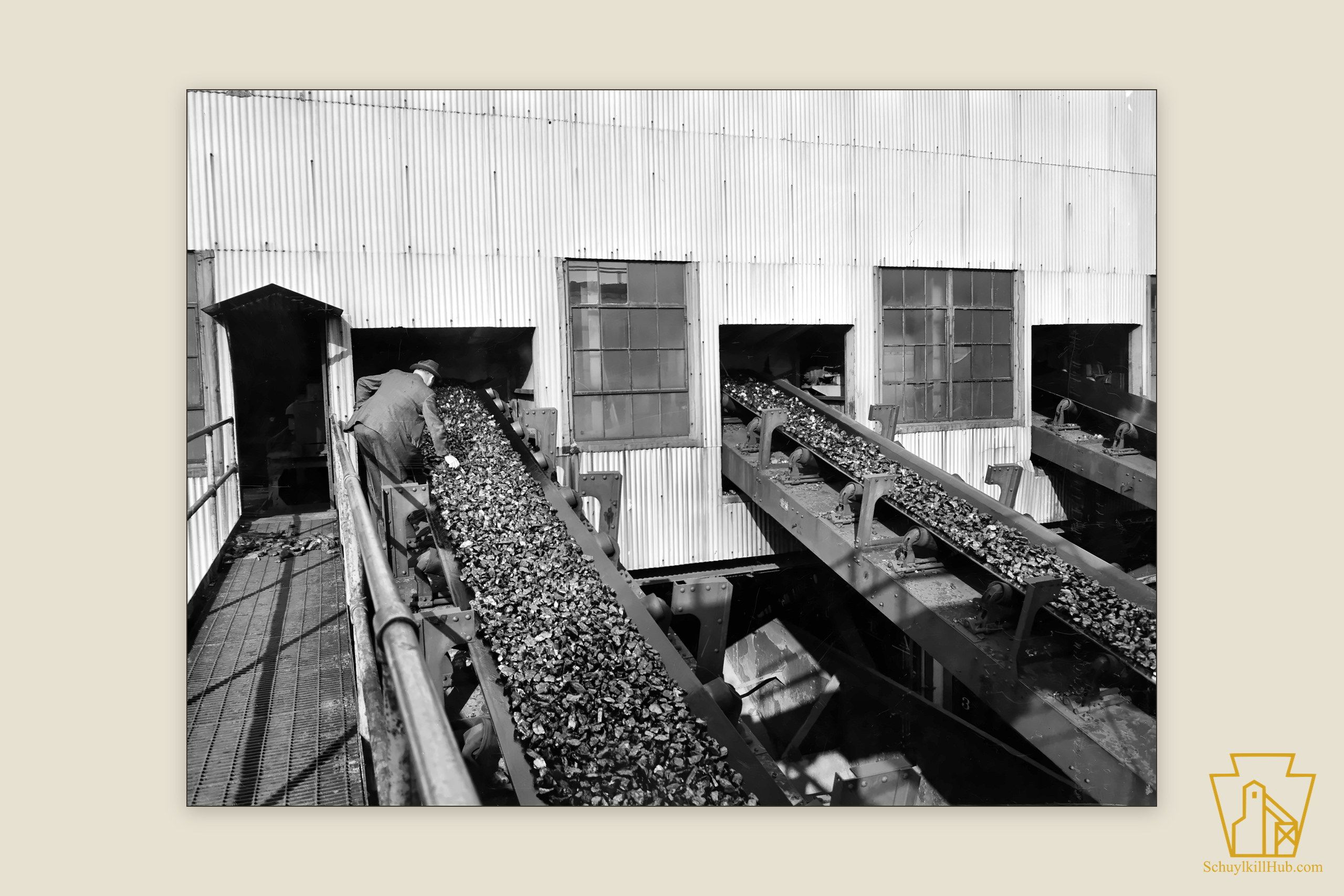
  • An inspector examining coal on a loading belt inside the St. Nicholas breaker.

    Collieries · 1938 · Slide 48 of 77

    Coal Inspector at the St. Nicholas Breaker, Gilberton

    A company inspector examining coal on a car-loading belt inside the St. Nicholas breaker at Gilberton — one of the two largest coal breakers in the world — photographed by Sheldon Dick for the Farm Security Administration in 1938.

    Photo: Sheldon Dick, U.S. Farm Security Administration, 1938, Library of Congress (LC-USF34-040423-D; no known restrictions) · No known restrictions (Library of Congress, FSA/OWI)

    Own this print
  • Mine tracks leading toward the towering St. Nicholas breaker, seen from a shaft tower.

    Collieries · 1938 · Slide 49 of 77

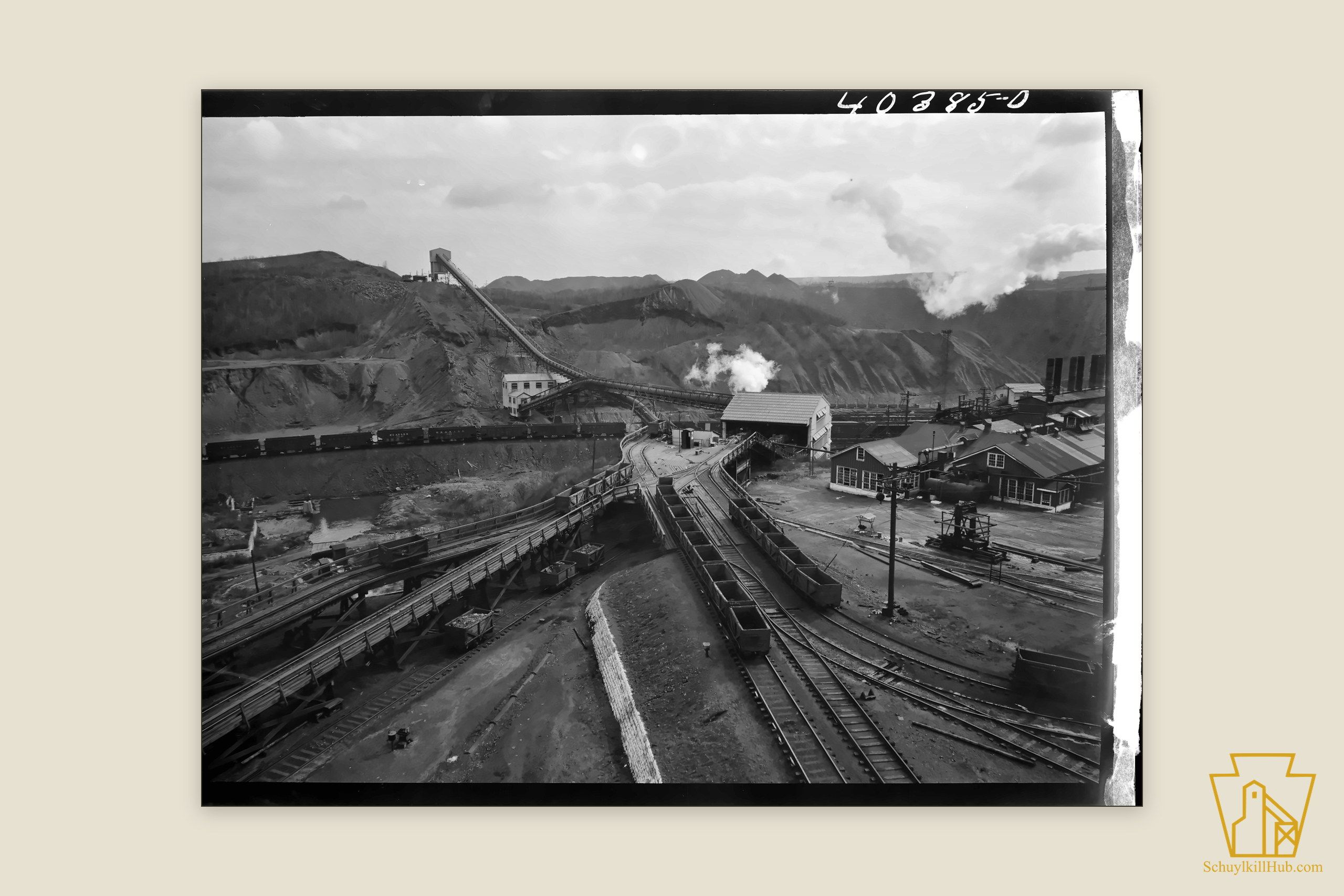
    St. Nicholas Breaker from the Shaft Tower, Gilberton

    Tracks at the Maple Hill mine leading to the crusher and the St. Nicholas breaker at Gilberton, photographed from the shaft tower by Sheldon Dick for the Farm Security Administration in 1938. St. Nicholas was among the largest coal breakers in the world.

    Photo: Sheldon Dick, U.S. Farm Security Administration, 1938, Library of Congress (LC-USF34-040385-D; no known restrictions) · No known restrictions (Library of Congress, FSA/OWI)

    Own this print
  • Heavy timber props and cross-beams bracing a settling mine-tunnel roof.

    Collieries · Slide 50 of 77

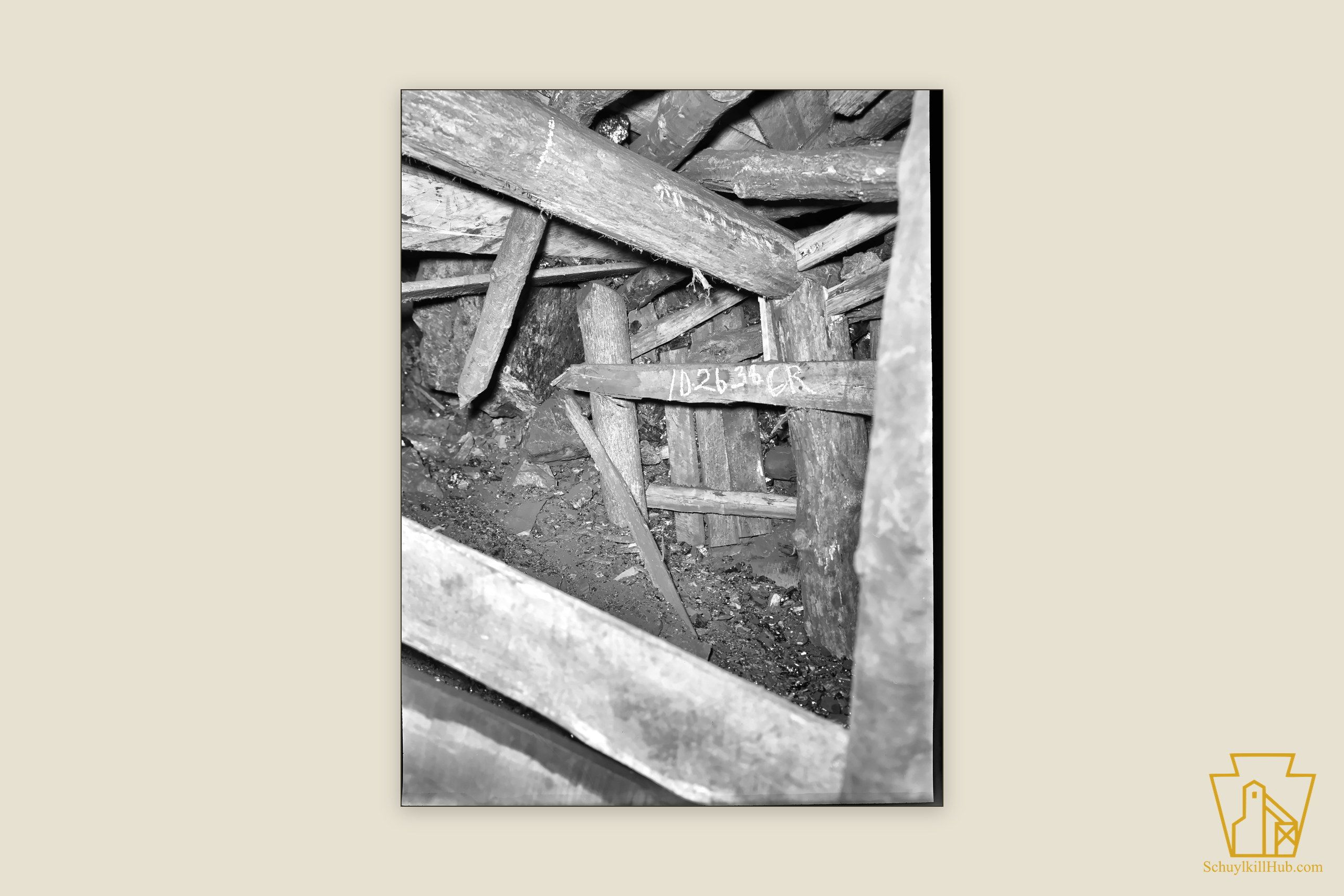
    Timbering in Tunnel 29, Maple Hill Mine

    Heavy props and cross-timbers strain under a settling roof in tunnel 29 of the Maple Hill mine near Shenandoah, where the miners were retreating from the workings. Sheldon Dick for the Farm Security Administration, 1938.

    Photo: Sheldon Dick, U.S. Farm Security Administration, 1938, Library of Congress (no known restrictions) · No known restrictions (Library of Congress, FSA/OWI)

    Own this print
  • The long arcaded stone engine house beside the Mine Hill Railroad tracks at Cressona — a stereograph frame.

    Railroads · Slide 51 of 77

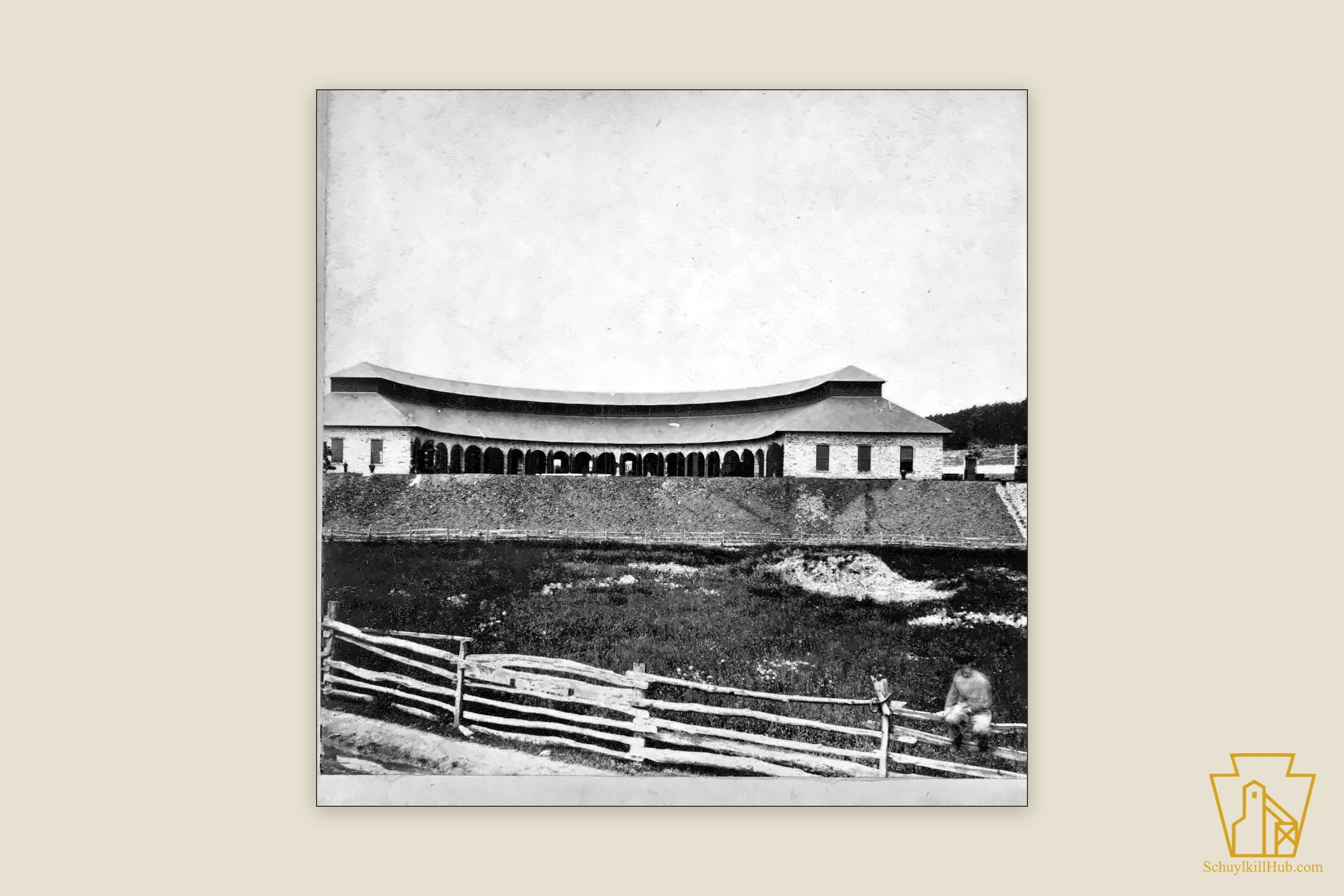
    Engine House at Cressona, Mine Hill Railroad

    The long arcaded stone engine house of the Mine Hill & Schuylkill Haven Railroad at Cressona, about 1865 — the road that carried Schuylkill County's anthracite to the canal at Schuylkill Haven. One frame of an albumen stereograph card.

    Photo: unknown, c.1860-1870, The New York Public Library, Robert N. Dennis collection (public domain), via Wikimedia Commons · Public Domain (PD-scan / PD-US)

  • The railroad junction at Gordon — multiple tracks, an arched engine house and coal cars below wooded hills.

    Railroads · Slide 52 of 77

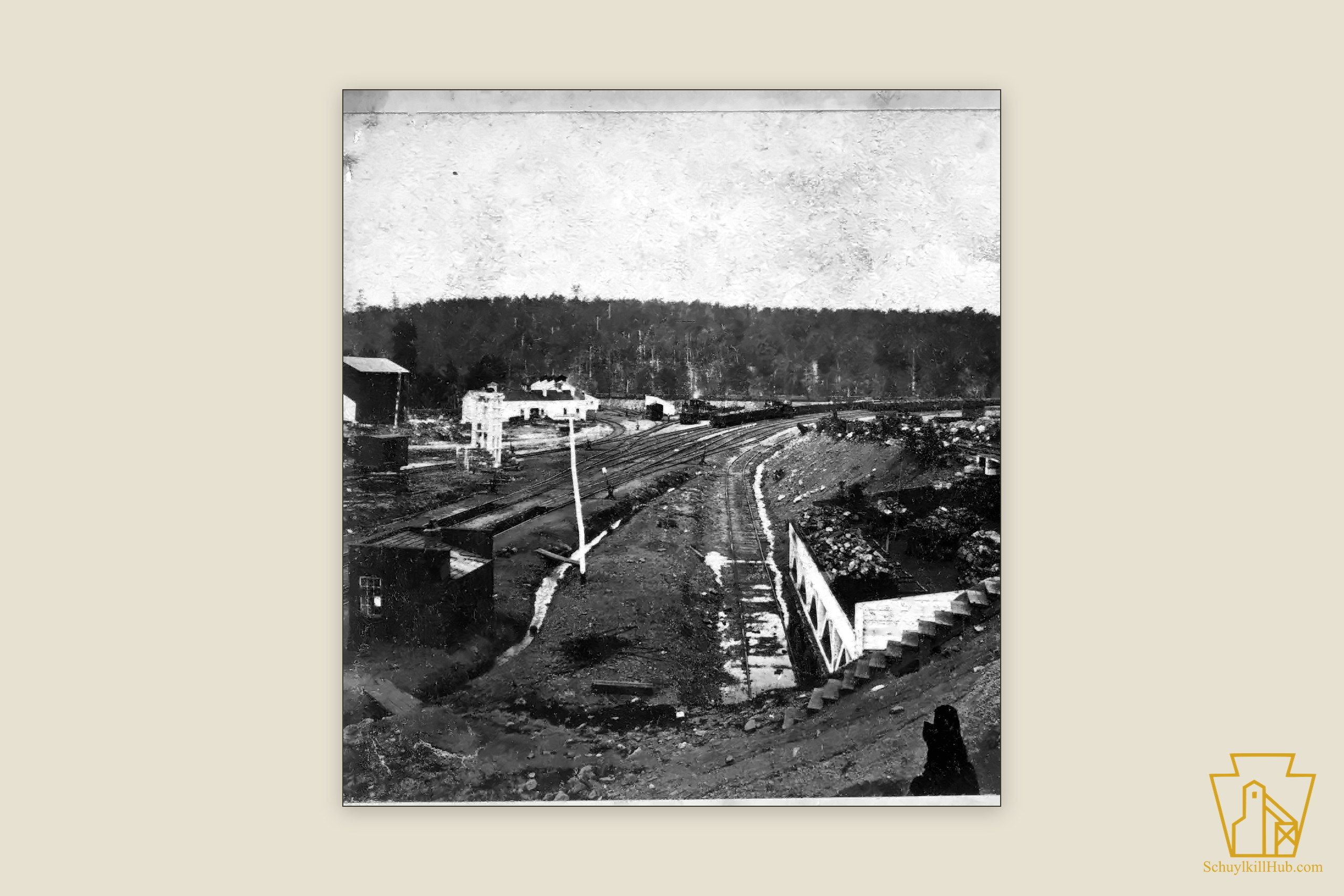
    Gordon, on the Mine Hill Railroad

    The railroad junction at Gordon — multiple tracks, an arched engine house and coal cars under the wooded hills — about 1865. One frame of an albumen stereograph card.

    Photo: unknown, c.1860-1870, The New York Public Library, Robert N. Dennis collection (public domain), via Wikimedia Commons · Public Domain (PD-scan / PD-US)

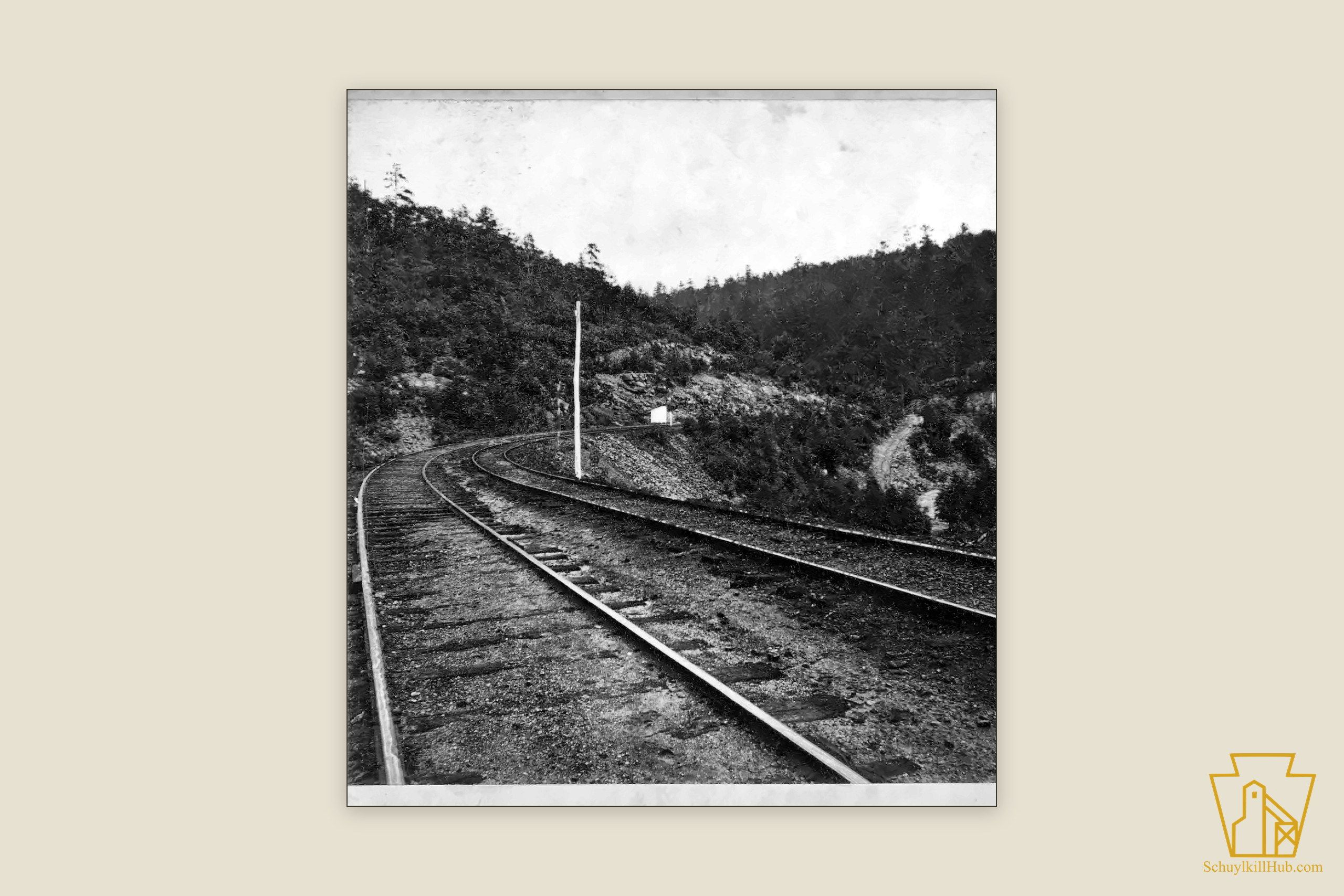
  • A railroad grade curving through the wooded hills of Schuylkill County — a stereograph frame.

    Railroads · Slide 53 of 77

    Mahanoy Grade, Mahanoy & Broad Mountain Railroad

    The Mahanoy & Broad Mountain Railroad grade curving through the wooded hills of Schuylkill County, about 1865. One frame of an albumen stereograph card.

    Photo: unknown, c.1860-1870, The New York Public Library, Robert N. Dennis collection (public domain), via Wikimedia Commons · Public Domain (PD-scan / PD-US)

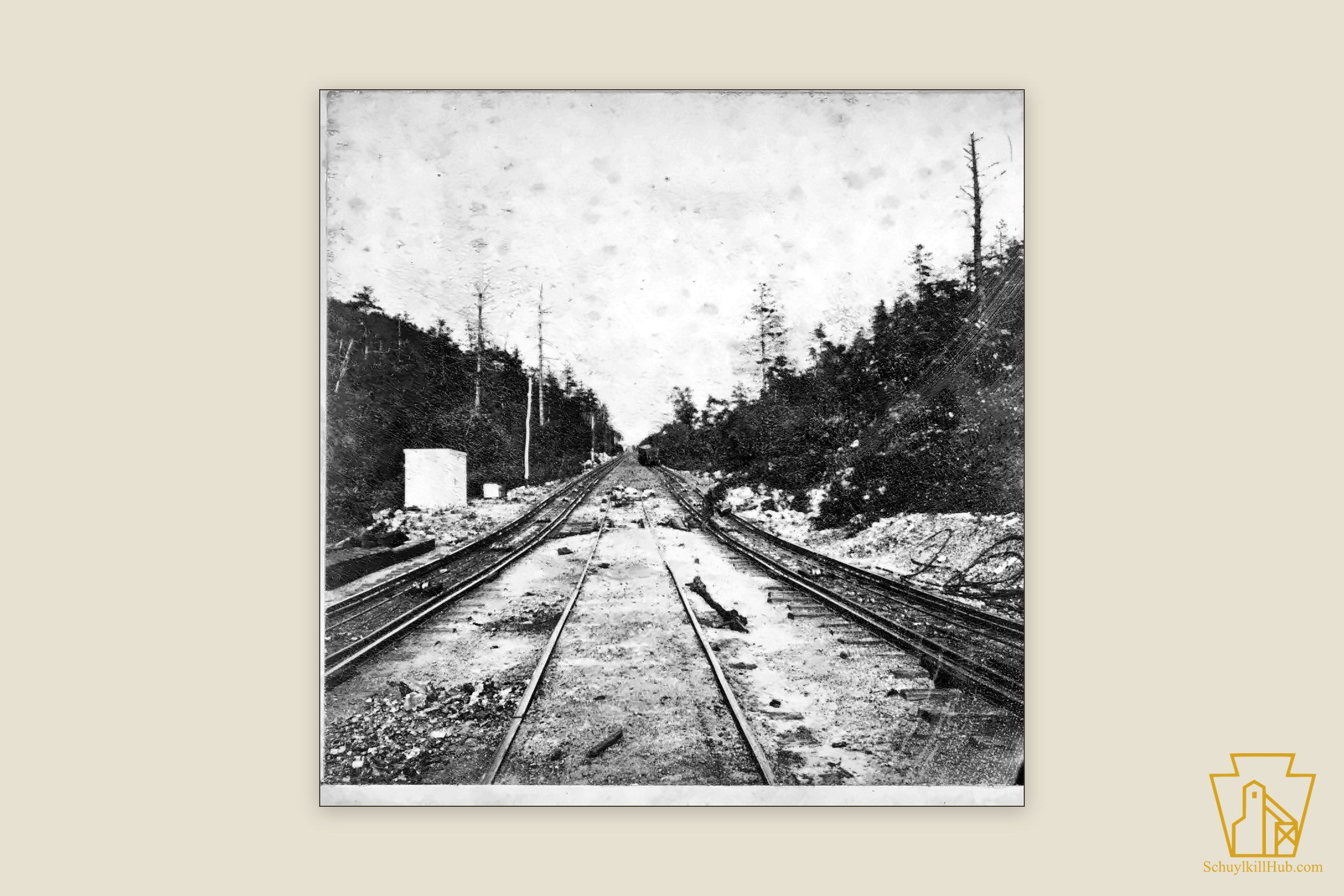
  • Looking up the Upper Gordon inclined plane, a distant train on the wooded grade.

    Railroads · Slide 54 of 77

    Upper Gordon Plane, Mine Hill Railroad

    Looking up the Upper Gordon inclined plane of the Mine Hill Railroad, a distant train on the wooded grade near Gordon, about 1865. One frame of an albumen stereograph card.

    Photo: unknown, c.1860-1870, The New York Public Library, Robert N. Dennis collection (public domain), via Wikimedia Commons · Public Domain (PD-scan / PD-US)

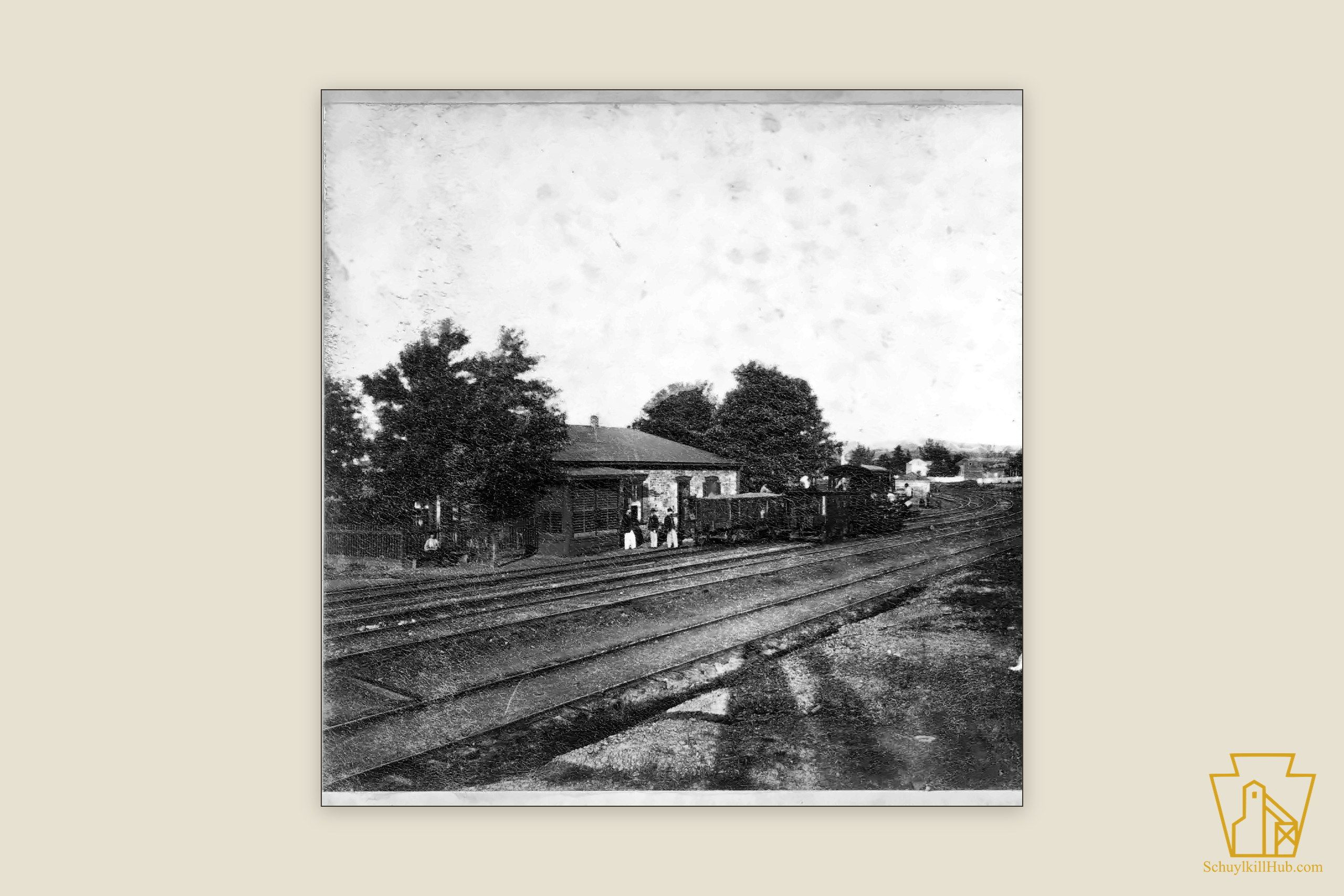
  • The small weighmaster’s office beside the tracks at Cressona, a locomotive and railroad men nearby.

    Railroads · Slide 55 of 77

    Weighmaster's Office at Cressona, Mine Hill Railroad

    The weighmaster's office beside the tracks at Cressona, a small locomotive and railroad men on the Mine Hill & Schuylkill Haven line, about 1865. One frame of an albumen stereograph card.

    Photo: unknown, c.1860-1870, The New York Public Library, Robert N. Dennis collection (public domain), via Wikimedia Commons · Public Domain (PD-scan / PD-US)

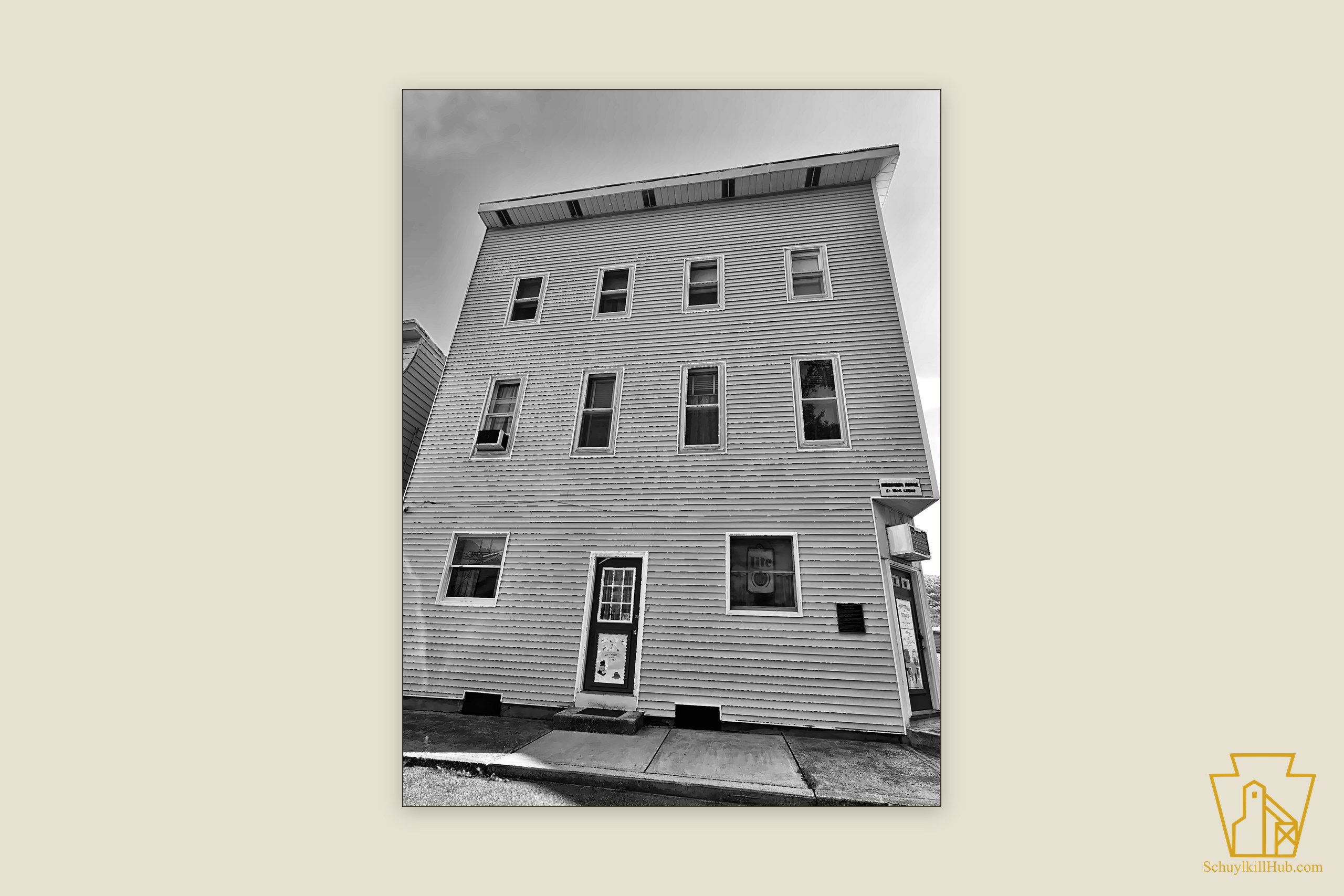
  • The Hibernian House at Girardville — Jack Kehoe’s tavern — as it stands today.

    Labor & the Molly Maguires · 2023 · Slide 56 of 77

    Hibernian House, Jack Kehoe's Tavern, Girardville — Present Day

    The Hibernian House at 21 Beech Street, Girardville — the tavern of John 'Jack' Kehoe, the reputed 'King of the Mollies' hanged in 1878 — photographed in 2023; the tavern still stands.

    Photo: JJonahJackalope / CC BY-SA 4.0, via Wikimedia Commons · CC BY-SA 4.0

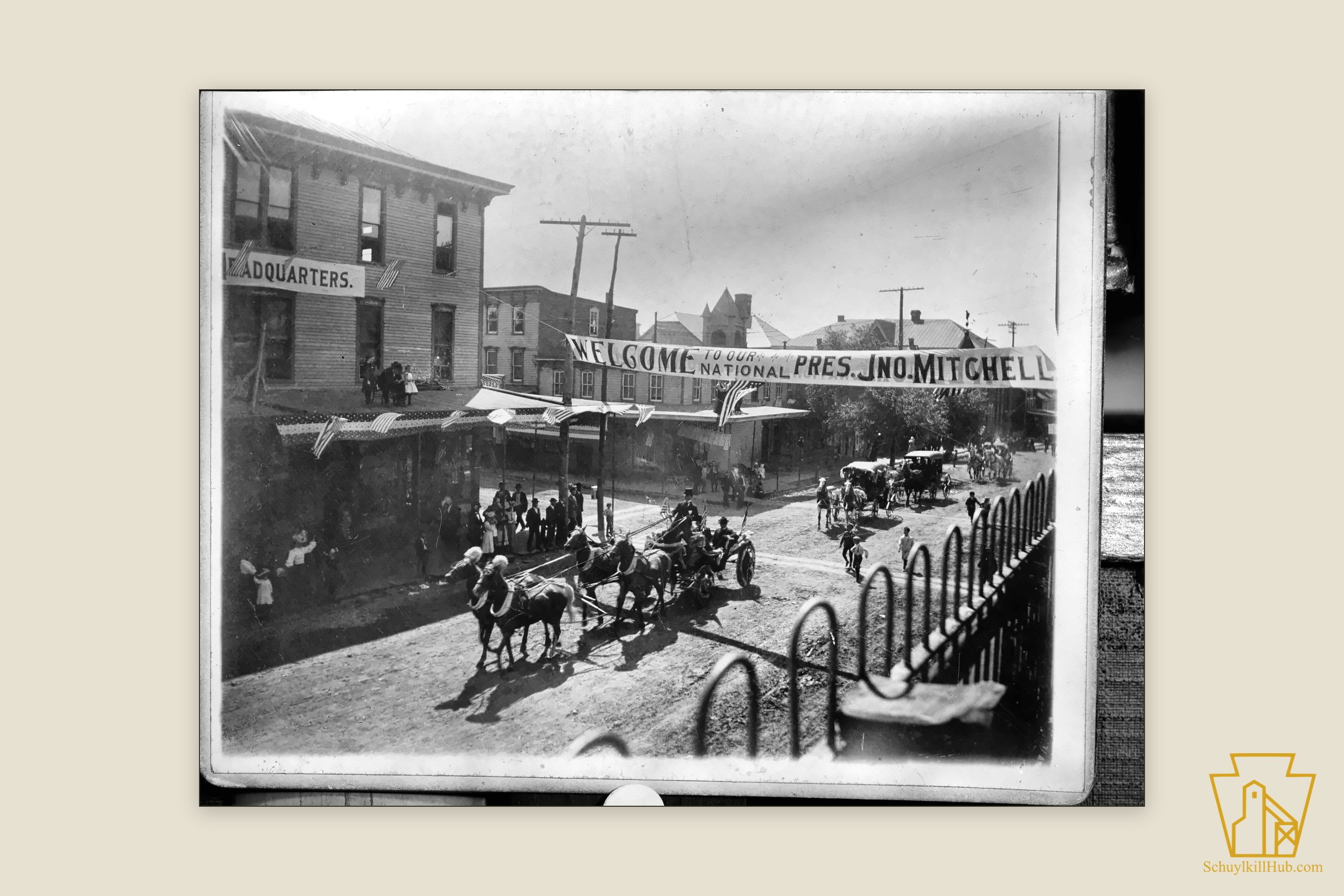
  • A banner spanning a Shenandoah street — ‘Welcome to our National Pres. Jno. Mitchell’ — over a horse-drawn procession.

    Labor & the Molly Maguires · Slide 57 of 77

    John Mitchell's Welcome at Shenandoah

    A banner spanning the street — 'Welcome to our National Pres. Jno. Mitchell' — greets the United Mine Workers president riding through Shenandoah by four-horse carriage in 1902, the year of the great anthracite coal strike. From a Farm Security Administration copy of the 1902 photograph.

    Photo: 1902, Library of Congress FSA/OWI Collection (no known restrictions) · No known restrictions (Library of Congress; U.S. government / FSA-OWI)

    Own this print
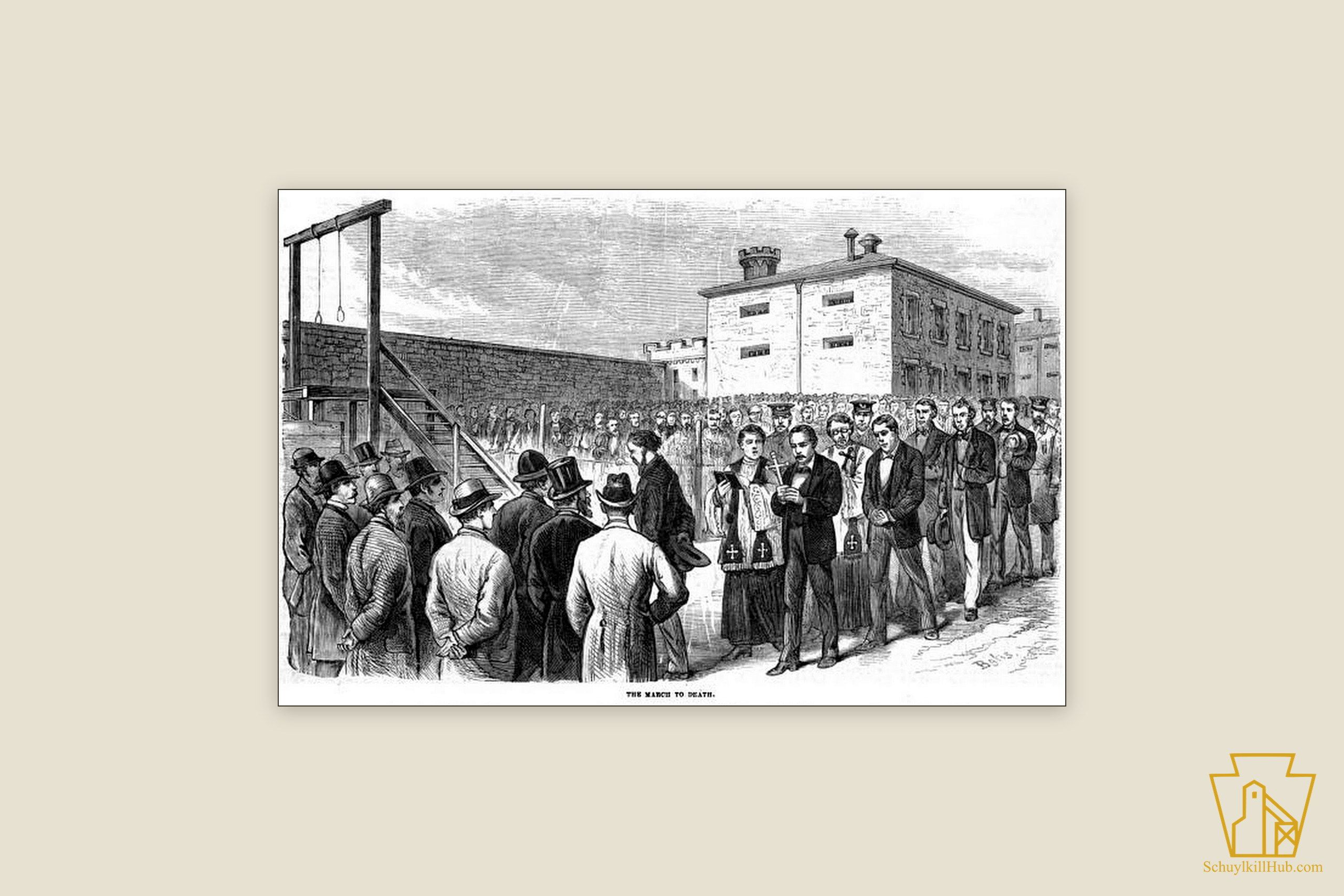
  • Wood engraving of the condemned Molly Maguires led by clergy past the gallows in the prison yard.

    Labor & the Molly Maguires · Slide 58 of 77

    The March to Death

    The condemned Molly Maguires, led by clergy past the gallows in the Schuylkill County prison yard at Pottsville on the morning of the June 21, 1877 executions — the 'Day of the Rope.' Wood engraving from Frank Leslie's Illustrated Newspaper, July 1877.

    Illustration: Frank Leslie's Illustrated Newspaper, 1877 (public domain), via Wikimedia Commons · Public Domain (PD-old)

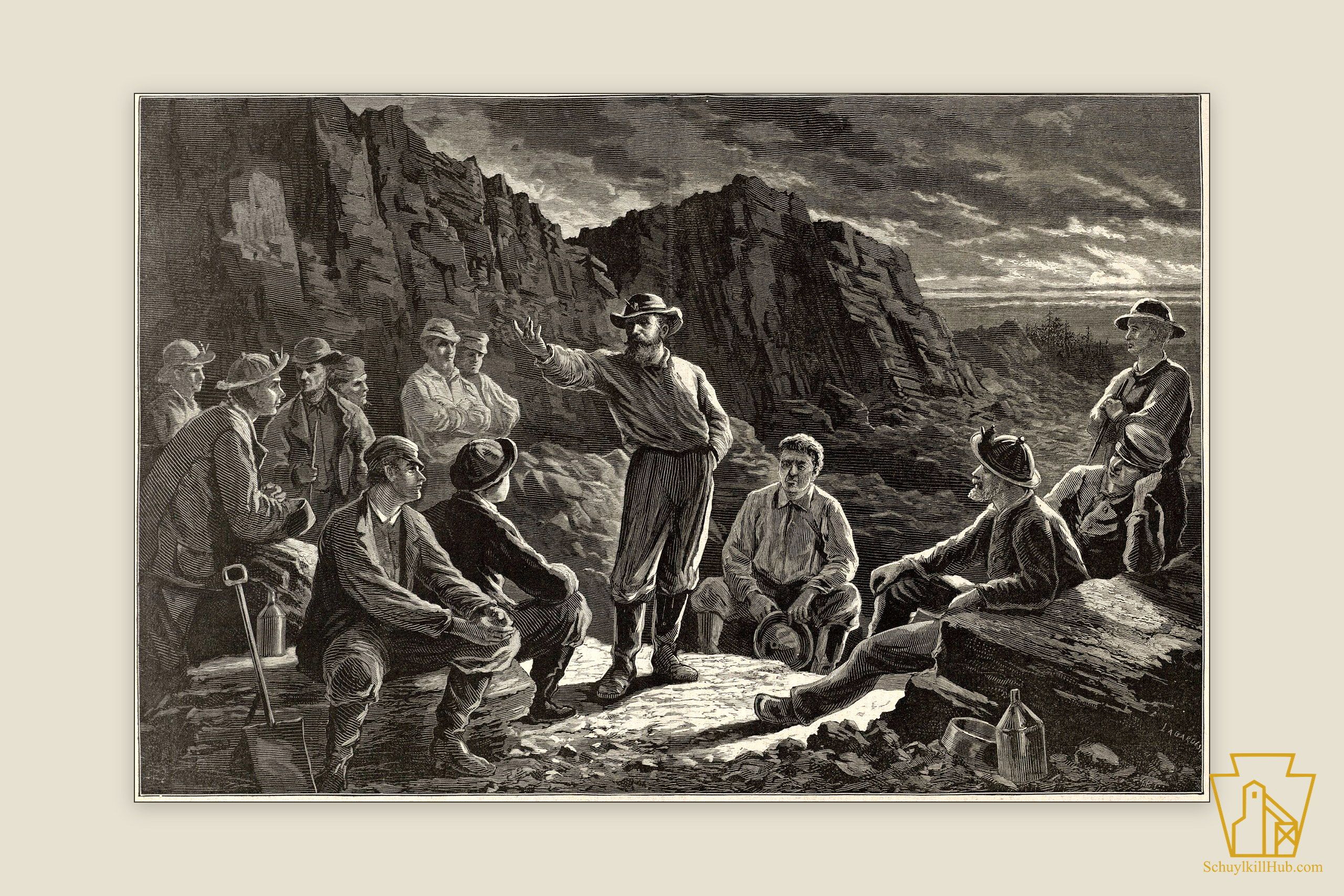
  • Wood engraving of a torch-lit night meeting of ‘Molly M’Guire’ men.

    Labor & the Molly Maguires · Slide 59 of 77

    The Strike in the Coal Mines — Meeting of 'Molly M'Guire' Men

    A full-page wood engraving from Harper's Weekly of January 31, 1874, drawn by Paul Frenzeny and Jules Tavernier, depicting a night meeting of 'Molly M'Guire' men during the anthracite strike. The accompanying Harper's text described the secret society then said to control Pennsylvania's anthracite coal fields.

    Illustration: Frenzeny & Tavernier, Harper's Weekly, 31 Jan 1874 (public domain), via Wikimedia Commons · Public Domain (PD-old)

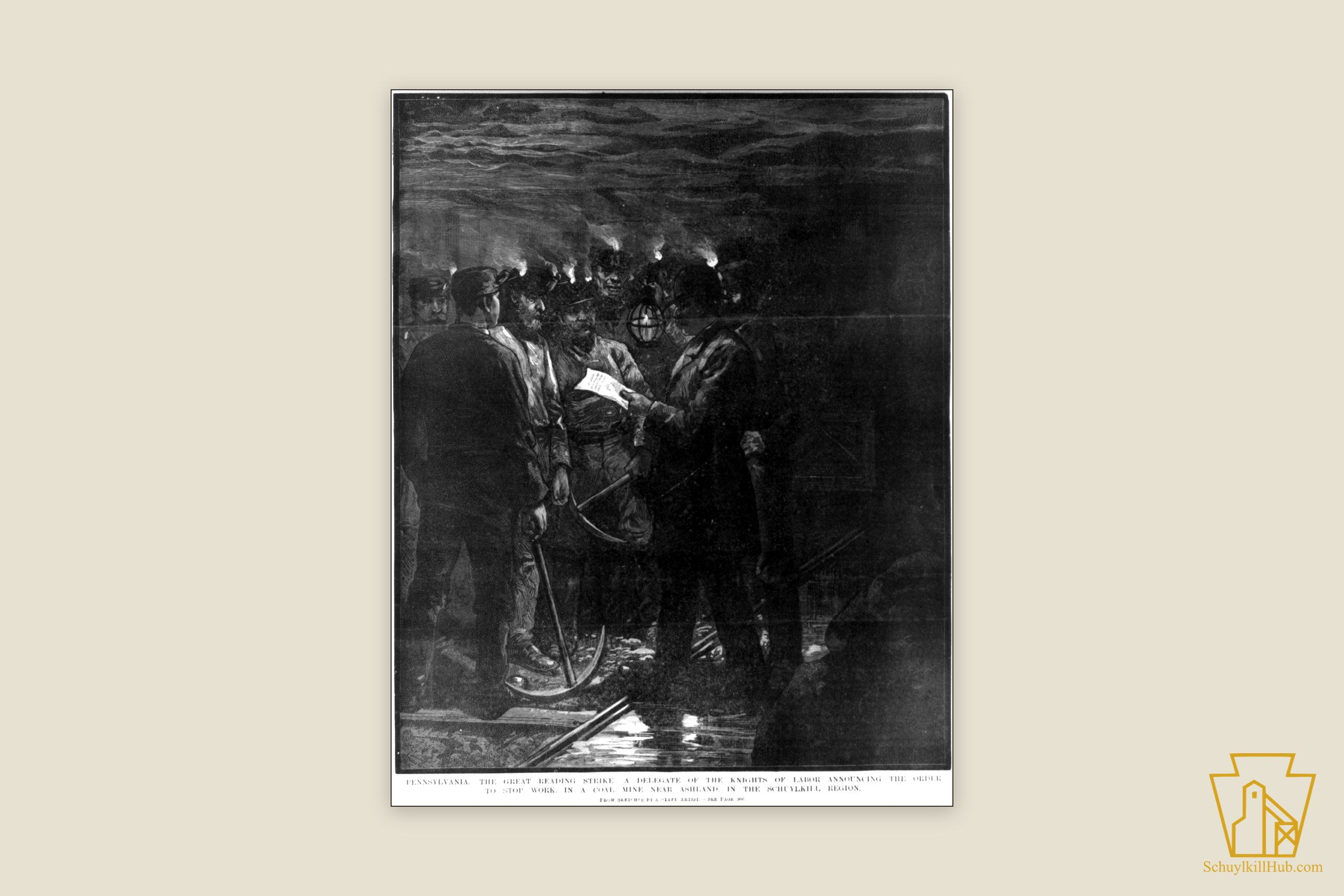
  • Wood engraving of a Knights of Labor delegate reading a stop-work order to miners underground by lamplight.

    Labor & the Molly Maguires · Slide 60 of 77

    The Great Reading Strike — Stopping Work in a Mine near Ashland

    A Knights of Labor delegate reads the order to stop work by lamplight to miners underground near Ashland, in the Schuylkill region — an illustrated-newspaper wood engraving of January 1888, during the great Reading strike.

    Illustration: 1888 wood engraving, Library of Congress (public domain) · Public Domain (PD-old)

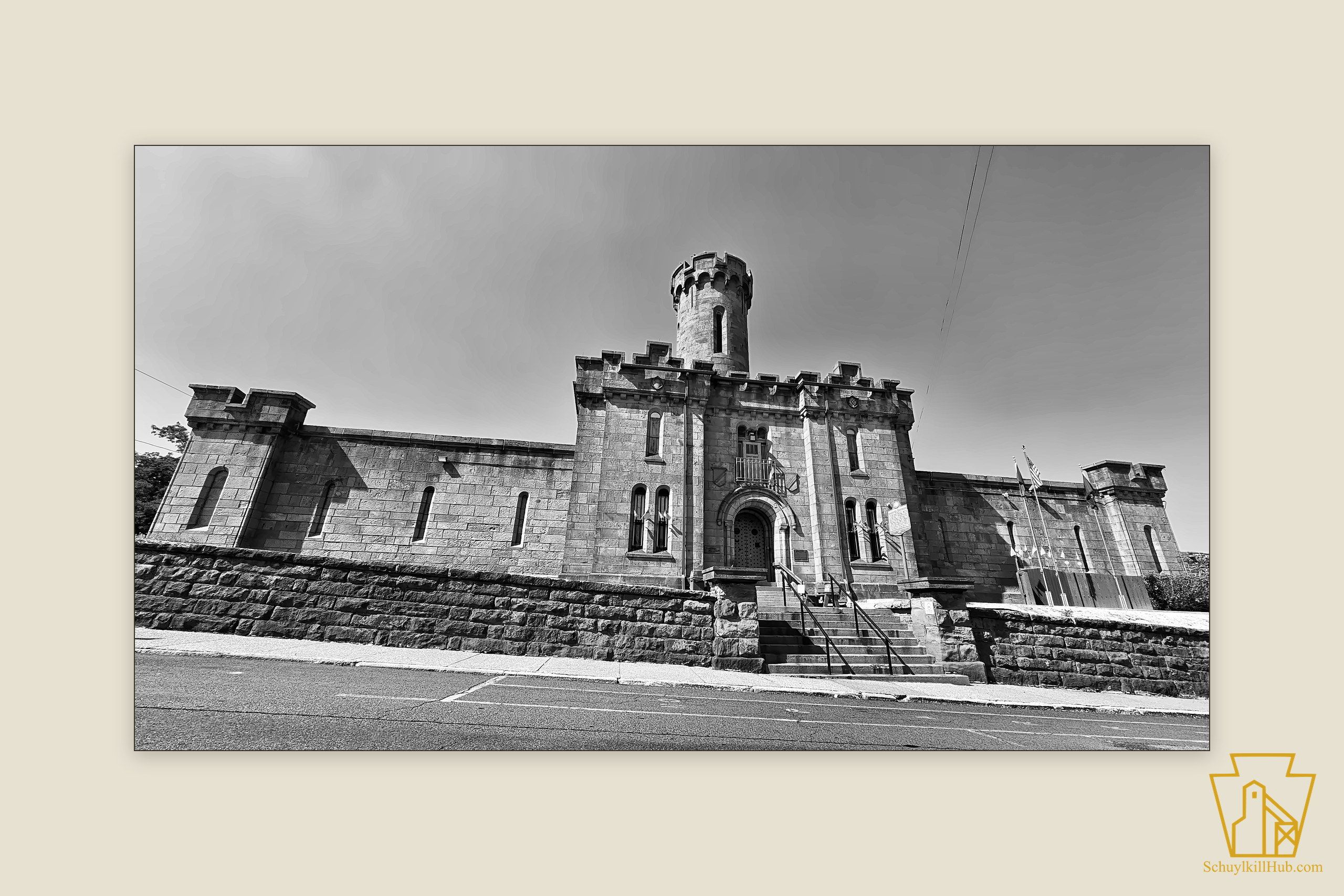
  • The castellated stone front of the Schuylkill County Prison at Pottsville.

    Labor & the Molly Maguires · 2023 · Slide 61 of 77

    Schuylkill County Prison, Pottsville — Present Day

    The castellated Schuylkill County Prison at Pottsville (built 1851), where six Molly Maguires were hanged on the 'Day of the Rope,' June 21, 1877 — photographed in 2023; no period photograph of the site is known.

    Photo: JJonahJackalope / CC BY-SA 4.0, via Wikimedia Commons · CC BY-SA 4.0

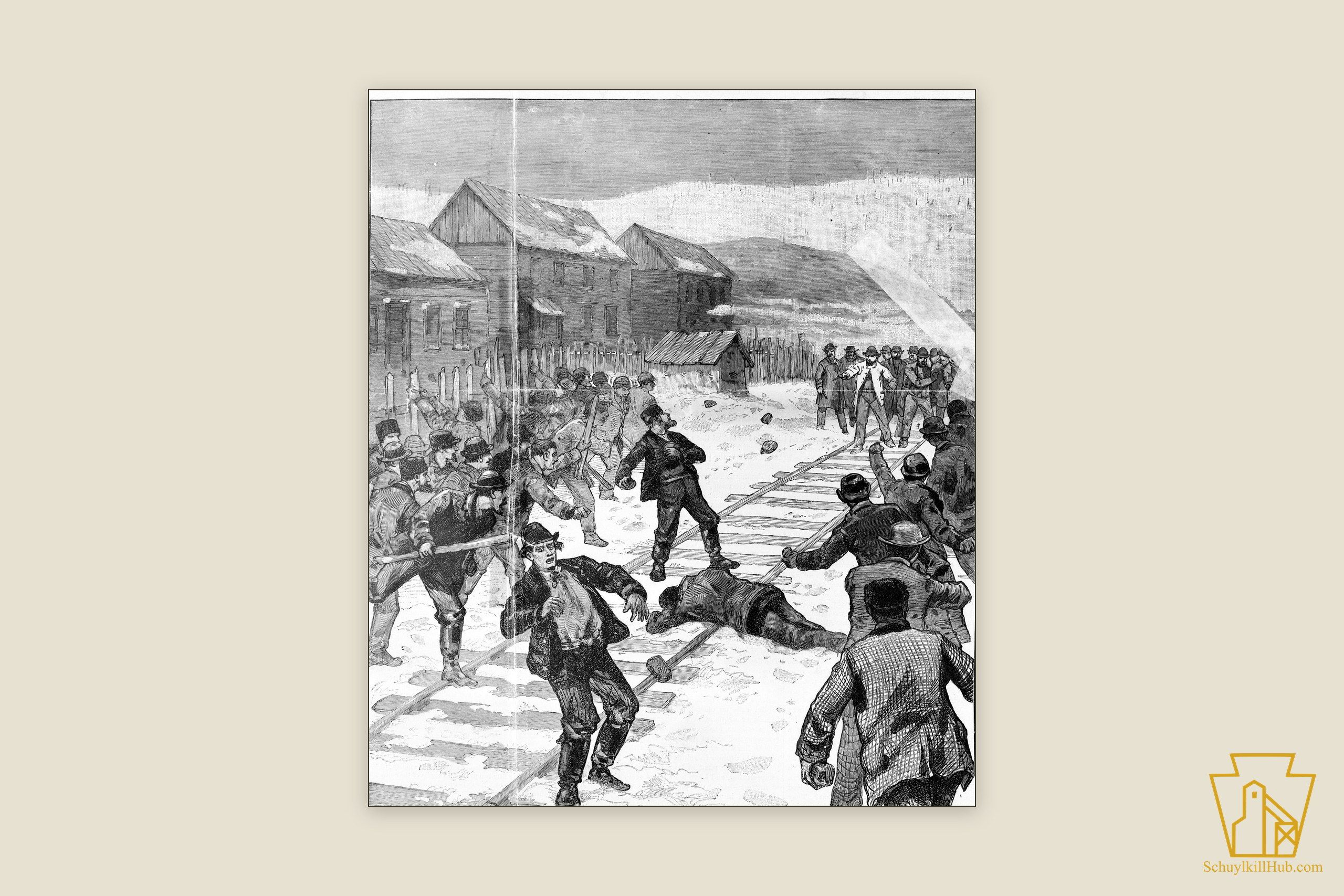
  • Wood engraving of strikers clashing with the Coal and Iron Police on a snowy Shenandoah street.

    Labor & the Molly Maguires · Slide 62 of 77

    Attack on the Coal & Iron Police at Shenandoah

    Strikers clash with the Coal and Iron Police on a snowy Shenandoah street, February 3, 1888, from a sketch by Joseph Becker — the front-page wood engraving of Frank Leslie's Illustrated Newspaper for the week ending February 18, 1888, covering 'the mining troubles in the Schuylkill region.'

    Illustration: after Joseph Becker, Frank Leslie's Illustrated Newspaper, 18 Feb 1888 (public domain), via Wikimedia Commons / Library of Congress (LCCN 98511383) · Public Domain (PD-old); LOC no known restrictions

    Own this print
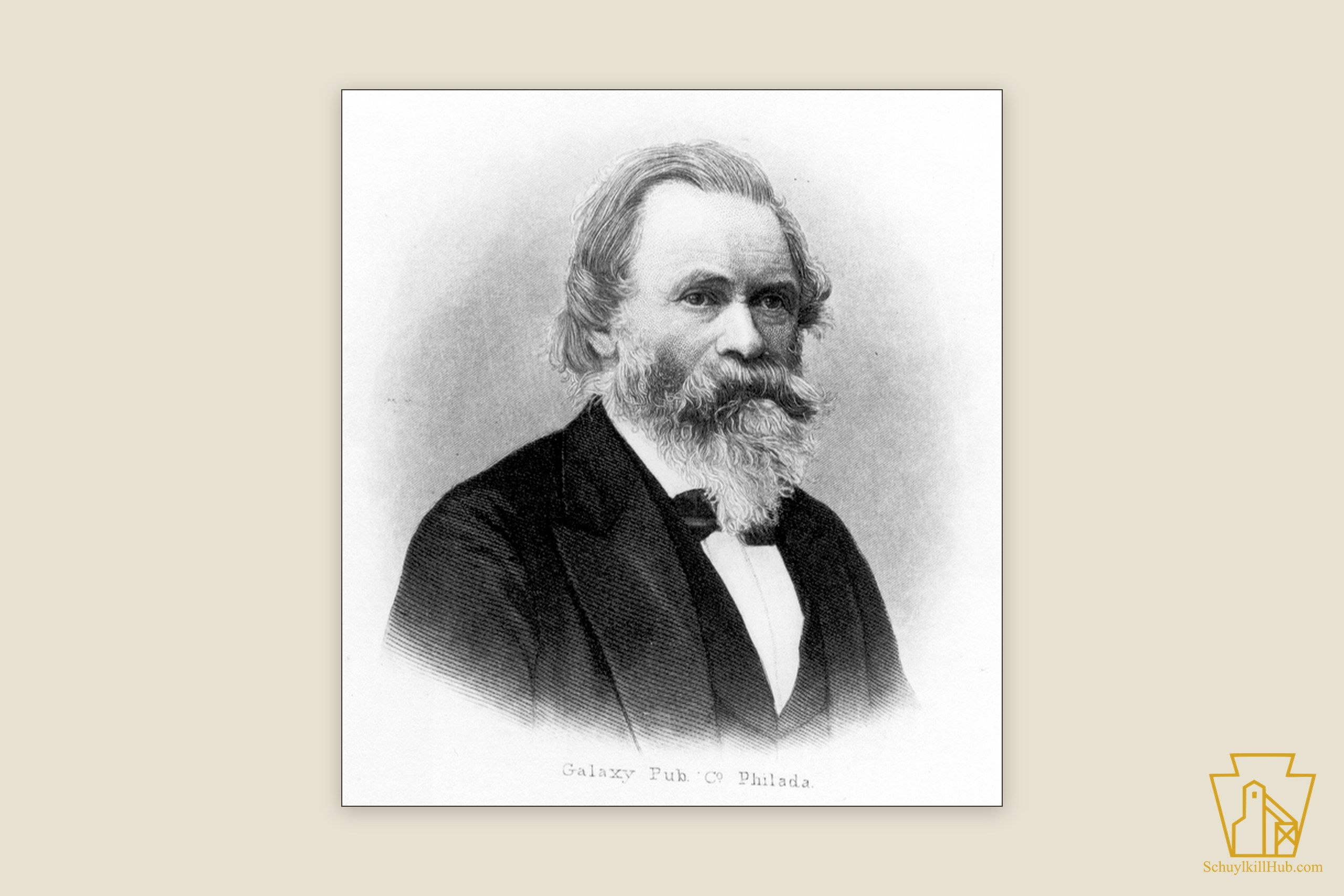
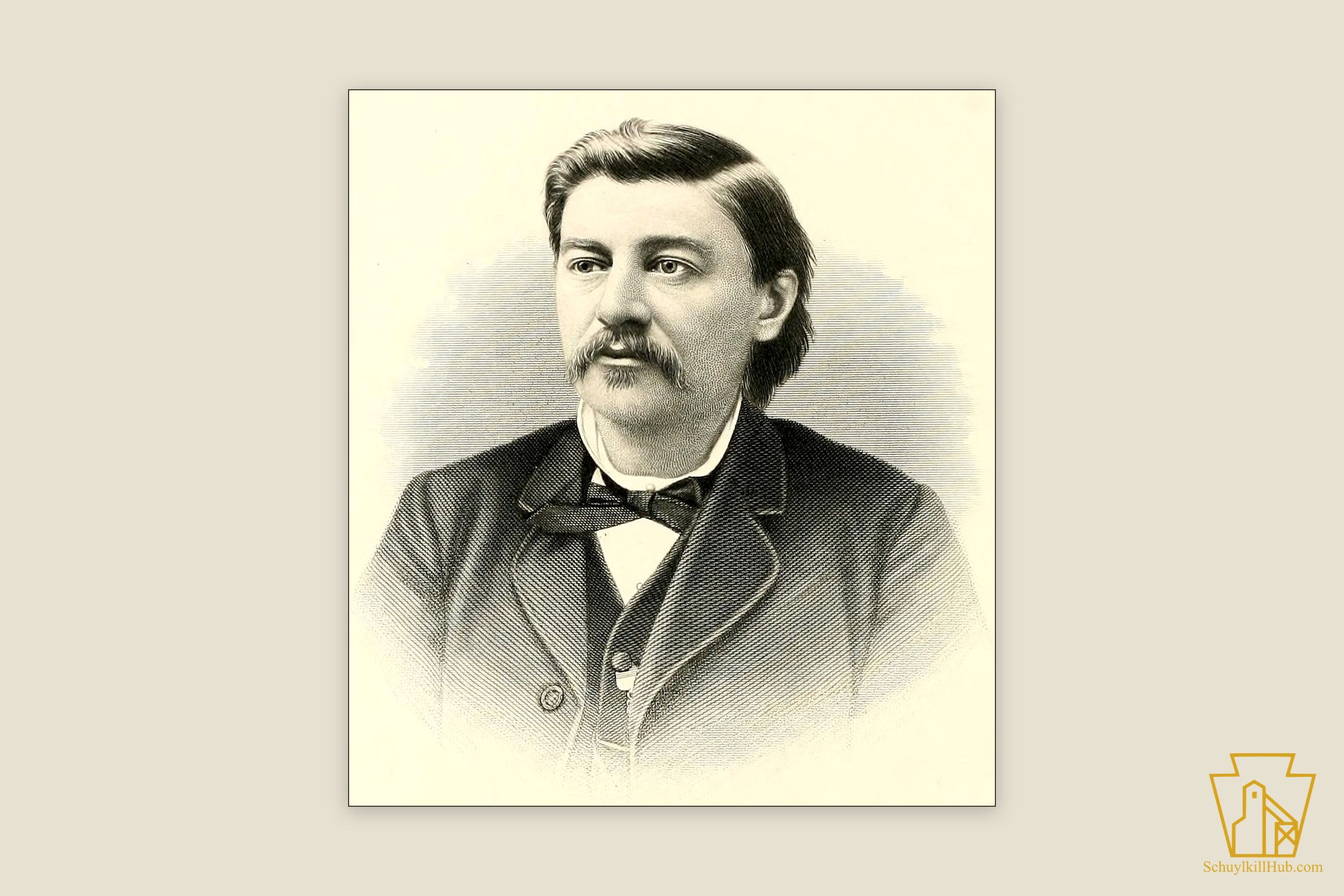
  • Steel-engraved bust portrait of publisher Benjamin Bannan.

    Portraits · Slide 63 of 77

    Benjamin Bannan, Publisher of the Miners' Journal

    Benjamin Bannan (1807–1875), longtime publisher of Pottsville's Miners' Journal and a leading Schuylkill County editor and abolitionist — a steel-engraved portrait from the Biographical Encyclopedia of Pennsylvania (Galaxy Publishing Co., 1874).

    Engraving: Galaxy Publishing Co., 1874 (public domain), via Wikimedia Commons · Public Domain (PD-old / PD-US)

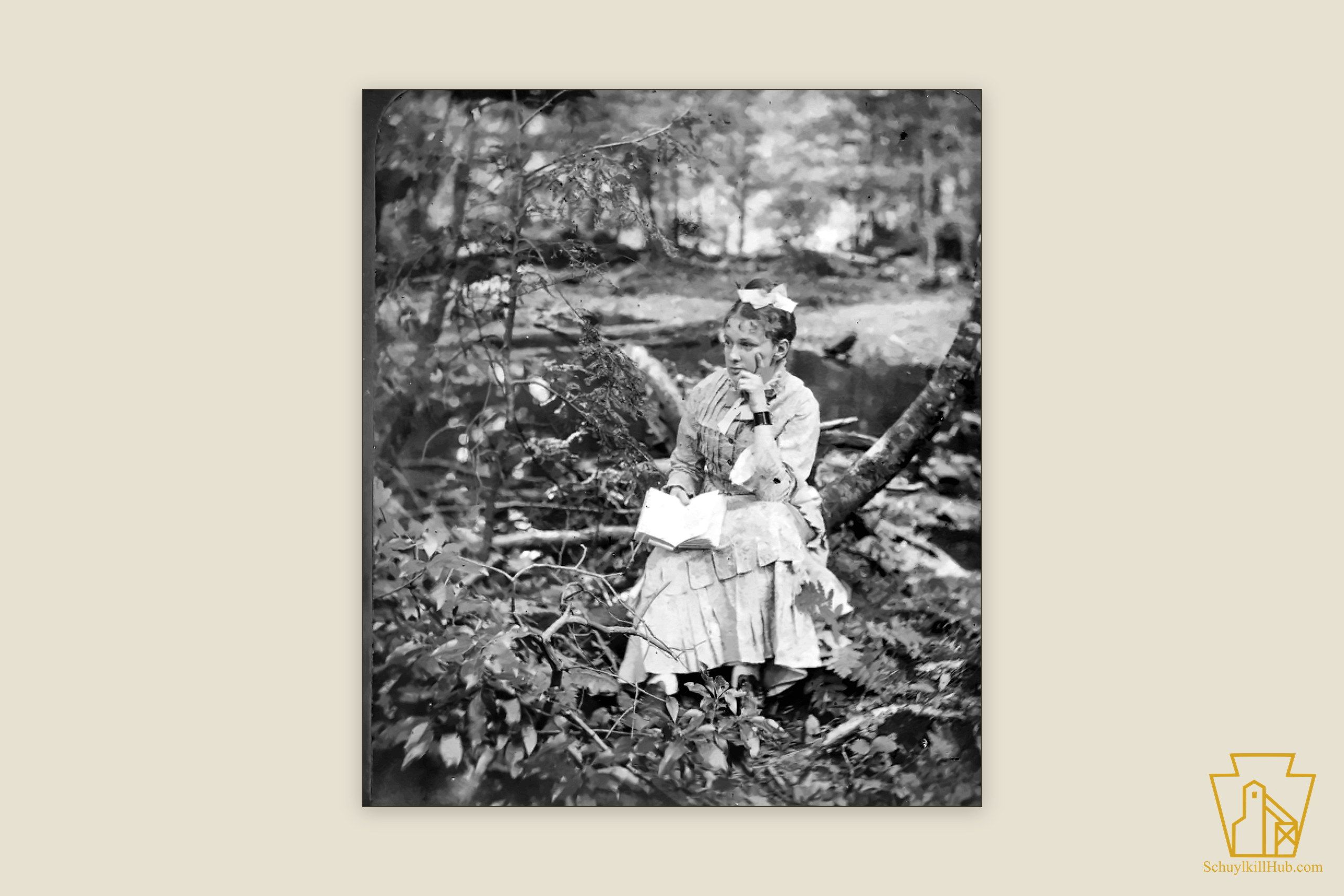
  • A young woman seated reading a book in a woodland — a stereograph frame by George M. Bretz.

    Portraits · Slide 64 of 77

    Woman Reading in the Woods (George M. Bretz)

    A young woman reading in a woodland, an early stereograph by George M. Bretz (1842–1895) of Pottsville — the photographer whose 1884 anthracite series would take the camera underground at the Kohinoor mine. One frame of Bretz's albumen stereograph card.

    Photo: George M. Bretz, c.1865-1885, The New York Public Library (public domain), via Wikimedia Commons · Public Domain (PD-scan / PD-US)

  • Steel-engraved bust portrait of Congressman Charles N. Brumm.

    Portraits · Slide 65 of 77

    Charles N. Brumm of Minersville

    Charles N. Brumm, Civil War veteran and U.S. Congressman from Minersville — a steel-engraved portrait from the county's own History of Schuylkill County, Pa. (W.W. Munsell & Co., 1881).

    Engraving: W.W. Munsell & Co., 1881 (public domain), via Wikimedia Commons · Public Domain (PD-old / PD-US)

  • Studio bust portrait of Franklin B. Gowen.

    Portraits · Slide 66 of 77

    Franklin B. Gowen

    Franklin B. Gowen (1836–1889), District Attorney of Schuylkill County and president of the Philadelphia & Reading Railroad, who directed the Pinkerton infiltration of the Molly Maguires and served as special prosecutor at the Pottsville trials.

    Photo: unknown (public domain), via Wikimedia Commons · Public Domain (PD-old / PD-US)

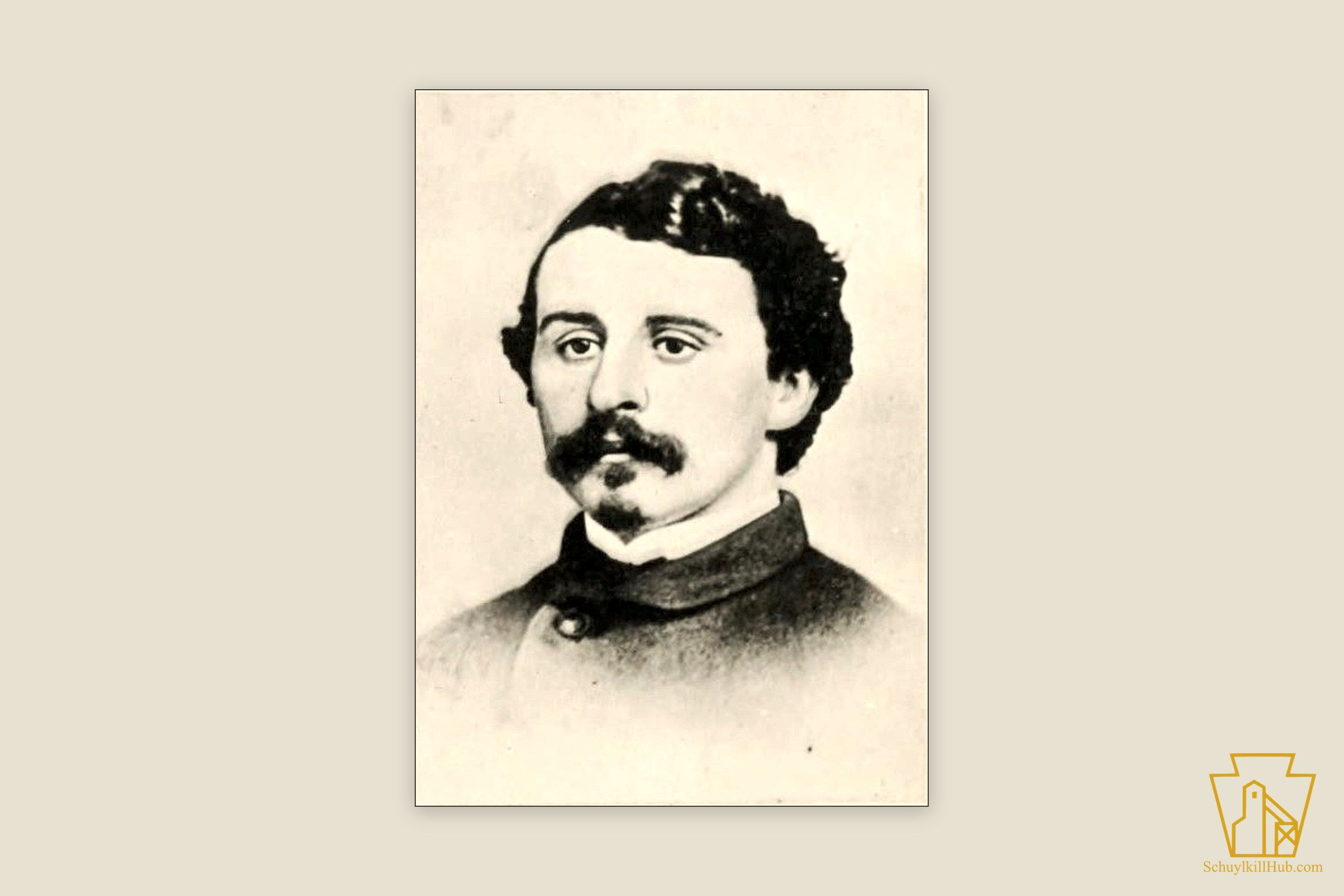
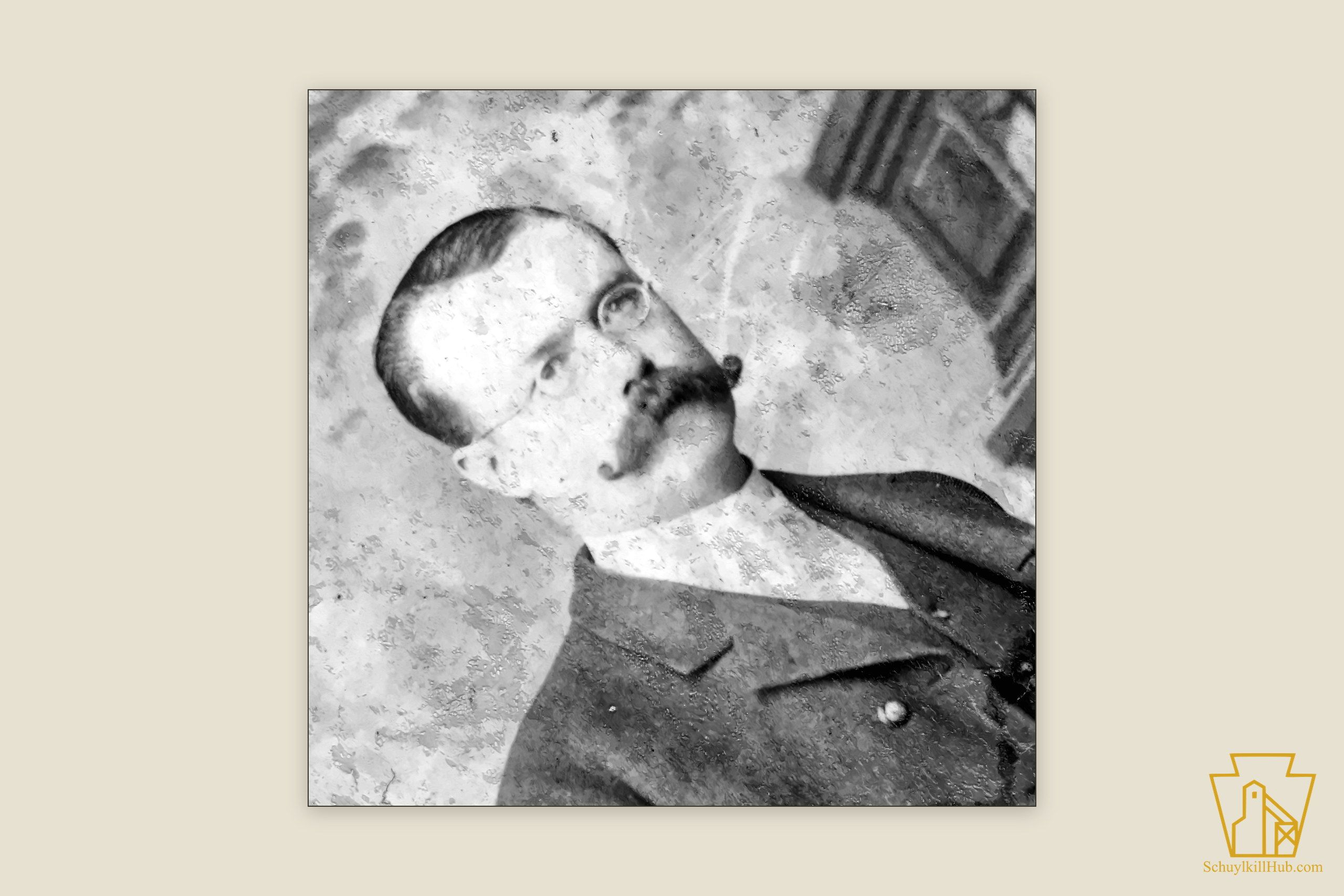
  • Portrait print of Henry Pleasants, the Pottsville mining engineer of the 48th Pennsylvania.

    Portraits · Slide 67 of 77

    Henry Pleasants, Engineer of the Petersburg Mine

    Henry Pleasants (1833–1880), the Pottsville mining engineer and lieutenant colonel of the 48th Pennsylvania — the Schuylkill County regiment whose anthracite miners dug the Petersburg mine that produced the Battle of the Crater in 1864.

    Photo/print: unknown, c.1865 (public domain), via Wikimedia Commons · Public Domain (PD-old / PD-US)

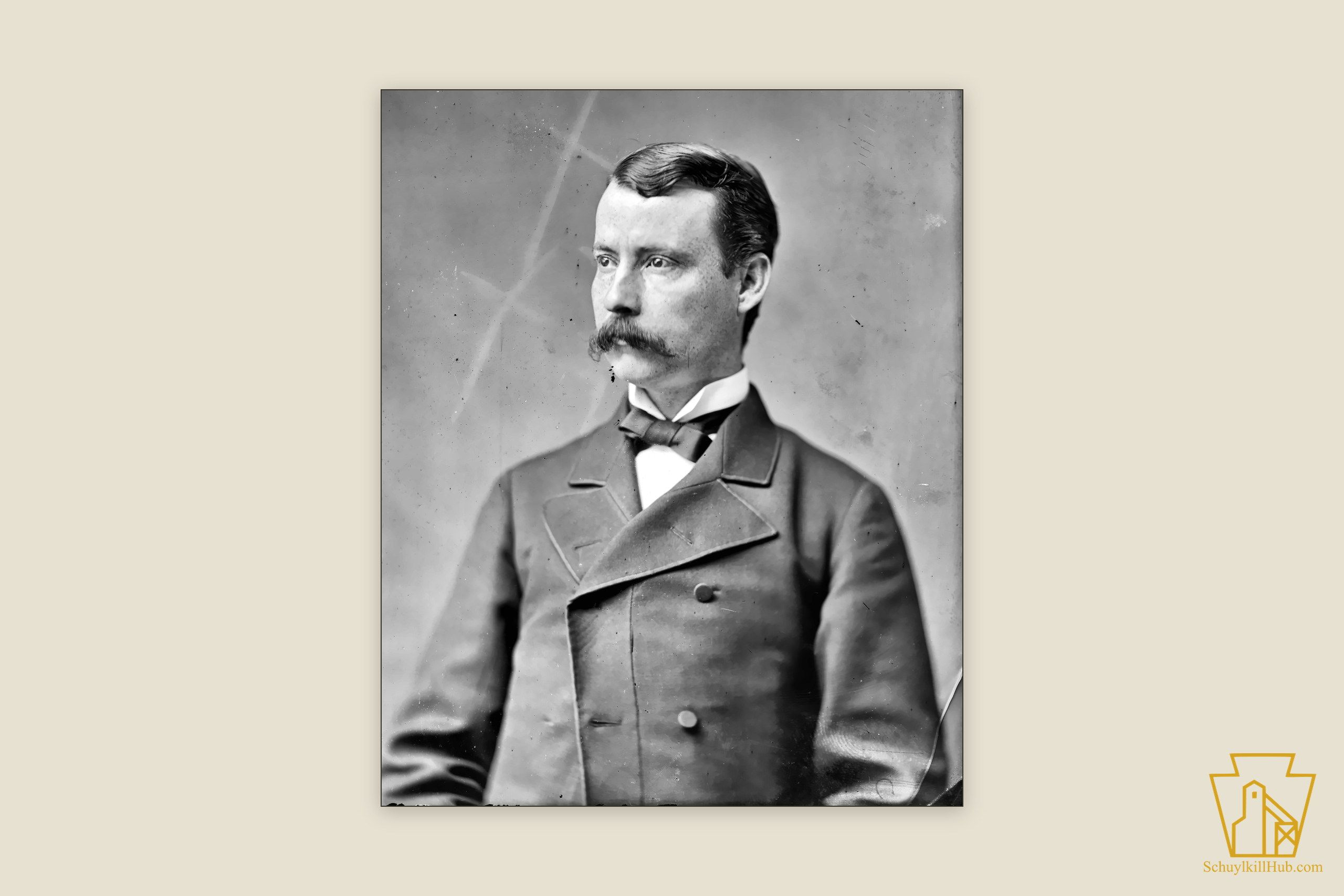
  • Brady–Handy studio bust portrait of Congressman James B. Reilly.

    Portraits · Slide 68 of 77

    James B. Reilly

    James Bernard Reilly, District Attorney of Schuylkill County (1871–1875) and U.S. Congressman from Pottsville — a studio portrait from the Brady–Handy collection at the Library of Congress.

    Photo: Brady-Handy studio, c.1865-1880, Library of Congress (LC-BH832-28891; public domain) · Public Domain (LOC Brady-Handy; PD-old)

    Own this print
  • Carte-de-visite bust portrait of Pinkerton detective James McParland.

    Portraits · Slide 69 of 77

    James McParland, Pinkerton Detective

    James McParland, who as 'James McKenna' infiltrated the Molly Maguires in Shenandoah and Pottsville for the Pinkertons from 1873 to 1876; his testimony drove the Pottsville convictions. An albumen carte de visite from the Pinkerton's National Detective Agency records.

    Photo: unknown, c.1880, Library of Congress (LCCN 2012646956; no known restrictions), via Wikimedia Commons · Public Domain - No known restrictions on publication (Library of Congress)

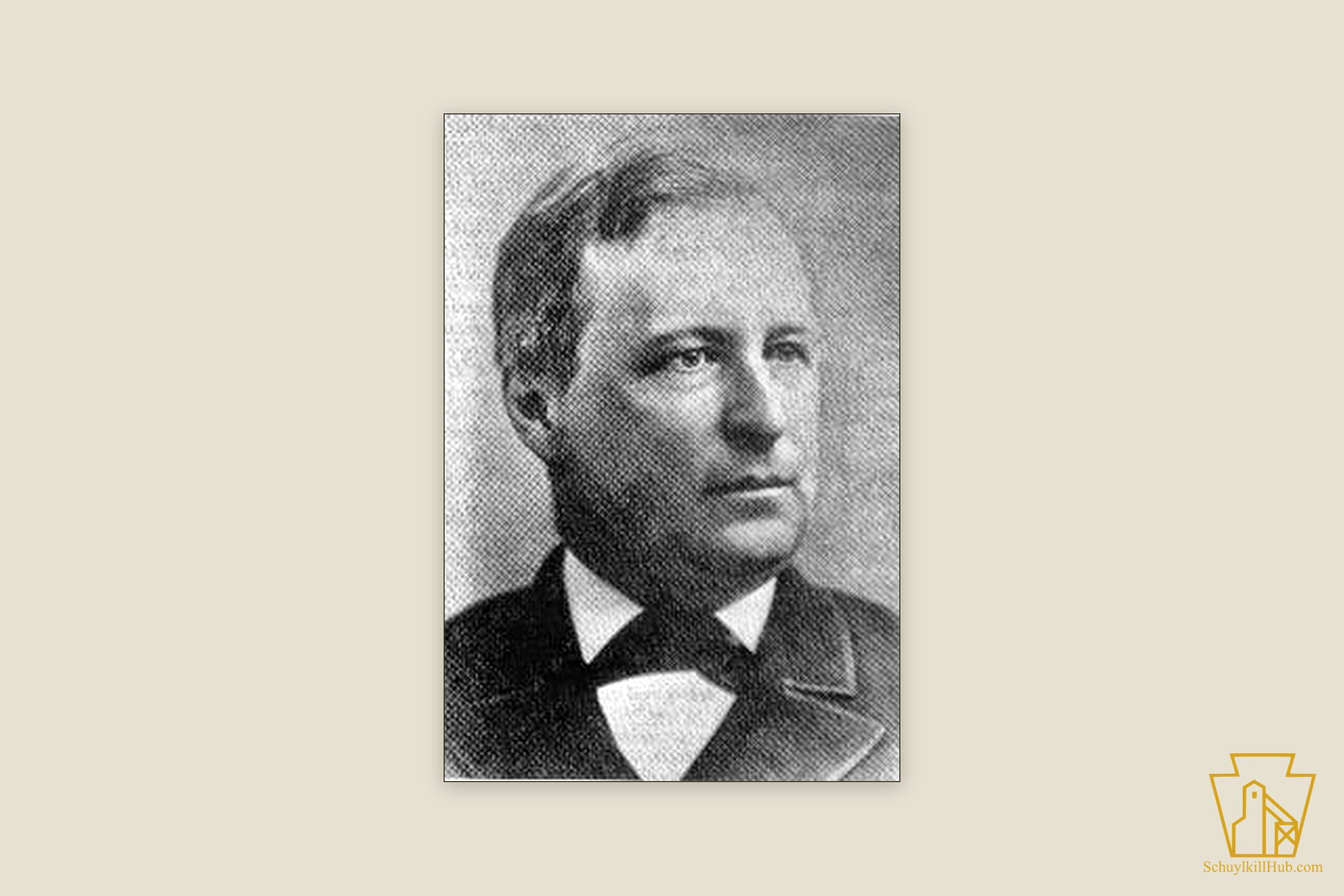
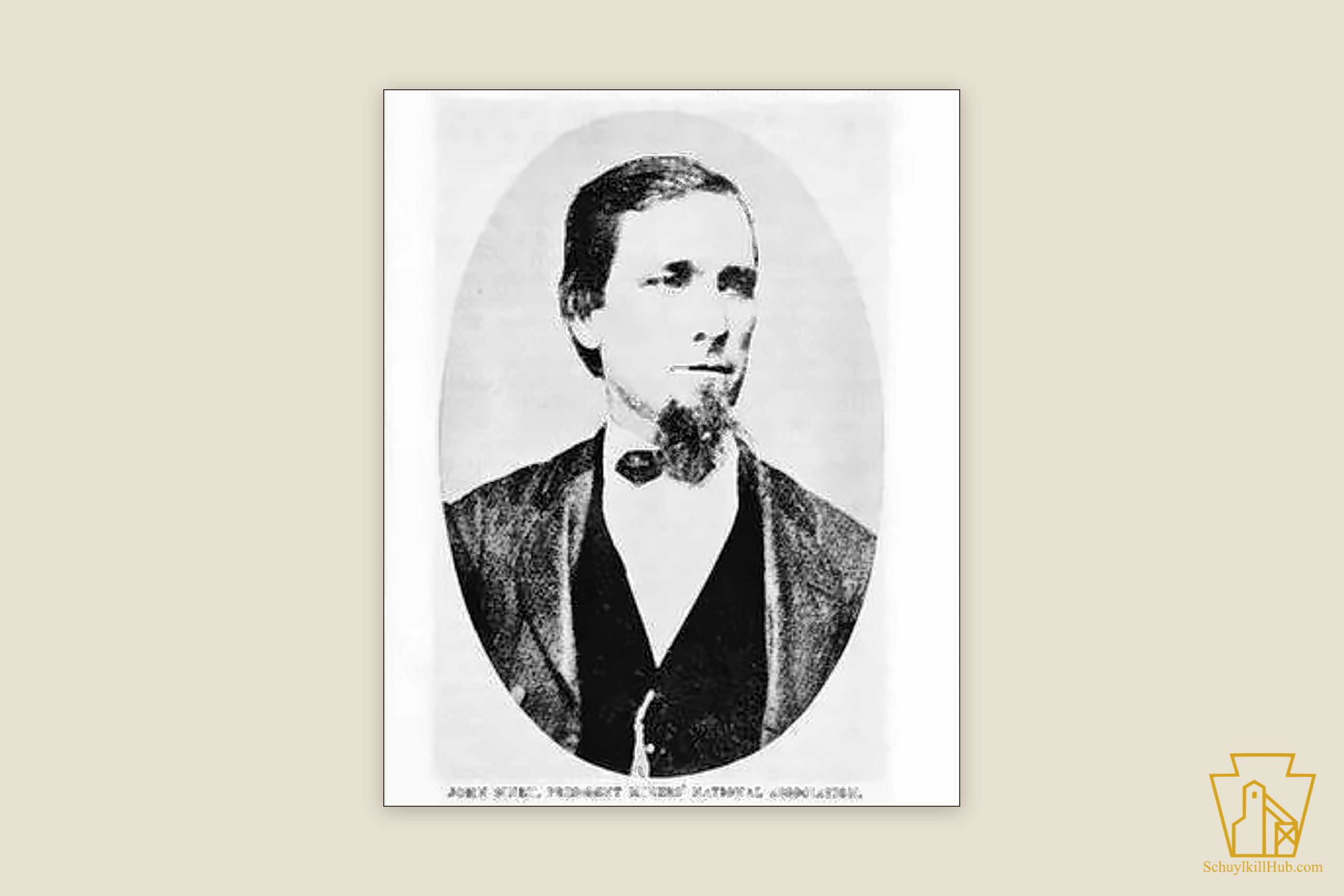
  • Halftone bust portrait of union founder John Siney.

    Portraits · Slide 70 of 77

    John Siney, Founder of the Workingmen's Benevolent Association

    John Siney (1831–1880), who founded the Workingmen's Benevolent Association of Schuylkill County at St. Clair in 1868 — the pioneering anthracite miners' union — and later led the Miners' National Association; as reproduced in Andrew Roy's History of the Coal Miners of the United States (1907).

    Halftone: from Andrew Roy, 'A History of the Coal Miners of the United States', 1907 (public domain), via Wikimedia Commons · Public Domain (PD-old / PD-US)

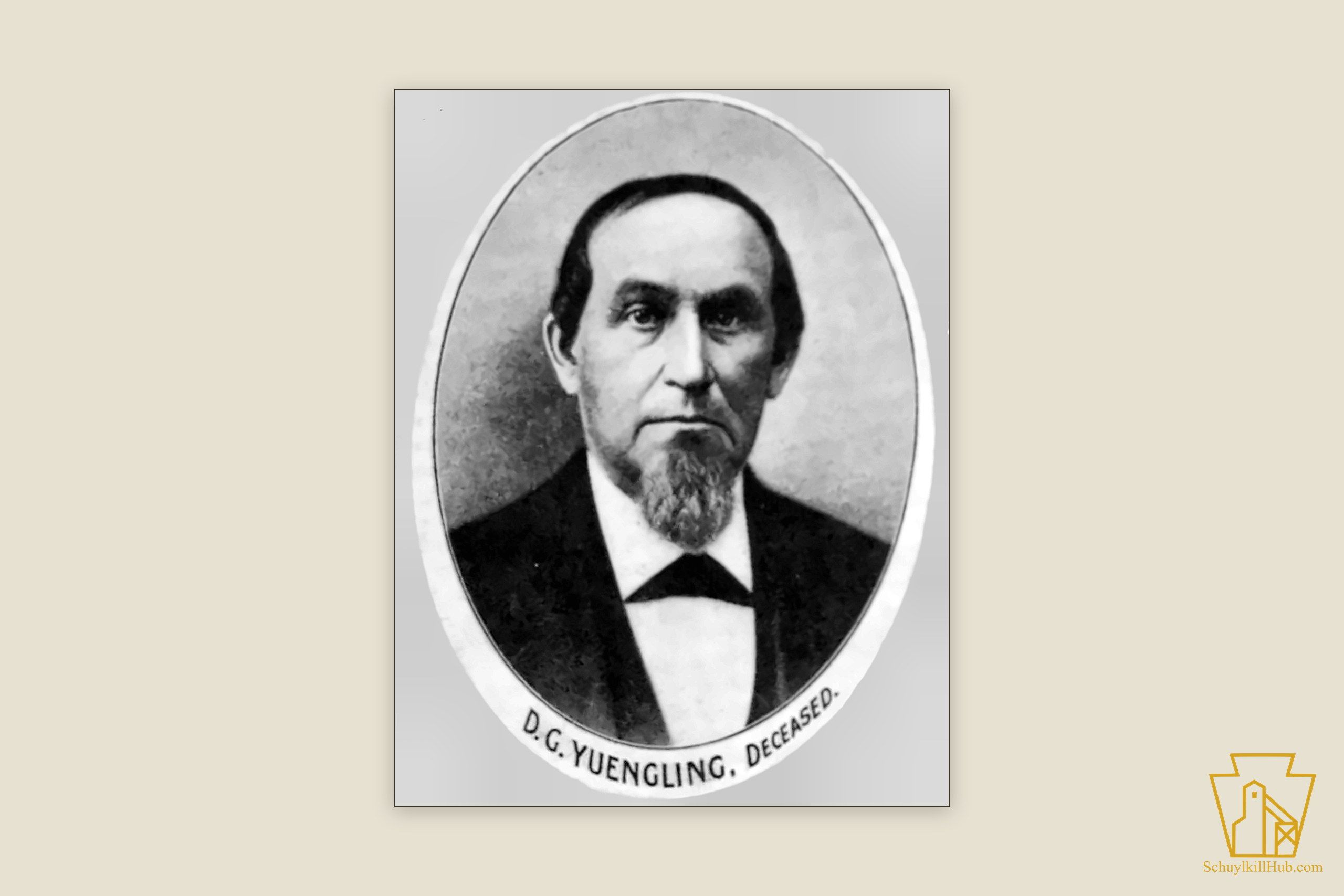
  • Oval bust portrait of brewer David G. Yuengling.

    Portraits · before 1877 · Slide 71 of 77

    David G. Yuengling

    Oval portrait of David Gottlieb Yuengling (1808–1877), the German-born brewer who founded the Eagle Brewery at Pottsville in 1829 — today D.G. Yuengling & Son, America's oldest operating brewery.

    Portrait of D. G. Yuengling (d.1877), public domain, via Wikimedia Commons · Public Domain (PD-old)

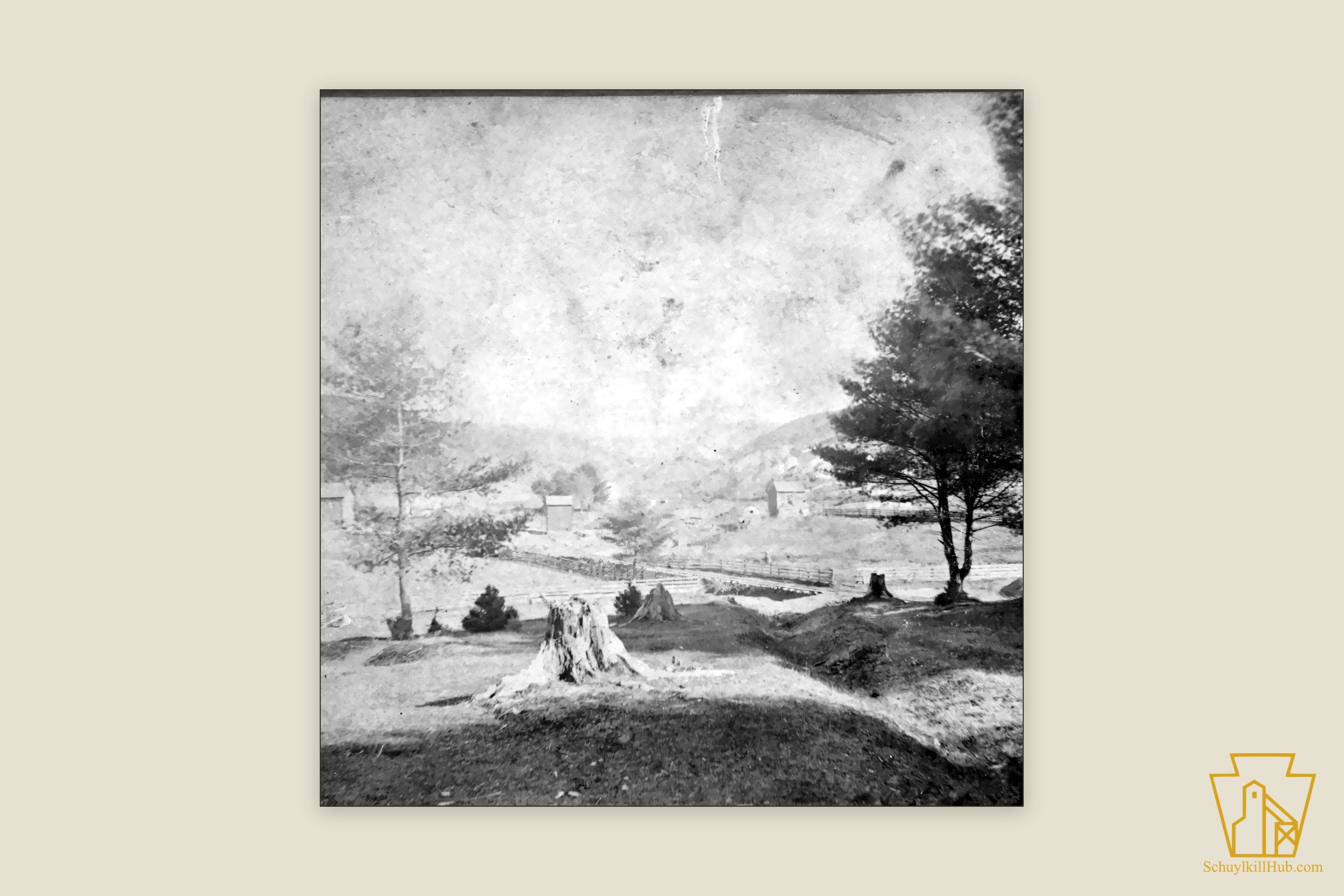
  • A hillside of tree stumps, split-rail fences and scattered houses northwest of Pottsville — a stereograph frame.

    Scenery · Slide 72 of 77

    Fishbach, northwest of Pottsville

    Tree stumps, split-rail fences and scattered houses across the rolling hills of Fishbach, the northwest suburb of Pottsville, photographed by A. M. Allen about 1868. One frame of Allen's albumen stereograph card.

    Photo: A. M. Allen, 1868, Library of Congress (LC-DIG-stereo-1s08199; no known restrictions) · No known restrictions on publication (Library of Congress)

    Own this print
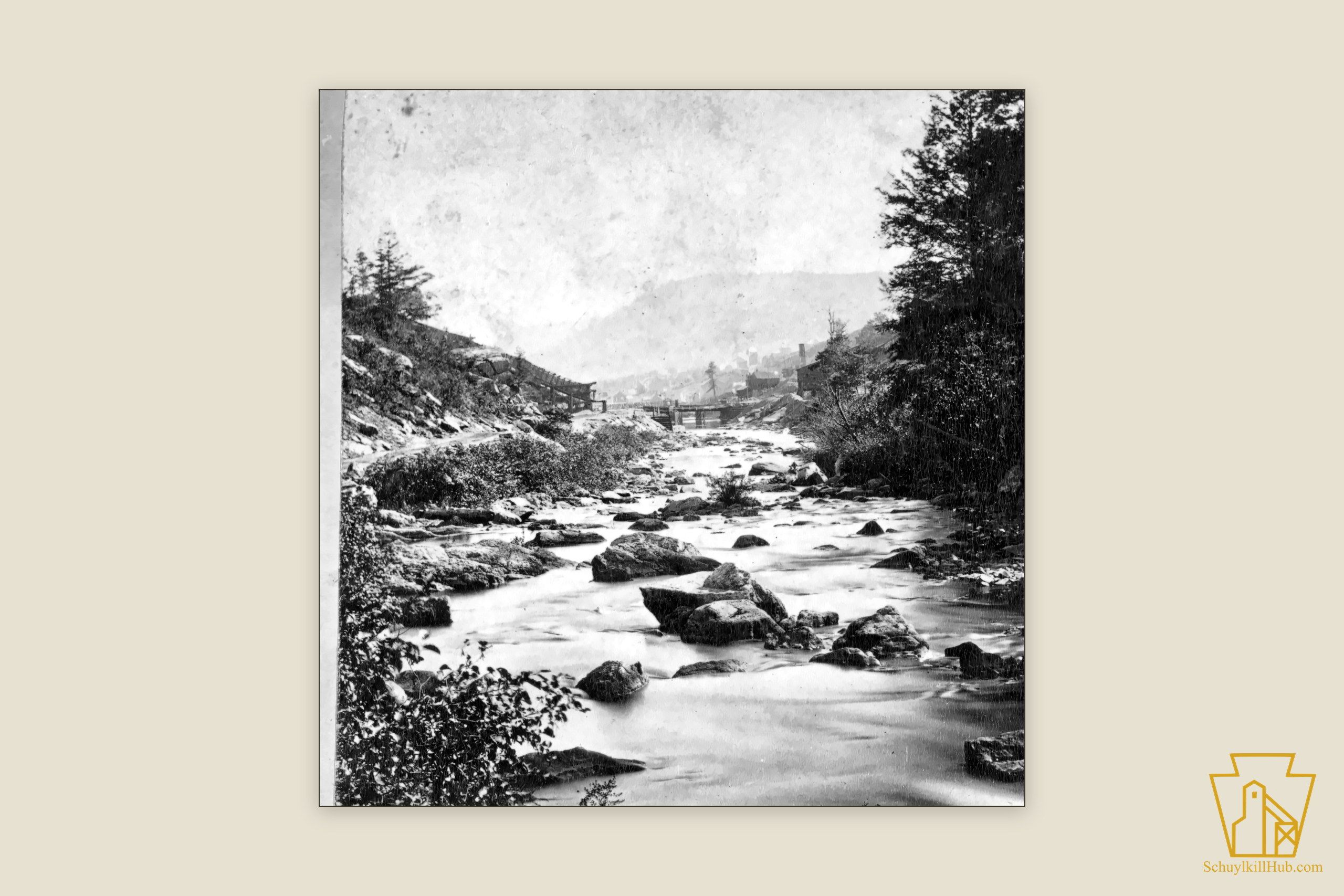
  • The Little Schuylkill tumbling over boulders below a forested gorge, a wooden footbridge and mill settlement beyond.

    Scenery · c. 1870 · Slide 73 of 77

    The Little Schuylkill above Tamaqua

    The Little Schuylkill River tumbling over boulders above Tamaqua, a wooden footbridge and a small mill settlement against the forested gorge, in an albumen stereograph of about 1870. One frame of the card.

    Stereograph: ca.1870, Library of Congress (no known restrictions on publication) · No known restrictions on publication (Library of Congress)

    Own this print
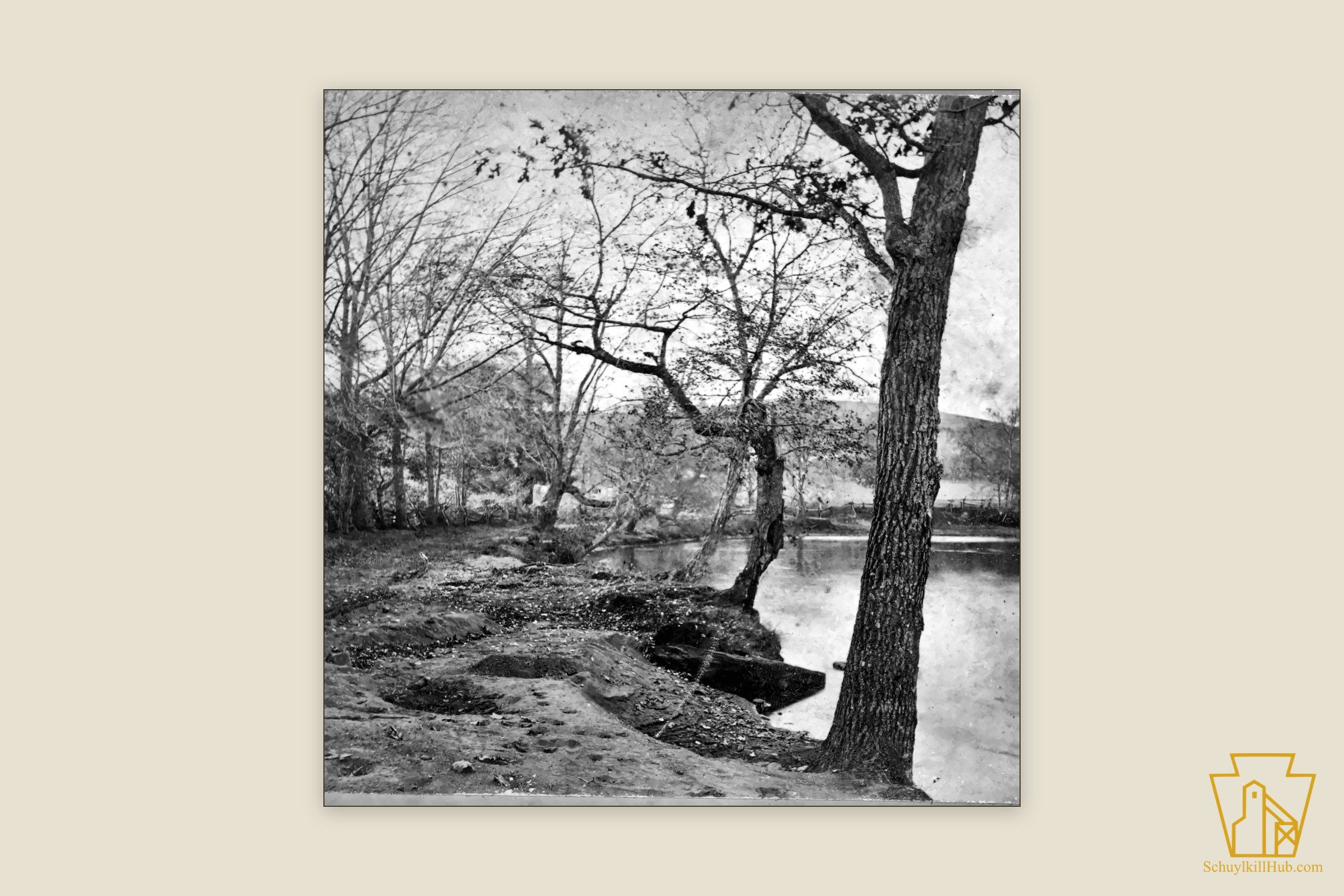
  • A wooded stream bank in Schuylkill County — a frame from an 1868 stereograph.

    Scenery · Slide 74 of 77

    Photographic Wanderings — a Schuylkill County stream

    A wooded stream bank from A. M. Allen's 1868 'Photographic Wanderings' series of Schuylkill County views. One frame of Allen's albumen stereograph card.

    Photo: A. M. Allen, 1868, Library of Congress (LC-DIG-stereo-1s08200; no known restrictions) · No known restrictions on publication (Library of Congress)

    Own this print
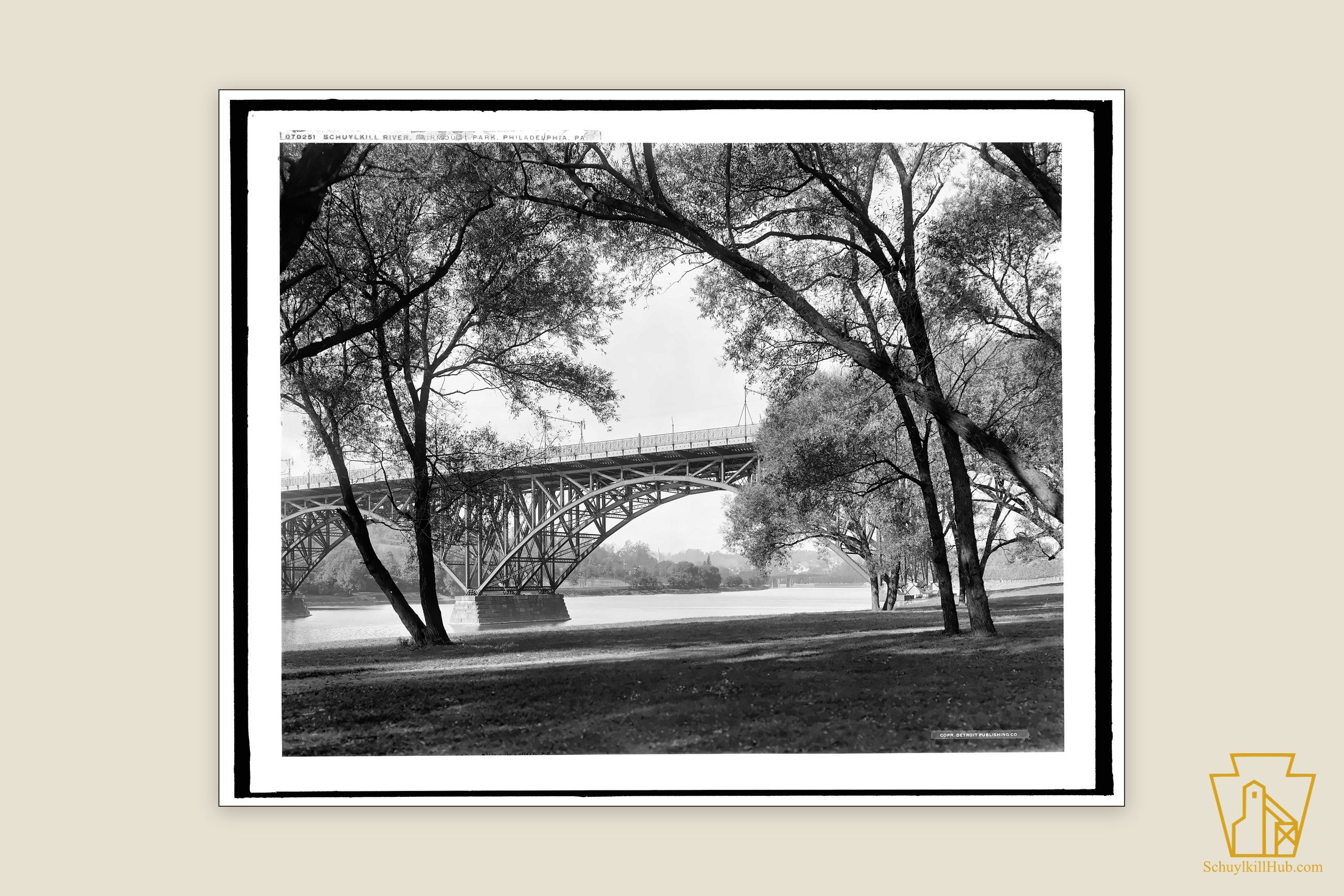
  • The broad lower Schuylkill River at Fairmount Park, Philadelphia, about 1908.

    Scenery · c. 1908 · Slide 75 of 77

    Schuylkill River, Fairmount Park, Philadelphia

    The lower Schuylkill at Fairmount Park, Philadelphia, in a Detroit Publishing Company view of about 1908 — the river's tidewater reach, a hundred miles downstream from the anthracite landings at Mount Carbon where the Schuylkill Navigation began.

    Photo: Detroit Publishing Co., Library of Congress (Detroit Publishing Co. no. 070251; no known restrictions) · No known restrictions on publication (Library of Congress)

    Own this print
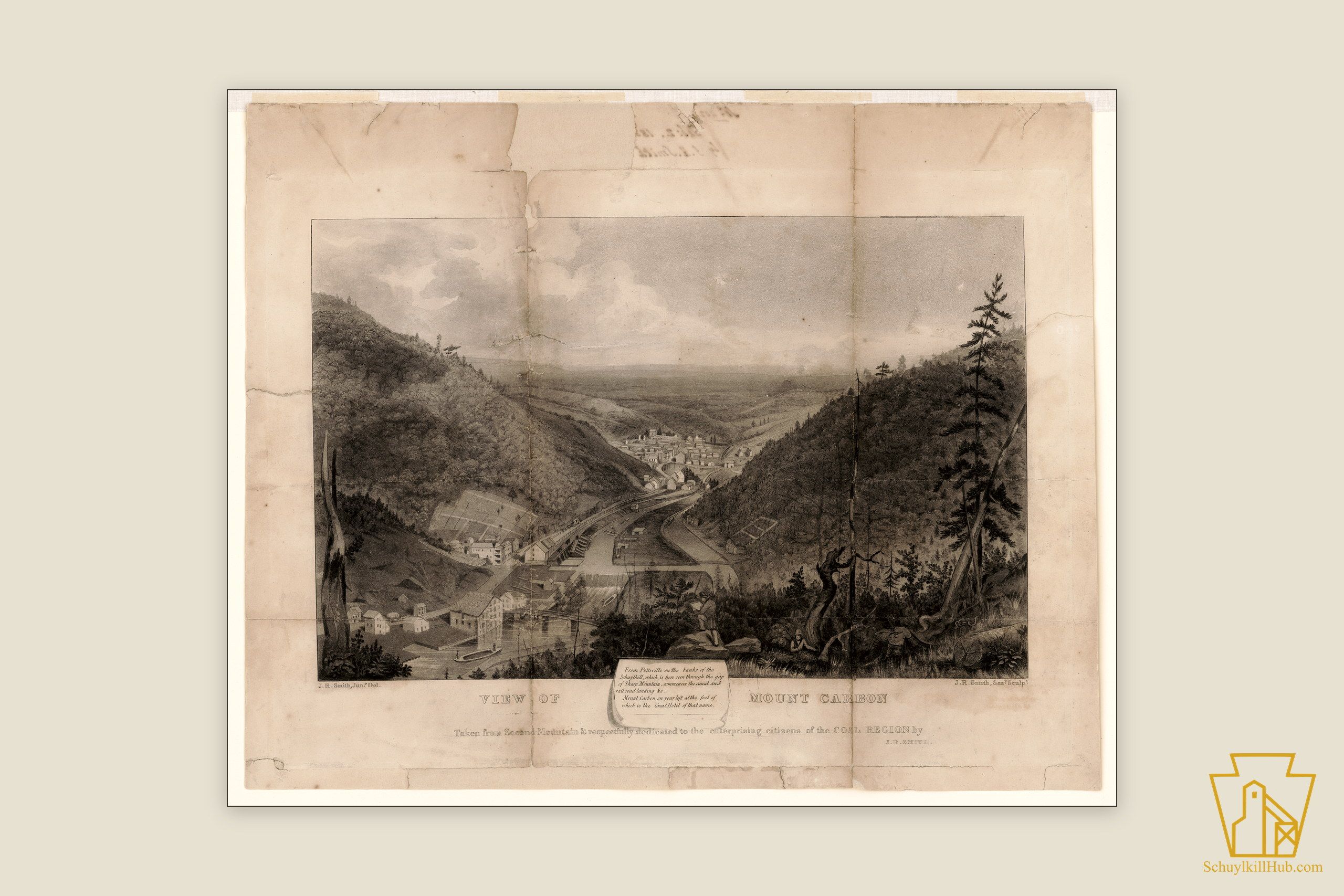
  • Aquatint view of the Schuylkill River winding between wooded ridges at Mount Carbon.

    Scenery · c. 1833 · Slide 76 of 77

    View of Mount Carbon Taken from Second Mountain

    John Rubens Smith's aquatint view of the Schuylkill River valley between Mount Carbon and Sharp Mountain, c. 1833 — Pottsville's canal landing at the head of the Schuylkill Navigation, where anthracite began its journey downriver. The oldest image in our historic Schuylkill picture archive.

    Etching/aquatint: J.R. Smith, 1833, Library of Congress (no known restrictions) · No known restrictions on publication (Library of Congress)

    Own this print
  • The twin dams and wooded shore at Tumbling Run — a frame from an 1868 stereograph.

    Scenery · Slide 77 of 77

    Tumbling Run, near Pottsville

    The twin dams at Tumbling Run, the pleasure resort at the southern foot of Sharp Mountain, photographed by A. M. Allen of Pottsville about 1868 — the oldest digitized photograph of Schuylkill County we have located. One frame of Allen's albumen stereograph card.

    Photo: A. M. Allen, 1868, Library of Congress (LC-DIG-stereo-1s08198; no known restrictions) · No known restrictions on publication (Library of Congress)

    Own this print

Slide 1 of 77

The encore

And for an encore — the county, read aloud
The History of Schuylkill County — the Schuylkill Hub audio edition, an 1889 bird’s-eye view of Pottsville on the cover

When the reels run out, the story keeps going. Listen is the written archive of Schuylkill County, read aloud — a growing audiobook.

Open the Listen edition

About this program

The theatre and the films

The Capitol Theatre opened on North Centre Street in November 1927, a roughly 2,700-seat Spanish Colonial Revival movie palace, and was demolished in 1982. The fullest surviving record of it is the set of Historic American Buildings Survey photographs held by the Library of Congress, which the marquee, proscenium, and stage curtain here follow.

The films are the anthracite region’s own documentary heritage, drawn from the Library of Congress, the U.S. National Archives, and the Prelinger Archives. Every film is public domain, credited to its holding archive.

The Lantern Show’s 77 plates are digitally restored presentations of historic Schuylkill imagery — cleaned and toned — drawn from the Library of Congress, the New York Public Library, the Boston Public Library, the Smithsonian Institution, Wikimedia Commons, and other public collections. Every plate carries its credit and rights beneath its slide. Two present-day photographs are used under CC BY-SA 4.0, and our restored presentations of those two plates carry the same license. Select plates are available as archival prints.

The films & their sources

  • Mining Operations, Pennsylvania Coal Fields (1904) Thomas A. Edison, Inc. (cameraman W. L. Jamison) · Filmed at Drifton, Luzerne County — the eastern-middle anthracite field, not Schuylkill County. Library of Congress · No known restrictions · Public domain — pre-1929 US publication (1904); the Library of Congress records the item with no known restrictions.
  • Black Sunlight (1920) The Bray Studios · The Pennsylvania anthracite region (specific town not identified in the film). Internet Archive (Prelinger Archives) · Public Domain · Public domain — pre-1929 US publication (1920), a silent-era educational film in the Prelinger public-domain collection.
  • The Story of Coal (1920) U.S. Bureau of Mines with the National Coal Association · Generic to U.S. coal — not anthracite- or Schuylkill County-specific. Library of Congress · No known restrictions · Public domain — U.S. Government work (Bureau of Mines); pre-1929; the Library of Congress records no known restrictions and no copyright registration.
  • Bootleg Coal (1935) U.S. Government newsreel outtakes (NARA) · Shamokin, Northumberland County — the western-middle anthracite field, not Schuylkill County. Internet Archive (FedFlix) / U.S. National Archives · Public Domain · Public domain — U.S. Government work (U.S. National Archives newsreel outtakes).
  • Mining and Preparation of Anthracite Coal (c. 1930s) Handy (Jam) Organization · Pennsylvania anthracite (town not named); sponsored by the Delaware & Lackawanna Coal Company. Internet Archive (Prelinger Archives) · No known restrictions · Public domain — a sponsored industrial film in the Prelinger public-domain collection, carrying no copyright notice; treated as public domain for non-commercial cultural use.
  • Drive for Anthracite (1942) Office for Emergency Management, War Production Board (OWI) · The Pennsylvania anthracite region (no town named). Internet Archive (FedFlix) / U.S. National Archives · CC0 · Public domain — U.S. Government work (Office for Emergency Management / OWI); the Internet Archive item also carries a CC0 public-domain dedication.